Molecular Medicine, Research Institute, The Hospital for Sick Children, Toronto, Ontario, M5G 1X8, Canada; Department of Laboratory Medicine and Pathobiology, University of Toronto, Toronto, Ontario, M5S 1A8, Canada.
Mol Metab. 2022 Nov;65:101590. doi: 10.1016/j.molmet.2022.101590. Epub 2022 Sep 5.
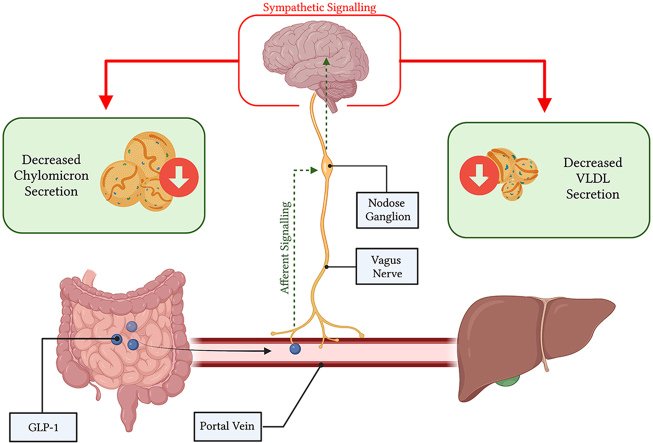
BACKGROUND/OBJECTIVE: GLP-1R agonists have been shown to reduce fasting and postprandial plasma lipids, both of which are independent risk factors for the development of cardiovascular disease. However, how endogenous GLP-1 - which is rapidly degraded - modulates intestinal and hepatic lipid metabolism is less clear. A vagal gut-brain-axis originating in the portal vein has been proposed as a possible mechanism for GLP-1's anti-lipemic effects. Here we sought to examine the relationship between vagal GLP-1 signalling and intestinal lipid absorption and lipoprotein production.
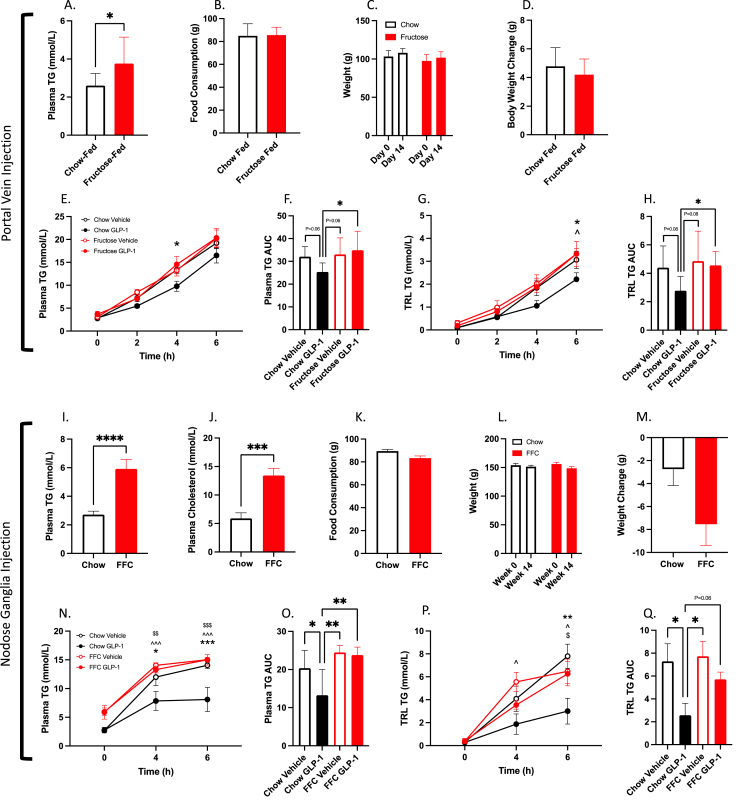
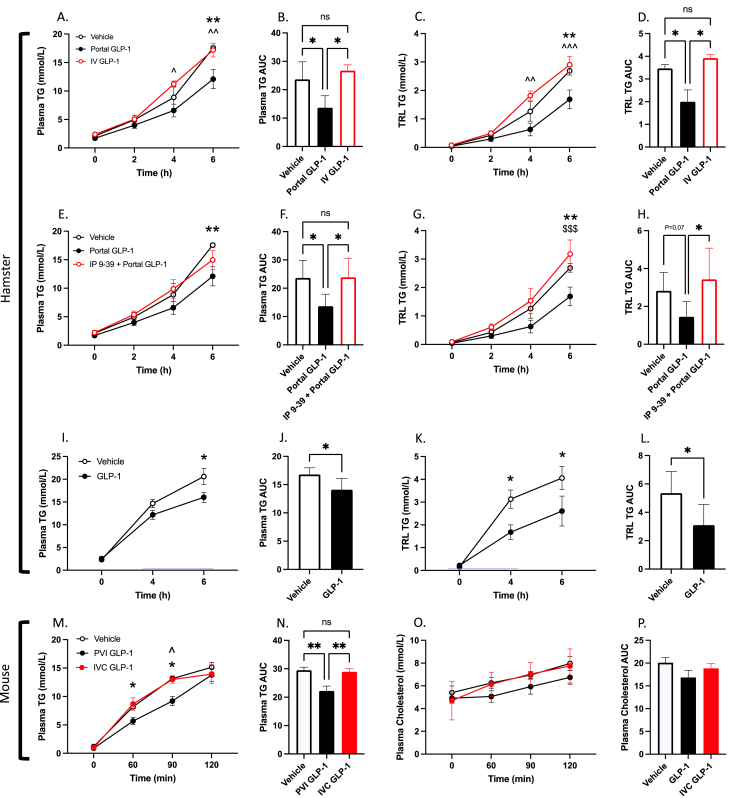
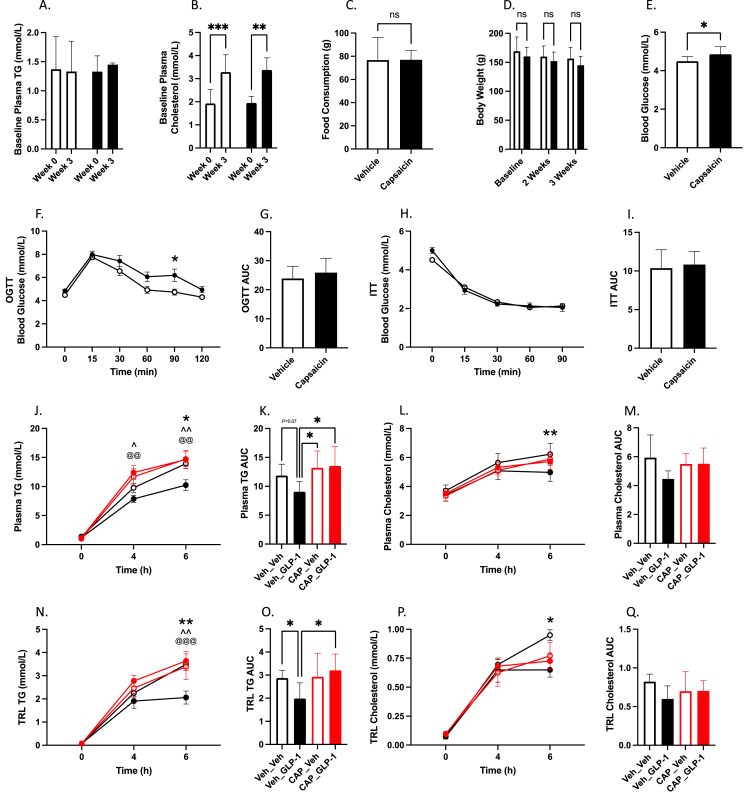
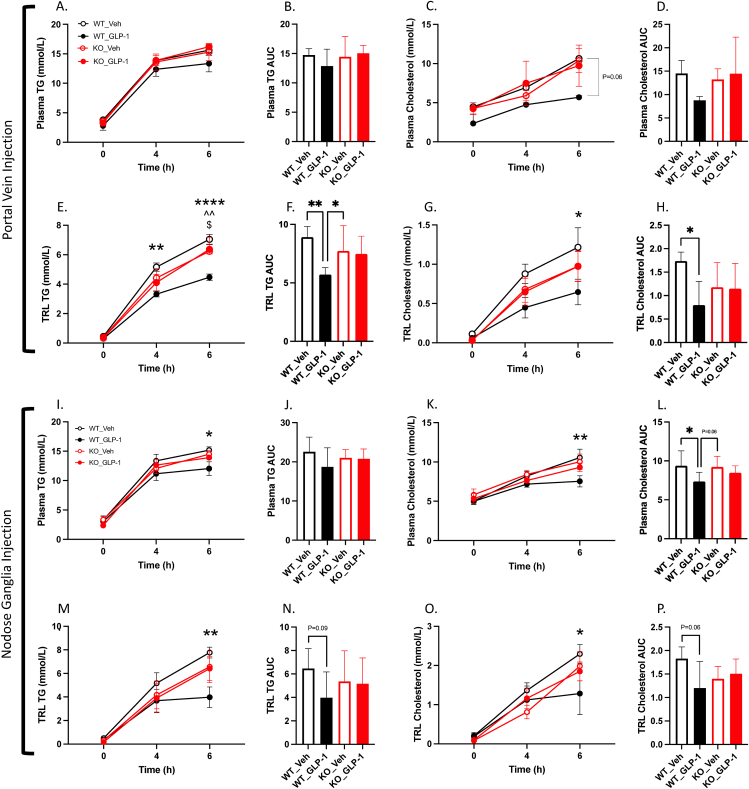
Syrian golden hamsters or C57BL/6 mice received portal vein injections of GLP-1, and postprandial and fasting plasma TG, TRL TG, or VLDL TG were examined. These experiments were repeated during sympathetic blockade, and under a variety of pharmacological or surgical deafferentation techniques. In addition, hamsters received nodose ganglia injections of a GLP-1R agonist or antagonist to further probe the vagal pathway. Peripheral studies were repeated in a novel GLP-1R KO hamster model and in our diet-induced hamster models of insulin resistance.
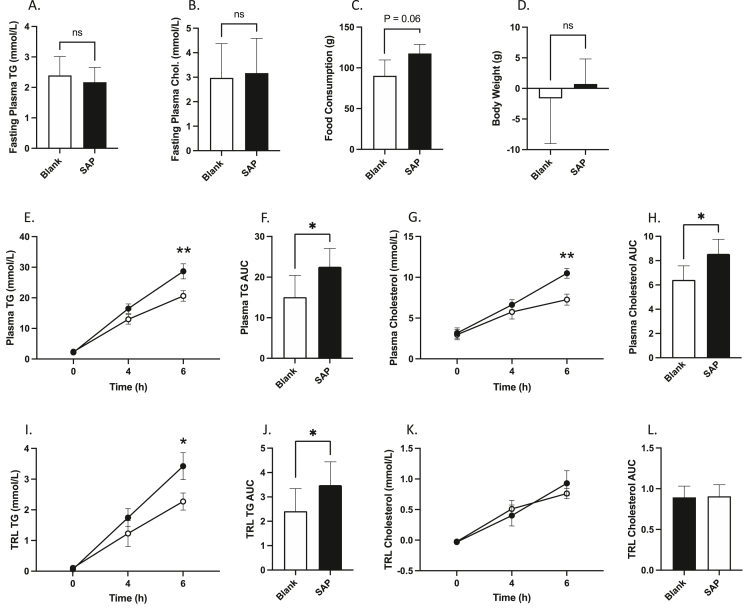
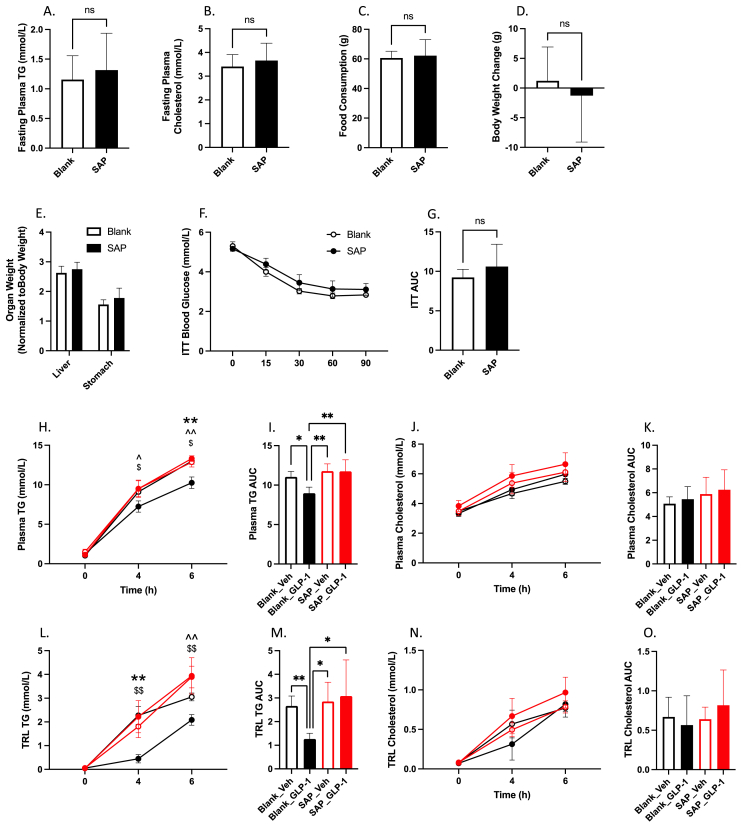
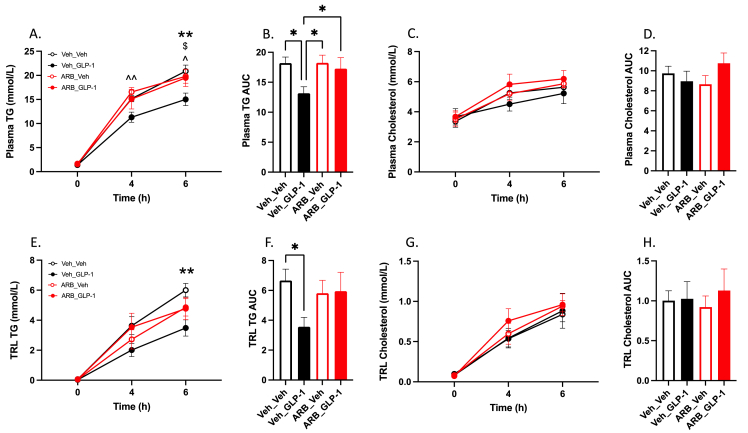
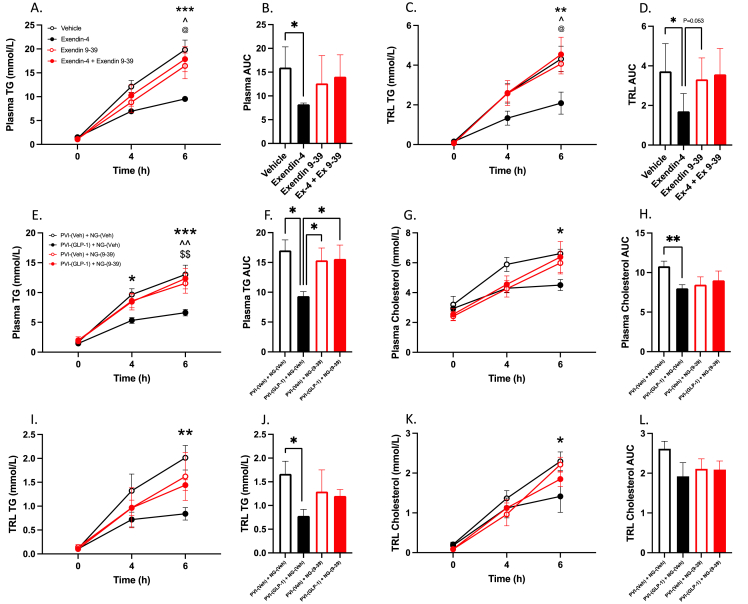
GLP-1 site-specifically reduced postprandial and fasting plasma lipids in both hamsters and mice. These inhibitory effects of GLP-1 were investigated via pharmacological and surgical denervation experiments and found to be dependent on intact afferent vagal signalling cascades and efferent changes in sympathetic tone. Furthermore, GLP-1R agonism in the nodose ganglia resulted in markedly reduced postprandial plasma TG and TRL TG, and fasting VLDL TG and this nodose GLP-1R activity was essential for portal GLP-1s effect. Notably, portal and nodose ganglia GLP-1 effects were lost in GLP-1R KO hamsters and following diet-induced insulin resistance.
Our data demonstrates for the first time that portal GLP-1 modulates postprandial and fasting lipids via a complex vagal gut-brain-liver axis. Importantly, loss or interference with this signalling axis via surgical, pharmacological, or dietary intervention resulted in the loss of portal GLP-1s anti-lipemic effects. This supports emerging evidence that native GLP-1 works primarily through a vagal neuroendocrine mechanism.
背景/目的:GLP-1R 激动剂已被证明可降低空腹和餐后血浆脂质,这两者都是心血管疾病发展的独立危险因素。然而,内源性 GLP-1(其迅速降解)如何调节肠道和肝脏脂质代谢尚不清楚。起源于门静脉的迷走神经-肠-脑轴被认为是 GLP-1 抗血脂作用的一种可能机制。在这里,我们试图研究迷走神经 GLP-1 信号与肠道脂质吸收和脂蛋白生成之间的关系。
给予叙利亚金黄地鼠或 C57BL/6 小鼠门静脉注射 GLP-1,并检测餐后和空腹时的血浆 TG、TRL TG 或 VLDL TG。在交感神经阻断期间以及在各种药理学或手术去传入技术下重复这些实验。此外,金黄地鼠接受迷走神经节注射 GLP-1R 激动剂或拮抗剂,以进一步探究迷走神经途径。外周研究在新型 GLP-1R KO 金黄地鼠模型和我们的胰岛素抵抗金黄地鼠饮食模型中重复进行。
GLP-1 特异性降低了金黄地鼠和小鼠的餐后和空腹血浆脂质。通过药理学和手术去神经实验研究了 GLP-1 的这些抑制作用,发现它们依赖于完整的传入迷走神经信号级联和传出交感神经张力的变化。此外,迷走神经节中的 GLP-1R 激动作用导致餐后血浆 TG 和 TRL TG 以及空腹 VLDL TG 显著降低,并且这种迷走神经节 GLP-1R 活性对于门静脉 GLP-1 的作用是必需的。值得注意的是,GLP-1R KO 金黄地鼠和饮食诱导的胰岛素抵抗后,门静脉和迷走神经节 GLP-1 的作用消失。
我们的数据首次表明,门静脉 GLP-1 通过复杂的迷走神经-肠-肝轴调节餐后和空腹脂质。重要的是,通过手术、药理学或饮食干预对该信号轴的丧失或干扰导致门静脉 GLP-1 的抗血脂作用丧失。这支持了新兴的证据,即内源性 GLP-1 主要通过迷走神经内分泌机制发挥作用。