Speight B, Colvin E, Epurescu E D, Drummond J, Verhoef S, Pereira M, Evans D G, Tischkowitz M
East Anglian Medical Genetics Service, Cambridge Biomedical Campus, Box 134, Level 6, Addenbrooke's Treatment Centre, Addenbrooke's Hospital, Cambridge, CB2 0QQ, UK.
Manchester Centre for Genomic Medicine, St Mary's Hospital, Manchester University NHS Foundation Trust, Manchester Academic Health Science Centre, Oxford Road, Manchester, M13 9WL, UK.
Hered Cancer Clin Pract. 2022 Sep 6;20(1):32. doi: 10.1186/s13053-022-00237-x.
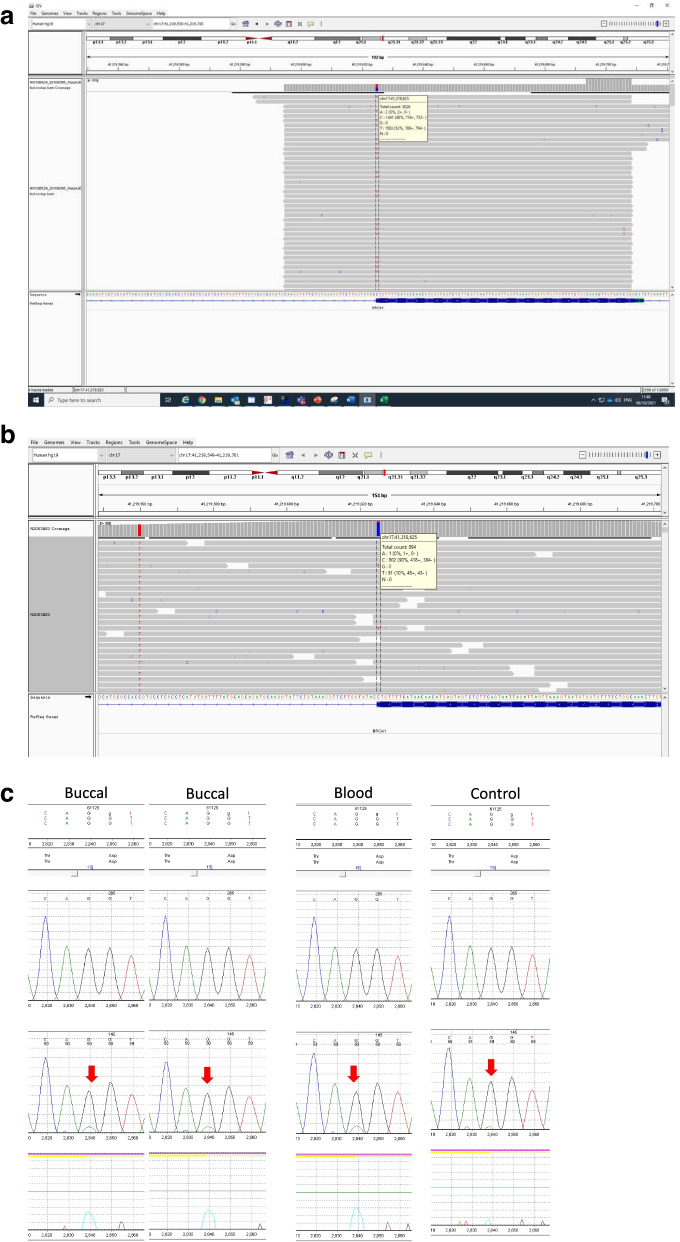
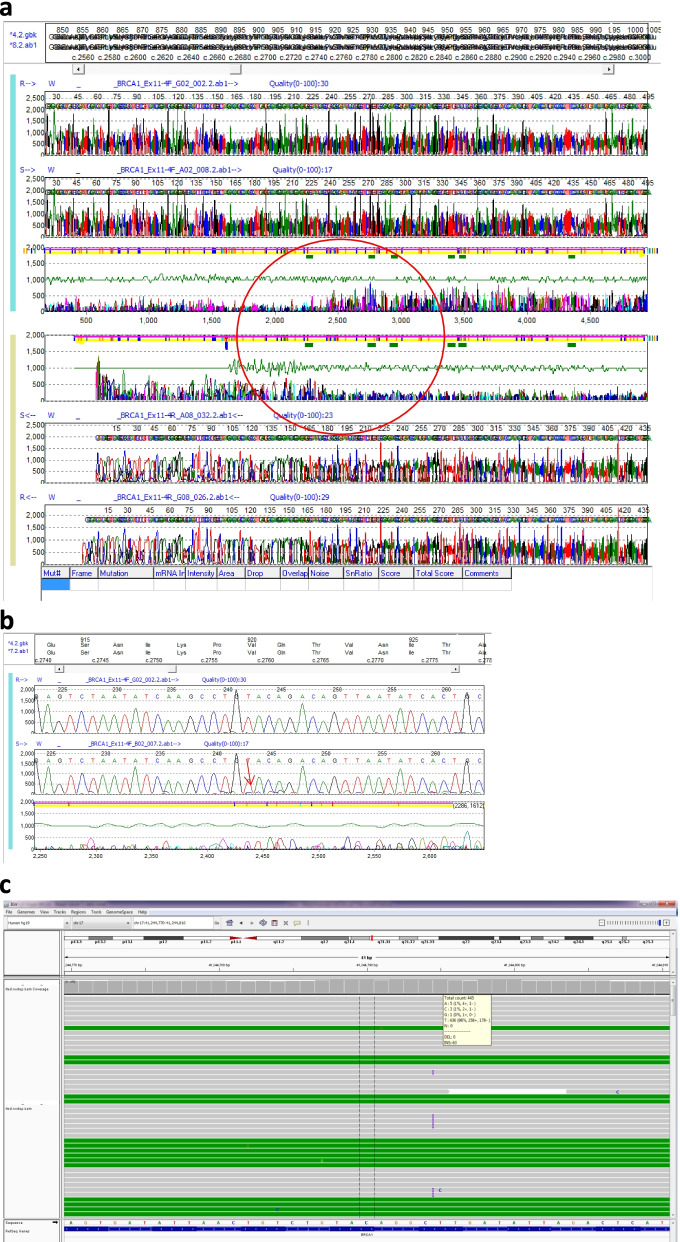
Germline pathogenic variants in BRCA1 and BRCA2 cause hereditary breast and ovarian cancer. The vast majority of these variants are inherited from a parent. De novo constitutional pathogenic variants are rare. Even fewer cases of constitutional mosaicism have been reported and these have mostly been described in women with breast cancer. Here we report low-level constitutional mosaicism identified by Next Generation Sequencing in two women with ovarian cancer. A BRCA1 c.5074G > A p.(Asp1692Asn) variant detected in the first female at 42 years, classed as likely pathogenic, was found in ~ 52% of reads in DNA extracted from tumour, ~ 10% of reads in DNA extracted from peripheral blood leukocytes and ~ 10% of reads in DNA extracted from buccal mucosa. The second BRCA1 c.2755_2758dupCCTG p.(Val920AlafsTer6) variant was detected in a female aged 53 years, classed as pathogenic, and was found in ~ 59% of reads in DNA extracted from tumour, ~ 14% of reads in DNA extracted from peripheral blood leukocytes and similarly in ~ 14% of reads in both DNA extracted from buccal mucosa and urine sample. Sanger sequencing confirmed the presence of these variants at a corresponding low level consistent with mosaicism that may not have been detected by this method alone. This report demonstrates the clinical benefit for two women of BRCA1/BRCA2 germline NGS testing at a depth that can detect low-level mosaicism. As well as informing appropriate treatments, tumour sequencing results may facilitate the detection and interpretation of low-level mosaic variants in the germline. Both results have implications for other cancer risks and for relatives when providing a family cancer risk assessment and reproductive risk. The implications for laboratory practice, clinical genetics management and genetic counselling for constitutional mosaicism of BRCA1/BRCA2 are discussed.
BRCA1和BRCA2基因种系致病性变异会导致遗传性乳腺癌和卵巢癌。这些变异绝大多数是从父母一方遗传而来。新发的体细胞致病性变异很少见。报道的体细胞镶嵌现象病例更少,且大多是在乳腺癌女性患者中描述的。在此,我们报告了通过下一代测序在两名卵巢癌女性患者中鉴定出的低水平体细胞镶嵌现象。在第一名42岁女性中检测到的BRCA1基因c.5074G>A p.(Asp1692Asn)变异,分类为可能致病,在肿瘤提取的DNA中约52%的读数中发现,在外周血白细胞提取的DNA中约10%的读数中发现,在颊黏膜提取的DNA中约10%的读数中发现。第二个BRCA1基因c.2755_2758dupCCTG p.(Val920AlafsTer6)变异在一名53岁女性中检测到,分类为致病,在肿瘤提取的DNA中约59%的读数中发现,在外周血白细胞提取的DNA中约14%的读数中发现,在颊黏膜和尿液样本提取的DNA中同样约14%的读数中发现。桑格测序证实了这些变异在相应低水平的存在,与仅用该方法可能无法检测到的镶嵌现象一致。本报告证明了对两名女性进行深度BRCA1/BRCA2基因种系NGS检测的临床益处,该检测深度可检测低水平镶嵌现象。除了为适当治疗提供信息外,肿瘤测序结果可能有助于检测和解释种系中的低水平镶嵌变异。在提供家族癌症风险评估和生殖风险时,这两个结果对其他癌症风险和亲属都有影响。讨论了BRCA1/BRCA2体细胞镶嵌现象对实验室操作、临床遗传学管理和遗传咨询的影响。