Department of Anesthesiology (B.K., G.S., M.E.S., J.K.F.), Medical College of Wisconsin, Milwaukee.
Cardiovascular Center (B.K., G.S., M.E.S., J.K.F.), Medical College of Wisconsin, Milwaukee.
Hypertension. 2022 Oct;79(10):2250-2261. doi: 10.1161/HYPERTENSIONAHA.122.19862. Epub 2022 Aug 22.
Preclinical studies suggest that S1P (sphingosine-1-phosphate) influences blood pressure regulation primarily through NO-induced vasodilation. Because microvascular tone significantly contributes to mean arterial pressure, the mechanism of S1P on human resistance arterioles was investigated. We hypothesized that S1P induces NO-mediated vasodilation in human arterioles from adults without coronary artery disease (non-coronary artery disease) through activation of 2 receptors, S1PR (S1P receptor 1) and S1PR (S1P receptor 3). Furthermore, we tested whether this mechanism is altered in vessels from patients diagnosed with coronary artery disease.
Human arterioles (50-200 µm in luminal diameter) were dissected from otherwise discarded surgical adipose tissue, cannulated, and pressurized. Following equilibration, resistance vessels were preconstricted with ET-1 (endothelin-1) and changes in internal diameter to increasing concentrations of S1P (10-12 to 10-7 M) in the presence or absence of various inhibitors were measured.
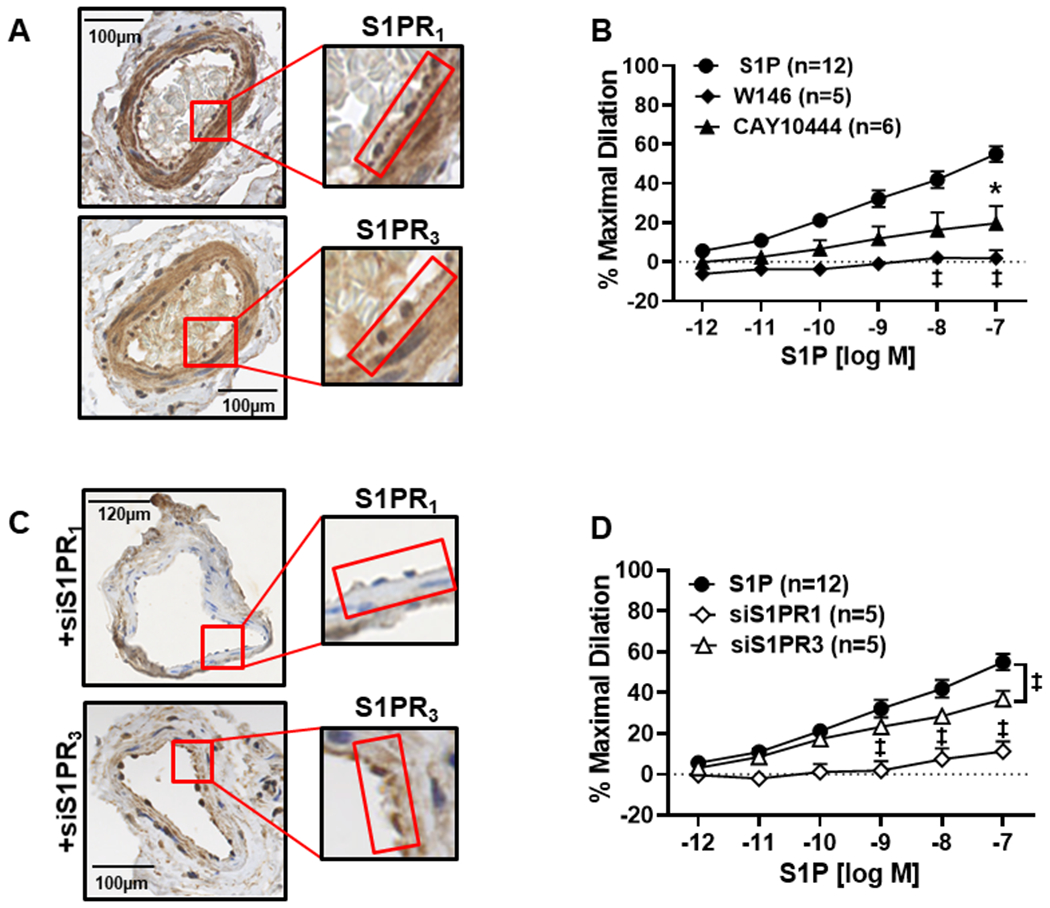
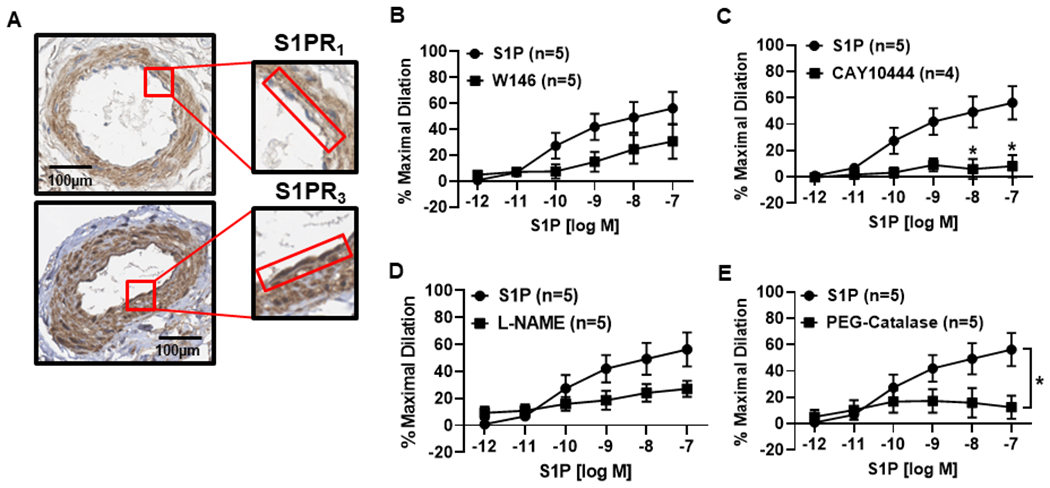
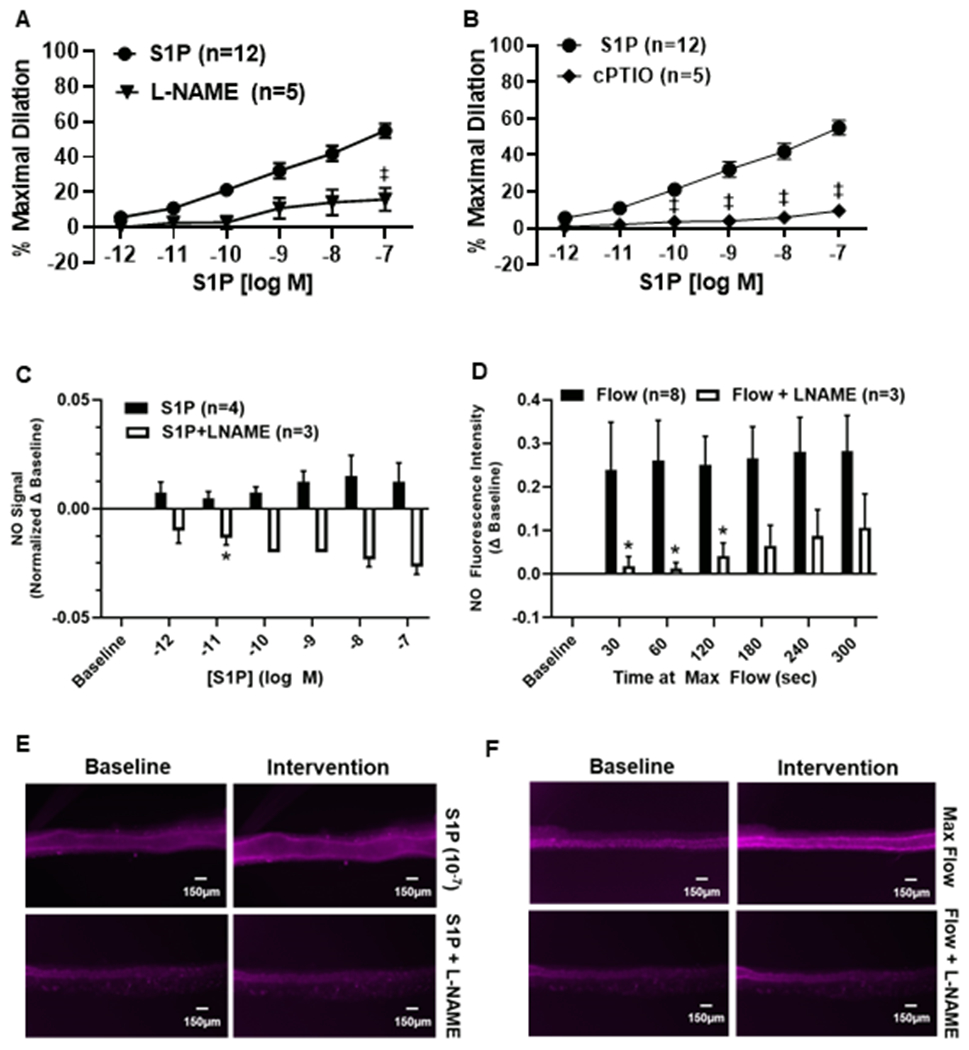
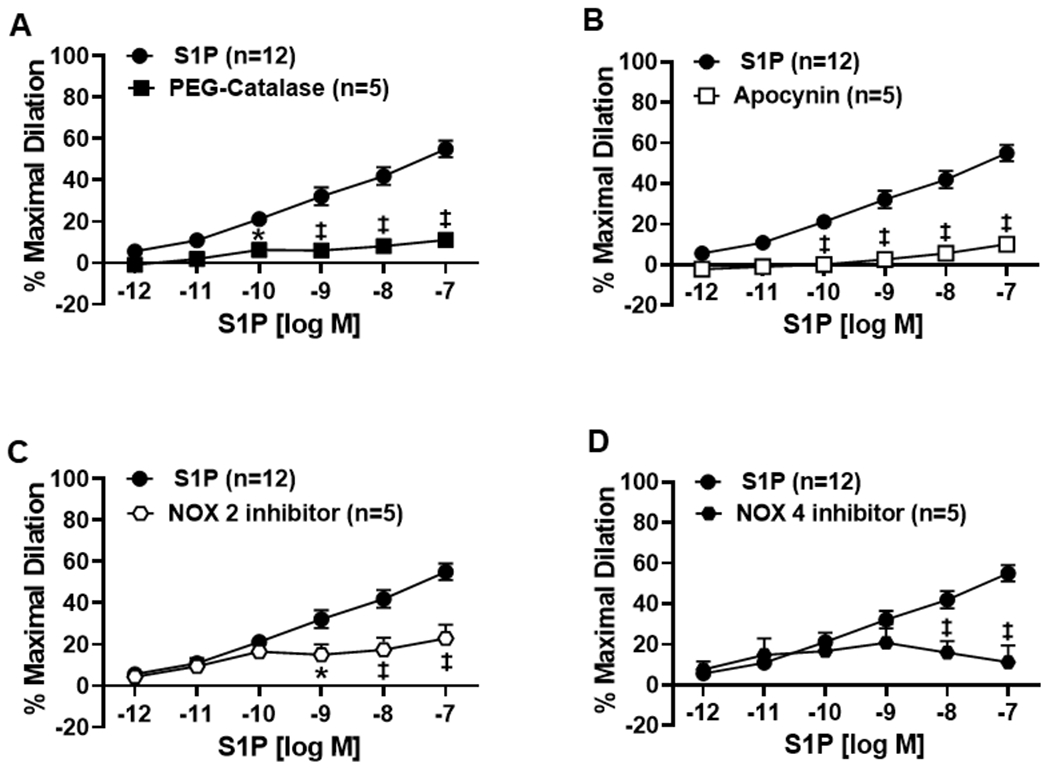
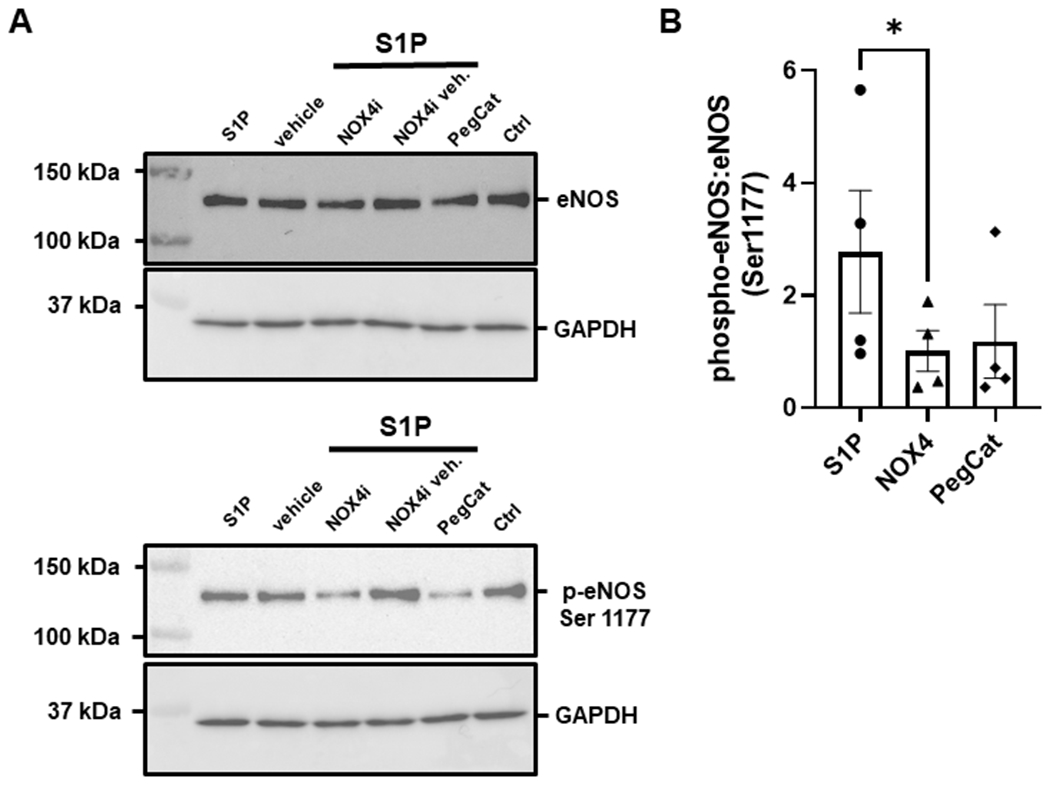
S1P resulted in significant dilation that was abolished in vessels treated with S1PR and S1PR inhibitors and in vessels with reduced expression of each receptor. Dilation to S1P was significantly reduced in the presence of the NOS (NO synthase) inhibitor Nω-nitro-L-arginine methyl ester and the NO scavenger 2-4-(carboxyphenyl)-4,4,5,5-tetramethylimidazoline-1-oxyl-3-oxide. Interestingly, dilation was also significantly impaired in the presence of PEG-catalase (polyethylene glycol-catalase), apocynin, and specific inhibitors of NOX (NADPH oxidases) 2 and 4. Dilation in vessels from patients diagnosed with coronary artery disease was dependent on HO alone which was only dependent on S1PR activation.
These translational studies highlight the inter-species variation observed in vascular signaling and provide insight into the mechanism by which S1P regulates microvascular resistance and ultimately blood pressure in humans.
临床前研究表明,S1P(鞘氨醇-1-磷酸)主要通过诱导一氧化氮(NO)引起的血管舒张来影响血压调节。由于微血管张力对平均动脉压有重要影响,因此研究了 S1P 对人类阻力小动脉的作用机制。我们假设 S1P 通过激活 2 种受体,S1PR(S1P 受体 1)和 S1PR(S1P 受体 3),诱导非冠心病(非冠状动脉疾病)成人的人类小动脉中的 NO 介导的血管舒张。此外,我们还测试了这种机制在诊断为冠心病的患者的血管中是否发生改变。
从小肠脂肪组织中分离出腔内径为 50-200µm 的人类小动脉,进行套管和加压。平衡后,用内皮素-1(ET-1)预收缩阻力血管,测量在存在或不存在各种抑制剂的情况下,血管内径对 S1P(10-12 至 10-7 M)浓度增加的变化。
S1P 导致显著的血管舒张,用 S1PR 和 S1PR 抑制剂处理的血管和表达每种受体减少的血管中,这种舒张作用被消除。在 NOS(一氧化氮合酶)抑制剂 Nω-硝基-L-精氨酸甲酯和 NO 清除剂 2-4-(羧基苯基)-4,4,5,5-四甲基咪唑啉-1-氧-3-氧化物存在的情况下,S1P 引起的舒张作用显著减少。有趣的是,在存在 PEG-过氧化氢酶(聚乙二醇-过氧化氢酶)、阿朴肉桂酸和 NADPH 氧化酶 2 和 4 的特异性抑制剂的情况下,舒张作用也显著受损。从诊断为冠心病的患者的血管中观察到的舒张作用仅依赖于 HO,而 HO 仅依赖于 S1PR 激活。
这些转化研究强调了血管信号中观察到的种间差异,并深入了解 S1P 调节人类微血管阻力并最终调节血压的机制。