Tiongco Rafael Felix P, Puthumana Joseph S, Khan Iman F, Aravind Pathik, Cheah Michael A, Sacks Justin M, Manahan Michele, Cooney Carisa M, Rosson Gedge D
Department of Plastic and Reconstructive Surgery, Johns Hopkins University School of Medicine, Baltimore, USA.
Cureus. 2022 Aug 4;14(8):e27680. doi: 10.7759/cureus.27680. eCollection 2022 Aug.
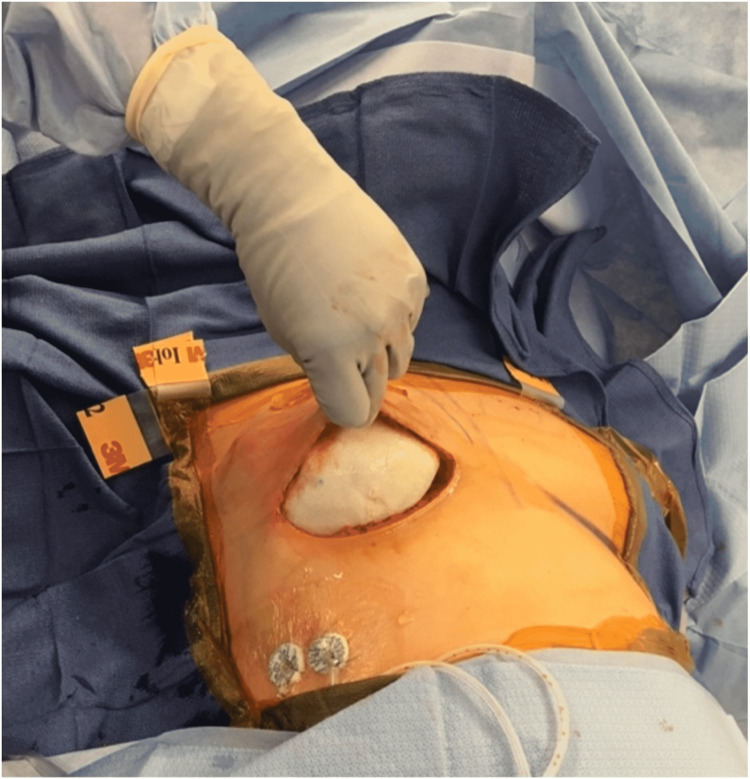
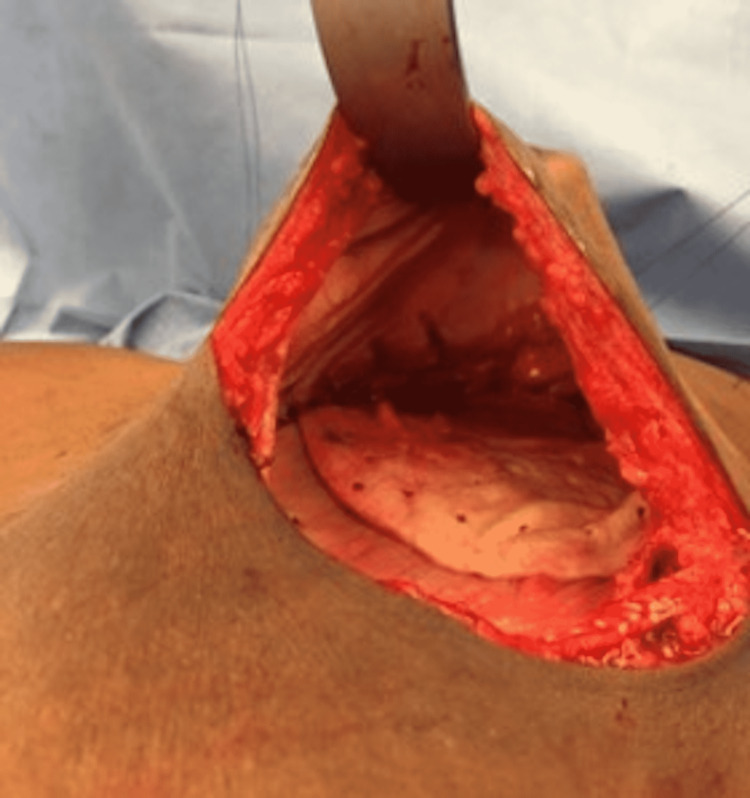
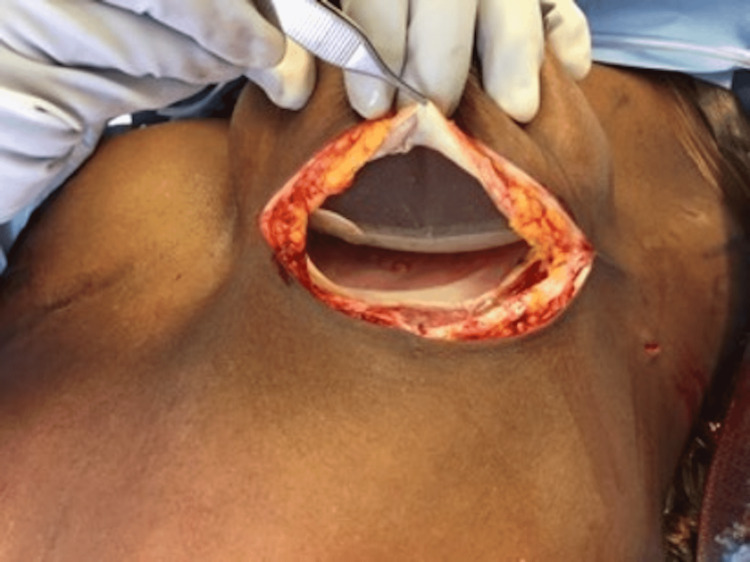
Two-stage tissue expander (TE) to implant breast reconstruction is commonly performed by plastic surgeons. Prepectoral implant placement with acellular dermal matrix (ADM, e.g., AlloDerm®) reinforcement is evidenced by minimal postoperative pain. However, the same is not known for TE-based reconstruction. We performed this study to explore the use of complete AlloDerm® reinforcement of breast pocket tissues in women undergoing unilateral or bilateral mastectomies followed by immediate, two-stage tissue expansion in the prepectoral plane.
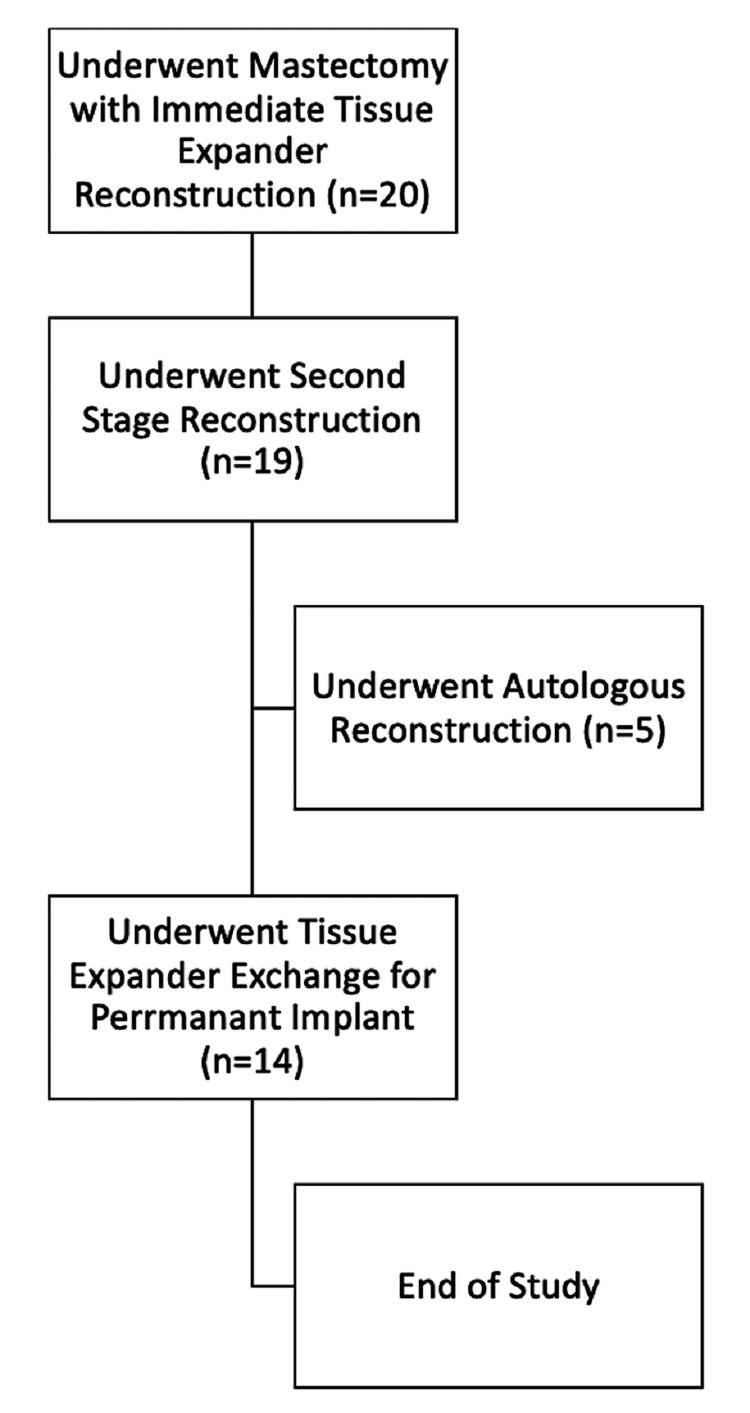
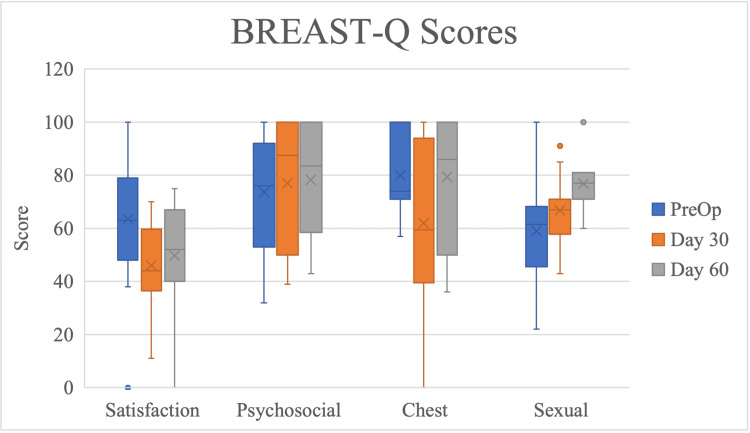
Patients (n = 20) aged 18-75 years were followed prospectively from their preoperative consult to 60 days post-TE insertion. The pain visual analog scale (VAS), Patient Pain Assessment Questionnaire, Subjective Pain Survey, Brief Pain Inventory-Short Form (BPI-SF), postoperative nausea and vomiting (PONV) survey, BREAST-Q Reconstruction Module, and short-form 36 (SF-36) questionnaires were administered. Demographic, intraoperative, and 30- and 60-day complications data were abstracted from medical records. After TE-to-implant exchange, patients were followed until 60 days postoperatively to assess for complications.
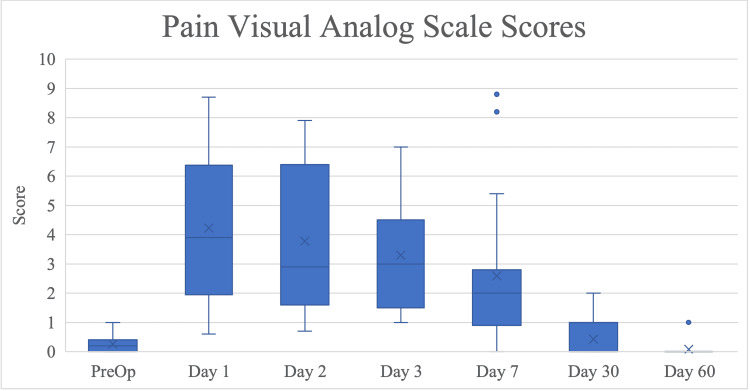
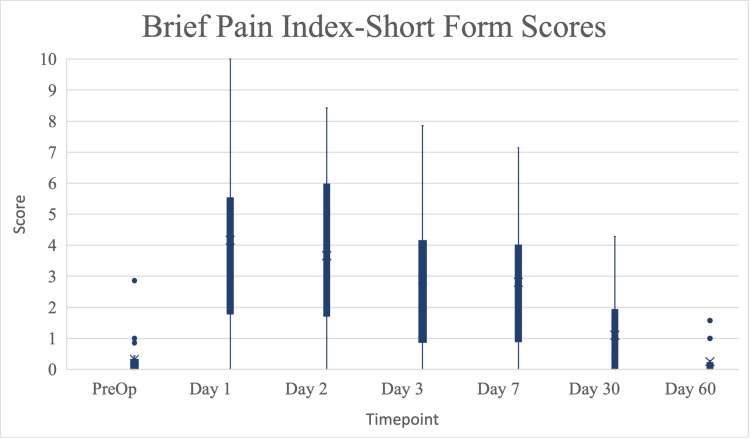
Pain VAS and BPI-SF pain interference scores returned to preoperative values by 30 days post-TE insertion. Static and moving pain scores from the Patient Pain Assessment Questionnaire returned to preoperative baseline values by day 60. The mean subjective pain score was 3.0 (0.5 standard deviation) with seven patients scoring outside the standard deviation; none of these seven patients had a history of anxiety or depression. Median PONV scores remained at 0 from postoperative day 0 to day 7. Patient-reported opioid use dropped from 89.5% to 10.5% by postoperative day 30.
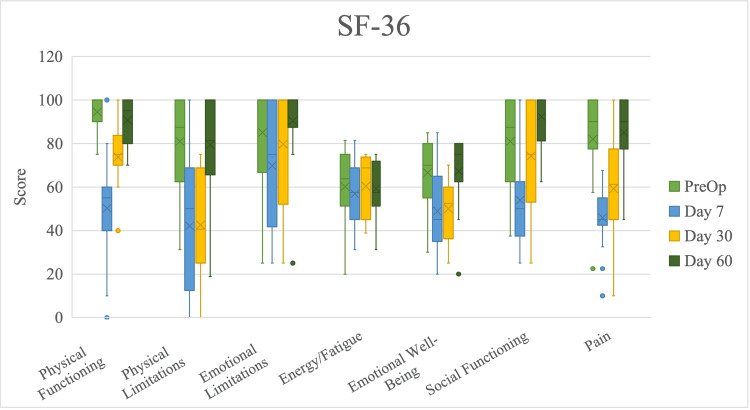
BREAST-Q: Sexual well-being scores significantly increased from preoperative baseline to day 60 post-TE insertion. Changes in SF-36 physical functioning, physician limitations, emotional well-being, social functioning, and pain scores were significantly different from preoperative baseline to day 60 post-TE insertion. Five participants had complications within 60 days post-TE insertion. One participant experienced a complication within 60 days after TE-to-implant exchange.
We describe pain scores, opioid usage, patient-reported outcomes data, and complication profiles of 20 consecutive patients undergoing mastectomy followed by immediate, two-stage tissue expansion in the prepectoral plane. We hope this study serves as a baseline for future research.
整形外科医生通常采用两阶段组织扩张器(TE)进行乳房重建植入手术。采用脱细胞真皮基质(ADM,如AlloDerm®)加固的胸前植入物放置方式术后疼痛轻微。然而,基于TE的重建手术情况尚不清楚。我们开展这项研究,以探讨在接受单侧或双侧乳房切除术并随即在胸前平面进行两阶段组织扩张的女性中,使用AlloDerm®完全加固乳房腔隙组织的情况。
对20例年龄在18 - 75岁的患者进行前瞻性研究,从术前咨询一直跟踪至TE植入后60天。采用疼痛视觉模拟量表(VAS)、患者疼痛评估问卷、主观疼痛调查、简明疼痛问卷简表(BPI - SF)、术后恶心呕吐(PONV)调查、BREAST - Q重建模块和36项简明健康状况调查(SF - 36)问卷。从病历中提取人口统计学、术中以及术后30天和60天的并发症数据。在TE更换为植入物后,对患者进行跟踪直至术后60天,以评估并发症情况。
TE植入后30天,疼痛VAS和BPI - SF疼痛干扰评分恢复到术前值。患者疼痛评估问卷中的静态和动态疼痛评分在第60天恢复到术前基线值。主观疼痛评分均值为3.0(标准差为0.5),7名患者评分超出标准差范围;这7名患者均无焦虑或抑郁病史。术后第0天至第7天,PONV评分中位数均为0。术后第30天,患者报告的阿片类药物使用比例从89.5%降至10.5%。
BREAST - Q:性健康评分从术前基线至TE植入后60天显著增加。从术前基线至TE植入后60天,SF - 36身体功能、医生限制因素影响、情绪健康、社会功能和疼痛评分的变化与术前基线有显著差异。5名参与者在TE植入后60天内出现并发症。1名参与者在TE更换为植入物后60天内出现并发症。
我们描述了20例连续接受乳房切除术并随即在胸前平面进行两阶段组织扩张的患者的疼痛评分、阿片类药物使用情况、患者报告的结局数据和并发症情况。我们希望这项研究能为未来的研究提供一个基线。