Ji Xiaotan, Tian Long, Niu Shenna, Yao Shumei, Qu Chuanqiang
Department of Neurology, Shandong Provincial Hospital, Shandong University, Jinan, China.
Department of Neurology, Jining No. 1 People's Hospital, Jining, China.
Front Aging Neurosci. 2022 Aug 22;14:963876. doi: 10.3389/fnagi.2022.963876. eCollection 2022.
Hypertension is a leading risk factor for cerebral small vessel disease (CSVD), a brain microvessels dysfunction accompanied by white matter lesions (WML). Trimethylamine N-oxide (TMAO), a metabolite of intestinal flora, is correlated with cardiovascular and aging diseases. Here, we explored the effect of TMAO on the demyelination of WML.
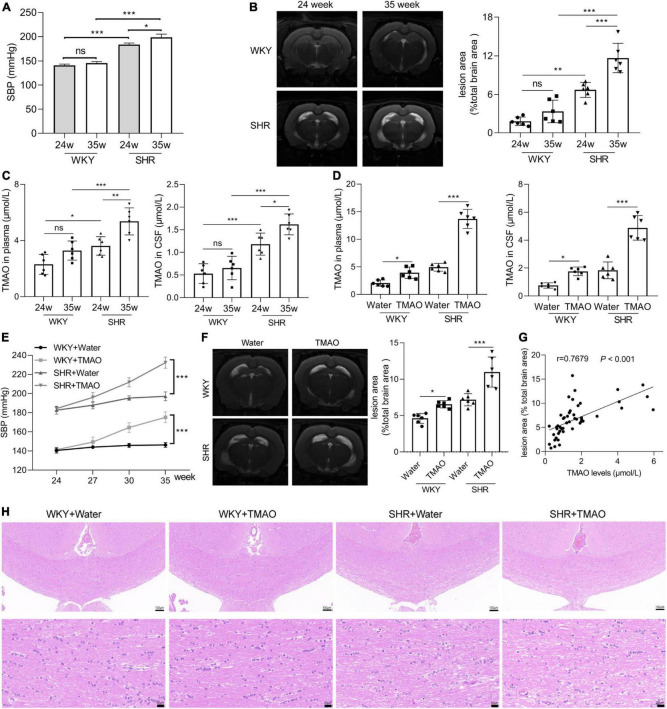
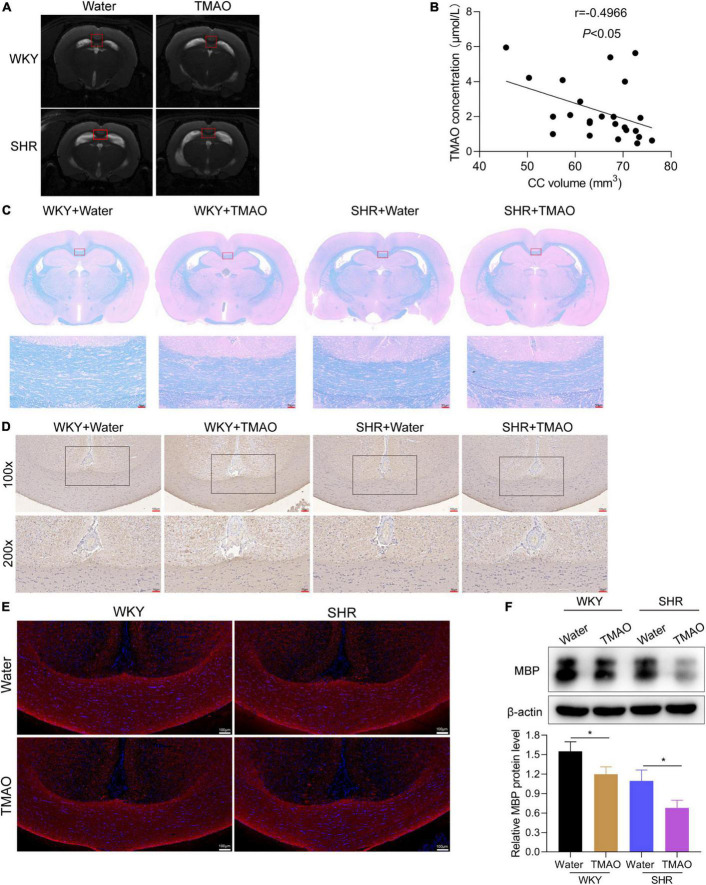
Spontaneous hypertension rats (SHRs) and primary oligodendrocytes were used to explore the effect of TMAO on demyelination and . T2-weighted magnetic resonance imaging (MRI) was applied to characterize the white matter hyperintensities (WMH) in rats. TMAO level was evaluated using LC-MS/MS assay. The histopathological changes of corpus callosum were measured by hematoxylin-eosin and luxol fast blue staining. And the related markers were detected by IHC, IF and western blot assay. Mito Tracker Red probe, DCFH-DA assay, flow cytometry based on JC-1 staining and Annexin V-FITC/PI double staining were conducted to evaluate the mitochondrial function, intracellular ROS levels and cell apoptosis.
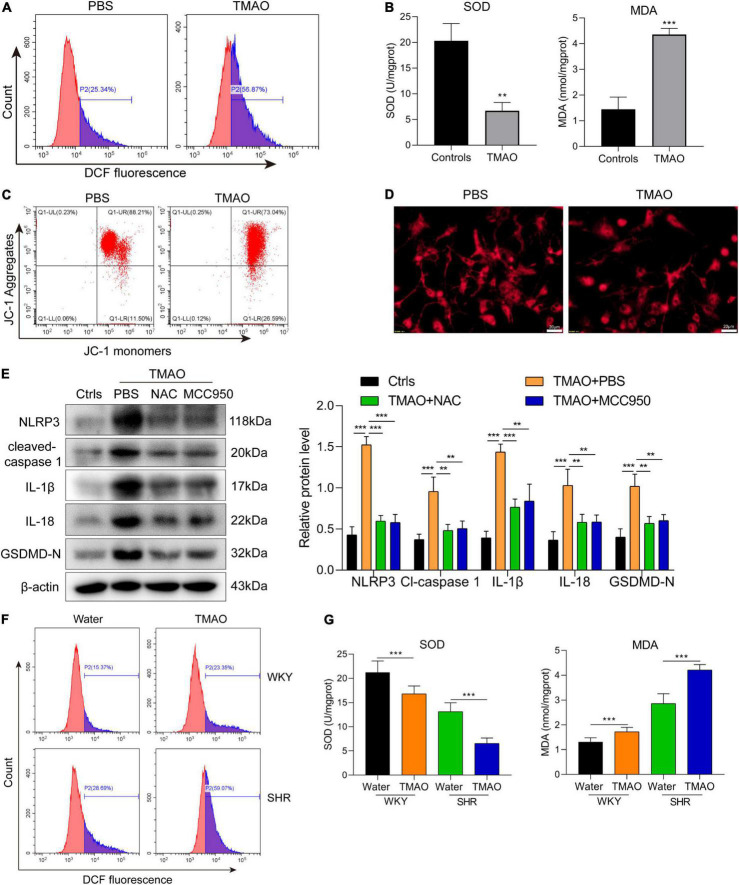
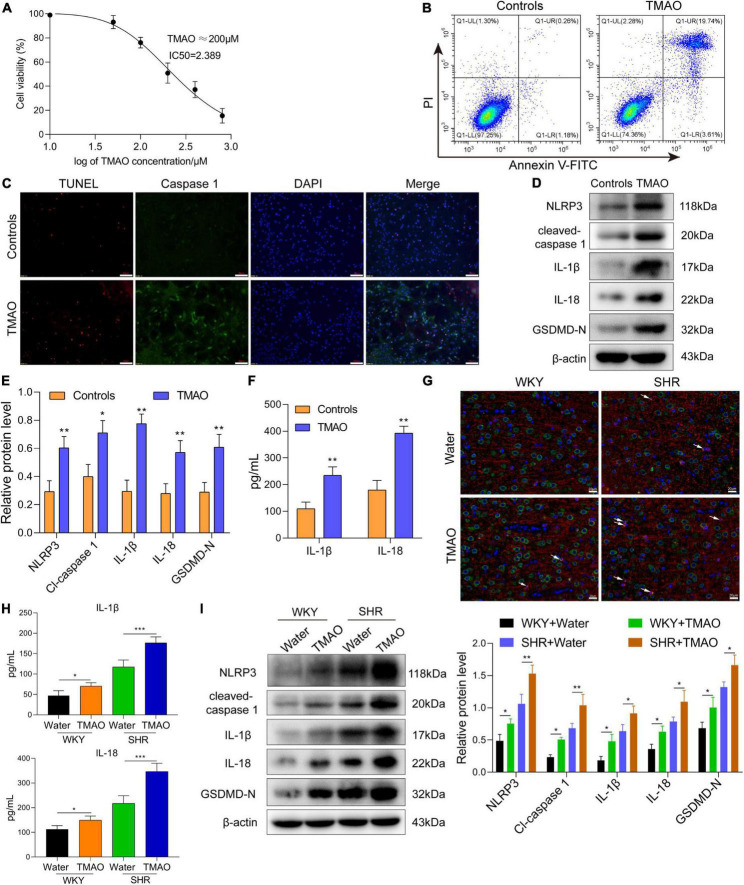
SHRs exhibited stronger WMH signals and a higher TMAO level than age-matched normotensive Wistar-kyoto rats (WKY). The corpus callosum region of SHR showed decreased volumes and enhanced demyelination when treated with TMAO. Furthermore, TMAO significantly elevated ROS production and induced NLRP3 inflammasome and impairment of mitochondrial function of oligodendrocytes. More importantly, TMAO enhanced the pyroptosis-related inflammatory death of oligodendrocytes.
TMAO could cross the blood-brain barrier (BBB) and promote oligodendrocytes pyroptosis ROS/NLRP3 inflammasome signaling and mitochondrial dysfunction to promote demyelination, revealing a new diagnostic marker for WML under hypertension.
高血压是脑小血管病(CSVD)的主要危险因素,脑小血管病是一种伴有白质病变(WML)的脑微血管功能障碍。氧化三甲胺(TMAO)是肠道菌群的一种代谢产物,与心血管疾病和衰老疾病相关。在此,我们探讨了TMAO对WML脱髓鞘的影响。
使用自发性高血压大鼠(SHR)和原代少突胶质细胞来探讨TMAO对脱髓鞘的影响。采用T2加权磁共振成像(MRI)对大鼠白质高信号(WMH)进行表征。使用液相色谱-串联质谱法(LC-MS/MS)检测TMAO水平。通过苏木精-伊红染色和Luxol固蓝染色测量胼胝体的组织病理学变化。并通过免疫组织化学(IHC)、免疫荧光(IF)和蛋白质免疫印迹法检测相关标志物。使用线粒体追踪红探针、2',7'-二氯二氢荧光素二乙酸酯(DCFH-DA)检测、基于JC-1染色的流式细胞术和膜联蛋白V-异硫氰酸荧光素/碘化丙啶(Annexin V-FITC/PI)双染色来评估线粒体功能、细胞内活性氧(ROS)水平和细胞凋亡。
与年龄匹配的正常血压Wistar-Kyoto大鼠(WKY)相比,SHR表现出更强的WMH信号和更高的TMAO水平。用TMAO处理后,SHR的胼胝体区域体积减小,脱髓鞘增强。此外,TMAO显著提高ROS生成,并诱导少突胶质细胞的NLRP3炎性小体和线粒体功能损伤。更重要的是,TMAO增强了少突胶质细胞与焦亡相关的炎性死亡。
TMAO可穿过血脑屏障(BBB),通过ROS/NLRP3炎性小体信号传导和线粒体功能障碍促进少突胶质细胞焦亡,从而促进脱髓鞘,揭示了高血压下WML的一种新诊断标志物。