Zhao Mengjie, Duan Yu, Wang Jiangyun, Liu Yong, Zhao Yao, Wang Haihua, Zhang Lei, Chen Zhe-Sheng, Hu Zhenbo, Wei Liuya
Laboratory for Stem Cell and Regenerative Medicine, Affiliated Hospital of Weifang Medical University, Weifang, China.
School of Pharmacy, Weifang Medical University, Weifang, China.
J Oncol. 2022 Aug 28;2022:3345536. doi: 10.1155/2022/3345536. eCollection 2022.
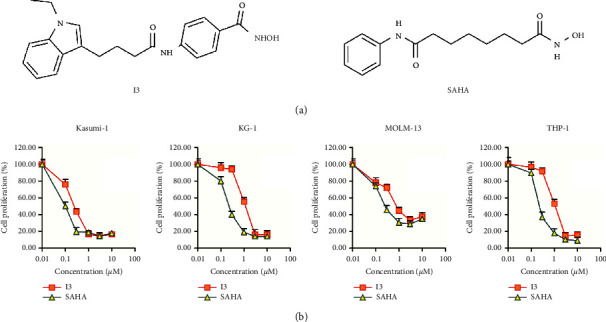
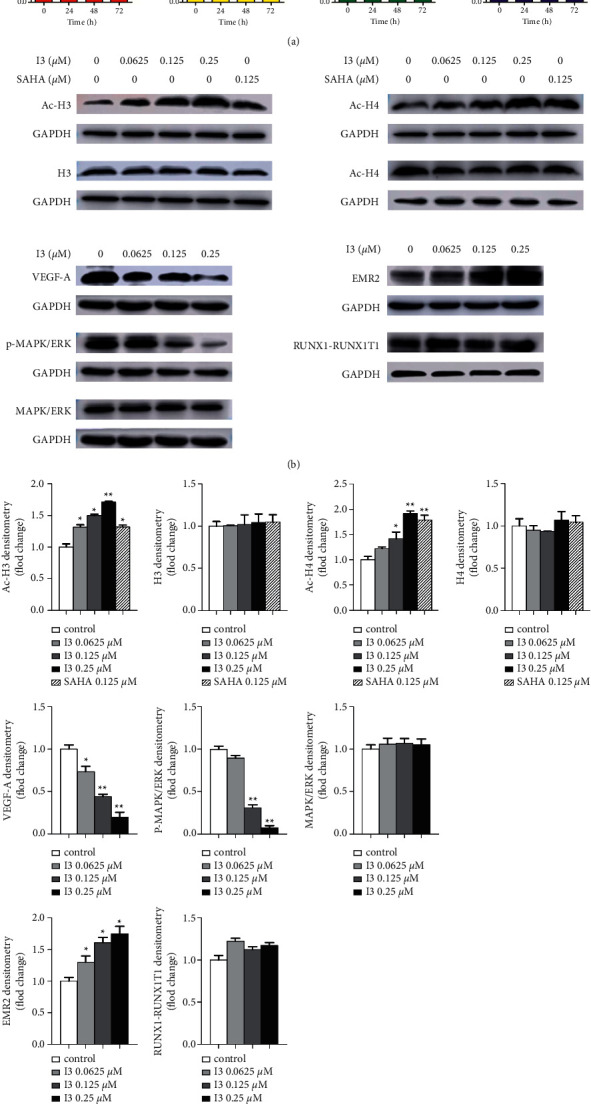
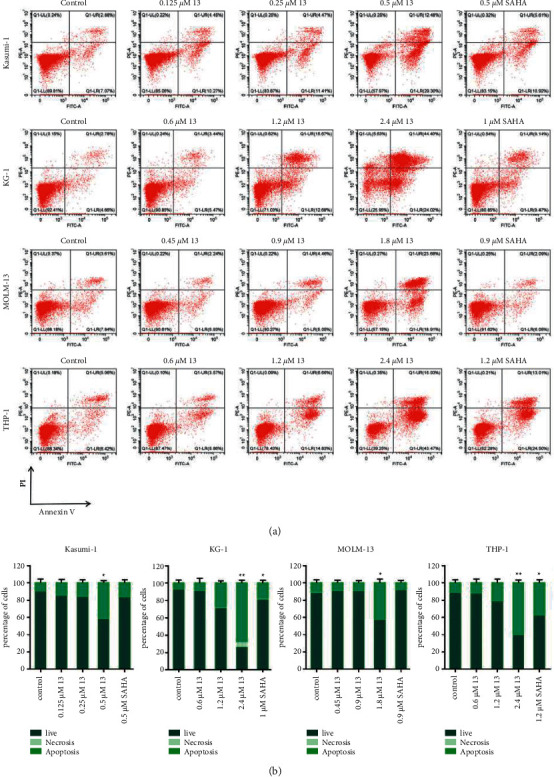
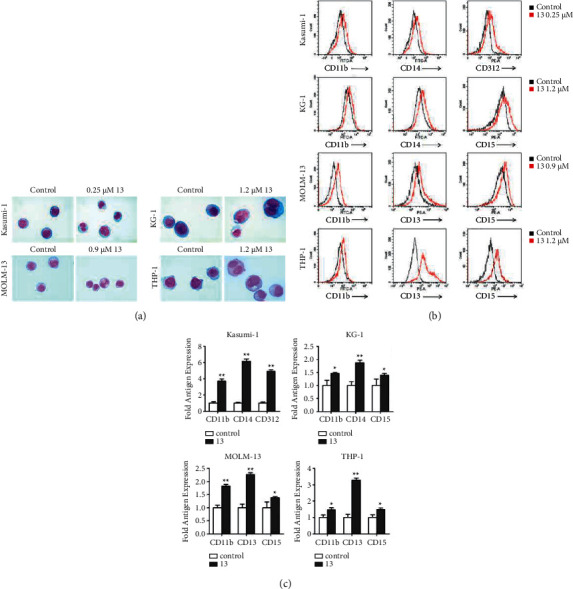
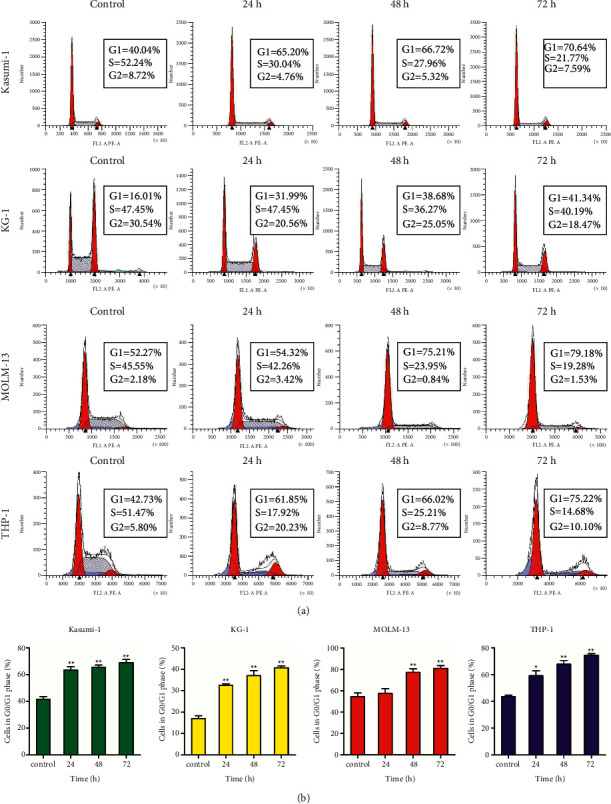
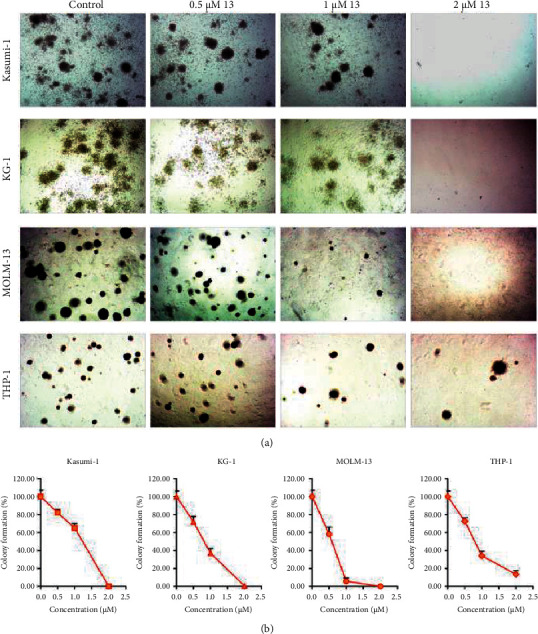
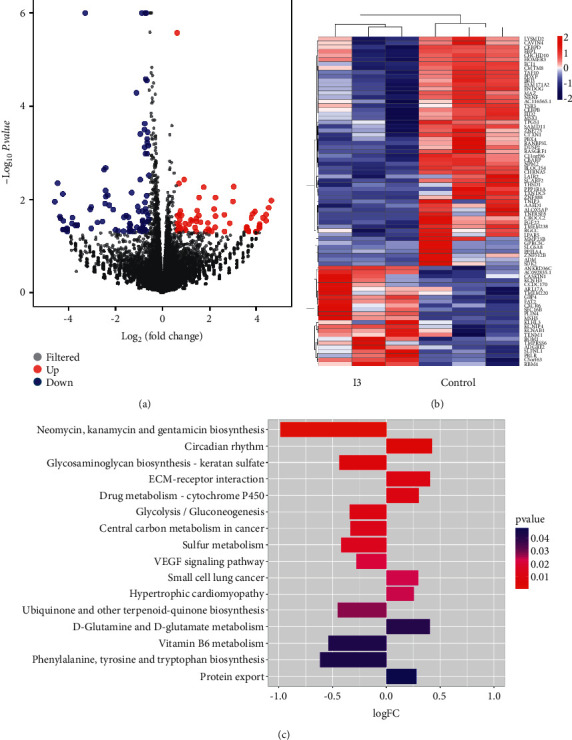
Acute myeloid leukemia (AML) is a heterogeneous disorder characterized by the clonal expansion and differentiation arrest of leukemic cells in peripheral blood and bone marrow. Though the treatment using cytarabine-based protocol for AML patients with (8; 21) translocation has improved the 5-year overall survival rate, drug resistance continues to be the principal limiting factor for the cure of the disease. In addition, very few AML patients with mixed lineage leukemia gene rearrangements (MLLr) have a desirable outcome. This study evaluated the cell differentiation effect of a potent HDAC (histone deacetylase) inhibitor, I3, and its possible mechanism on the AML cells with (8; 21) translocation or MLLr and leukemic stem-like cells (Kasumi-1, KG-1, MOLM-13, and THP-1). I3 exhibited efficient anti-proliferative activity on these cells via promoting cell differentiation, accompanied by the cell cycle exit at 0/1. Importantly, I3 showed the properties of HDAC inhibition, as assessed by the acetylation of histones 3 and 4, which resulted in blocking the activation of the VEGF (vascular endothelial growth factor)-MAPK (mitogen-activated protein kinase) signaling pathway in the Kasumi-1 cell line. These data demonstrate that I3 could be a potent chromatin-remodeling agent to surmount the differentiation block in AML patients, including those with (8; 21) translocation or MLLr, and could be a potent and selective agent for AML treatment.
急性髓系白血病(AML)是一种异质性疾病,其特征为外周血和骨髓中白血病细胞的克隆性增殖和分化停滞。尽管使用基于阿糖胞苷的方案治疗(8;21)易位的AML患者提高了5年总生存率,但耐药性仍然是治愈该疾病的主要限制因素。此外,很少有混合谱系白血病基因重排(MLLr)的AML患者有理想的治疗结果。本研究评估了一种强效组蛋白去乙酰化酶(HDAC)抑制剂I3对具有(8;21)易位或MLLr的AML细胞以及白血病干细胞样细胞(Kasumi-1、KG-1、MOLM-13和THP-1)的细胞分化作用及其可能机制。I3通过促进细胞分化对这些细胞表现出有效的抗增殖活性,并伴有细胞周期停滞在G0/G1期。重要的是,通过组蛋白3和4的乙酰化评估,I3显示出HDAC抑制特性,这导致Kasumi-1细胞系中血管内皮生长因子(VEGF)-丝裂原活化蛋白激酶(MAPK)信号通路的激活受阻。这些数据表明,I3可能是一种强效的染色质重塑剂,可克服AML患者(包括那些具有(8;21)易位或MLLr的患者)的分化障碍,并且可能是一种用于AML治疗的强效且选择性的药物。