Section of Cardiovascular and Renal Research Oslo University Hospital, Ullevaal Oslo Norway.
Department of Nephrology Oslo University Hospital, Ullevaal Oslo Norway.
J Am Heart Assoc. 2022 Sep 20;11(18):e025879. doi: 10.1161/JAHA.121.025879. Epub 2022 Sep 8.
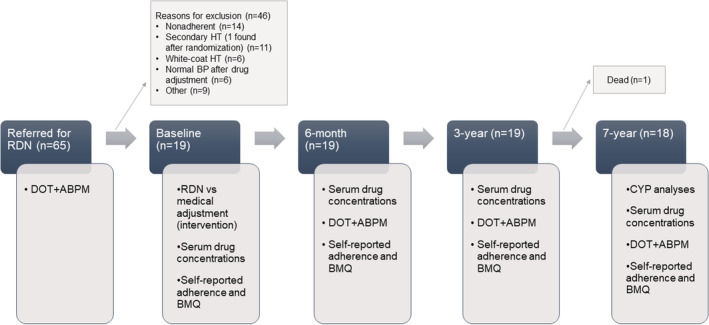
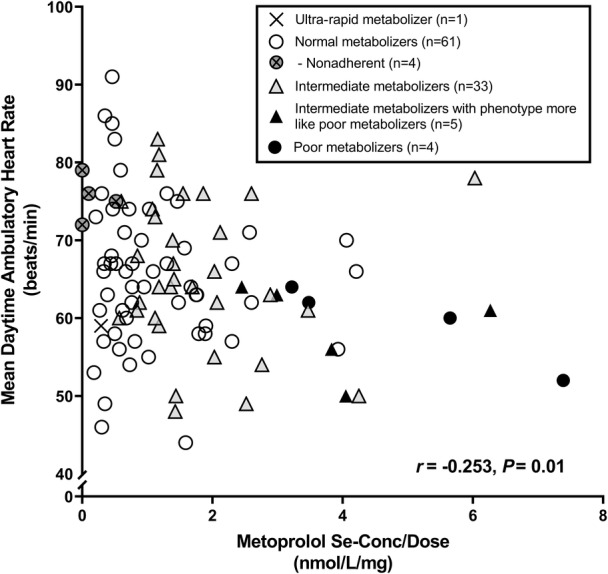
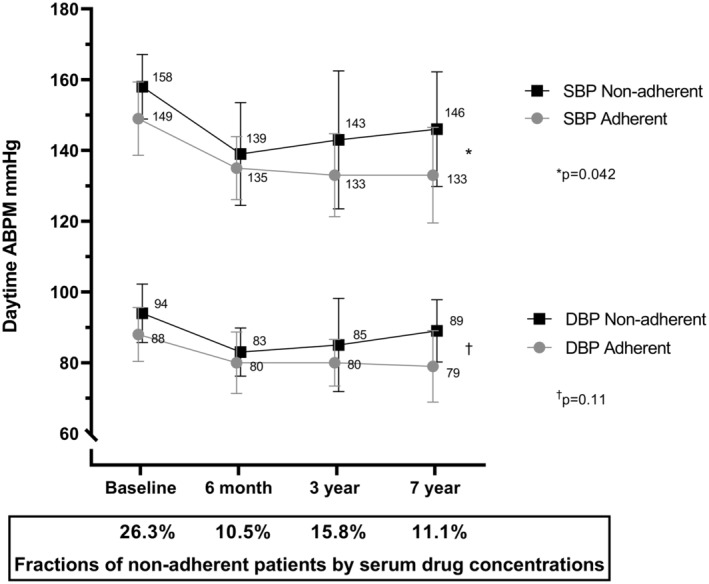
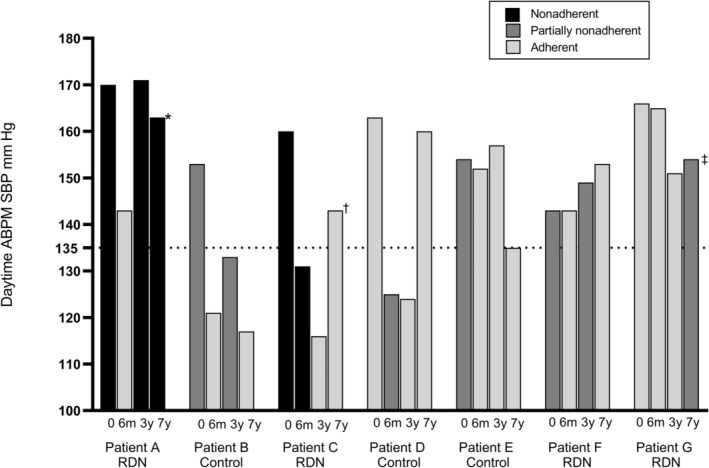
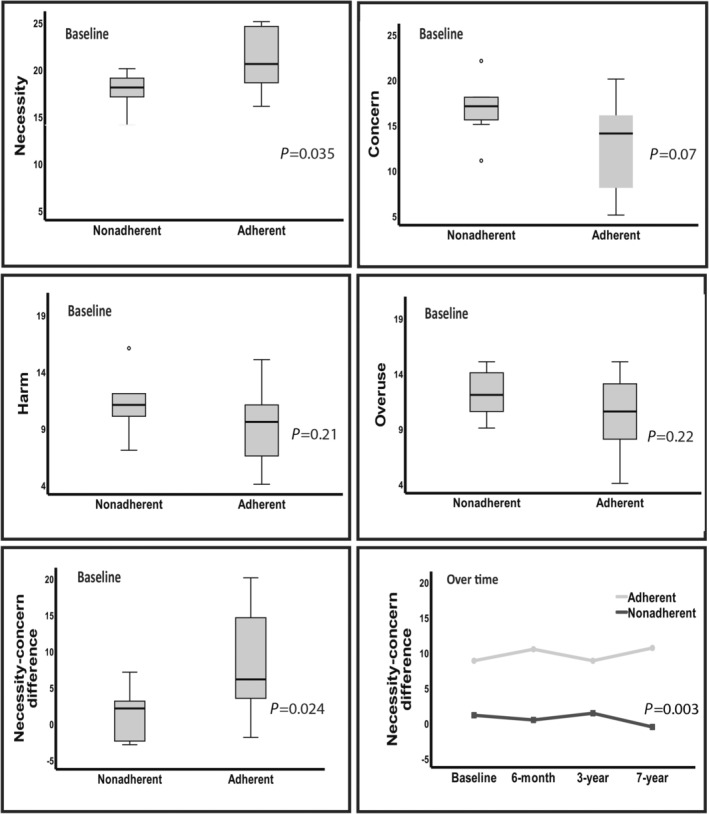
Background Measurement of serum concentrations of drugs is a novelty found useful in detecting poor drug adherence in patients taking ≥2 antihypertensive agents. Regarding patients with treatment-resistant hypertension, we previously based our assessment on directly observed therapy. The present study aimed to investigate whether serum drug measurements in patients with resistant hypertension offer additional information regarding drug adherence, beyond that of initial assessment with directly observed therapy. Methods and Results Nineteen patients assumed to have true treatment-resistant hypertension and adherence to antihypertensive drugs based on directly observed therapy were investigated repeatedly through 7 years. Serum concentrations of antihypertensive drugs were measured by ultra-high-performance liquid chromatography-tandem mass spectrometry from blood samples taken at baseline, 6-month, 3-year, and 7-year visits. Cytochrome P450 polymorphisms, self-reported adherence and beliefs about medicine were performed as supplement investigations. Seven patients (37%) were redefined as nonadherent based on their serum concentrations during follow-up. All patients reported high adherence to medications. Nonadherent patients expressed lower necessity and higher concerns regarding intake of antihypertensive medication (=0.003). Cytochrome P450 polymorphisms affecting metabolism of antihypertensive drugs were found in 16 patients (84%), 21% were poor metabolizers, and none were ultra-rapid metabolizers. Six of 7 patients redefined as nonadherent had cytochrome P450 polymorphisms, however, not explaining the low serum drug concentrations measured in these patients. Conclusions Our data suggest that repeated measurements of serum concentrations of antihypertensive drugs revealed nonadherence in one-third of patients previously evaluated as adherent and treatment resistant by directly observed therapy, thereby improving the accuracy of adherence evaluation. Registration URL: https://www.clinicaltrials.gov; unique identifier: NCT01673516.
测量血清药物浓度是一种新方法,有助于发现服用≥2 种降压药物的患者药物依从性差的情况。对于治疗抵抗性高血压患者,我们之前基于直接观察疗法来评估。本研究旨在探讨在治疗抵抗性高血压患者中,血清药物测量除了直接观察疗法的初始评估外,是否能提供关于药物依从性的额外信息。
19 名被认为患有真正的治疗抵抗性高血压且基于直接观察疗法的患者接受了重复治疗,随访时间长达 7 年。在基线、6 个月、3 年和 7 年就诊时,通过超高效液相色谱-串联质谱法从血液样本中测量了降压药物的血清浓度。还进行了细胞色素 P450 多态性、自我报告的依从性和对药物的信念等补充调查。根据随访期间的血清浓度,有 7 名患者(37%)重新定义为不依从。所有患者均报告了对药物的高度依从性。不依从的患者表达了对服用降压药物的较低需求和更高担忧(=0.003)。发现 16 名患者(84%)存在影响降压药物代谢的细胞色素 P450 多态性,其中 21%为弱代谢者,无超快代谢者。在重新定义为不依从的 7 名患者中,有 6 名患者存在细胞色素 P450 多态性,但这并不能解释这些患者测量的低血清药物浓度。
我们的数据表明,重复测量降压药物的血清浓度揭示了三分之一以前通过直接观察疗法评估为依从性和治疗抵抗性的患者存在不依从,从而提高了依从性评估的准确性。注册网址:https://www.clinicaltrials.gov;唯一标识符:NCT01673516。