Hunan Cancer Hospital/the Affiliated Cancer Hospital of Xiangya School of Medicine, Central South University, Changsha, 410013, China; Department of Microbiology, School of Basic Medical Science, Central South University, Changsha, 410078, China; The Key Laboratory of Carcinogenesis and Cancer Invasion of the Chinese Ministry of Education, NHC Key Laboratory of Carcinogenesis, Cancer Research Institute, Central South University, Changsha, 410078, China; China-Africa Research Center of Infectious Diseases, Central South University, Changsha, 410013, China; Department of Hematology, National Clinical Research Center for Geriatric Disorders, Department of Pathology, Xiangya Hospital, Central South University, Changsha, 410080, China.
Hunan Cancer Hospital/the Affiliated Cancer Hospital of Xiangya School of Medicine, Central South University, Changsha, 410013, China; Department of Microbiology, School of Basic Medical Science, Central South University, Changsha, 410078, China; The Key Laboratory of Carcinogenesis and Cancer Invasion of the Chinese Ministry of Education, NHC Key Laboratory of Carcinogenesis, Cancer Research Institute, Central South University, Changsha, 410078, China.
Virol Sin. 2022 Dec;37(6):913-921. doi: 10.1016/j.virs.2022.09.001. Epub 2022 Sep 6.
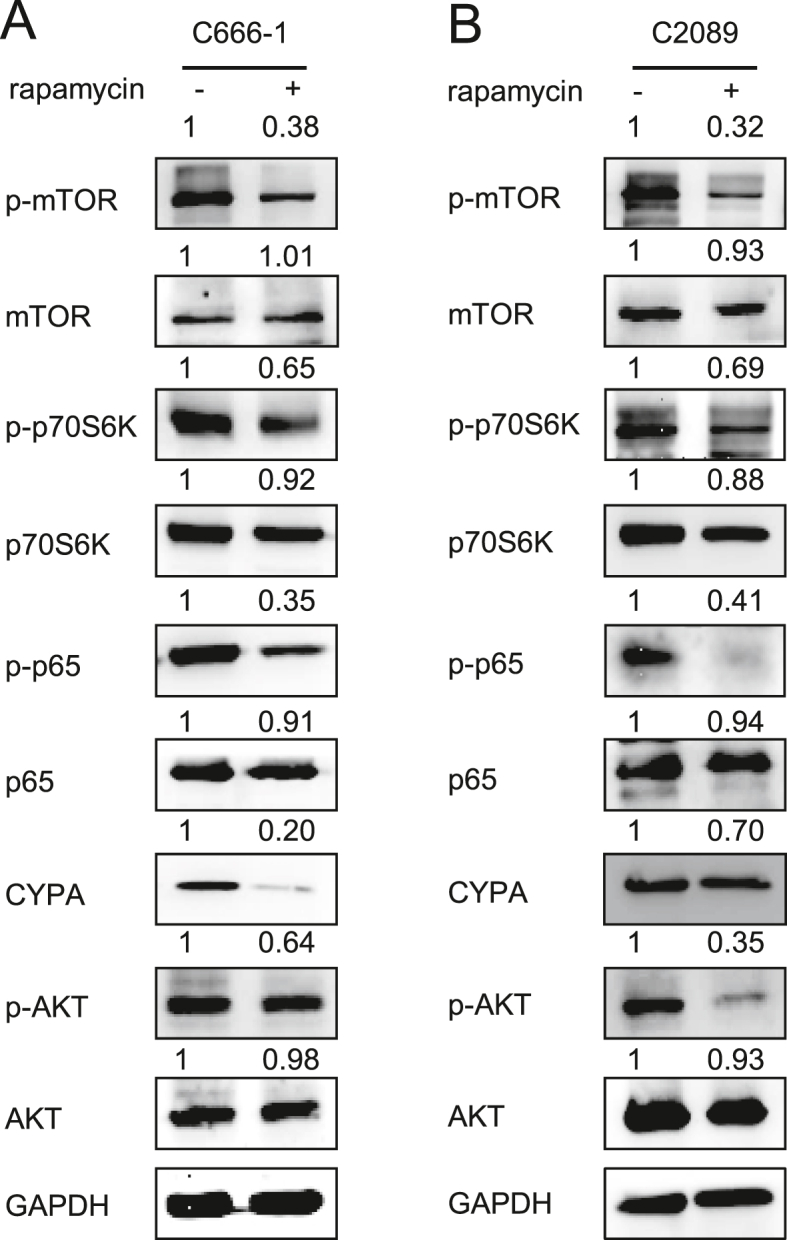
The AKT/mTOR and NF-κB signalings are crucial pathways activated in cancers including nasopharyngeal carcinoma (NPC), which is prevalent in southern China and closely related to Epstein-Barr virus (EBV) infection. How these master pathways are persistently activated in EBV-associated NPC remains to be investigated. Here we demonstrated that EBV-encoded latent membrane protein 1 (LMP1) promoted cyclophilin A (CYPA) expression through the activation of NF-κB. The depletion of CYPA suppressed cell proliferation and facilitated apoptosis. CYPA was able to bind to AKT1, thus activating AKT/mTOR/NF-κB signaling cascade. Moreover, the use of mTOR inhibitor, rapamycin, subverted the activation of the positive feedback loop, NF-κB/CYPA/AKT/mTOR. It is reasonable that LMP1 expression derived from initial viral infection is enough to assure the constant potentiation of AKT/mTOR and NF-κB signalings. This may partly explain the fact that EBV serves as a tumor-promoting factor with minimal expression of the viral oncoprotein LMP1 in malignancies. Our findings provide new insight into the understanding of causative role of EBV in tumorigenicity during latent infection.
AKT/mTOR 和 NF-κB 信号通路是包括鼻咽癌(NPC)在内的多种癌症中被激活的关键通路,NPC 在华南地区较为常见,与 Epstein-Barr 病毒(EBV)感染密切相关。在 EBV 相关 NPC 中,这些主要通路是如何持续激活的仍有待研究。本研究表明,EBV 编码的潜伏膜蛋白 1(LMP1)通过激活 NF-κB 促进亲环素 A(CYPA)的表达。CYPA 的耗竭抑制了细胞增殖并促进了细胞凋亡。CYPA 能够与 AKT1 结合,从而激活 AKT/mTOR/NF-κB 信号级联。此外,使用 mTOR 抑制剂雷帕霉素可破坏正反馈回路 NF-κB/CYPA/AKT/mTOR 的激活。由此推测,最初病毒感染中产生的 LMP1 表达足以确保 AKT/mTOR 和 NF-κB 信号通路的持续增强。这部分解释了 EBV 作为一种促肿瘤因子,在恶性肿瘤中仅表达少量病毒癌蛋白 LMP1 的事实。本研究结果为理解 EBV 在潜伏感染期间致癌作用的因果关系提供了新的认识。