Department of Orthopaedics, Second Affiliated Hospital of Naval Medical University, Shanghai, 200003, China.
Department of Orthopedics, The Third Affiliated Hospital of Guangzhou Medical University, Guangdong, 510140, China.
BMC Urol. 2022 Sep 8;22(1):146. doi: 10.1186/s12894-022-01070-z.
Oblique lumbar interbody fusion (OLIF) surgery has been performed as a minimally invasive lateral lumbar fusion technique in recent years. Reports of operative complications of OLIF are limited, and there are fewer reports of ureteral injuries.
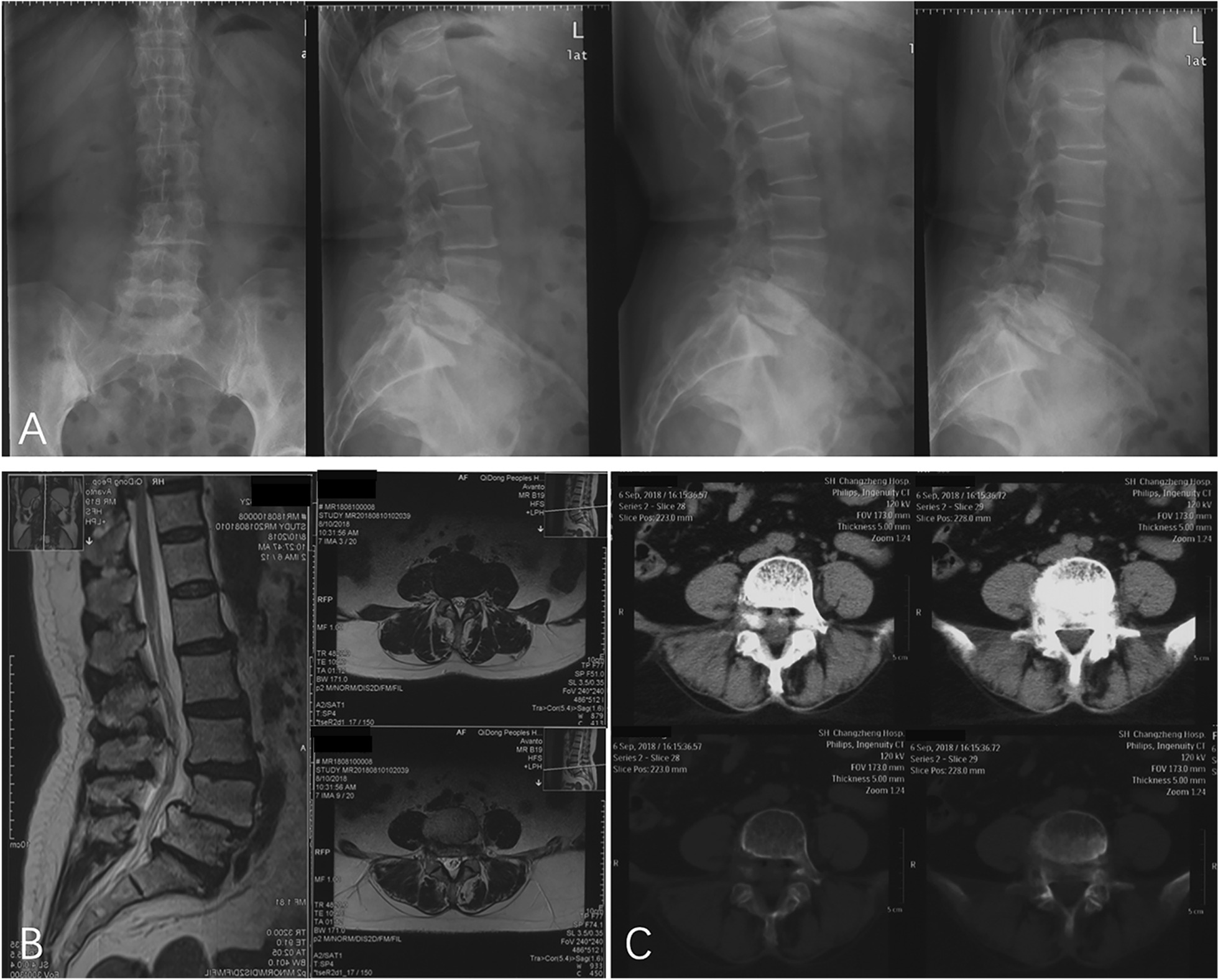
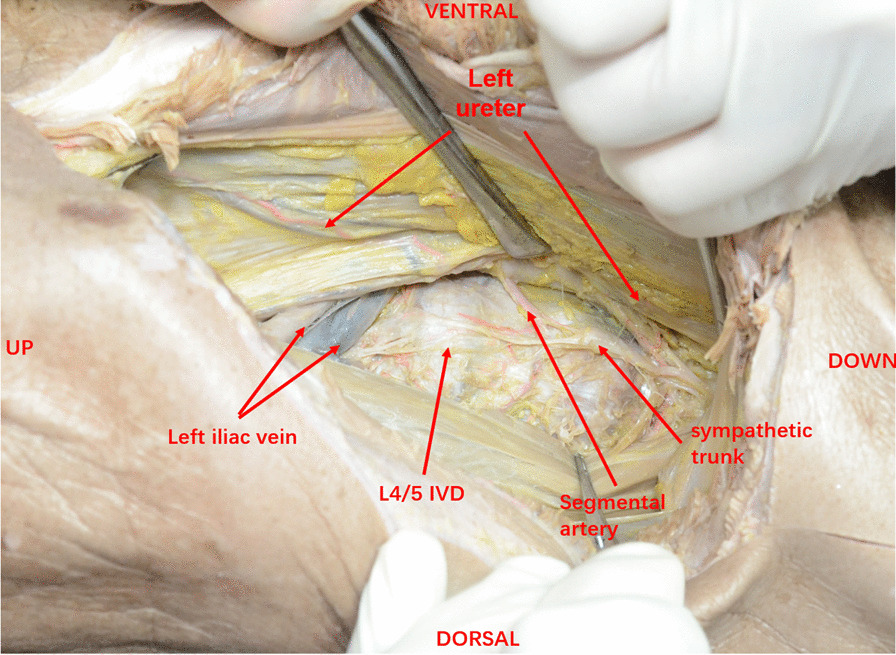
A 62-year-old Chinese woman diagnosed with "lumbar spondylolisthesis (L4 forward slip, I degree)" underwent OLIF treatment. The surgical decompression process was smooth, and the cage was successfully placed. After the expansion sleeve of OLIF was removed, clear liquid continuous outflow from the peritoneum was found. The patient was diagnosed with a ureteral injury. The urological surgeon expanded the original incision, and left ureteral injury anastomosis and ureteral stent implantation were performed. The patient was changed to the prone position and a percutaneous pedicle screw was placed in the corresponding vertebral body. The patient was indwelled with a catheter for 2 weeks, and regular oral administration of levofloxacin to prevent urinary tract infection. After 2 months, the double J tube was removed using a cystoscope. One year after surgery, the symptoms of lumbar back were significantly improved, and there were no urinary system symptoms. However, the patient needed an annual left ureter and kidney B-ultrasound.
Ureteral injury is a rare complication and is easily missed in OLIF surgery. If the diagnosis is missed, the consequences can be serious. Patients should undergo catheterization before the operation and hematuria should be observed during the operation. We emphasize the careful use of surgical instruments to prevent intraoperative complications. In addition, after withdrawing the leaf in the operation, it is necessary to carefully observe whether a clear liquid continues to leak. If ureteral injury is found, one-stage ureteral injury repair operation should be performed to prevent ureteral stricture.
近年来,斜侧腰椎体间融合术(OLIF)已作为一种微创侧方腰椎融合技术进行应用。有关 OLIF 手术并发症的报道有限,且输尿管损伤的报道较少。
一名 62 岁的中国女性,诊断为“腰椎滑脱症(L4 前滑脱,I 度)”,行 OLIF 治疗。手术减压过程顺利, cage 成功置入。OLIF 扩张套管取出后,发现腹膜持续有清亮液体流出。患者被诊断为输尿管损伤。泌尿科医生扩大了原切口,进行了左输尿管损伤吻合和输尿管支架植入术。患者改为俯卧位,相应椎体置入经皮椎弓根螺钉。患者留置导尿管 2 周,定期口服左氧氟沙星以预防尿路感染。2 个月后,使用膀胱镜取出双 J 管。术后 1 年,患者腰痛症状明显改善,无泌尿系统症状。但患者需要每年进行左侧输尿管和肾脏 B 超检查。
输尿管损伤是一种罕见的并发症,在 OLIF 手术中容易被忽视。如果漏诊,后果可能很严重。患者术前应行导尿,术中应观察血尿。我们强调要小心使用手术器械,以防止术中并发症。此外,在操作中取出叶片后,需要仔细观察是否有清亮液体继续漏出。如果发现输尿管损伤,应进行一期输尿管损伤修复手术,以防止输尿管狭窄。