Agakidou Eleni, Agakidis Charalampos, Kontou Angeliki, Chotas William, Sarafidis Kosmas
1st Department of Neonatology and Neonatal Intensive Care, School of Medicine, Faculty of Health Sciences, Aristotle University of Thessaloniki, Ippokration General Hospital, 49 Konstantinoupoleos Str, 54642 Thessaloniki, Greece.
1st Department of Pediatrics, School of Medicine, Faculty of Health Sciences, Aristotle University of Thessaloniki, Ippokration General Hospital, 49 Konstantinoupoleos Str, 54642 Thessaloniki, Greece.
J Clin Med. 2022 Aug 29;11(17):5074. doi: 10.3390/jcm11175074.
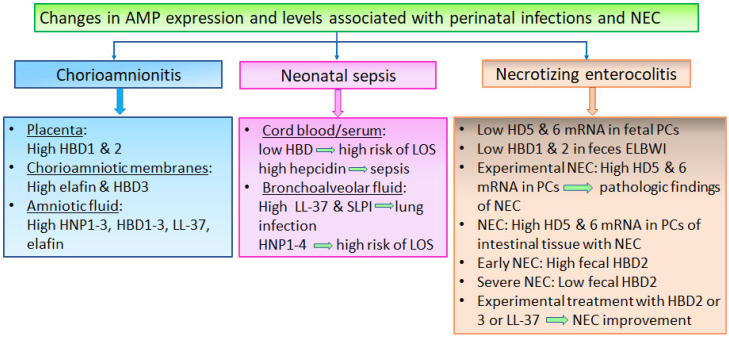
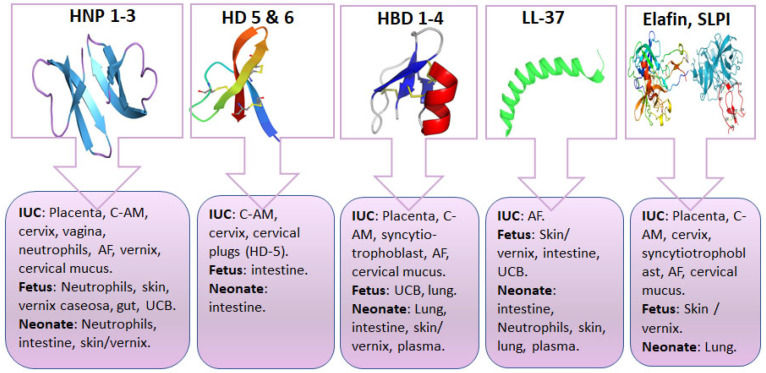
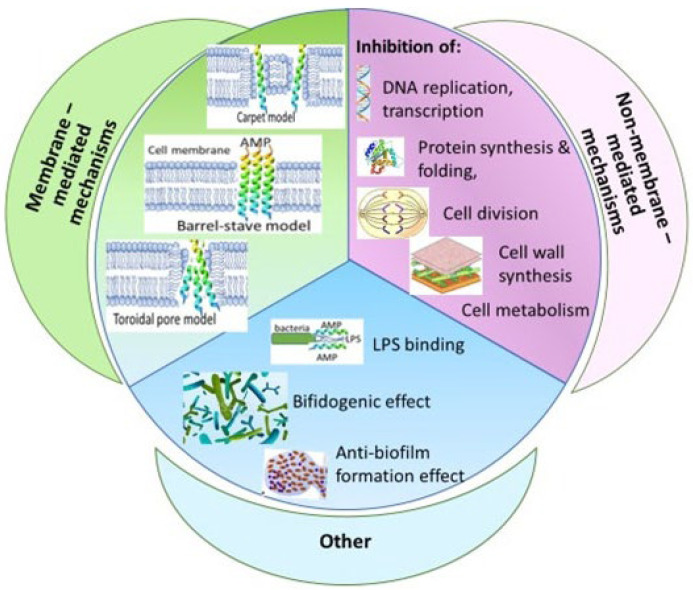
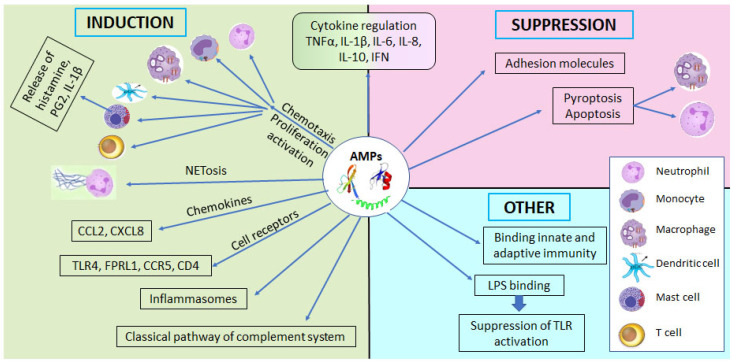
Host defense against early-life infections such as chorioamnionitis, neonatal sepsis, or necrotizing enterocolitis (NEC) relies primarily on innate immunity, in which antimicrobial peptides (AMPs) play a major role. AMPs that are important for the fetus and neonate include α and β defensins, cathelicidin LL-37, antiproteases (elafin, SLPI), and hepcidin. They can be produced by the fetus or neonate, the placenta, chorioamniotic membranes, recruited neutrophils, and milk-protein ingestion or proteolysis. They possess antimicrobial, immunomodulating, inflammation-regulating, and tissue-repairing properties. AMPs are expressed as early as the 13th week and increase progressively through gestation. Limited studies are available on AMP expression and levels in the fetus and neonate. Nevertheless, existing evidence supports the role of AMPs in pathogenesis of chorioamnionitis, neonatal sepsis, and NEC, and their association with disease severity. This suggests a potential role of AMPs in diagnosis, prevention, prognosis, and treatment of sepsis and NEC. Herein, we present an overview of the antimicrobial and immunomodulating properties of human AMPs, their sources in the intrauterine environment, fetus, and neonate, and their changes during pre- and post-natal infections and NEC. We also discuss emerging data regarding the potential utility of AMPs in early-life infections, as diagnostic or predictive biomarkers and as therapeutic alternatives or adjuncts to antibiotic therapy considering the increase of antibiotic resistance in neonatal intensive care units.
机体对诸如绒毛膜羊膜炎、新生儿败血症或坏死性小肠结肠炎(NEC)等早期感染的防御主要依赖先天免疫,其中抗菌肽(AMPs)发挥着主要作用。对胎儿和新生儿重要的抗菌肽包括α和β防御素、杀菌肽LL-37、抗蛋白酶(弹性蛋白酶、分泌性白细胞蛋白酶抑制因子)和铁调素。它们可由胎儿或新生儿、胎盘、绒毛羊膜、募集的中性粒细胞以及通过摄入乳蛋白或蛋白水解产生。它们具有抗菌、免疫调节、炎症调节和组织修复特性。抗菌肽早在第13周就开始表达,并在整个孕期逐渐增加。关于胎儿和新生儿抗菌肽表达及水平的研究有限。然而,现有证据支持抗菌肽在绒毛膜羊膜炎、新生儿败血症和坏死性小肠结肠炎发病机制中的作用,以及它们与疾病严重程度的关联。这表明抗菌肽在败血症和坏死性小肠结肠炎的诊断、预防、预后及治疗中具有潜在作用。在此,我们概述了人类抗菌肽的抗菌和免疫调节特性、它们在子宫内环境、胎儿和新生儿中的来源,以及它们在产前和产后感染及坏死性小肠结肠炎期间的变化。我们还讨论了有关抗菌肽在早期感染中的潜在用途的新数据,即作为诊断或预测生物标志物,以及作为治疗选择或抗生素治疗的辅助手段,考虑到新生儿重症监护病房中抗生素耐药性的增加。