Gao Hongli, Lin Zhiyuan, Huang Xinwei, Shang Hongbin, Zhan Jingsong
Key Laboratory of Special Equipment Manufacturing, Advanced Processing Technology of the Ministry 5 of Education, Zhejiang University of Technology, Hangzhou 310023, China.
Materials (Basel). 2022 Sep 2;15(17):6114. doi: 10.3390/ma15176114.
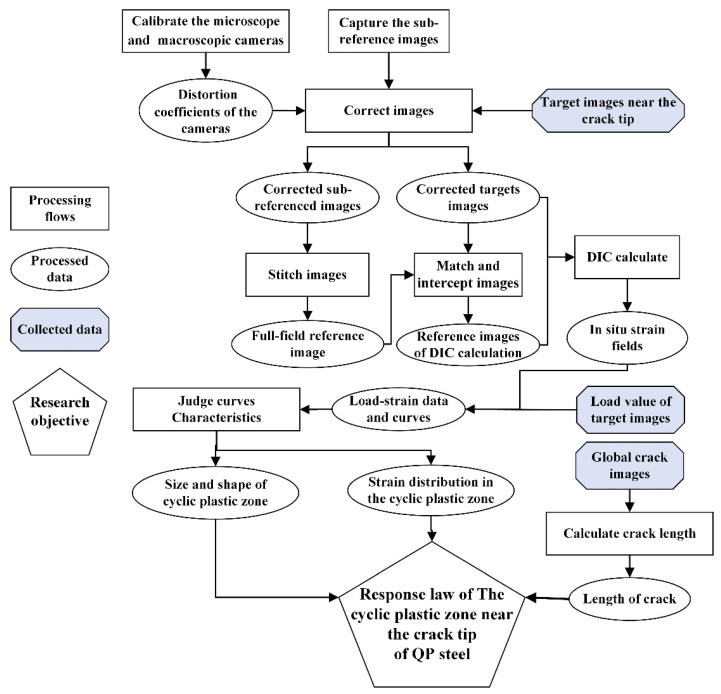
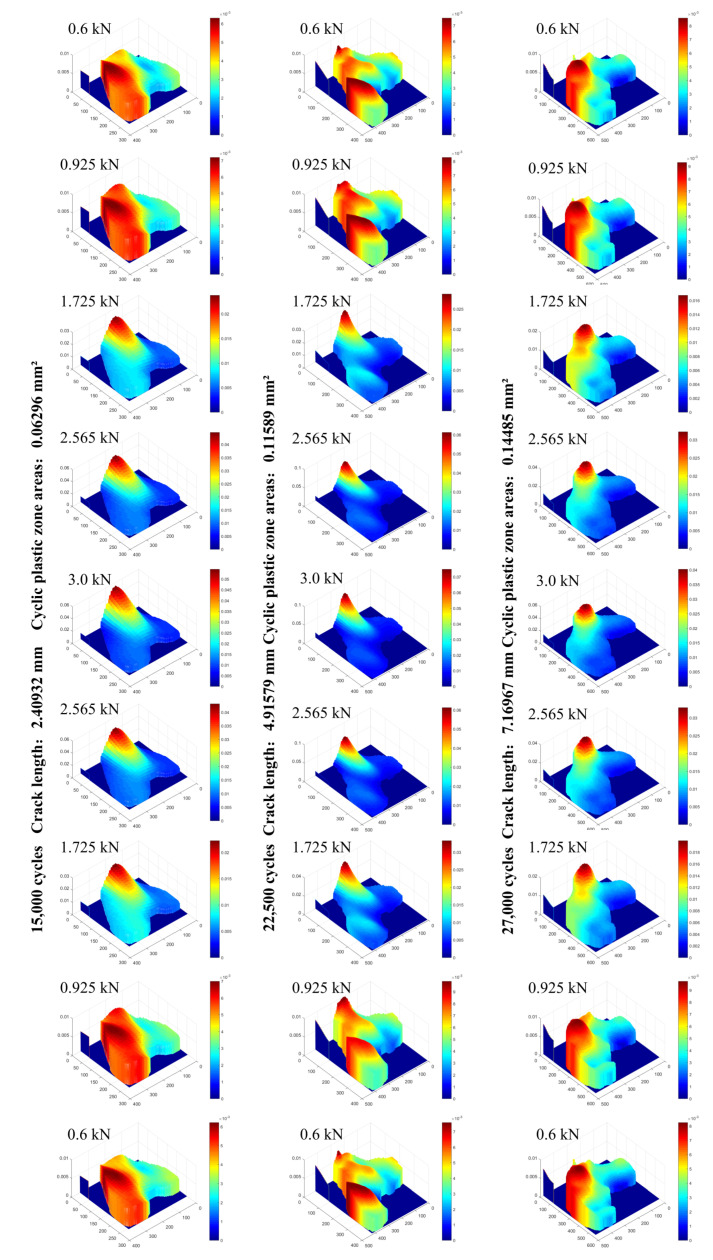
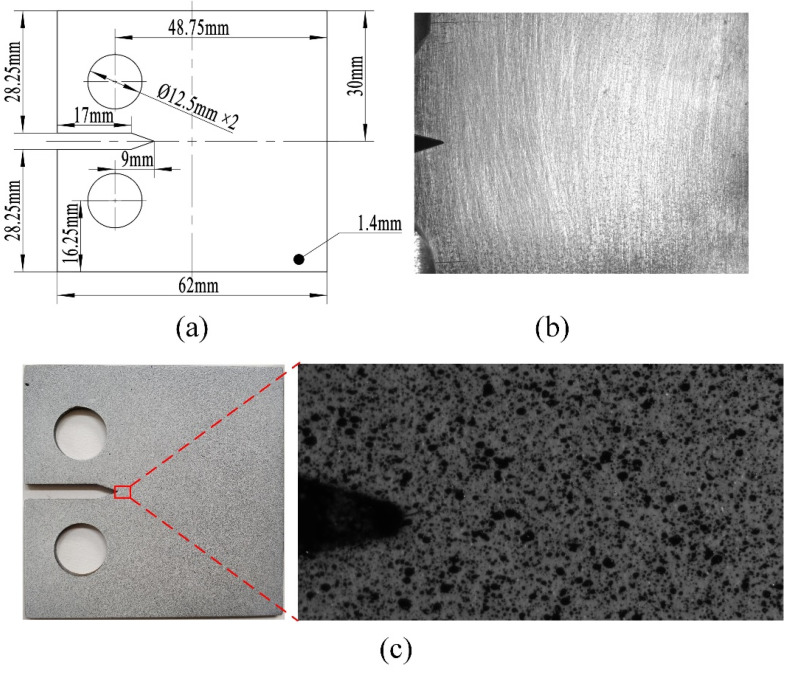
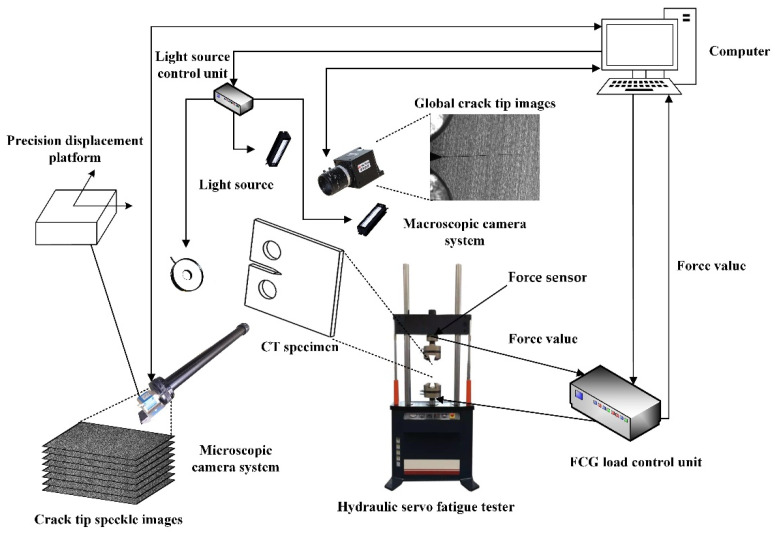
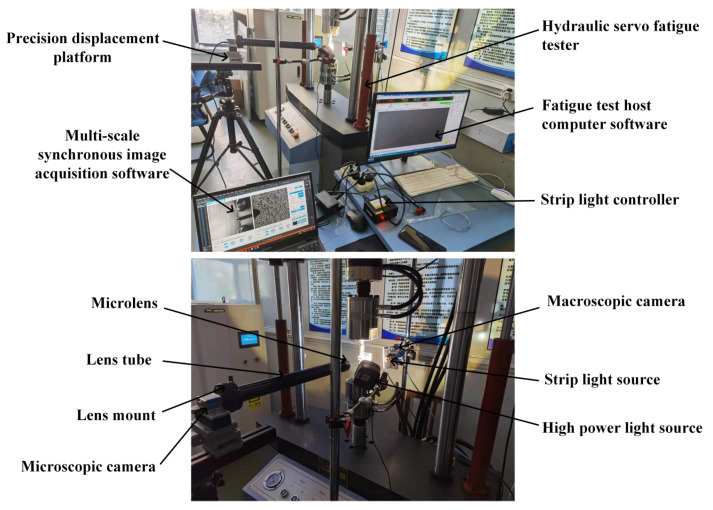
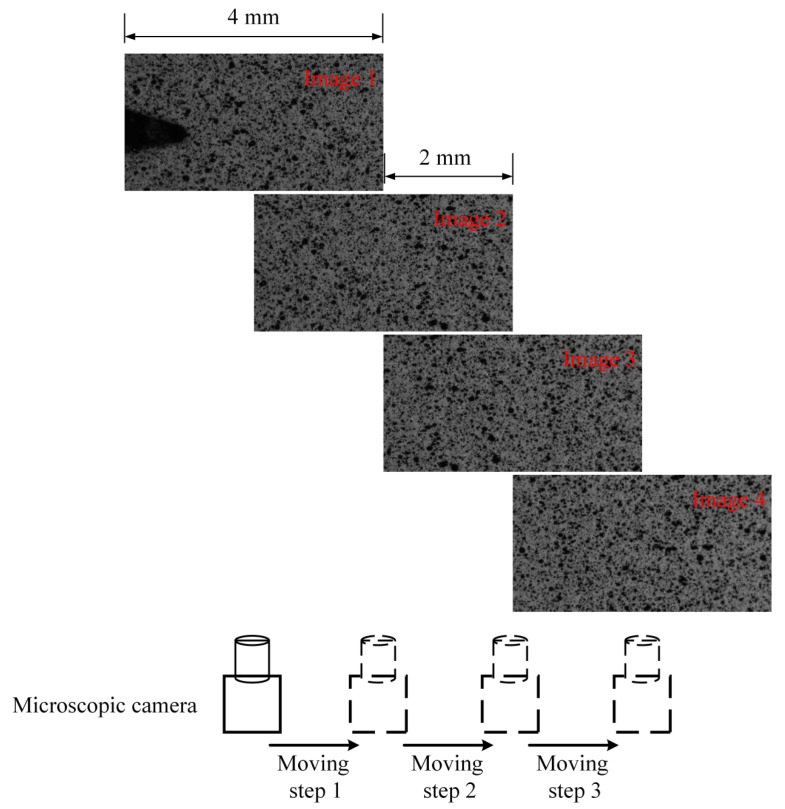
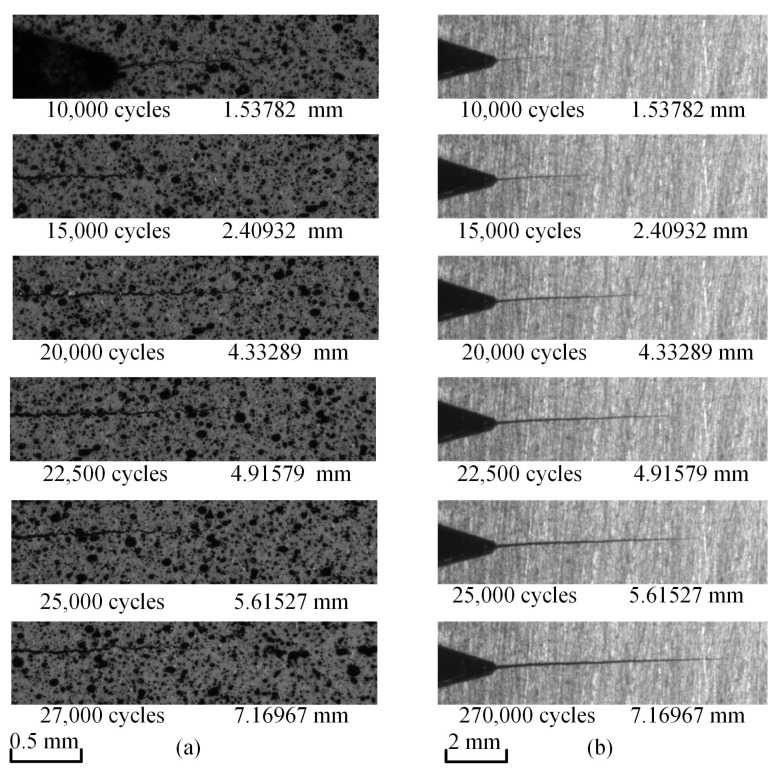
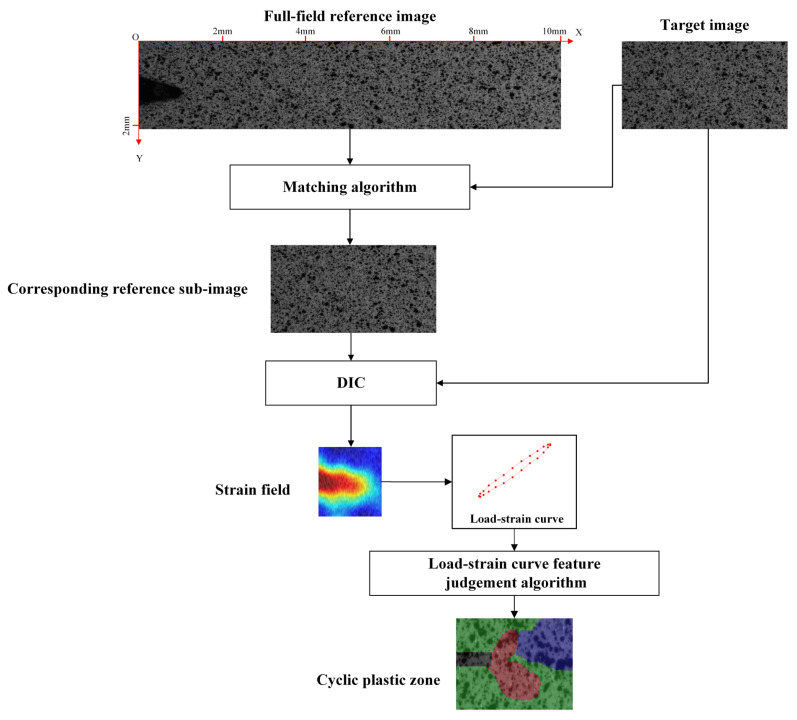
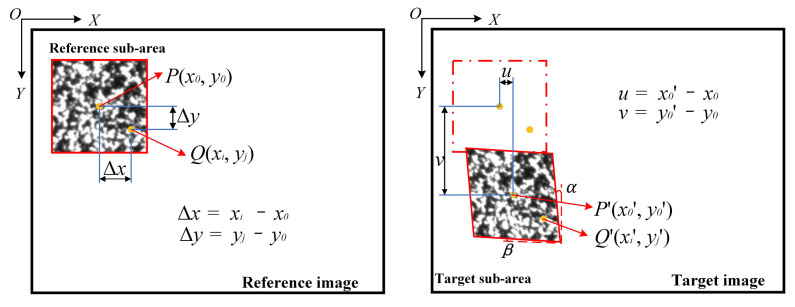
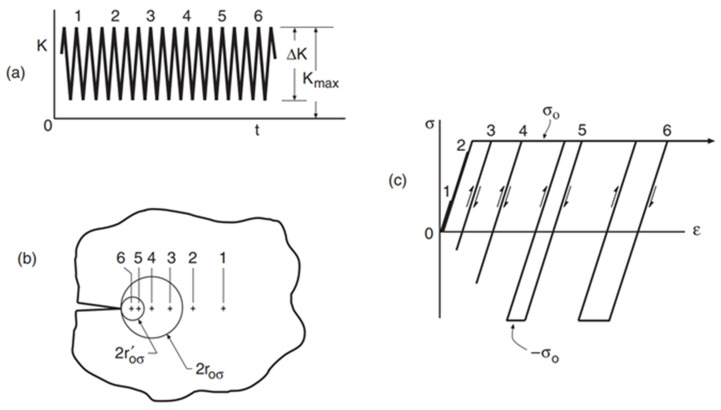
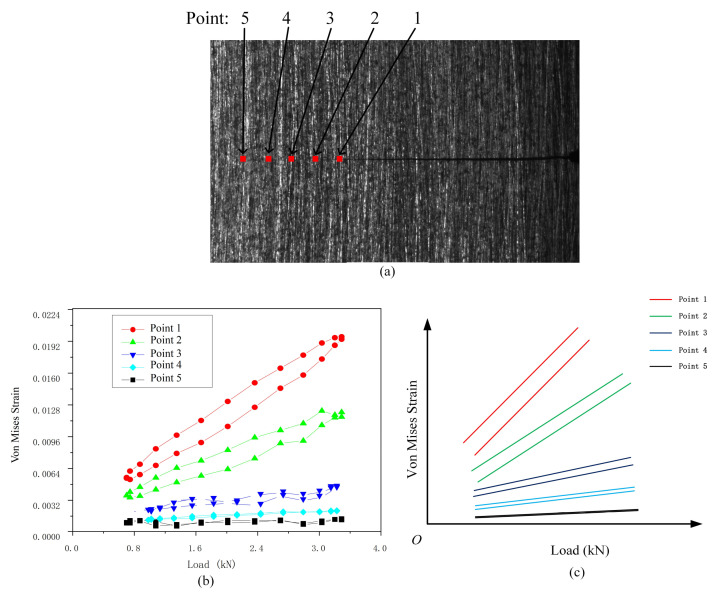
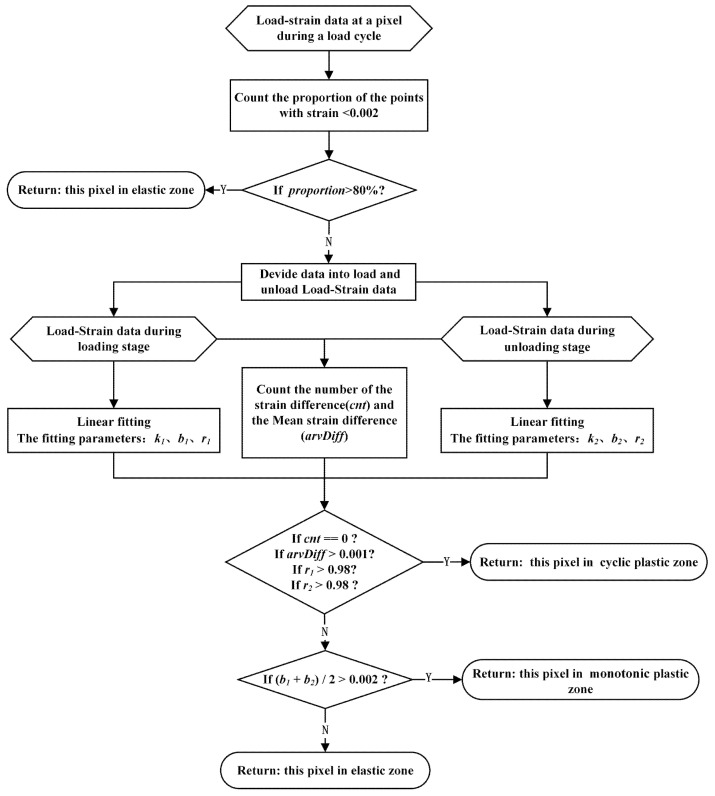
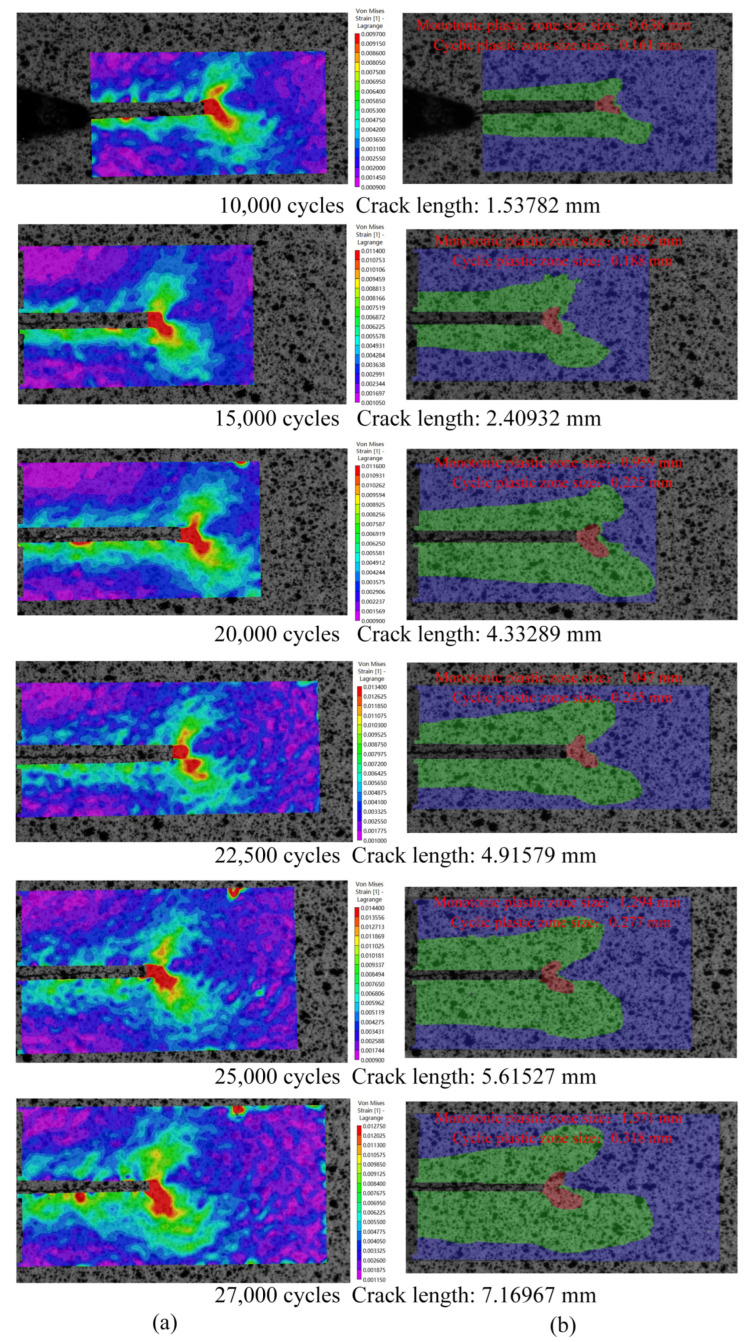
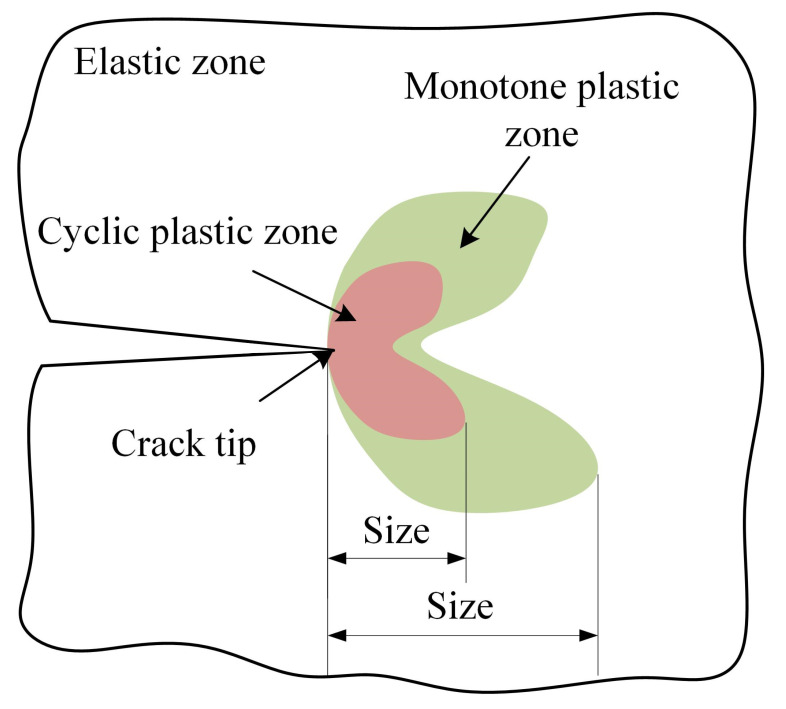
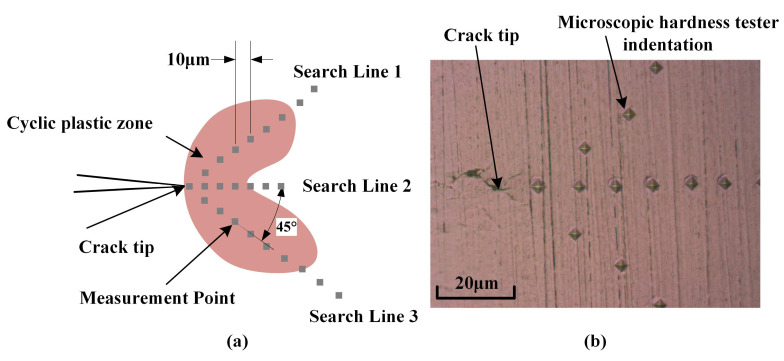
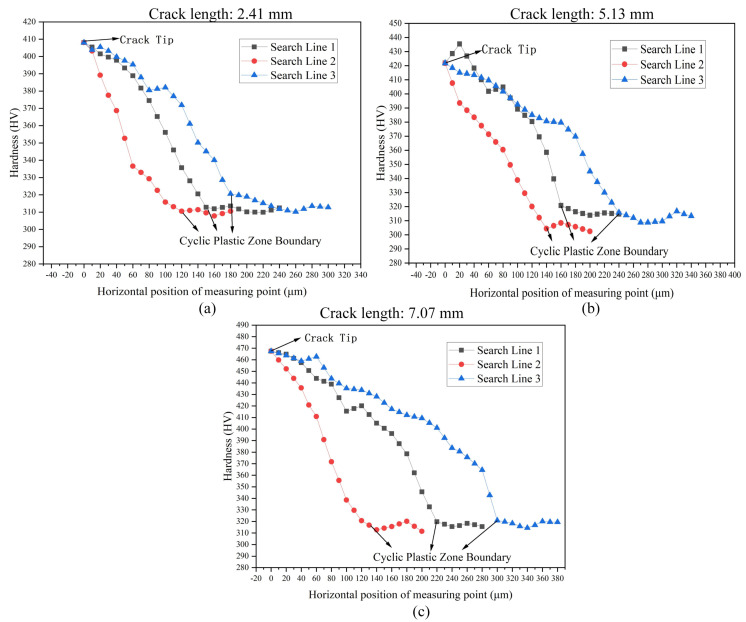
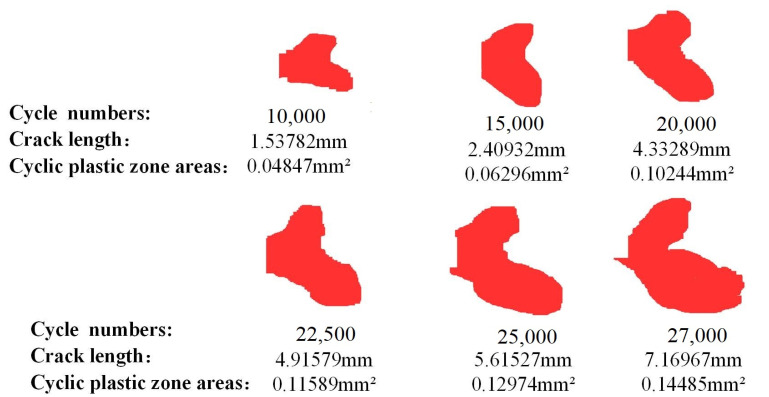
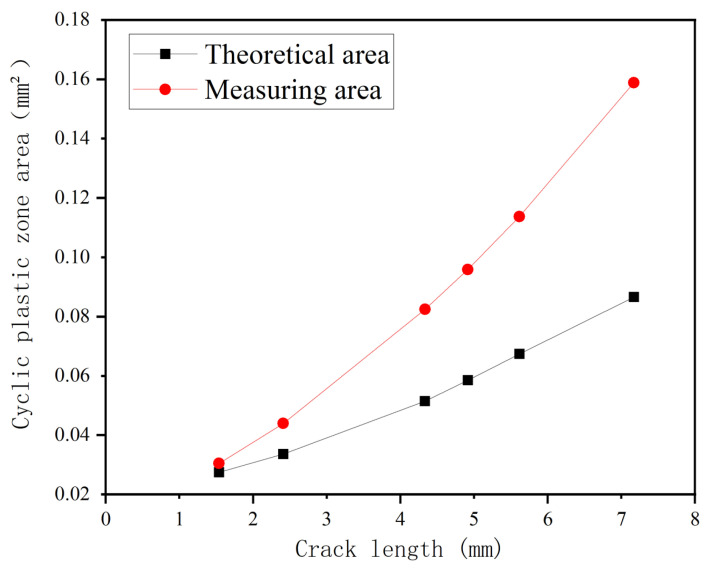
The shape and internal dynamic response characteristics of the plastic zone near the fatigue crack tip region, especially the cyclic plastic zone (CPZ), are the main factors affecting the fatigue crack initiation and propagation behaviors of ductile metal materials. The existing methods for characterizing the CPZ have some problems, which include the complexity of the process, the difficulty of achieving in situ measurement, and the inability to characterize the dynamic response in the CPZ during the crack propagation process. Therefore, a novel method is proposed for the in situ measurement of the CPZ near the crack tip region based on image stitching and matching algorithms, a load-strain loop curve characteristic judgement algorithm, and the microscopic digital image correlation (DIC) method. A microscopic camera and a macroscopic camera are used to simultaneously capture the micro crack tip speckle images and the global crack image of the two sides of the Compact Tension (CT) specimen for calculating in situ crack length and crack tip strain fields. The proposed method was performed and verified by a fatigue crack growth (FCG) test and micro-hardness experiments with Quenching and Partitioning 980 (Q&P980) steel, and the results show that the method is feasible because the maximum error is less than 5%. A "butterfly wings" shape of the CPZ and a strain concentration phenomenon in the CPZ of the Q&P980 were observed. Moreover, as the fatigue crack propagates, the area of the CPZ and the degree of the strain concentration increase gradually. This method, which can obtain the in situ and tracking measurements of the crack tip CPZ, will help to increase our understanding of CPZ characteristics, the FCG mechanism, and the behavior of Q&P steel and the plastic metal materials similar to Q&P steel.
疲劳裂纹尖端区域附近塑性区的形状和内部动态响应特性,尤其是循环塑性区(CPZ),是影响韧性金属材料疲劳裂纹萌生和扩展行为的主要因素。现有的表征CPZ的方法存在一些问题,包括过程复杂、难以实现原位测量以及无法表征裂纹扩展过程中CPZ的动态响应。因此,基于图像拼接与匹配算法、载荷-应变环曲线特征判断算法以及微观数字图像相关(DIC)方法,提出了一种用于原位测量裂纹尖端区域附近CPZ的新方法。使用微观相机和宏观相机同时采集紧凑拉伸(CT)试样两侧的微观裂纹尖端散斑图像和全局裂纹图像,以计算原位裂纹长度和裂纹尖端应变场。通过对淬火配分980(Q&P980)钢进行疲劳裂纹扩展(FCG)试验和显微硬度实验,对所提出的方法进行了实施和验证,结果表明该方法可行,因为最大误差小于5%。观察到Q&P980钢的CPZ呈“蝴蝶翅膀”形状以及CPZ中的应变集中现象。此外,随着疲劳裂纹的扩展,CPZ的面积和应变集中程度逐渐增加。这种能够获得裂纹尖端CPZ原位和跟踪测量结果的方法,将有助于加深我们对CPZ特性、FCG机制以及Q&P钢和类似于Q&P钢的塑性金属材料行为的理解。