Marsh Katherine M, Rastogi Radhika, Zhang Aimee, Wu Di, Kron Irving L, Yang Zequan
Department of Surgery, University of Virginia, Charlottesville, VA, USA.
Cardiol Cardiovasc Med. 2022;6(4):416-423. doi: 10.26502/fccm.92920278. Epub 2022 Aug 25.
We hypothesized that hydroxychloroquine (HCQ) attenuates myocardial ischemia/reperfusion injury (IRI) via TLR9 - type I interferon (IFN-I) pathway inhibition.
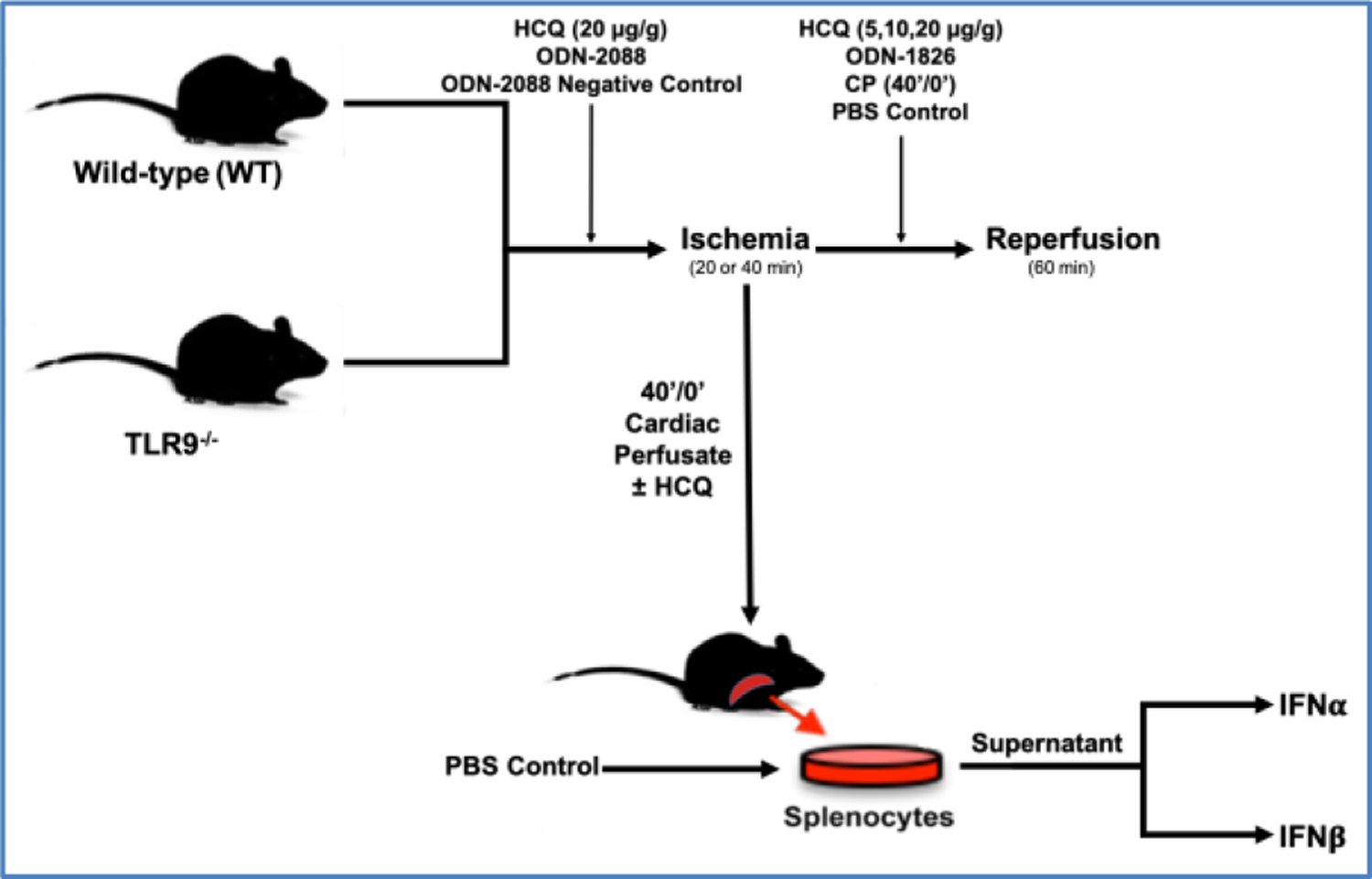
The left coronary artery of wild-type (WT) C57BL/6 and congenic TLR9 mice was occluded for 40 minutes, with or without 60 minutes of reperfusion (40'/0' or 40'/60'). Either ODN-2088 or HCQ (TLR9 inhibitors), or ODN-1826 (TLR9 agonist) was administered to determine effect on infarct size (IS). After 40'/0', cardiac perfusate (CP) was collected from harvested hearts and administered to either intact WT mice after 20 minutes of ischemia or isolated splenocytes. Type-I interferon (IFNα and IFNβ) levels were measured in plasma and splenocyte culture supernatant, and levels of damage associated molecular patterns HMGB1 and cell-free DNA (cfDNA) were measured in CP.
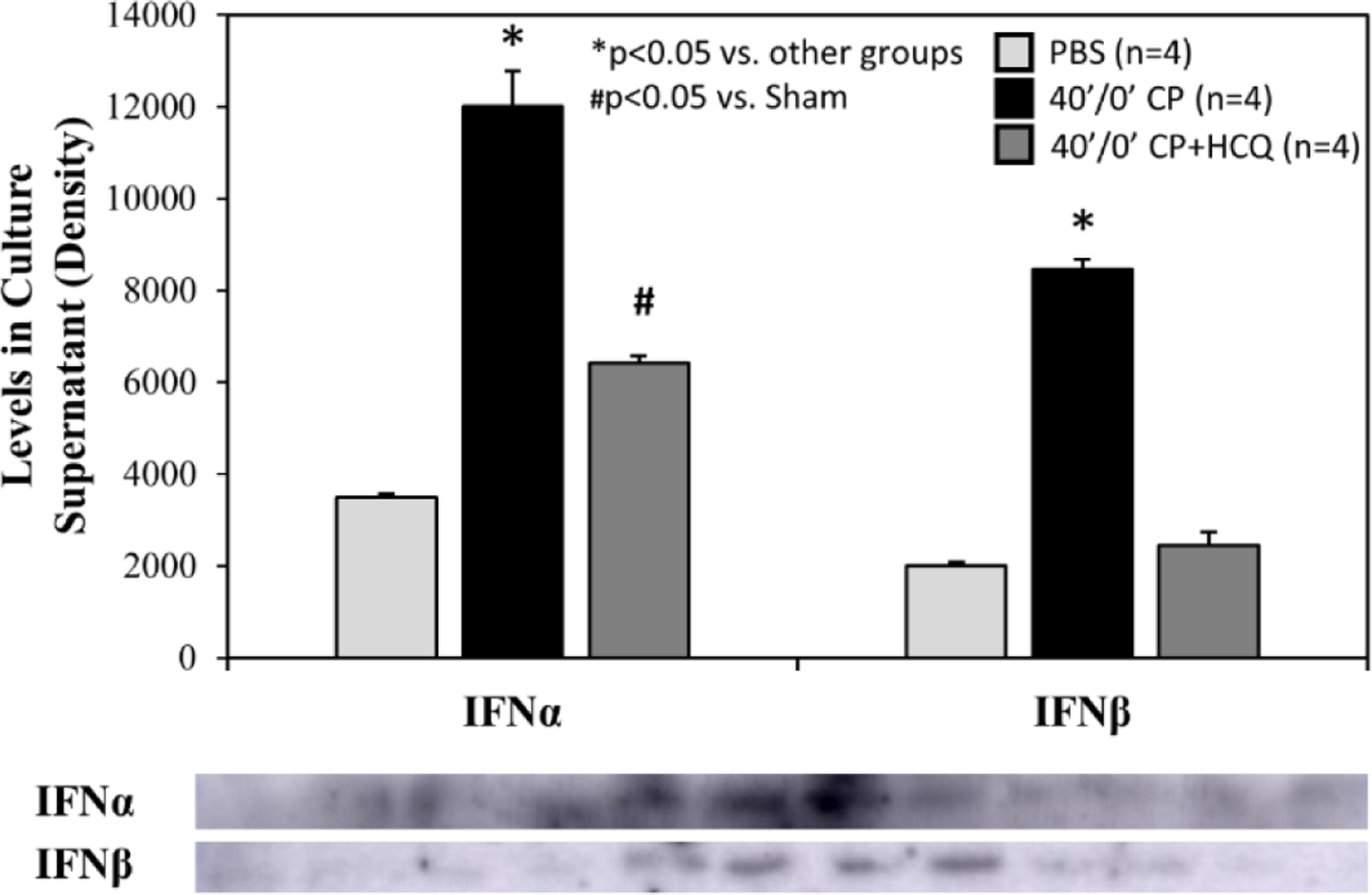
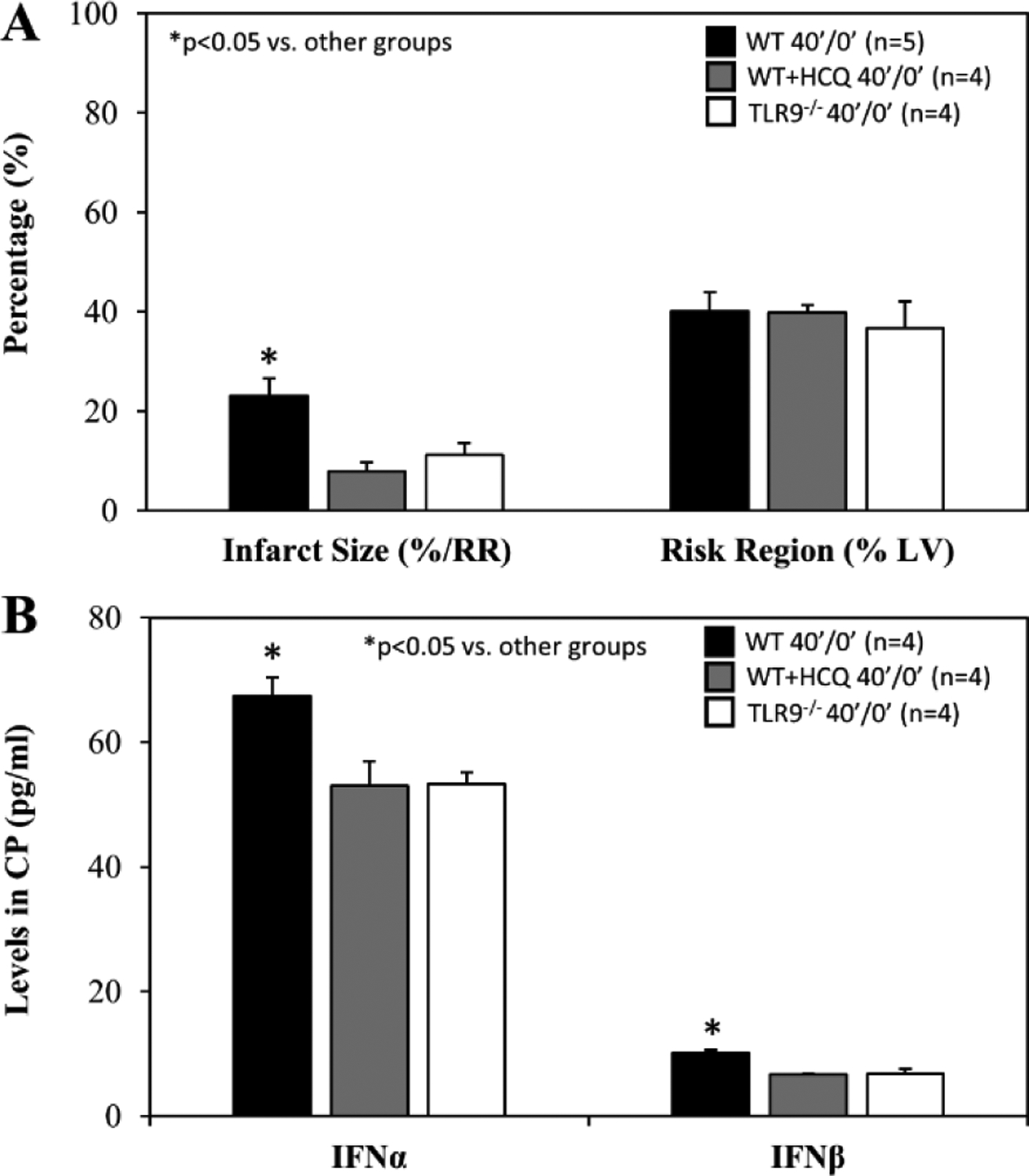
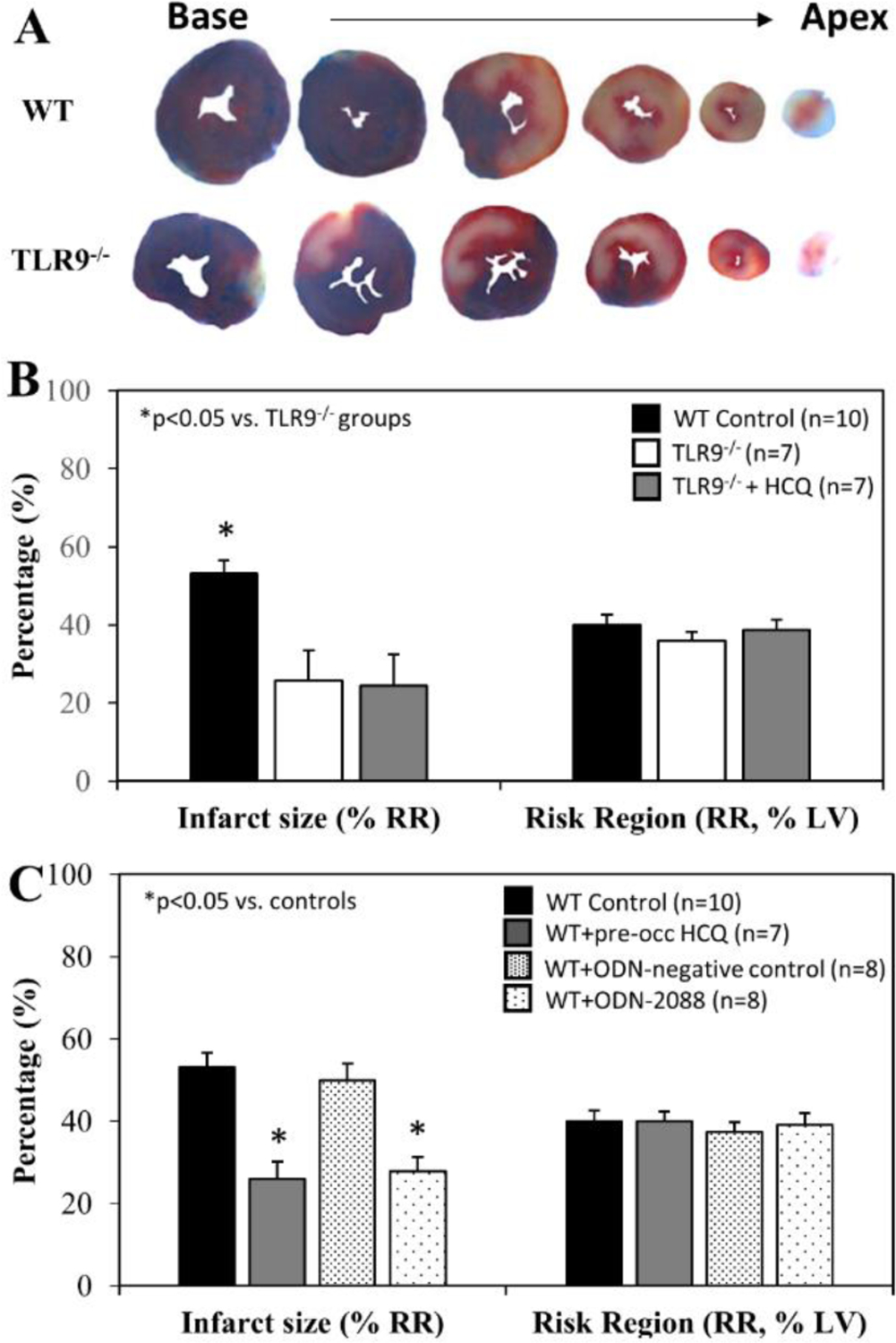
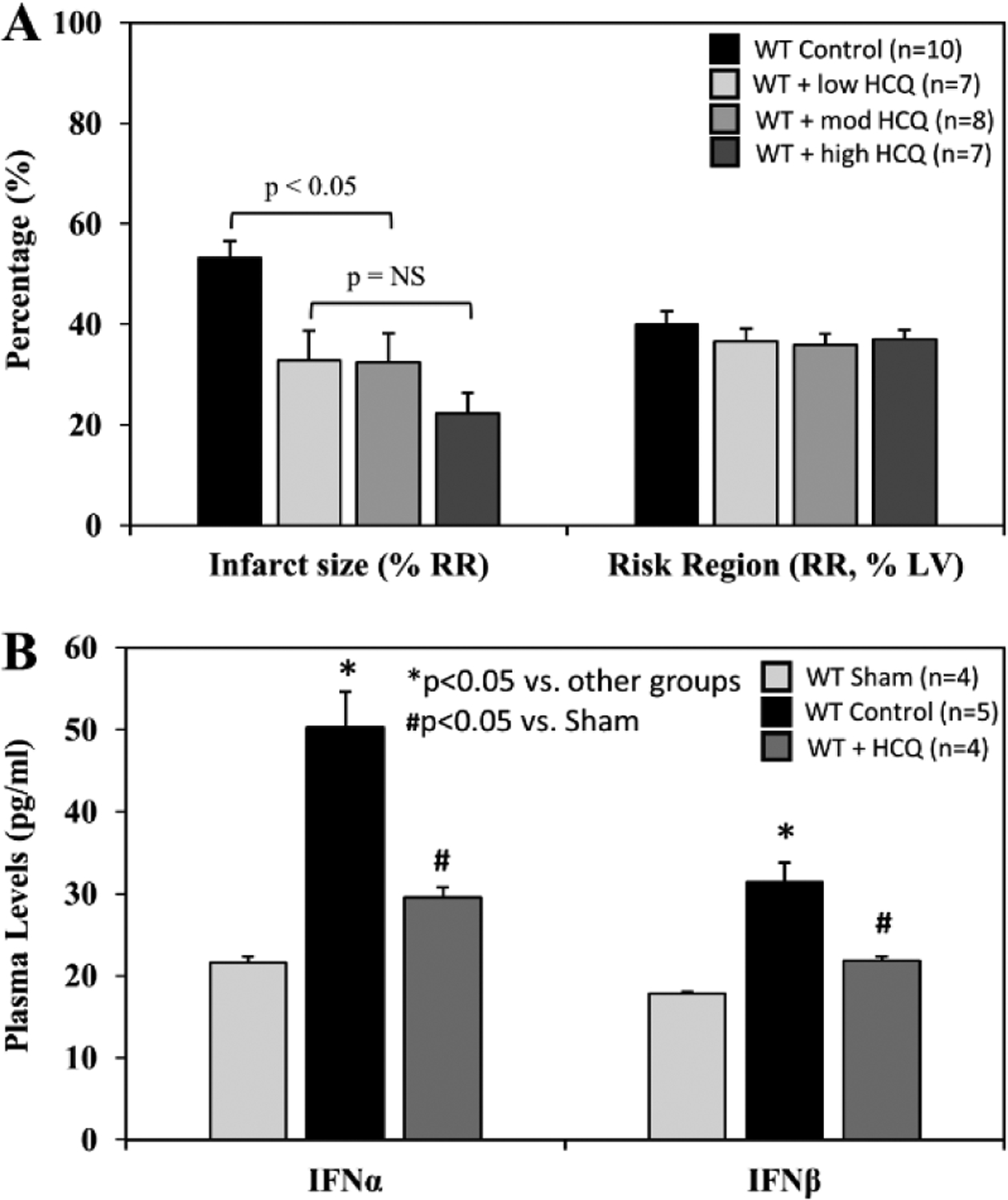
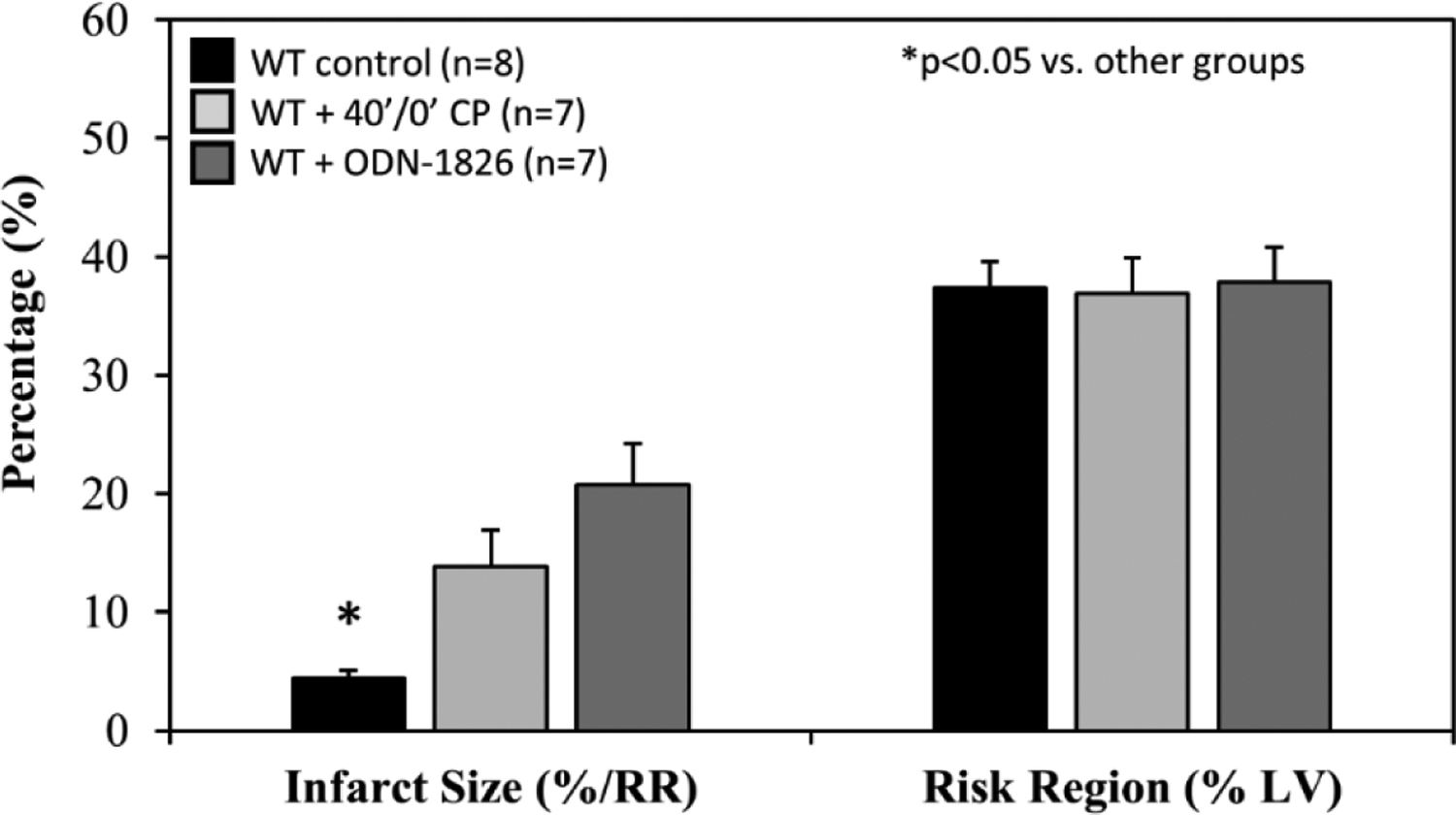
After 40'/60', WT mice treated with HCQ or ODN-2088 had significantly reduced IS. TLR9 mice and HCQ-treated WT mice undergoing 40'/0' and 40'/60' similarly attenuated IS, with significantly lower IFN-Is in CP after 40'/0' and in plasma after 40'/60'. IS was significantly increased in 40'/0' CP-treated and ODN-1826-treated 20'/60' WT mice. CP-treated WT splenocytes produced significantly higher IFN-I in culture supernatant, which was significantly reduced with HCQ.
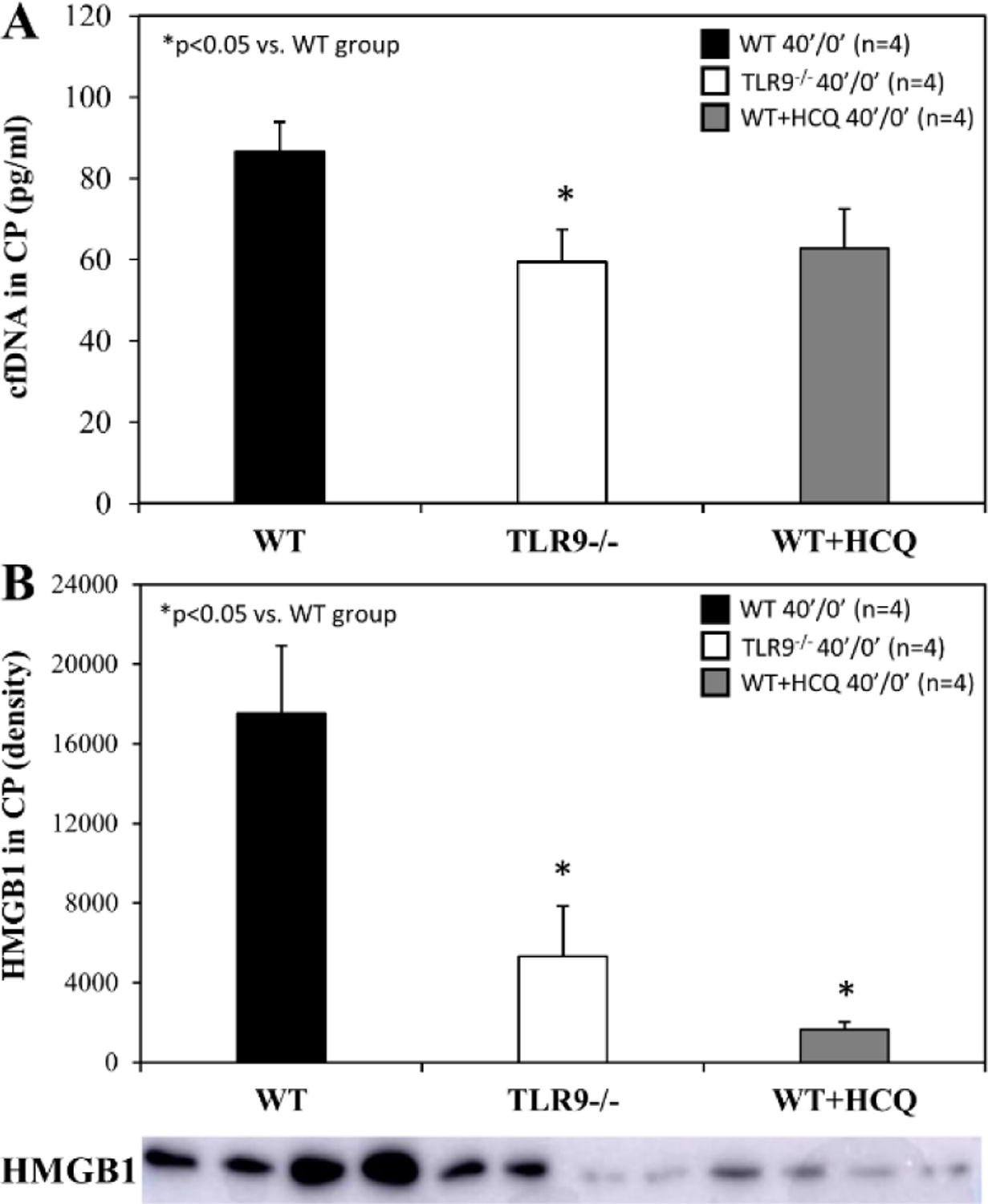
The TLR9-IFN-I-mediated inflammatory response contributes significantly to both ischemic and post-ischemic myocardial ischemia-reperfusion injury. HMGB1 and cfDNA released from ischemic myocardium activated the intra-myocardial TLR9 - IFN-I inflammatory pathway during ischemia and the extra-myocardial TLR9 - IFN-I inflammatory pathway during reperfusion. Hydroxychloroquine reduces production of IFN-I and attenuates myocardial IRI, likely by inhibiting the TLR9-IFN-I pathway.
我们推测羟氯喹(HCQ)通过抑制TLR9 - I型干扰素(IFN-I)途径减轻心肌缺血/再灌注损伤(IRI)。
野生型(WT)C57BL/6小鼠和同基因TLR9小鼠的左冠状动脉闭塞40分钟,再灌注60分钟(40'/0'或40'/60')或不进行再灌注。给予ODN - 2088或HCQ(TLR9抑制剂),或ODN - 1826(TLR9激动剂)以确定对梗死面积(IS)的影响。在40'/0'后,从收获的心脏收集心脏灌注液(CP),在缺血20分钟后给予完整的WT小鼠或分离的脾细胞。测定血浆和脾细胞培养上清液中的I型干扰素(IFNα和IFNβ)水平,并测定CP中损伤相关分子模式HMGB1和游离DNA(cfDNA)的水平。
在40'/60'后,用HCQ或ODN - 2088治疗的WT小鼠梗死面积显著减小。经历40'/0'和40'/60'过程的TLR9小鼠和用HCQ治疗的WT小鼠同样减轻了梗死面积,在40'/0'后的CP中以及40'/60'后的血浆中IFN-I显著降低。在40'/0'接受CP治疗的和接受ODN - 1826治疗的20'/60' WT小鼠中梗死面积显著增加。接受CP治疗的WT脾细胞在培养上清液中产生显著更高的IFN-I,而HCQ可使其显著降低。
TLR9 - IFN-I介导的炎症反应对缺血性和缺血后心肌缺血/再灌注损伤均有显著贡献。缺血心肌释放的HMGB1和cfDNA在缺血期间激活心肌内TLR9 - IFN-I炎症途径,在再灌注期间激活心肌外TLR9 - IFN-I炎症途径。羟氯喹可能通过抑制TLR9 - IFN-I途径减少IFN-I的产生并减轻心肌IRI。