Jeffrey Cheah School of Medicine and Health Sciences, Monash University Malaysia, 47500, Bandar Sunway, Selangor, Malaysia.
Mol Neurobiol. 2022 Dec;59(12):7095-7118. doi: 10.1007/s12035-022-03016-w. Epub 2022 Sep 9.
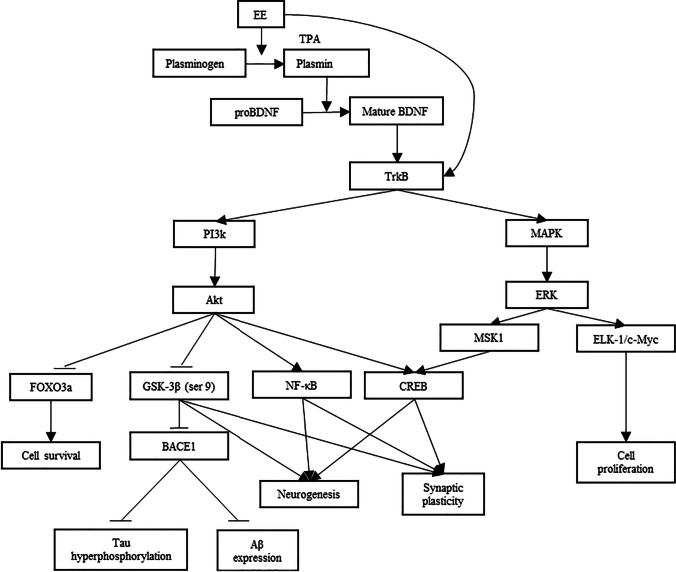
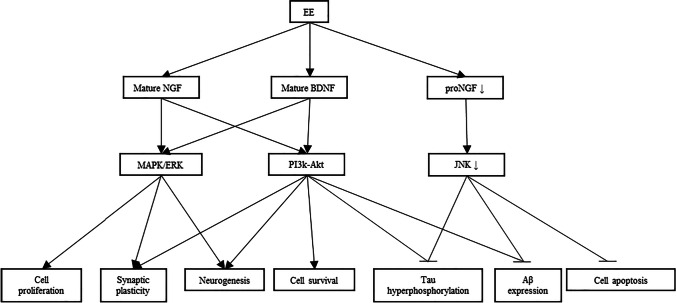
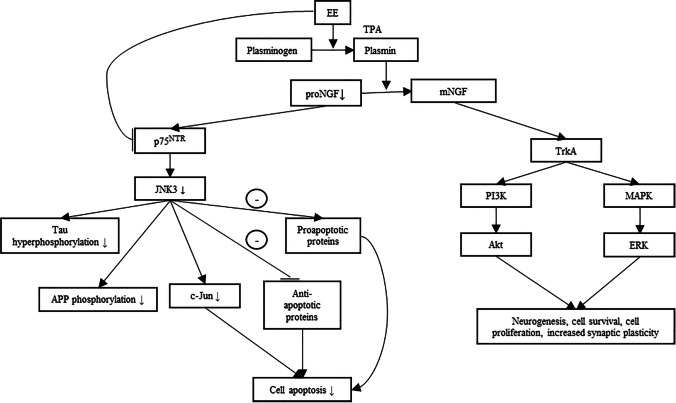
Environmental enrichment (EE) is an environmental paradigm encompassing sensory, cognitive, and physical stimulation at a heightened level. Previous studies have reported the beneficial effects of EE in the brain, particularly in the hippocampus. EE improves cognitive function as well as ameliorates depressive and anxiety-like behaviors, making it a potentially effective neuroprotective strategy against neurodegenerative diseases such as Alzheimer's disease (AD). Here, we summarize the current evidence for EE as a neuroprotective strategy as well as the potential molecular pathways that can explain the effects of EE from a biochemical perspective using animal models. The effectiveness of EE in enhancing brain activity against neurodegeneration is explored with a view to differences present in early and late life EE exposure, with its potential application in human being discussed. We discuss EE as one of the non pharmacological approaches in preventing or delaying the onset of AD for future research.
环境丰富(EE)是一种环境模式,包括在更高水平的感官、认知和身体刺激。先前的研究报告了 EE 对大脑的有益影响,特别是在海马体中。EE 改善认知功能,同时改善抑郁和焦虑样行为,使其成为一种潜在有效的神经保护策略,可预防阿尔茨海默病(AD)等神经退行性疾病。在这里,我们总结了 EE 作为神经保护策略的现有证据,以及从动物模型的生化角度解释 EE 作用的潜在分子途径。探讨了 EE 在增强大脑活动对抗神经退行性变方面的有效性,以期了解早期和晚期 EE 暴露的差异,并讨论其在人类中的潜在应用。我们将 EE 作为预防或延缓 AD 发病的非药物治疗方法之一进行讨论,以供未来研究参考。