Department of Thoracic Surgery, University of Tsukuba, Ibaraki, Japan; Department of Healthcare Quality Assessment, The University of Tokyo, Tokyo, Japan; Department of Surgery, Tokyo Medical University, Tokyo, Japan; Japan Cancer Society, Tokyo, Japan; Department of Thoracic Surgery, Jichi Medical University, Tochigi, Japan; Department of Thoracic Surgery, Tohoku University, Miyagi, Japan; Department of General Thoracic Surgery, Kyorin University, Tokyo, Japan; Department of Thoracic Surgery, Osaka University, Osaka, Japan; Department of Thoracic Surgery, Okayama University, Okayama, Japan; Department of Thoracic Surgery, Tottori University, Tottori, Japan; Department of Thoracic Surgery, Fujita Health University, Aichi, Japan; Department of Thoracic Surgery, Nagoya University, Aichi, Japan; Department of Thoracic Surgery, Chiba University, Chiba, Japan; Japan Cancer Society, Tokyo, Japan; Department of Thoracic Surgery, Dokkyo Medical University, Tochigi, Japan.
Department of Thoracic Surgery, University of Tsukuba, Ibaraki, Japan; Department of Healthcare Quality Assessment, The University of Tokyo, Tokyo, Japan; Department of Surgery, Tokyo Medical University, Tokyo, Japan; Japan Cancer Society, Tokyo, Japan; Department of Thoracic Surgery, Jichi Medical University, Tochigi, Japan; Department of Thoracic Surgery, Tohoku University, Miyagi, Japan; Department of General Thoracic Surgery, Kyorin University, Tokyo, Japan; Department of Thoracic Surgery, Osaka University, Osaka, Japan; Department of Thoracic Surgery, Okayama University, Okayama, Japan; Department of Thoracic Surgery, Tottori University, Tottori, Japan; Department of Thoracic Surgery, Fujita Health University, Aichi, Japan; Department of Thoracic Surgery, Nagoya University, Aichi, Japan; Department of Thoracic Surgery, Chiba University, Chiba, Japan; Japan Cancer Society, Tokyo, Japan; Department of Thoracic Surgery, Dokkyo Medical University, Tochigi, Japan.
Lung Cancer. 2022 Oct;172:127-135. doi: 10.1016/j.lungcan.2022.08.011. Epub 2022 Aug 17.
The COVID-19 pandemic has far-reaching collateral health impacts on the ongoing delivery of surgical care worldwide. The current study was designed to analyze the impact of the COVID-19 pandemic on the number of surgeries of general thoracic surgery in Japan.
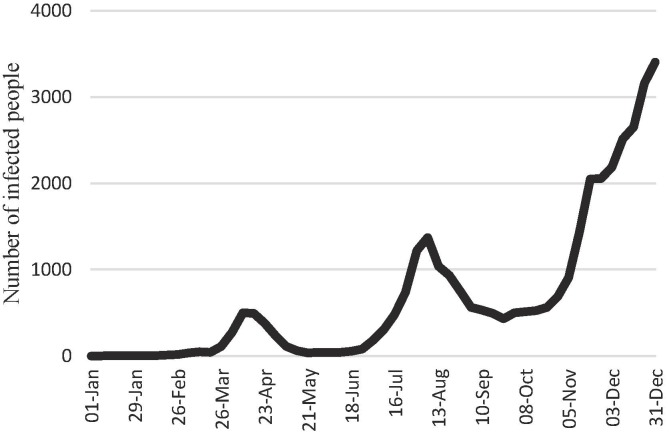
Changes in the number of surgeries for total and three representative tumors were analyzed using the National Clinical Database data with reference to the pandemic infection rate and lung cancer screening.
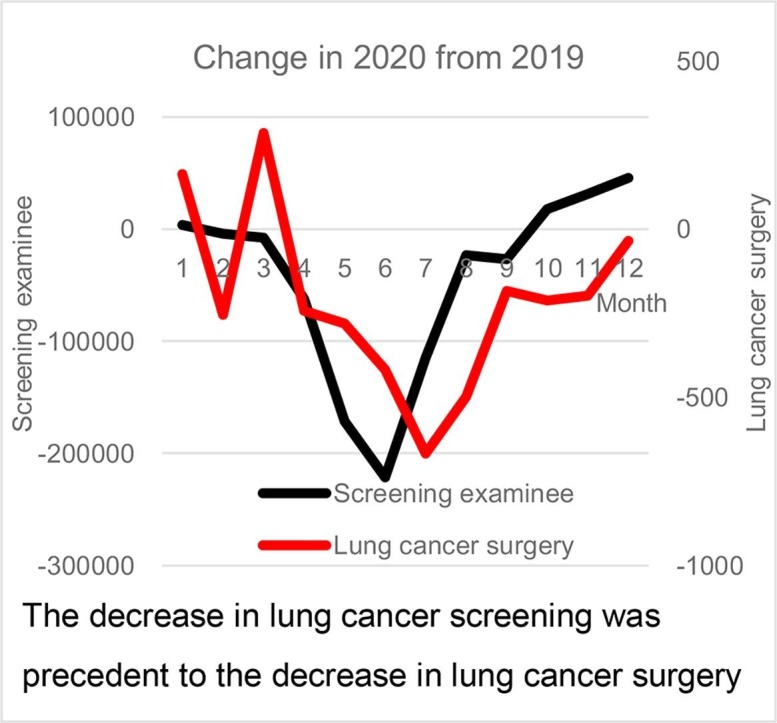
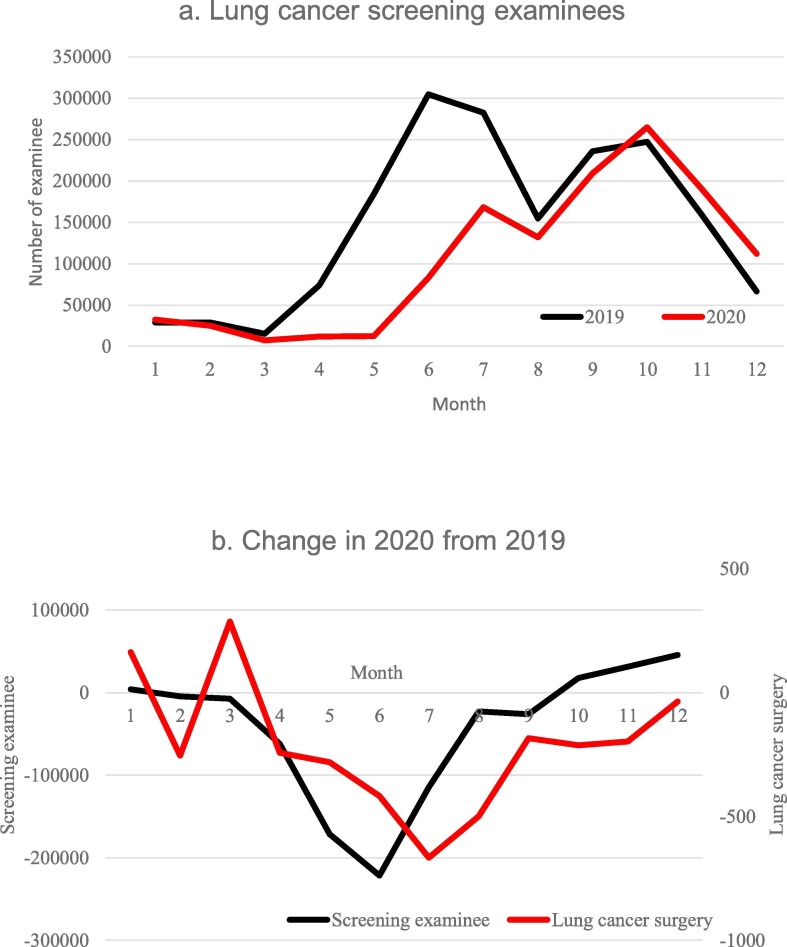
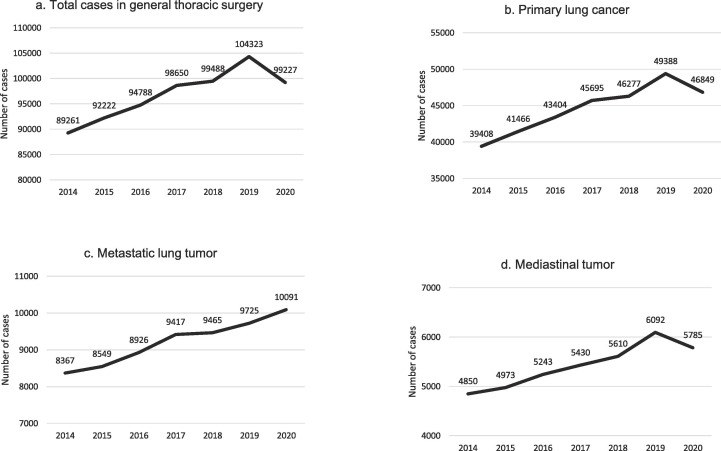
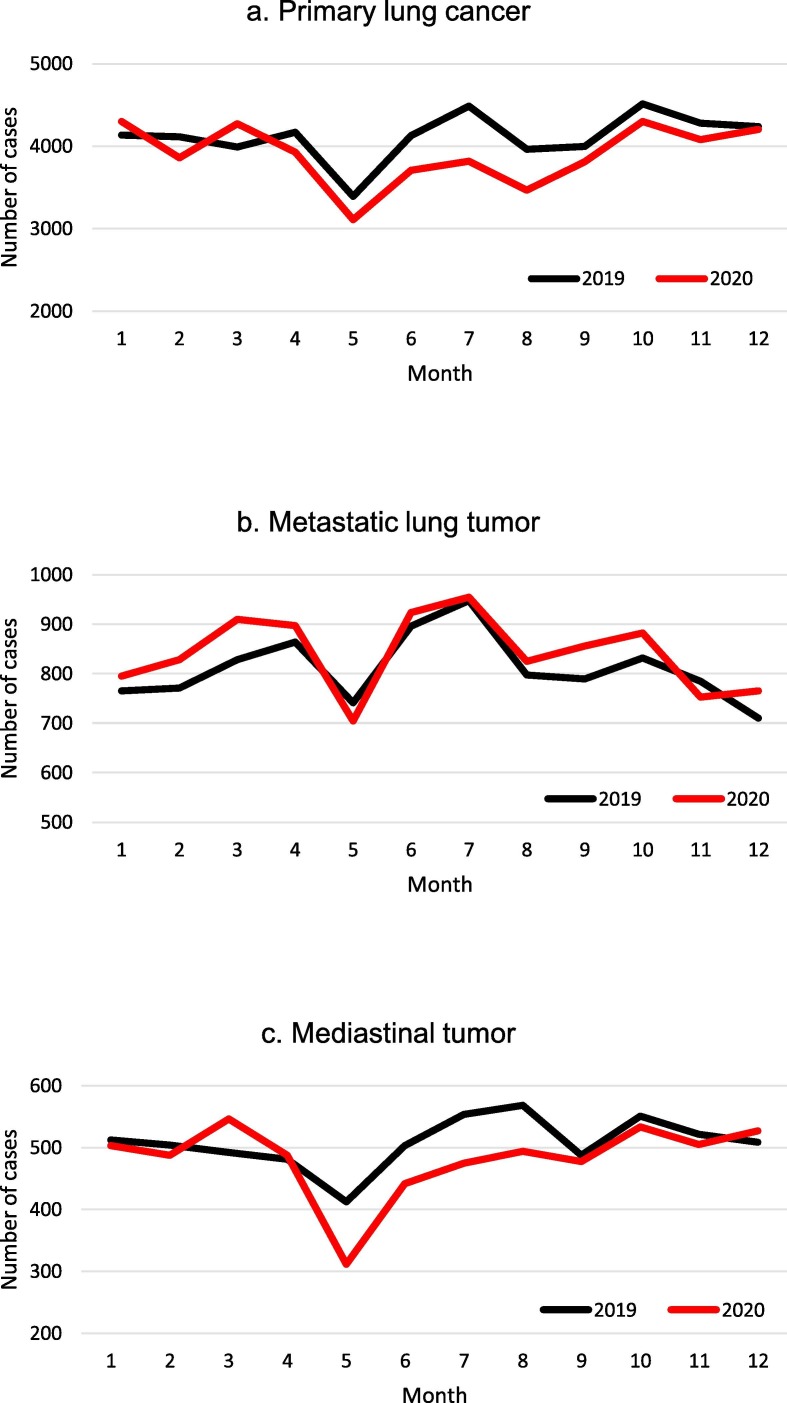
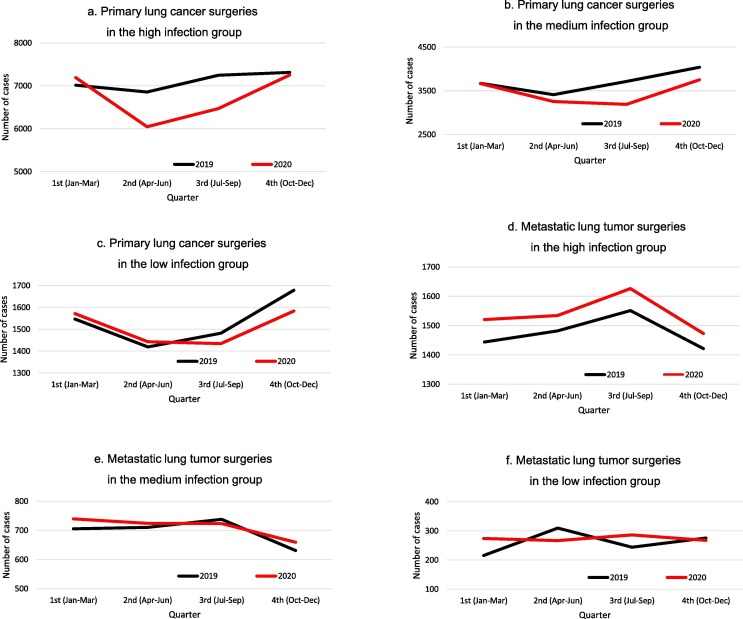
In 2020, the number of surgeries in total and for primary lung cancer and mediastinal lung tumor decreased by 4.9, 5.1, and 5.0 %, respectively. Considering the five-year trend towards a 5 % annual increase, there was a potential 10 % decrease in the number of primary lung cancer surgeries. The number of primary lung cancer surgeries bottomed in July 2020 but recovered towards the end of the year. In contrast, the number of metastatic lung tumor surgeries in 2020 increased by 3.2 %, following a similar trend observed over the previous five years. The number of lung cancer screening examinees decreased markedly with the lowest number in May. Our findings indicate that surgical triage had a limited impact on the decrease in primary lung cancer surgeries during the pandemic; rather, the decrease in lung cancer screening, which was a few months preceding, is most likely responsible.
The decrease in primary lung cancer was mainly caused by the decrease in lung cancer screening, indicating that continuing screening is vital even during a pandemic.
COVID-19 大流行对全球正在进行的外科护理产生了深远的附带健康影响。本研究旨在分析 COVID-19 大流行对日本普通胸外科手术数量的影响。
使用国家临床数据库数据,参考大流行感染率和肺癌筛查,分析总手术量和三种代表性肿瘤手术量的变化。
2020 年,总手术量以及原发性肺癌和纵隔肺肿瘤手术量分别下降了 4.9%、5.1%和 5.0%。考虑到过去五年每年增长 5%的趋势,原发性肺癌手术数量可能减少了 10%。原发性肺癌手术数量在 2020 年 7 月达到最低点,但在年底有所回升。相比之下,转移性肺癌手术数量在 2020 年增加了 3.2%,与过去五年的趋势相似。肺癌筛查受检者数量明显下降,5 月份达到最低。我们的研究结果表明,手术分类对大流行期间原发性肺癌手术数量的减少影响有限;相反,几个月前开始的肺癌筛查数量减少可能是主要原因。
原发性肺癌的减少主要是由于肺癌筛查的减少,这表明即使在大流行期间,继续进行筛查也至关重要。