Bone Marrow Transplantation Center, The First Affiliated Hospital, School of Medicine, Zhejiang University, Hangzhou, China.
Zhejiang Province Engineering Laboratory for Stem Cell and Immunity Therapy, Hangzhou, China.
Nat Commun. 2022 Sep 9;13(1):5313. doi: 10.1038/s41467-022-32960-3.
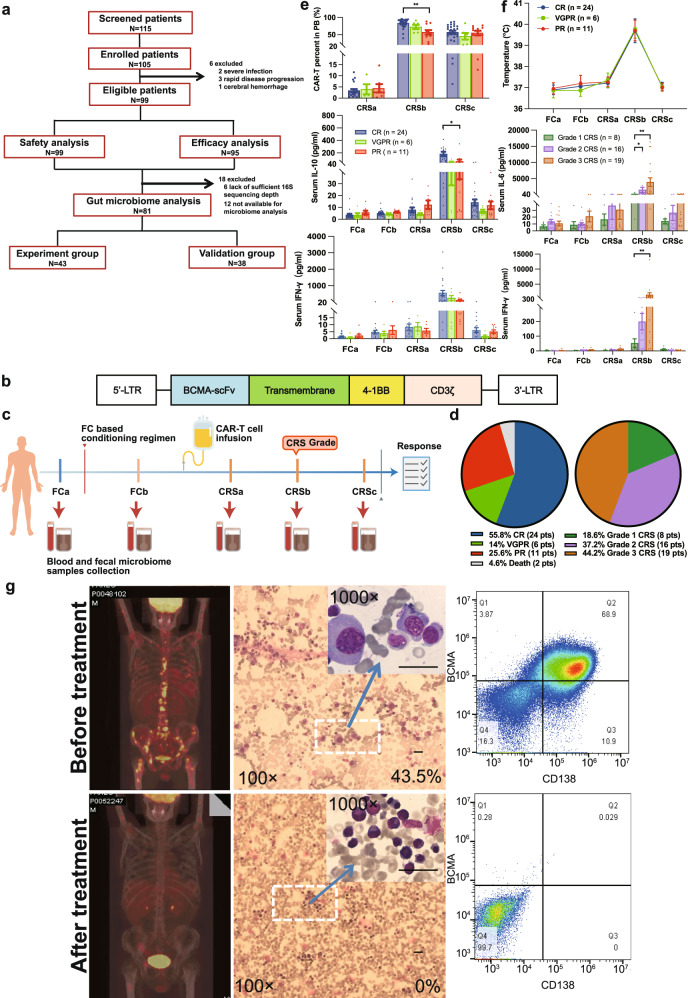
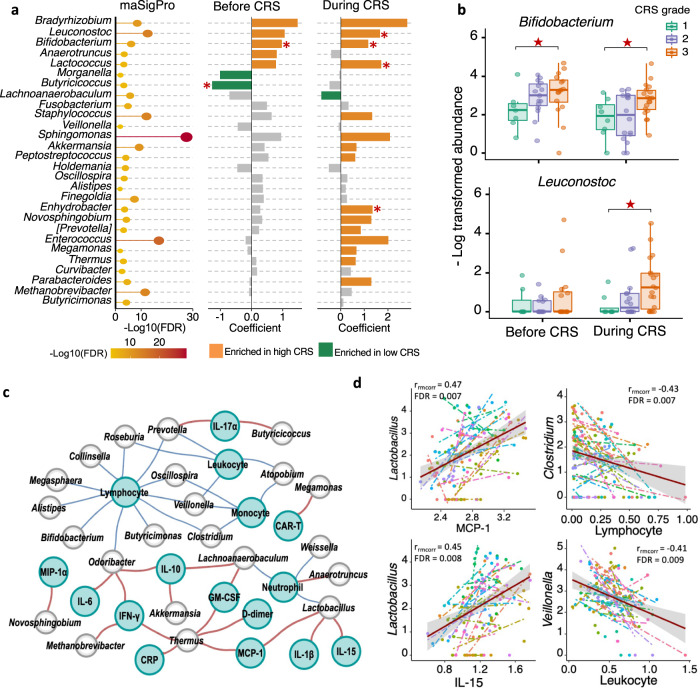
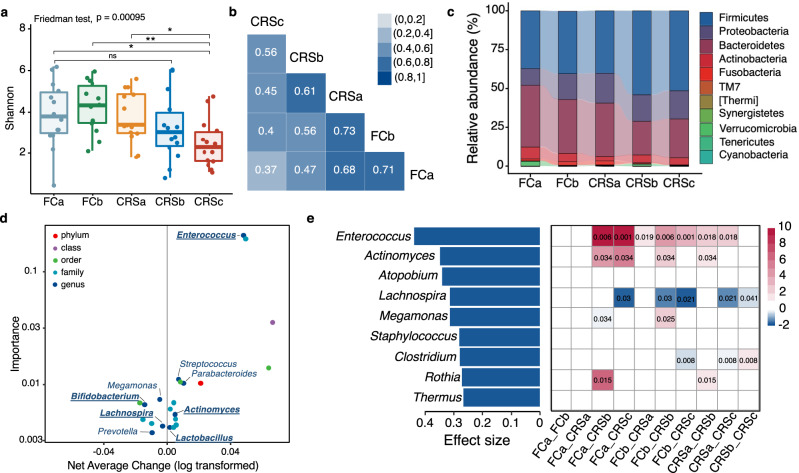
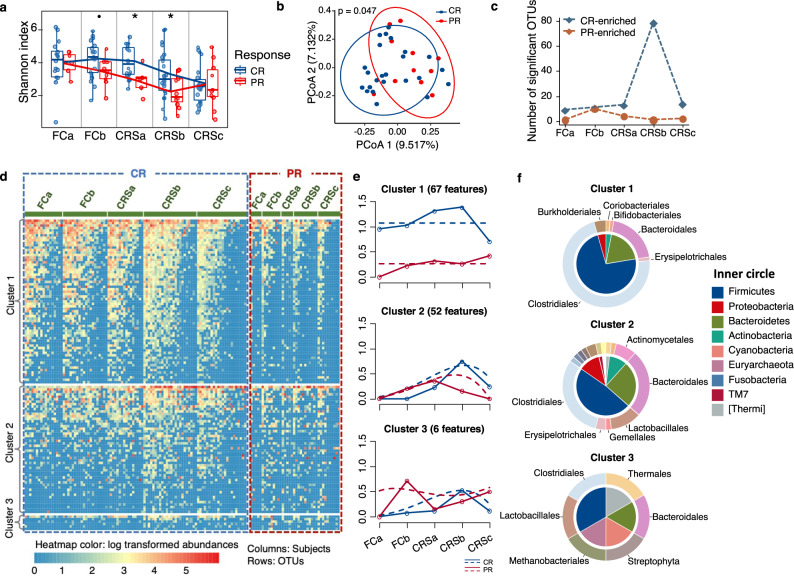
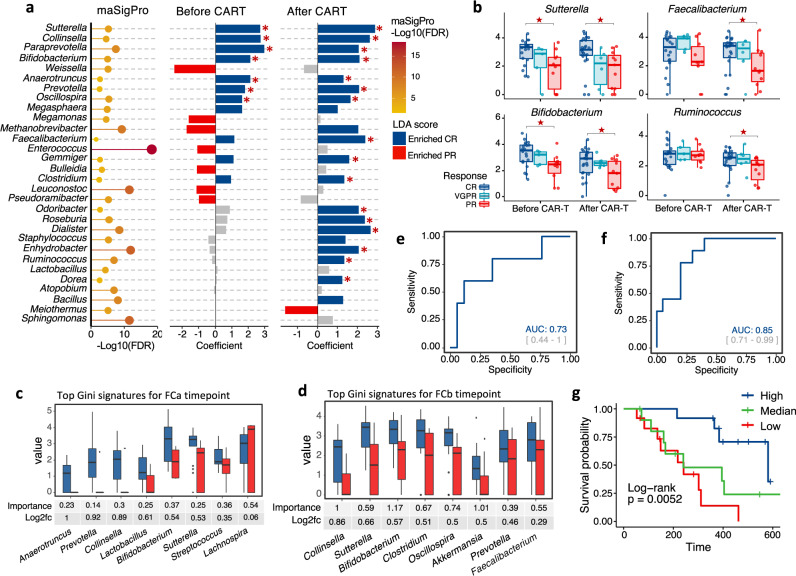
Immunotherapy utilizing chimeric antigen receptor T cell (CAR-T) therapy holds promise for hematologic malignancies, however, response rates and associated immune-related adverse effects widely vary among patients. Here we show, by comparing diversity and composition of the gut microbiome during different CAR-T therapeutic phases in the clinical trial ChiCTR1800017404, that the gut flora characteristically differs among patients and according to treatment stages, and might also reflect patient response to therapy in relapsed/refractory multiple myeloma (MM; n = 43), acute lympholastic leukemia (ALL; n = 23) and non-Hodgkin lymphoma (NHL; n = 12). We observe significant temporal differences in diversity and abundance of Bifidobacterium, Prevotella, Sutterella, and Collinsella between MM patients in complete remission (n = 24) and those in partial remission (n = 11). Furthermore, we find that patients with severe cytokine release syndrome present with higher abundance of Bifidobacterium, Leuconostoc, Stenotrophomonas, and Staphylococcus, which is reproducible in an independent cohort of 38 MM patients. This study has important implications for understanding the biological role of the microbiome in CAR-T treatment responsiveness of hematologic malignancy patients, and may guide therapeutic intervention to increase efficacy. The success rate of CAR-T cell therapy is high in blood cancers, yet individual patient characteristics might reduce therapeutic benefit. Here we show that therapeutic response in MM, ALL and NHL, and occurrence of severe cytokine release syndrome in multiple myeloma are associated with specific gut microbiome alterations.
嵌合抗原受体 T 细胞(CAR-T)疗法的免疫疗法为血液系统恶性肿瘤带来了希望,然而,患者之间的反应率和相关的免疫相关不良反应差异很大。在这里,我们通过比较 ChiCTR1800017404 临床试验中不同 CAR-T 治疗阶段的肠道微生物组的多样性和组成,表明肠道菌群在患者之间以及根据治疗阶段存在特征性差异,并且可能也反映了复发/难治性多发性骨髓瘤(MM;n=43)、急性淋巴细胞白血病(ALL;n=23)和非霍奇金淋巴瘤(NHL;n=12)患者对治疗的反应。我们观察到 MM 患者完全缓解(n=24)和部分缓解(n=11)之间双歧杆菌、普雷沃氏菌、萨特氏菌和柯林斯氏菌的多样性和丰度存在显著的时间差异。此外,我们发现严重细胞因子释放综合征患者的双歧杆菌、乳球菌、寡养单胞菌和葡萄球菌丰度较高,在 38 名 MM 患者的独立队列中可重复出现。这项研究对于理解微生物组在血液系统恶性肿瘤患者 CAR-T 治疗反应中的生物学作用具有重要意义,并可能指导治疗干预以提高疗效。CAR-T 细胞疗法在血液癌症中的成功率很高,但患者的个体特征可能会降低治疗效果。在这里,我们表明 MM、ALL 和 NHL 的治疗反应以及多发性骨髓瘤中严重细胞因子释放综合征的发生与特定的肠道微生物组改变有关。