Ochoa-de la Paz Lenin David, Gulias-Cañizo Rosario
Departamento de Bioquímica, Facultad de Medicina, Universidad Nacional Autónoma de México, Mexico.
Asociación para Evitar la Ceguera en México (APEC), Unidad de Investigación APEC-UNAM, Mexico.
Front Cell Neurosci. 2022 Aug 25;16:967496. doi: 10.3389/fncel.2022.967496. eCollection 2022.
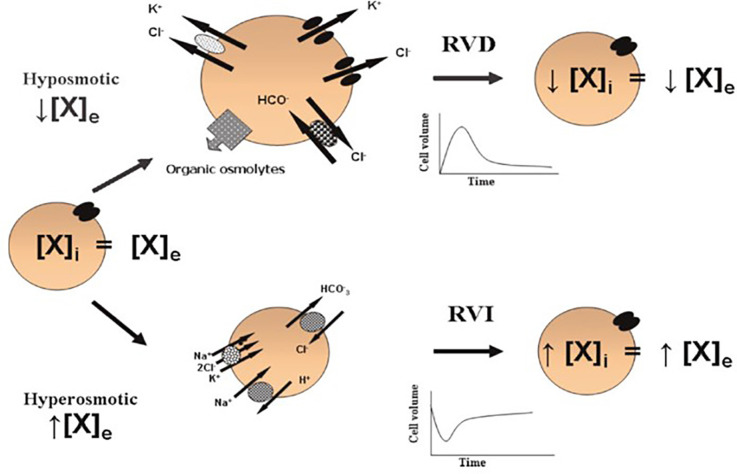
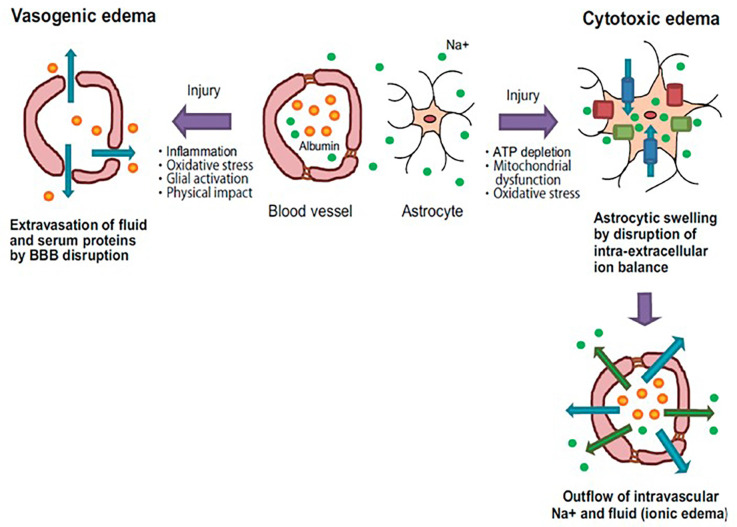
Brain edema is a pathological condition with potentially fatal consequences, related to cerebral injuries such as ischemia, chronic renal failure, uremia, and diabetes, among others. Under these pathological states, the cell volume control processes are fully compromised, because brain cells are unable to regulate the movement of water, mainly regulated by osmotic gradients. The processes involved in cell volume regulation are homeostatic mechanisms that depend on the mobilization of osmolytes (ions, organic molecules, and polyols) in the necessary direction to counteract changes in osmolyte concentration in response to water movement. The expression and coordinated function of proteins related to the cell volume regulation process, such as water channels, ion channels, and other cotransport systems in the glial cells, and considering the glial cell proportion compared to neuronal cells, leads to consider the astroglial network the main regulatory unit for water homeostasis in the central nervous system (CNS). In the last decade, several studies highlighted the pivotal role of glia in the cell volume regulation process and water homeostasis in the brain, including the retina; any malfunction of this astroglial network generates a lack of the ability to regulate the osmotic changes and water movements and consequently exacerbates the pathological condition.
脑水肿是一种具有潜在致命后果的病理状态,与诸如缺血、慢性肾衰竭、尿毒症和糖尿病等脑损伤有关。在这些病理状态下,细胞体积控制过程完全受损,因为脑细胞无法调节水的移动,而水的移动主要由渗透梯度调节。细胞体积调节所涉及的过程是稳态机制,其依赖于渗透溶质(离子、有机分子和多元醇)在必要方向上的动员,以抵消因水移动而引起的渗透溶质浓度变化。与细胞体积调节过程相关的蛋白质的表达和协调功能,如水通道、离子通道以及胶质细胞中的其他共转运系统,并且考虑到胶质细胞与神经元细胞的比例,使得星形胶质细胞网络被视为中枢神经系统(CNS)中水稳态的主要调节单元。在过去十年中,多项研究强调了胶质细胞在细胞体积调节过程和大脑(包括视网膜)水稳态中的关键作用;这个星形胶质细胞网络的任何功能失调都会导致缺乏调节渗透变化和水移动的能力,从而加剧病理状况。