Xu Hangcheng, Wang Yan, Han Yiqun, Wu Yun, Wang Jiayu, Xu Binghe
Department of Medical Oncology, National Cancer Center/National Clinical Research Center for Cancer/Cancer Hospital, Chinese Academy of Medical Sciences and Peking Union Medical College, Beijing, China.
Front Oncol. 2022 Aug 24;12:956464. doi: 10.3389/fonc.2022.956464. eCollection 2022.
Updated evidence was required to compare the efficacy and safety of cyclin-dependent kinases 4 and 6 (CDK4/6) inhibitors and phosphatidylinositol 3-kinase (PI3K)/protein kinase B (AKT)/mammalian target of rapamycin (mTOR) inhibitors for patients with hormone receptor-positive and HER2-negative metastatic breast cancer.
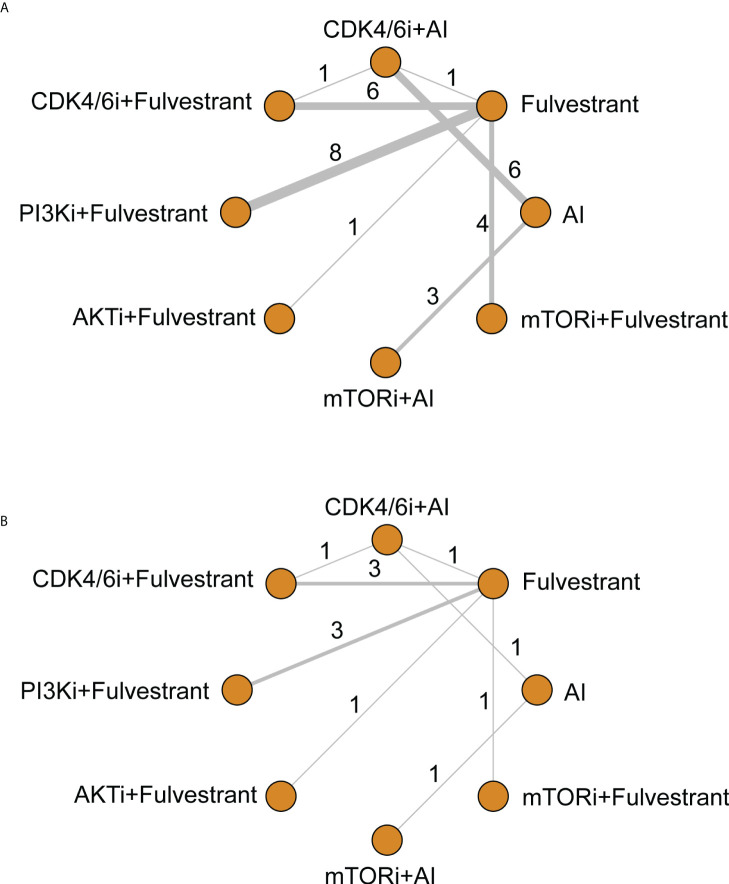
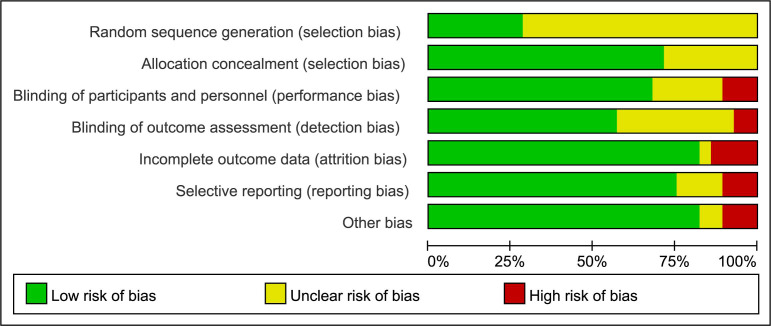
A systematic review and network meta-analysis was conducted utilizing data from randomized controlled trials (RCTs) that contained interventions of CDK4/6 inhibitors or PI3K/AKT/mTOR inhibitors. Progression-free survival (PFS), overall survival (OS), and treatment-related adverse events (TRAEs) were primary outcomes of interest. Pooled hazard ratios (HRs) and odds ratios (ORs) with 95% credible intervals (CrIs) were used to assess the survival outcomes and safety profiles, respectively.
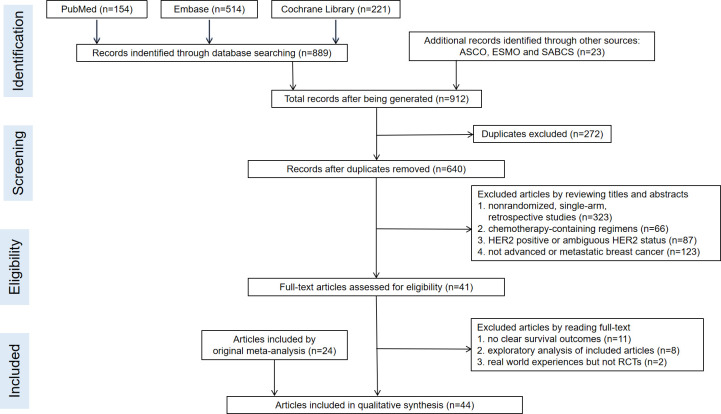
A total of 28 RCTs with 12,129 participants were included. Pooled analysis showed that CDK4/6 inhibitors significantly prolonged PFS than PI3K/AKT/mTOR inhibitors (HR, 0.81; 95% CrI, 0.69-0.94), whereas no significant differences were detected regarding OS. After balancing the treatment lines and metastatic sites, the superiority of CDK4/6 inhibitors only appeared in the visceral and non-visceral subgroups. Among CDK4/6 inhibitors, abemaciclib was significantly better than others in ≥3 grade neutropenia (OR, 0.04; 95% CrI, 0.01-0.15). The incidence of stomatitis and digestive disorders was different among diverse kinds of PI3K/AKT/mTOR inhibitors. Discrepancies appeared regarding TRAEs of hepatotoxicity, diarrhea, and hyperglycemia among different interventions.
CDK4/6 inhibitors showed better efficacy in PFS, but the benefits disappeared when taking treatment line into consideration. Specific and discrepant safety profiles were found in two categories of agents.
https://www.crd.york.ac.uk/PROSPERO, identifier CRD42022321172.
需要更新证据来比较细胞周期蛋白依赖性激酶4和6(CDK4/6)抑制剂与磷脂酰肌醇3激酶(PI3K)/蛋白激酶B(AKT)/雷帕霉素哺乳动物靶蛋白(mTOR)抑制剂对激素受体阳性且人表皮生长因子受体2阴性转移性乳腺癌患者的疗效和安全性。
利用来自包含CDK4/6抑制剂或PI3K/AKT/mTOR抑制剂干预措施的随机对照试验(RCT)数据进行系统评价和网状Meta分析。无进展生存期(PFS)、总生存期(OS)和治疗相关不良事件(TRAEs)是主要关注的结局指标。合并风险比(HRs)和比值比(ORs)以及95%可信区间(CrIs)分别用于评估生存结局和安全性概况。
共纳入28项RCT,涉及12129名参与者。汇总分析表明,CDK4/6抑制剂比PI3K/AKT/mTOR抑制剂显著延长PFS(HR,0.81;95%CrI,0.69 - 0.94),而在OS方面未检测到显著差异。在平衡治疗线数和转移部位后,CDK4/6抑制剂的优势仅在内脏和非内脏亚组中出现。在CDK4/6抑制剂中,阿贝西利在≥3级中性粒细胞减少方面显著优于其他药物(OR,0.04;95%CrI,0.01 - 0.15)。不同种类的PI3K/AKT/mTOR抑制剂中口腔炎和消化系统疾病的发生率不同。不同干预措施在肝毒性、腹泻和高血糖的TRAEs方面存在差异。
CDK4/6抑制剂在PFS方面显示出更好的疗效,但考虑治疗线数时益处消失。在两类药物中发现了特定且不同的安全性概况。