Laboratory for Biological Mass Spectrometry, Biosciences Institute, Newcastle University, Newcastle-upon-Tyne NE2 4HH, UK.
Sir William Dunn School of Pathology, University of Oxford, South Parks Road, Oxford OX1 3RE, UK.
J Med Chem. 2022 Sep 22;65(18):12014-12030. doi: 10.1021/acs.jmedchem.2c00671. Epub 2022 Sep 12.
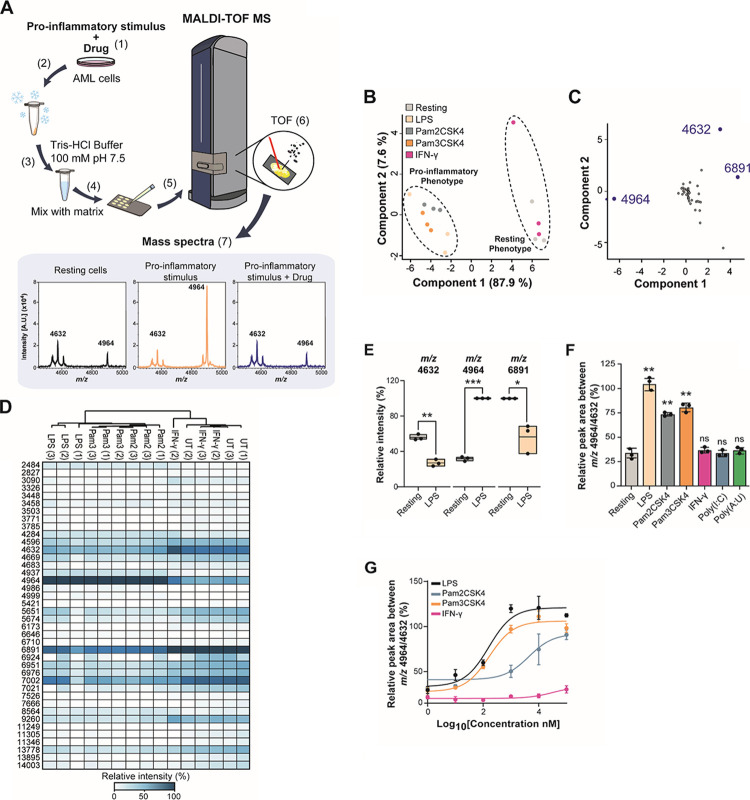
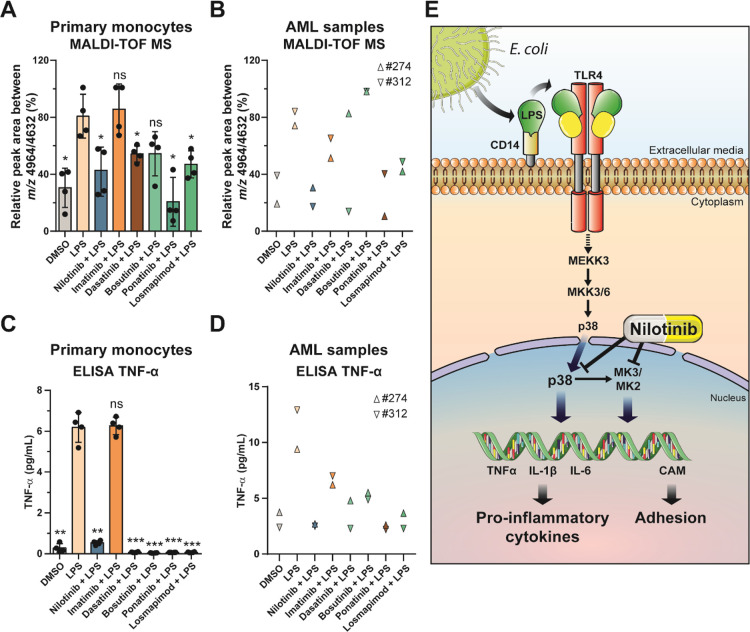
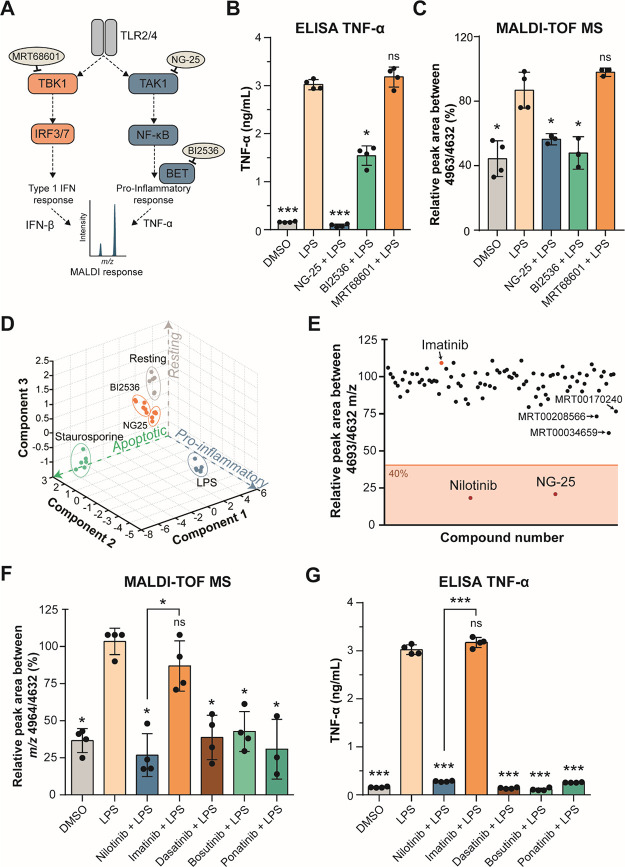
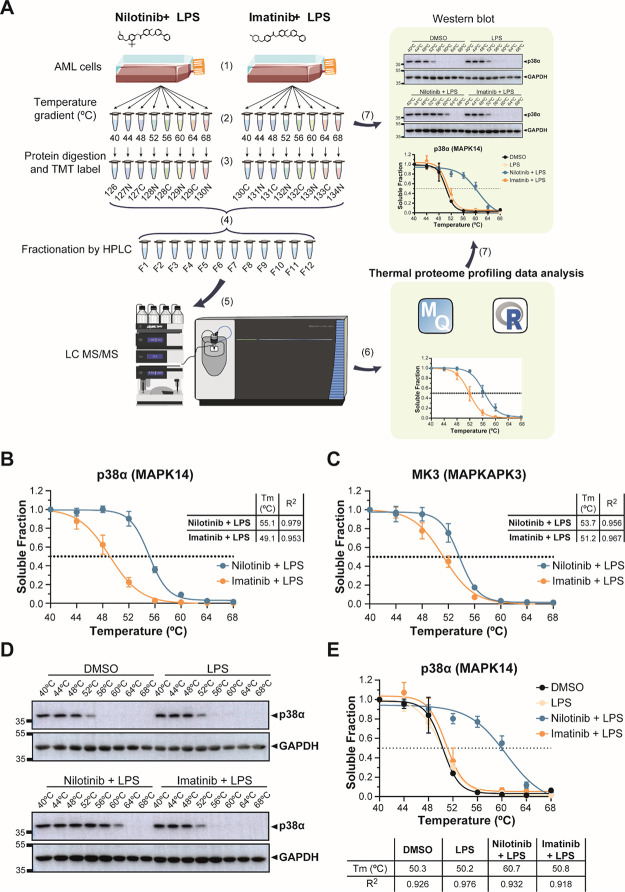
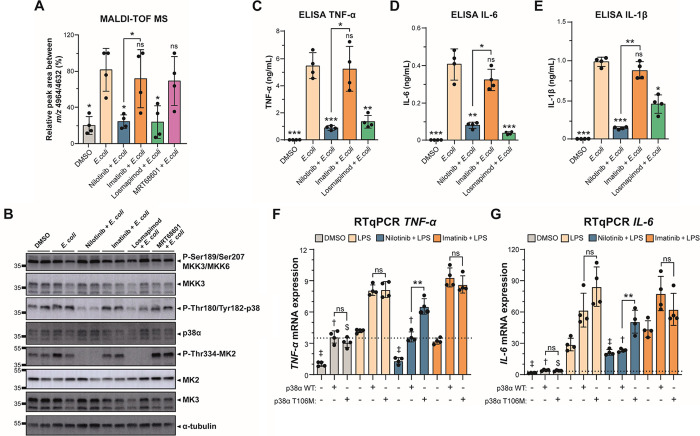
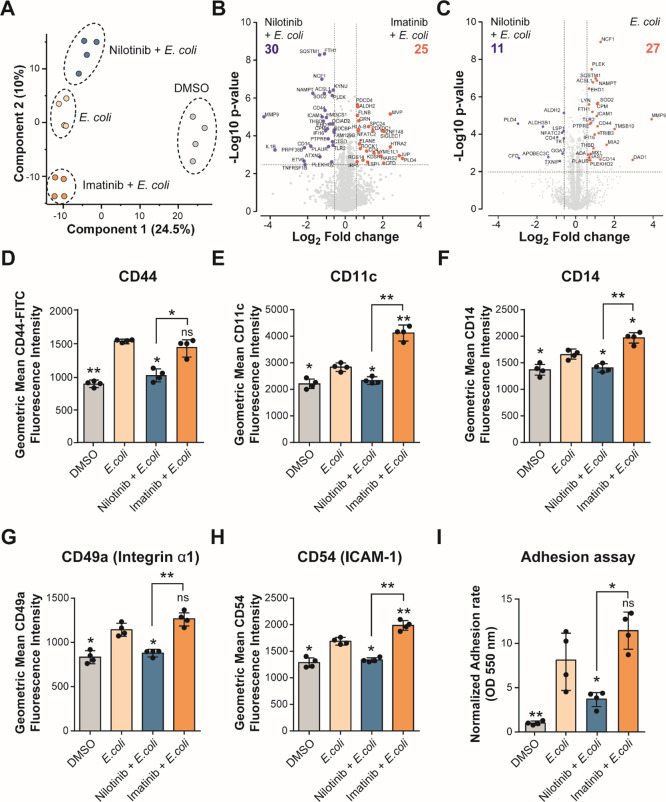
Inflammatory responses are important in cancer, particularly in the context of monocyte-rich aggressive myeloid neoplasm. We developed a label-free cellular phenotypic drug discovery assay to identify anti-inflammatory drugs in human monocytes derived from acute myeloid leukemia (AML), by tracking several features ionizing from only 2500 cells using matrix-assisted laser desorption/ionization-time of flight (MALDI-TOF) mass spectrometry. A proof-of-concept screen showed that the BCR-ABL inhibitor nilotinib, but not the structurally similar imatinib, blocks inflammatory responses. In order to identify the cellular (off-)targets of nilotinib, we performed thermal proteome profiling (TPP). Unlike imatinib, nilotinib and other later-generation BCR-ABL inhibitors bind to p38α and inhibit the p38α-MK2/3 signaling axis, which suppressed pro-inflammatory cytokine expression, cell adhesion, and innate immunity markers in activated monocytes derived from AML. Thus, our study provides a tool for the discovery of new anti-inflammatory drugs, which could contribute to the treatment of inflammation in myeloid neoplasms and other diseases.
炎症反应在癌症中很重要,特别是在富含单核细胞的侵袭性骨髓性肿瘤的背景下。我们开发了一种无标记细胞表型药物发现测定法,通过使用基质辅助激光解吸/电离飞行时间(MALDI-TOF)质谱法从仅 2500 个细胞中跟踪几个特征,可以鉴定源自急性髓细胞白血病(AML)的人单核细胞中的抗炎药物。概念验证筛选表明,BCR-ABL 抑制剂尼罗替尼,而不是结构相似的伊马替尼,可阻断炎症反应。为了确定尼罗替尼的细胞(脱靶)靶点,我们进行了热蛋白质组谱分析(TPP)。与伊马替尼不同,尼罗替尼和其他新一代 BCR-ABL 抑制剂与 p38α结合并抑制 p38α-MK2/3 信号轴,该信号轴抑制了来自 AML 的激活单核细胞中促炎细胞因子表达、细胞黏附和先天免疫标志物。因此,我们的研究为发现新的抗炎药物提供了一种工具,这可能有助于治疗骨髓性肿瘤和其他疾病中的炎症。