Division of Molecular Medicine and Virology, Department of Biomedical and Clinical Sciences, Linköping University, Linköping, Sweden.
Division of Infectious Diseases, Department of Medicine, Karolinska Institutet, Stockholm, Sweden.
mBio. 2022 Oct 26;13(5):e0138722. doi: 10.1128/mbio.01387-22. Epub 2022 Sep 12.
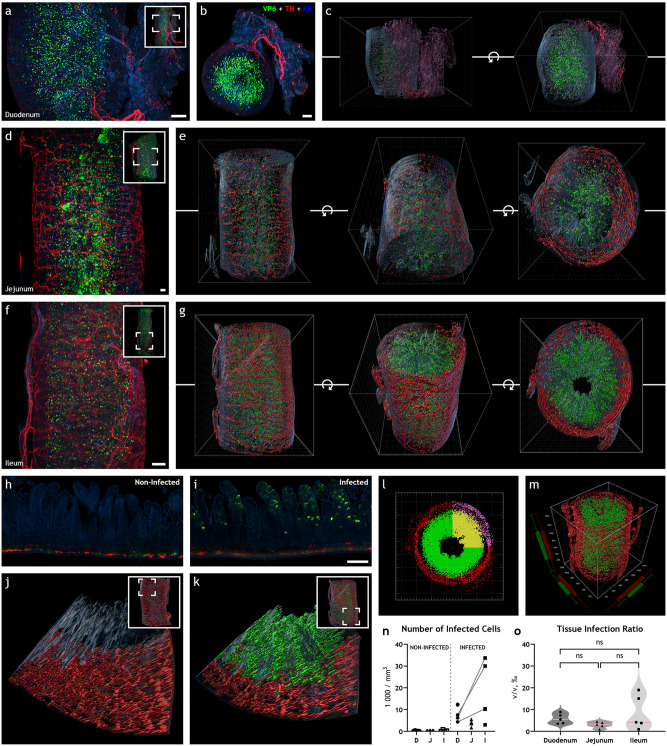
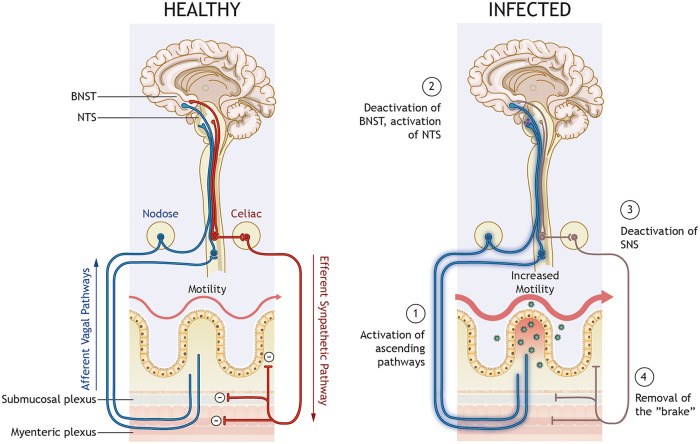
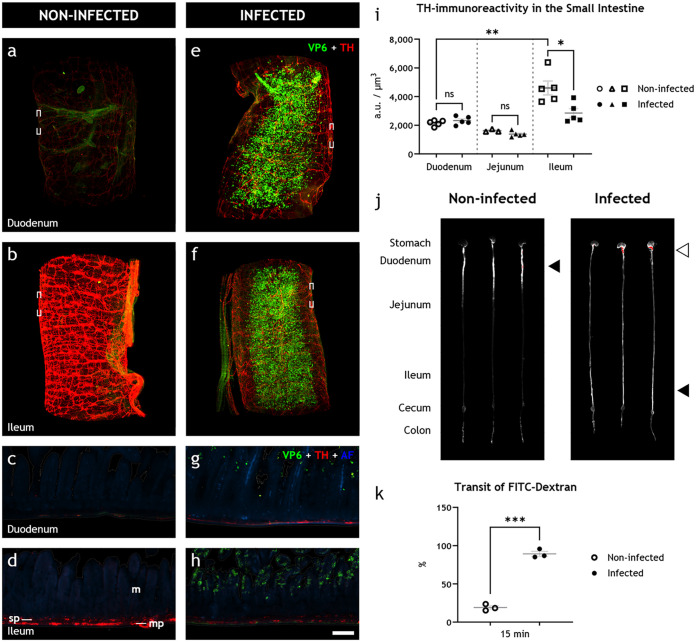
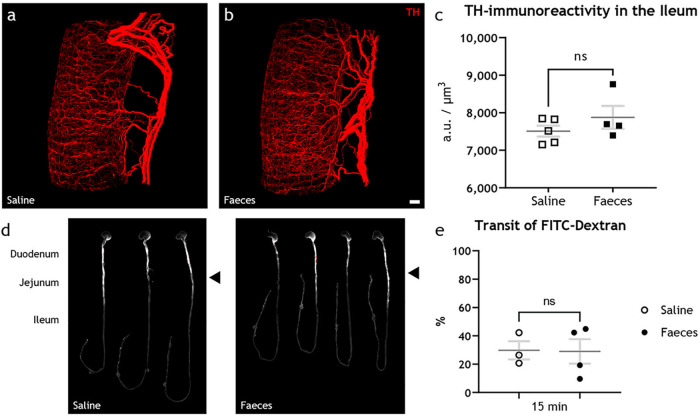
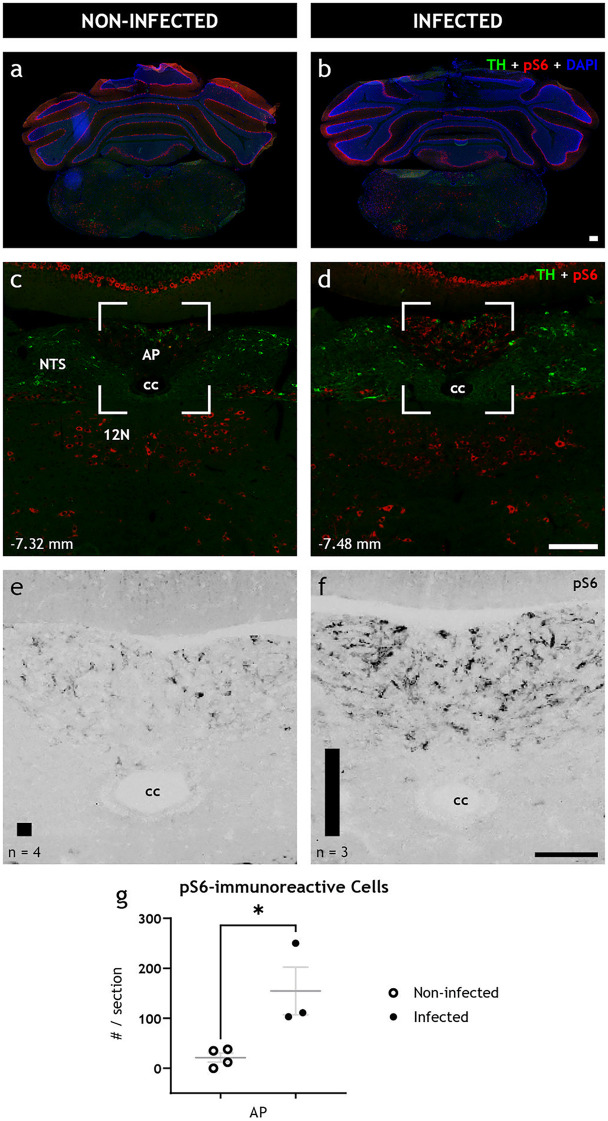
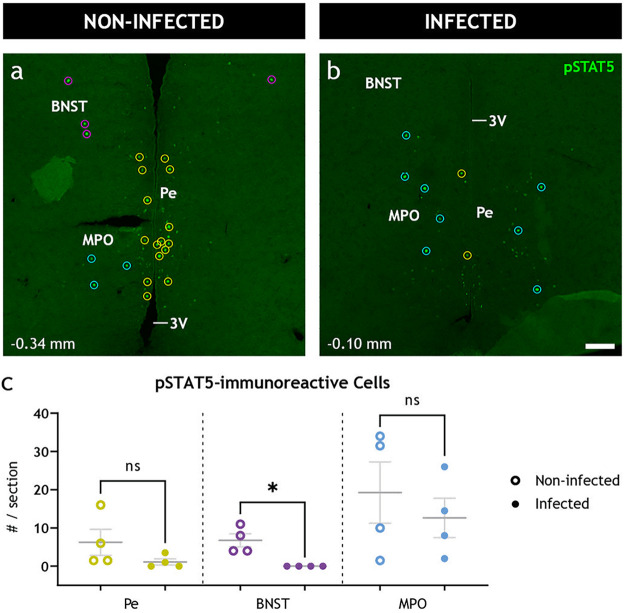
While rotavirus diarrhea has been considered to occur only due to intrinsic intestinal effects within the enteric nervous system, we provide evidence for central nervous system control underlying the clinical symptomology. Our data visualize infection by large-scale three-dimensional (3D) volumetric tissue imaging of a mouse model and demonstrate that rotavirus infection disrupts the homeostasis of the autonomous system by downregulating tyrosine hydroxylase in the noradrenergic sympathetic nervous system in ileum, concomitant with increased intestinal transit. Interestingly, the nervous response was found to occur before the onset of clinical symptoms. In adult infected animals, we found increased pS6 immunoreactivity in the area postrema of the brain stem and decreased phosphorylated STAT5-immunoreactive neurons in the bed nucleus of the stria terminalis, which has been associated with autonomic control, including stress response. Our observations contribute to knowledge of how rotavirus infection induces gut-nerve-brain interaction early in the disease. Previous studies have investigated the mechanisms of rotavirus diarrhea mainly by focusing on intrinsic intestinal signaling. Although these observations are compelling and have provided important mechanistic information on rotavirus diarrhea, no information is available on how the gut communicates with the central nervous system (CNS) during rotavirus infection or on how this communication initiates sickness symptoms. We show that rotavirus infection presymptomatically disrupts the autonomic balance by downregulating the noradrenergic sympathetic nervous system in ileum, concomitant with increased intestinal transit and altered CNS activity, particularly in regions associated with autonomic control and stress response. Altogether, these observations reveal that the rotavirus-infected gut communicates with the CNS before the onset of diarrhea, a surprising observation that brings a new understanding of how rotavirus gives rise to sickness symptoms.
虽然轮状病毒腹泻被认为仅由于肠内神经系统内的内在肠道作用而发生,但我们提供了中枢神经系统控制为基础的临床症状的证据。我们的数据通过对小鼠模型的大规模三维(3D)容积组织成像提供了感染的证据,并证明轮状病毒感染通过下调回肠中的去甲肾上腺素能交感神经系统中的酪氨酸羟化酶破坏自主系统的平衡,同时增加肠道转运。有趣的是,发现神经反应发生在临床症状出现之前。在感染的成年动物中,我们发现脑干的最后区中 pS6 免疫反应性增加,而终纹床核中的磷酸化 STAT5-免疫反应性神经元减少,这与自主控制有关,包括应激反应。我们的观察结果有助于了解轮状病毒感染如何在疾病早期引起肠道-神经-大脑相互作用。以前的研究主要通过关注内在肠道信号来研究轮状病毒腹泻的机制。尽管这些观察结果令人信服,并为轮状病毒腹泻提供了重要的机制信息,但关于轮状病毒感染期间肠道与中枢神经系统(CNS)如何通信以及这种通信如何引发疾病症状的信息尚不清楚。我们表明,轮状病毒感染通过下调回肠中的去甲肾上腺素能交感神经系统预先破坏自主平衡,同时增加肠道转运和改变中枢神经系统活动,特别是在与自主控制和应激反应相关的区域。总之,这些观察结果表明,感染轮状病毒的肠道在腹泻发作前与中枢神经系统进行通信,这一令人惊讶的观察结果为轮状病毒引起疾病症状的方式提供了新的认识。