I. Department of Medicine, University Medical Center of the Johannes Gutenberg University Mainz, Mainz, 55131, Germany.
Institute of Pathology, University Medical Center of the Johannes Gutenberg University Mainz, Mainz, Germany.
Clin Transl Med. 2022 Sep;12(9):e1048. doi: 10.1002/ctm2.1048.
Nonalcoholic fatty liver disease (NAFLD) is associated with hepatic as well as systemic insulin resistance even in the absence of type 2 diabetes. The extent and pathways through which hepatic inflammation modulates insulin sensitivity in NAFLD are only partially understood. We explored the contribution of hepatic interleukin (IL)-1 signalling in a novel conditional knockout mouse model and expand the knowledge on this signalling pathway with regard to its liver-specific functions.
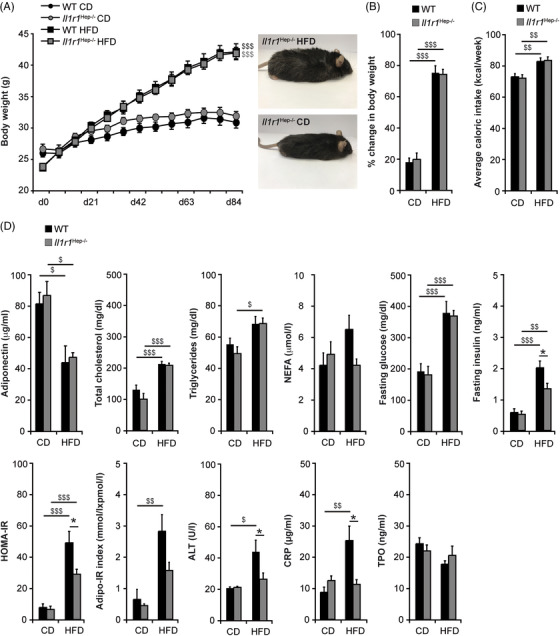
A high-fat, high-carbohydrate diet (HFD) over 12 weeks was used in male hepatocyte-specific IL-1 receptor type 1 (IL-1R1) knockout mice (Il1r1 ) and wild-type (WT) littermates.
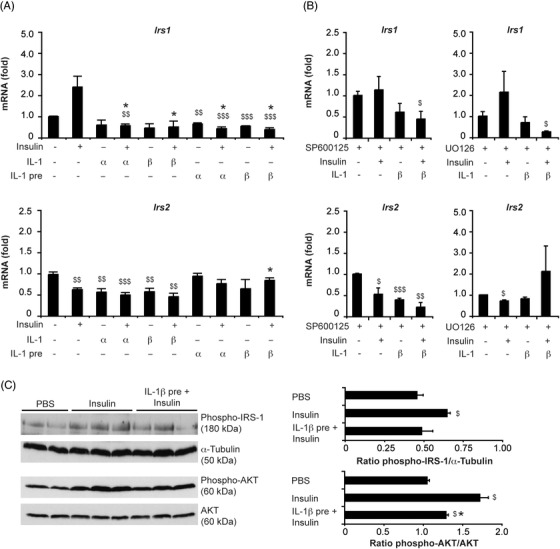
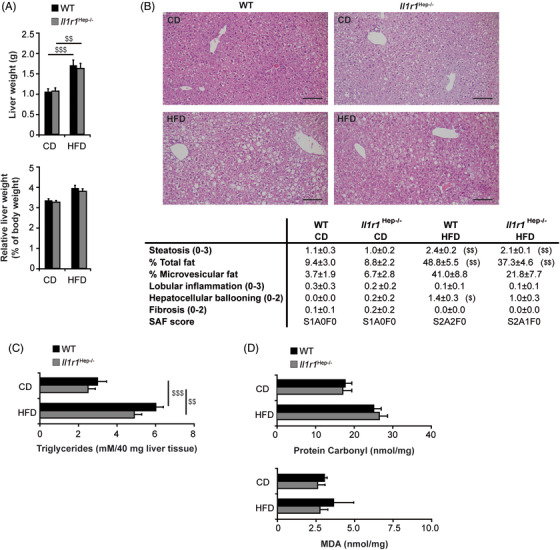
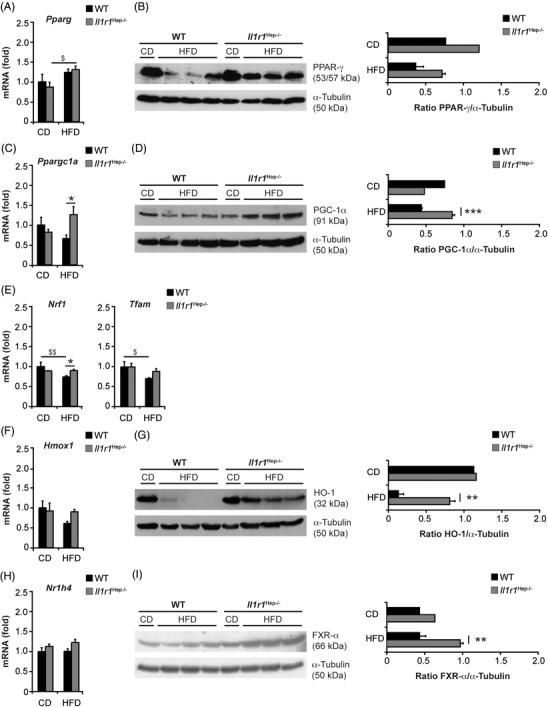
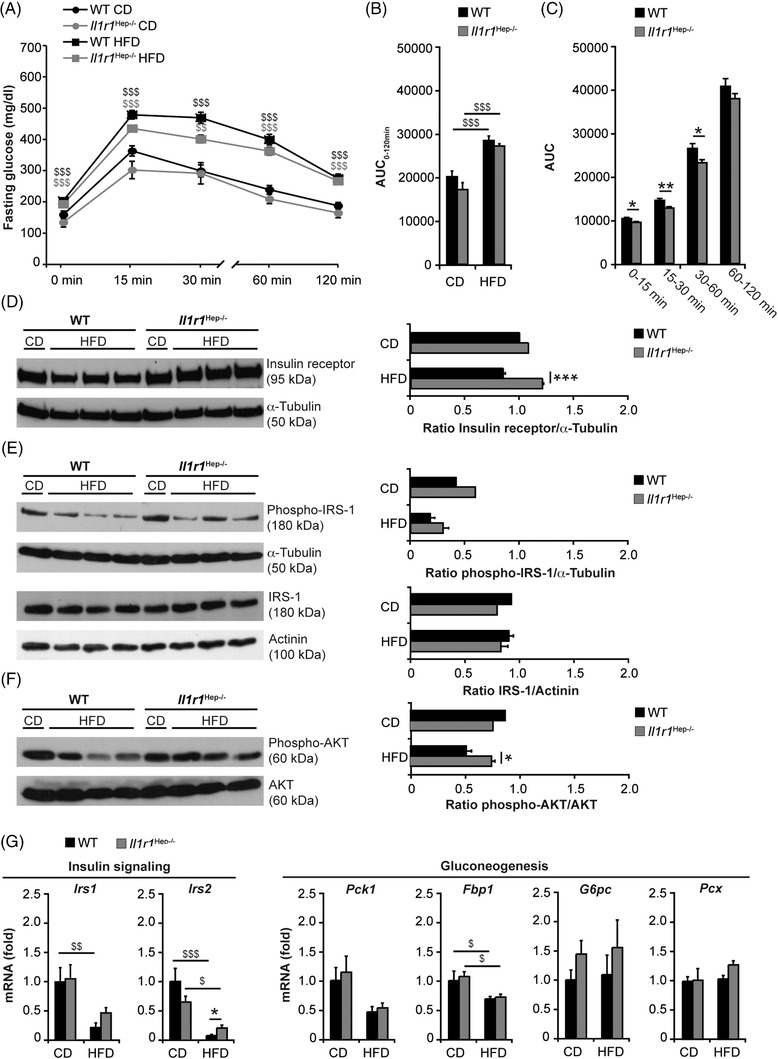
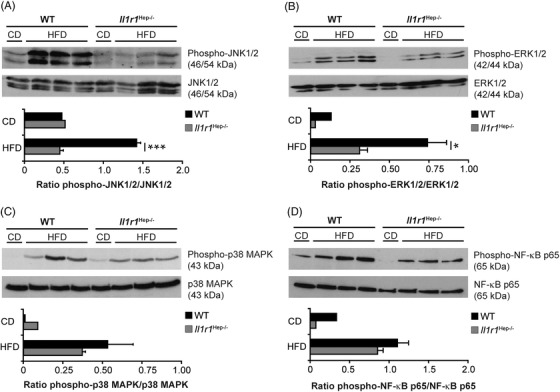
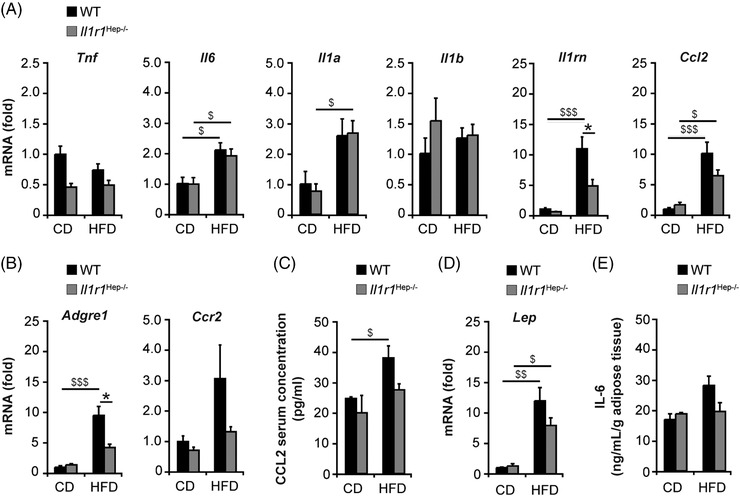
Both genotypes developed an obese phenotype and accompanying macrovesicular hepatic steatosis. In contrast to WT mice, microvesicular steatosis and ballooning injury was less pronounced in HFD-fed Il1r1 mice, and alanine aminotransferase remained in the normal range. This was paralleled by the suppression of injurious and proinflammatory hepatic c-Jun N-terminal kinases and extracellular signal-regulated kinases signalling, stable peroxisome proliferator activated receptor gamma coactivator-1alpha and farnesoid X receptor-alpha expression and preservation of mitochondrial function. Strikingly, despite HFD-feeding Il1r1 mice remained highly insulin sensitive as indicated by lower insulin levels, homeostatic model assessment for insulin resistance, higher glucose tolerance, more stable hepatic insulin signalling cascade, and less adipose tissue inflammation compared to the WT.
The current data highlights that hepatocyte IL-1R1 contributes to hepatic and extrahepatic insulin resistance. Future liver-directed therapies in NAFLD could have effects on insulin sensitivity when improving hepatic inflammation and IL-1R1 signalling.
非酒精性脂肪性肝病(NAFLD)与肝内和全身胰岛素抵抗有关,即使在没有 2 型糖尿病的情况下也是如此。肝内炎症调节胰岛素敏感性的程度和途径尚不完全清楚。我们在一种新型的条件性敲除小鼠模型中探索了肝内白细胞介素(IL)-1 信号在其中的作用,并扩展了关于该信号通路的知识,包括其在肝脏特异性功能方面的知识。
在雄性肝细胞特异性白细胞介素 1 受体 1(IL-1R1)敲除小鼠(Il1r1)和野生型(WT)同窝仔鼠中,使用高脂肪、高碳水化合物饮食(HFD)喂养 12 周。
两种基因型均发展为肥胖表型,并伴有大泡性肝脂肪变性。与 WT 小鼠相比,HFD 喂养的 Il1r1 小鼠的微泡性脂肪变性和气球样变性较轻,丙氨酸氨基转移酶仍在正常范围内。这与损伤性和促炎性肝 c-Jun N 端激酶和细胞外信号调节激酶信号的抑制、稳定的过氧化物酶体增殖物激活受体γ共激活因子-1α和法尼醇 X 受体-α表达以及线粒体功能的维持相平行。引人注目的是,尽管 HFD 喂养,Il1r1 小鼠仍然保持高度的胰岛素敏感性,表现为较低的胰岛素水平、稳态模型评估的胰岛素抵抗指数、更高的葡萄糖耐量、更稳定的肝胰岛素信号级联和较少的脂肪组织炎症,与 WT 相比。
目前的数据强调了肝细胞 IL-1R1 有助于肝内和肝外胰岛素抵抗。未来针对 NAFLD 的肝脏靶向治疗在改善肝内炎症和 IL-1R1 信号时,可能会对胰岛素敏感性产生影响。