Department of Biochemistry, Center for Biomedical Mass Spectrometry, Boston University School of Medicine, Boston, Massachusetts, USA.
Boston University Bioinformatics Program, Boston University, Boston, Massachusetts, USA.
Mol Cell Proteomics. 2022 Nov;21(11):100412. doi: 10.1016/j.mcpro.2022.100412. Epub 2022 Sep 11.
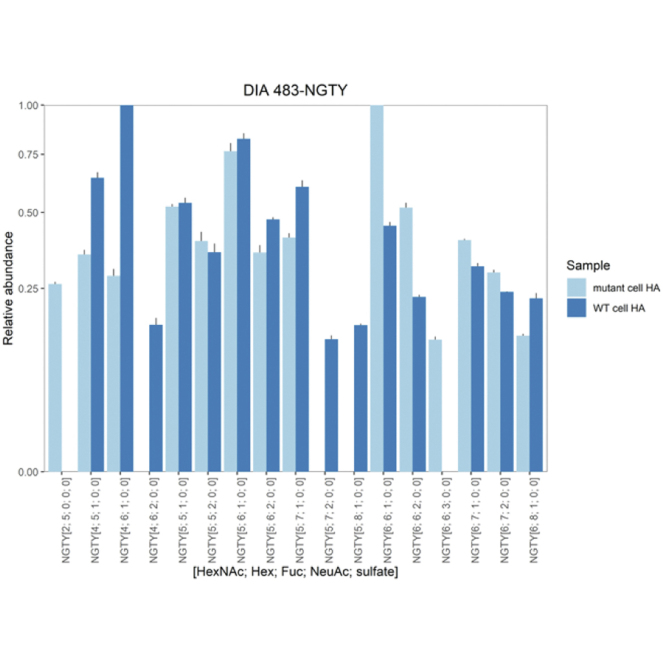
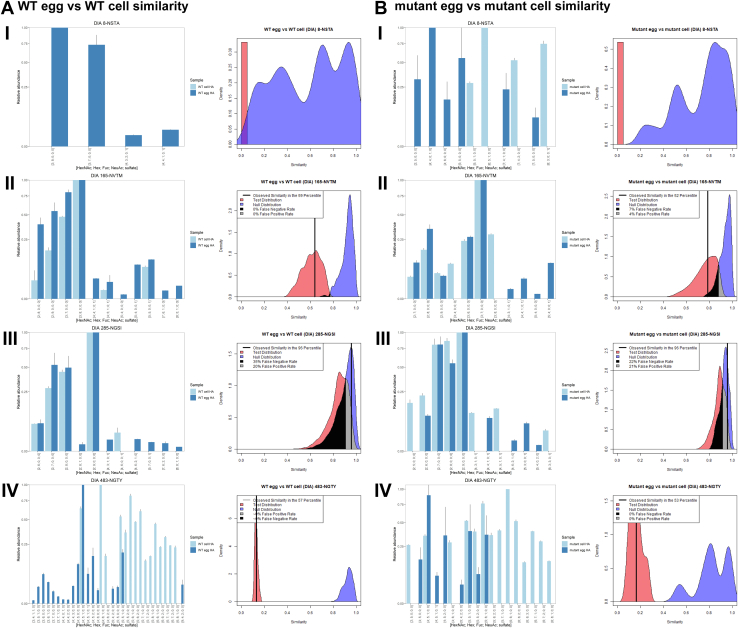
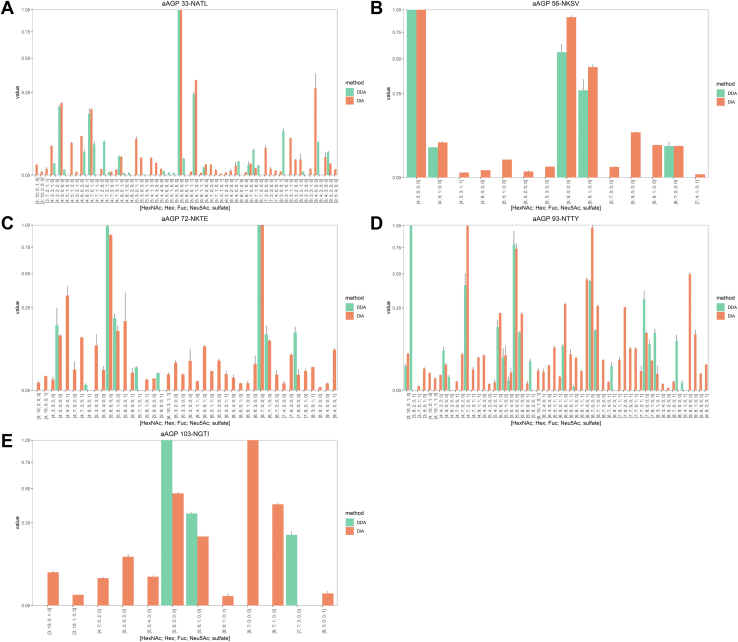
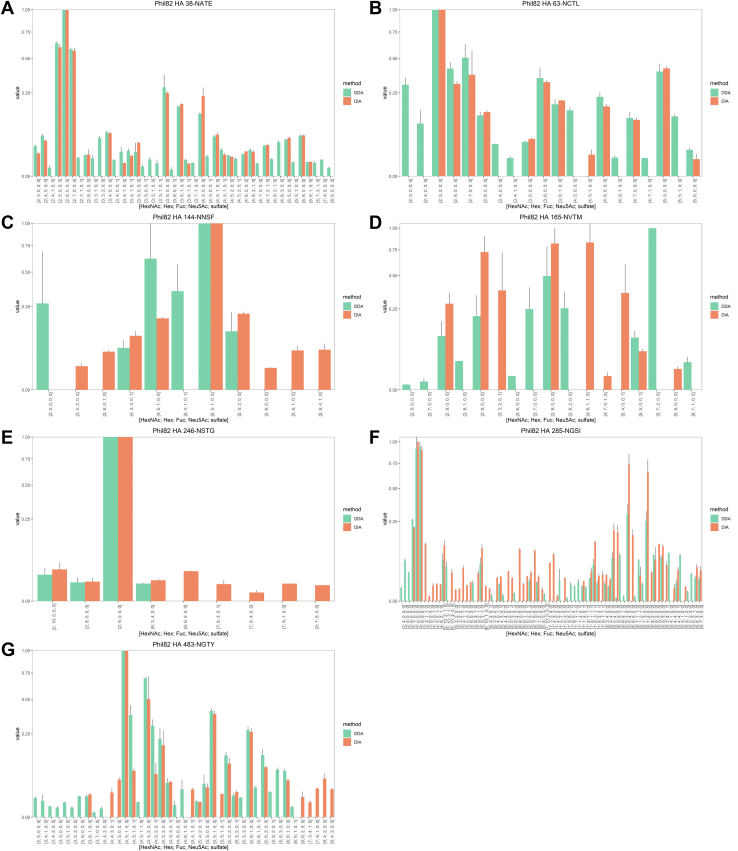
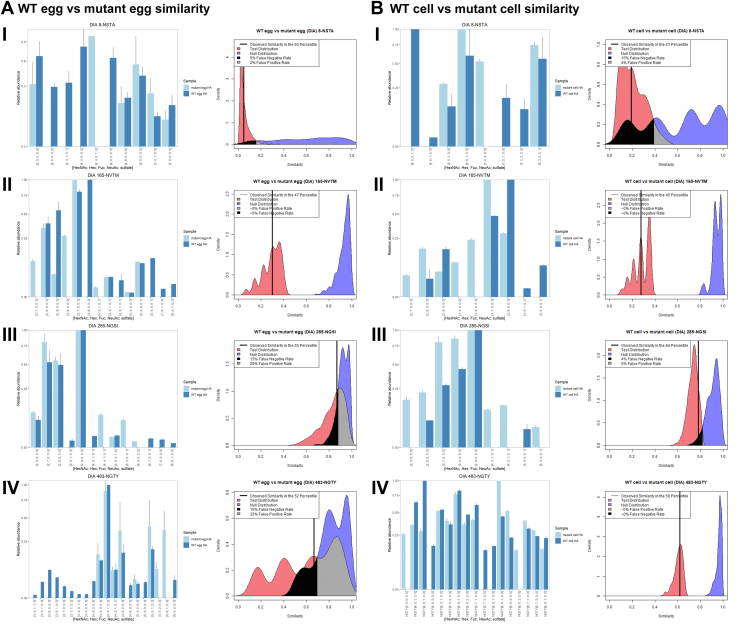
Amino acid sequences of immunodominant domains of hemagglutinin (HA) on the surface of influenza A virus (IAV) evolve rapidly, producing viral variants. HA mediates receptor recognition, binding and cell entry, and serves as the target for IAV vaccines. Glycosylation, a post-translational modification that places large branched polysaccharide molecules on proteins, can modulate the function of HA and shield antigenic regions allowing for viral evasion from immune responses. Our previous work showed that subtle changes in the HA protein sequence can have a measurable change in glycosylation. Thus, being able to quantitatively measure glycosylation changes in variants is critical for understanding how HA function may change throughout viral evolution. Moreover, understanding quantitatively how the choice of viral expression systems affects glycosylation can help in the process of vaccine design and manufacture. Although IAV vaccines are most commonly expressed in chicken eggs, cell-based vaccines have many advantages, and the adoption of more cell-based vaccines would be an important step in mitigating seasonal influenza and protecting against future pandemics. Here, we have investigated the use of data-independent acquisition (DIA) mass spectrometry for quantitative glycoproteomics. We found that DIA improved the sensitivity of glycopeptide detection for four variants of A/Switzerland/9715293/2013 (H3N2): WT and mutant, each expressed in embryonated chicken eggs and Madin-Darby canine kidney cells. We used the Tanimoto similarity metric to quantify changes in glycosylation between WT and mutant and between egg-expressed and cell-expressed virus. Our DIA site-specific glycosylation similarity comparison of WT and mutant expressed in eggs confirmed our previous analysis while achieving greater depth of coverage. We found that sequence variations and changing viral expression systems affected distinct glycosylation sites of HA. Our methods can be applied to track glycosylation changes in circulating IAV variants to bolster genomic surveillance already being done, for a more complete understanding of IAV evolution.
流感病毒(IAV)表面血凝素(HA)的免疫优势结构域的氨基酸序列迅速进化,产生病毒变体。HA 介导受体识别、结合和细胞进入,是 IAV 疫苗的靶标。糖基化是一种翻译后修饰,在蛋白质上添加大型分支多糖分子,可以调节 HA 的功能,并屏蔽抗原区域,使病毒能够逃避免疫反应。我们之前的工作表明,HA 蛋白序列的细微变化会导致糖基化发生可测量的变化。因此,能够定量测量变体中的糖基化变化对于了解 HA 功能在病毒进化过程中可能发生的变化至关重要。此外,定量了解病毒表达系统的选择如何影响糖基化,可以帮助疫苗设计和制造过程。虽然 IAV 疫苗最常用于在鸡胚中表达,但基于细胞的疫苗有许多优势,采用更多基于细胞的疫苗将是减轻季节性流感和防范未来大流行的重要一步。在这里,我们研究了使用数据非依赖性采集(DIA)质谱进行定量糖蛋白质组学的方法。我们发现,DIA 提高了对四种 A/Switzerland/9715293/2013(H3N2)变体(WT 和突变体)的糖肽检测灵敏度:WT 和突变体分别在鸡胚和犬肾细胞中表达。我们使用 Tanimoto 相似性度量来量化 WT 和突变体之间以及在鸡蛋和细胞中表达的病毒之间的糖基化变化。我们的 DIA 对在鸡蛋中表达的 WT 和突变体的特异性糖基化相似性比较证实了我们之前的分析,同时实现了更深的覆盖度。我们发现,序列变异和改变的病毒表达系统影响 HA 的不同糖基化位点。我们的方法可用于跟踪循环 IAV 变体中的糖基化变化,以支持已经进行的基因组监测,从而更全面地了解 IAV 的进化。