Ekenros Linda, von Rosen Philip, Solli Guro Strøm, Sandbakk Øyvind, Holmberg Hans-Christer, Hirschberg Angelica Lindén, Fridén Cecilia
Department of Neurobiology, Care Sciences and Society, Division of Physiotherapy Karolinska Institutet, Huddinge, Sweden.
School of Sport Sciences, UiT, the Arctic University of Norway, Tromsø, Norway.
Front Physiol. 2022 Aug 30;13:954760. doi: 10.3389/fphys.2022.954760. eCollection 2022.
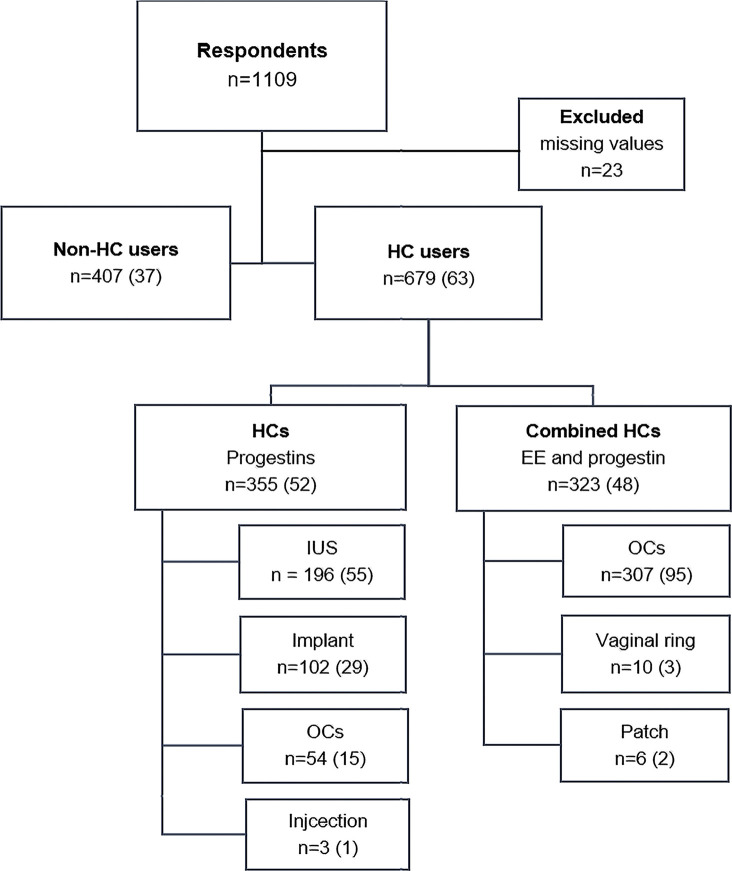
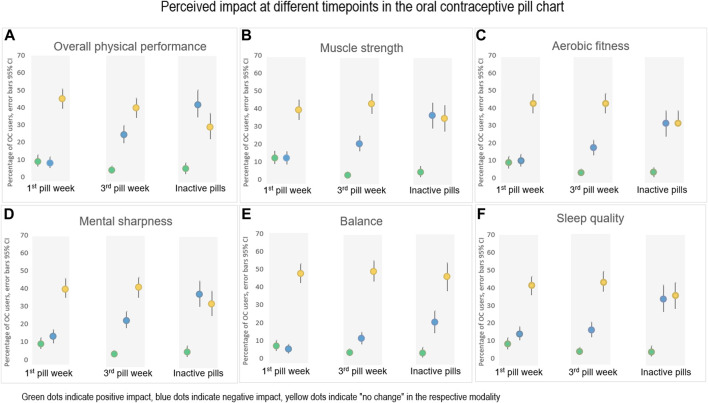
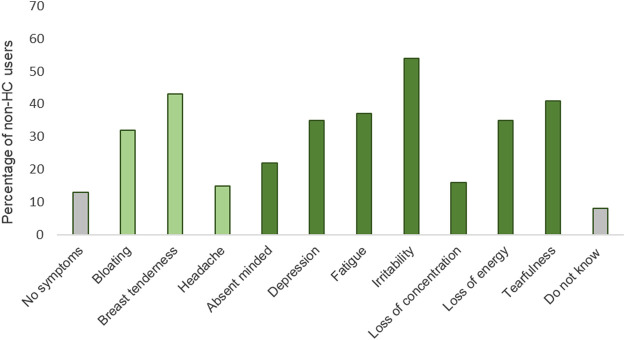
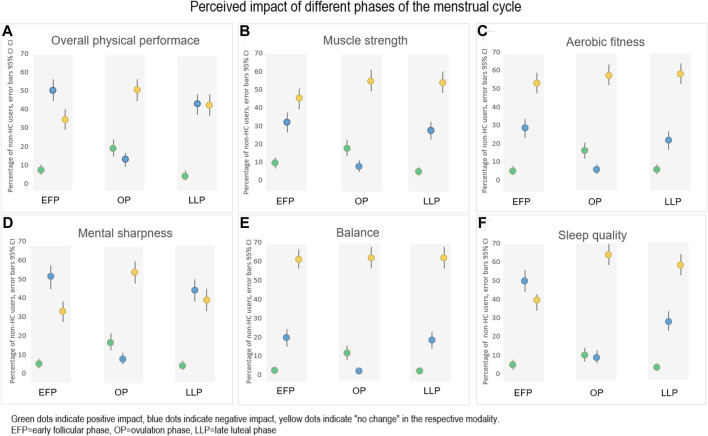
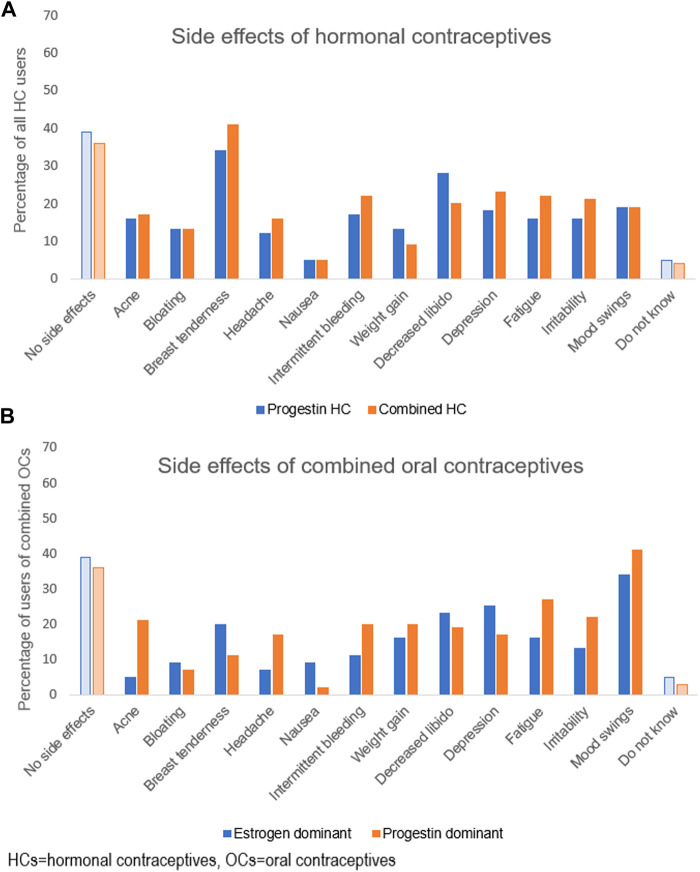
Female athletes train and compete under the potential influence of hormonal fluctuations during the menstrual cycle or during use of various hormonal contraceptives. Dysmenorrhea and premenstrual symptoms are common in the general population, as well as side effects of hormonal contraceptives. More detailed knowledge concerning prevalence and perceived impact of these symptoms on training and performance in different sports is required. The aim of the study was to 1) characterize perceptions of training and performance during the menstrual cycle phases and by hormonal contraceptive use in a large population of female athletes; 2) explore whether symptoms experienced are related to perceived performance; and 3) examine potential differences in these factors between athletes at different levels of performance. The study was based on self-reported data from 1,086 athletes from 57 sports at different performance levels a web-based questionnaire. Thirty-seven percent ( = 407) of the athletes did not use hormonal contraceptives. In this group, menstrual cycle related symptoms were common across all athlete levels, particularly dysmenorrhea (74%, = 300) and premenstrual symptoms (78%, = 318), which also influenced perceived performance of aerobic fitness, muscle strength, mental sharpness, balance, and sleep quality. Sixty-three percent ( = 679) of the athletes used various hormonal contraceptives and 40% ( = 272) perceived a variety of side-effects. Physical performance was experienced equally independent of time-point of the pill-chart except for the period of inactive pills, which was associated with more negative impact. Nonetheless, only 18% ( = 191) of the athletes considered menstrual cycle or hormonal contraceptive issues when planning their training or competitions. These results indicate that greater focus is needed to identify and effectively treat different menstrual cycle and hormonal contraceptive related symptoms on an individual level.
女性运动员在月经周期或使用各种激素避孕药期间进行训练和比赛时,会受到激素波动的潜在影响。痛经和经前症状在普通人群中很常见,激素避孕药的副作用也是如此。需要更详细地了解这些症状在不同运动项目中的患病率以及对训练和表现的感知影响。本研究的目的是:1)描述大量女性运动员在月经周期各阶段以及使用激素避孕药时对训练和表现的认知;2)探讨所经历的症状是否与感知到的表现相关;3)检查不同表现水平的运动员在这些因素上的潜在差异。该研究基于来自57个不同表现水平运动项目的1086名运动员的自我报告数据——一份基于网络的问卷。37%(n = 407)的运动员未使用激素避孕药。在这组运动员中,与月经周期相关的症状在所有水平的运动员中都很常见,尤其是痛经(74%,n = 300)和经前症状(78%,n = 318),这些症状也会影响对有氧适能、肌肉力量、思维敏捷度、平衡和睡眠质量的感知表现。63%(n = 679)的运动员使用了各种激素避孕药,40%(n = 272)的人感知到了各种副作用。除了无活性药片期,身体表现不受服药周期时间点的影响,无活性药片期会带来更多负面影响。尽管如此,只有18%(n = 191)的运动员在规划训练或比赛时会考虑月经周期或激素避孕药问题。这些结果表明,需要更加关注在个体层面上识别和有效治疗与月经周期和激素避孕药相关的不同症状。