David H. Koch Center for Applied Research of Genitourinary Cancers and Genitourinary Medical Oncology Department, The University of Texas MD Anderson Cancer Center, Houston, Texas.
Department of Urology, Urological Research Institute, Vita Salute San Raffaele University, San Raffaele Scientific Institute, Milan, Italy.
Mol Cancer Res. 2023 Jan 3;21(1):51-61. doi: 10.1158/1541-7786.MCR-22-0250.
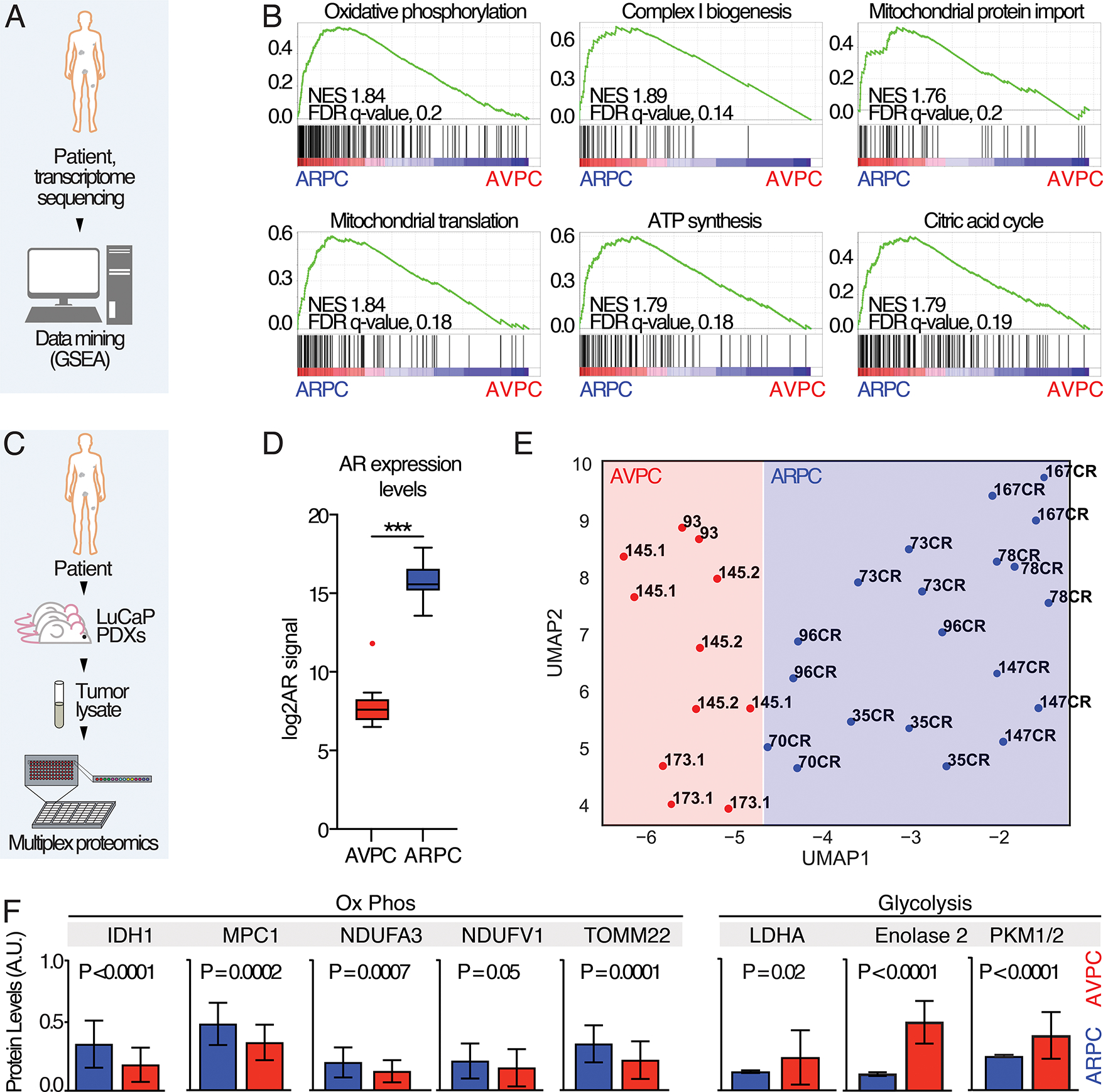
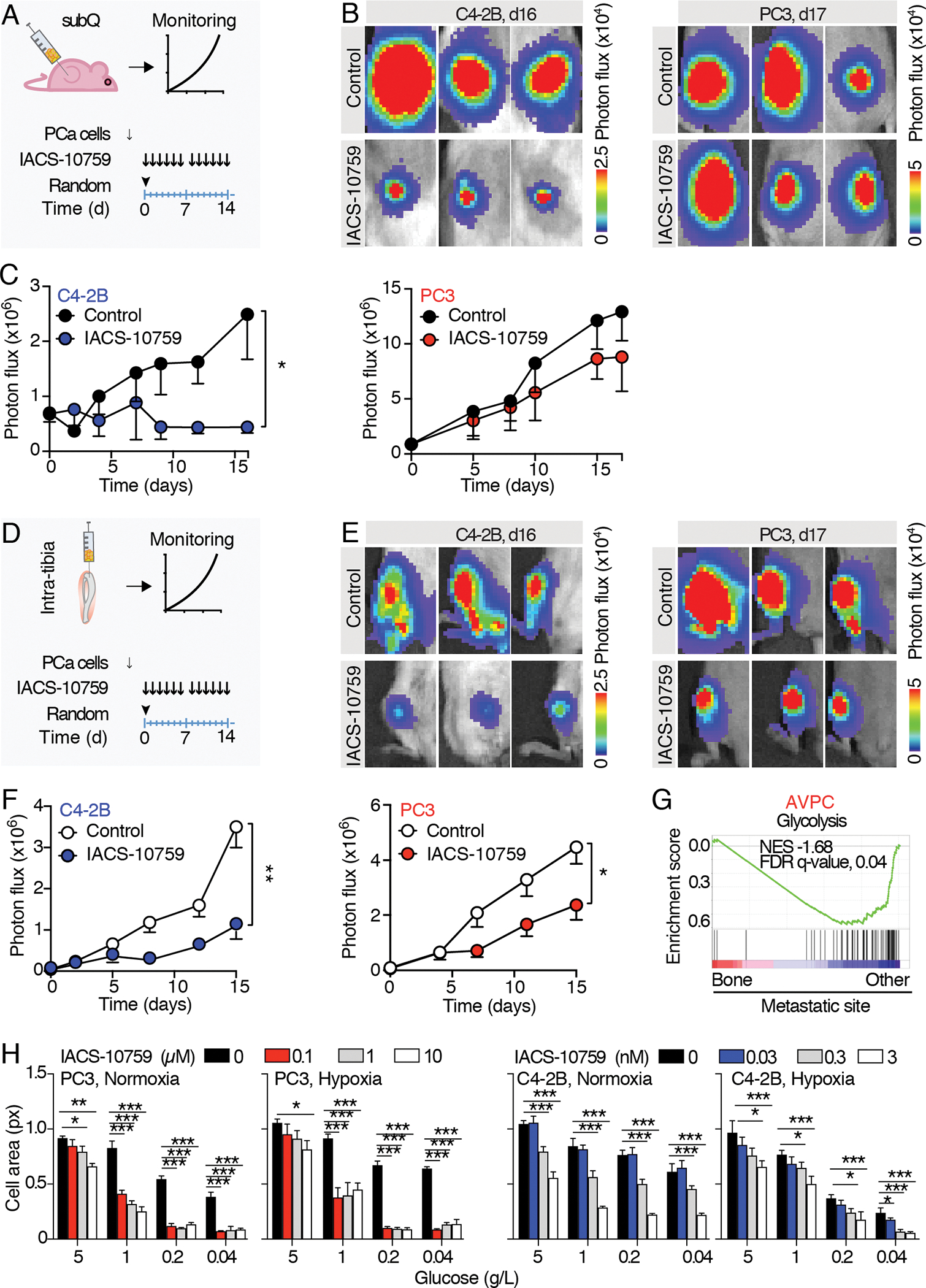
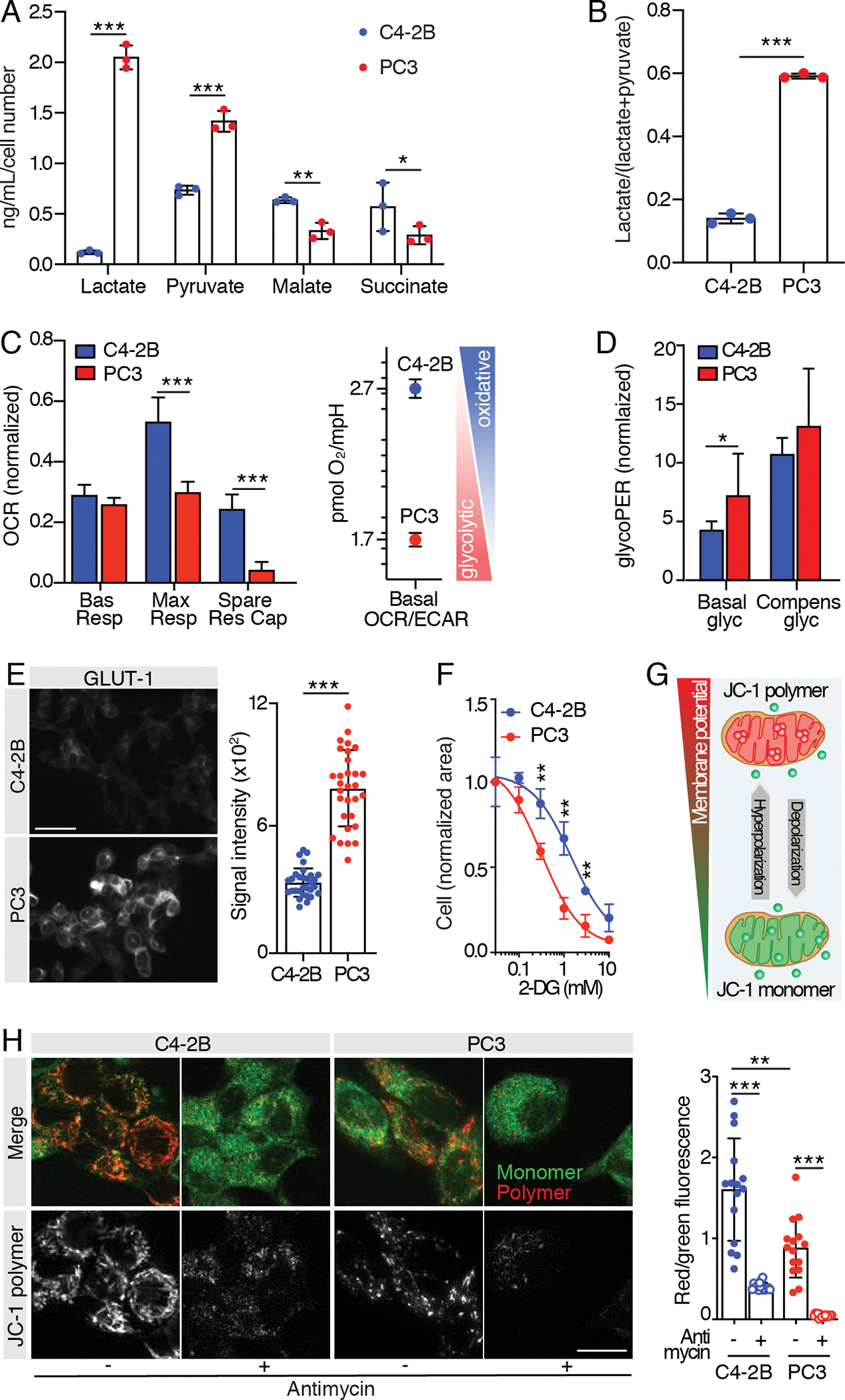
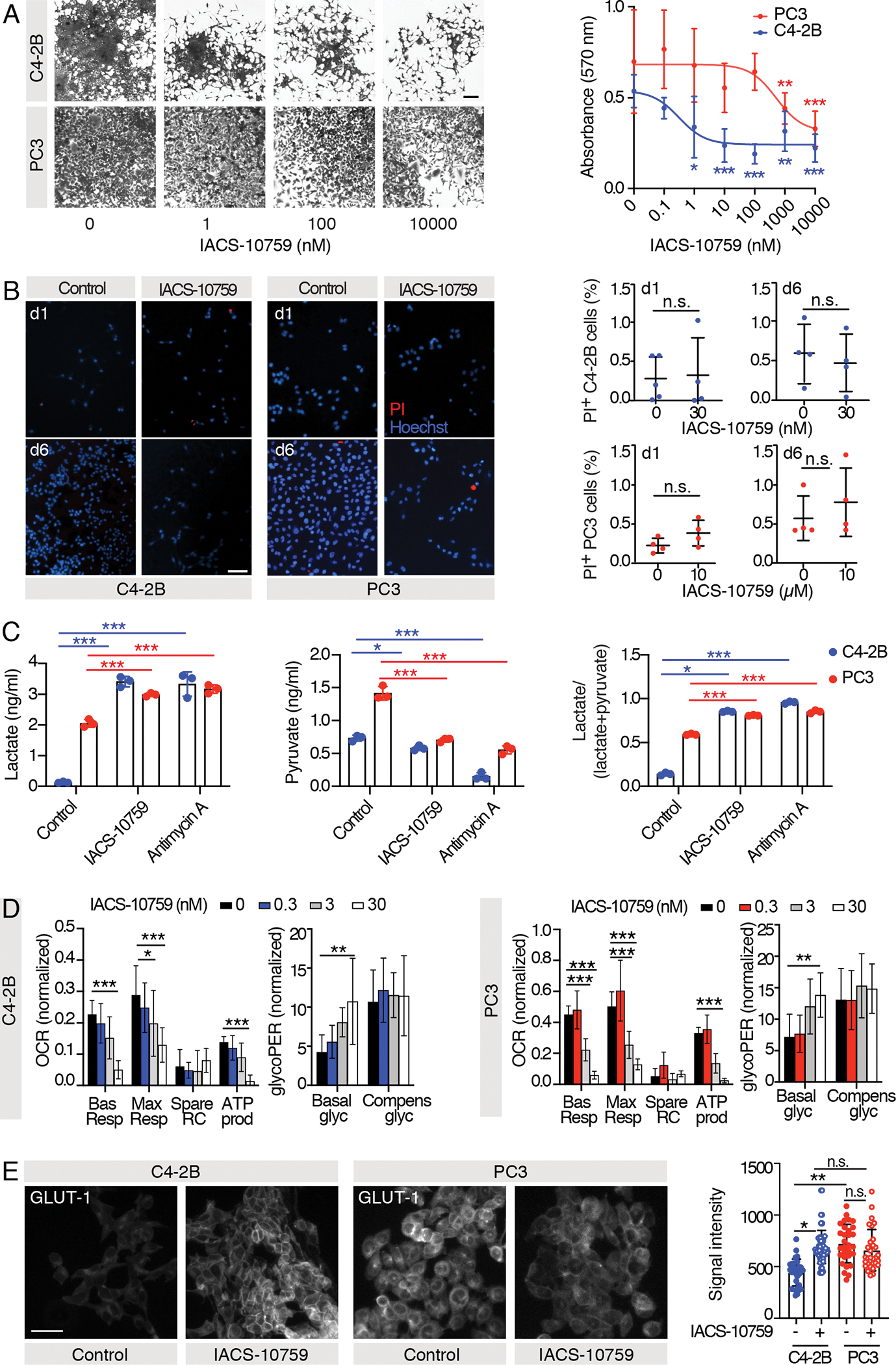
Aberrant metabolic functions play a crucial role in prostate cancer progression and lethality. Currently, limited knowledge is available on subtype-specific metabolic features and their implications for treatment. We therefore investigated the metabolic determinants of the two major subtypes of castration-resistant prostate cancer [androgen receptor-expressing prostate cancer (ARPC) and aggressive variant prostate cancer (AVPC)]. Transcriptomic analyses revealed enrichment of gene sets involved in oxidative phosphorylation (OXPHOS) in ARPC tumor samples compared with AVPC. Unbiased screening of metabolic signaling pathways in patient-derived xenograft models by proteomic analyses further supported an enrichment of OXPHOS in ARPC compared with AVPC, and a skewing toward glycolysis by AVPC. In vitro, ARPC C4-2B cells depended on aerobic respiration, while AVPC PC3 cells relied more heavily on glycolysis, as further confirmed by pharmacologic interference using IACS-10759, a clinical-grade inhibitor of OXPHOS. In vivo studies confirmed IACS-10759's inhibitory effects in subcutaneous and bone-localized C4-2B tumors, and no effect in subcutaneous PC3 tumors. Unexpectedly, IACS-10759 inhibited PC3 tumor growth in bone, indicating microenvironment-induced metabolic reprogramming. These results suggest that castration-resistant ARPC and AVPC exhibit different metabolic dependencies, which can further undergo metabolic reprogramming in bone.
These vulnerabilities may be exploited with mechanistically novel treatments, such as those targeting OXPHOS alone or possibly in combination with existing therapies. In addition, our findings underscore the impact of the tumor microenvironment in reprogramming prostate cancer metabolism.
异常代谢功能在前列腺癌的进展和致死性中起着至关重要的作用。目前,关于亚型特异性代谢特征及其对治疗的影响的知识有限。因此,我们研究了两种主要去势抵抗性前列腺癌亚型(雄激素受体表达型前列腺癌(ARPC)和侵袭性变异型前列腺癌(AVPC))的代谢决定因素。转录组分析显示,与 AVPC 相比,ARPC 肿瘤样本中涉及氧化磷酸化(OXPHOS)的基因集富集。通过蛋白质组学分析对患者来源的异种移植模型中的代谢信号通路进行无偏筛选,进一步支持 ARPC 中 OXPHOS 的富集和 AVPC 中的糖酵解偏向。在体外,ARPC C4-2B 细胞依赖有氧呼吸,而 AVPC PC3 细胞则更多地依赖糖酵解,这进一步通过 IACS-10759(一种临床级别的 OXPHOS 抑制剂)的药理学干扰得到证实。体内研究证实了 IACS-10759 在皮下和骨定位的 C4-2B 肿瘤中的抑制作用,而在皮下 PC3 肿瘤中没有作用。出乎意料的是,IACS-10759 抑制了骨中的 PC3 肿瘤生长,表明微环境诱导了代谢重编程。这些结果表明,去势抵抗性 ARPC 和 AVPC 表现出不同的代谢依赖性,这些依赖性可以在骨中进一步发生代谢重编程。
这些脆弱性可以通过机制上新颖的治疗方法来利用,例如单独靶向 OXPHOS 的治疗方法,或者可能与现有的治疗方法联合使用。此外,我们的研究结果强调了肿瘤微环境在重新编程前列腺癌代谢中的影响。