Chen Kang, Lu Qingyang, Xin Xu, Yang Zhongzhen, Zhu Lequn, Xu Qi
School of Maritime Economics and Management, Dalian Maritime University, Dalian, Liaoning, 116026, PR China.
School of Economics and Management, Tongji University, Shanghai, 200092, PR China.
Ocean Coast Manag. 2022 Nov 1;230:106366. doi: 10.1016/j.ocecoaman.2022.106366. Epub 2022 Sep 14.
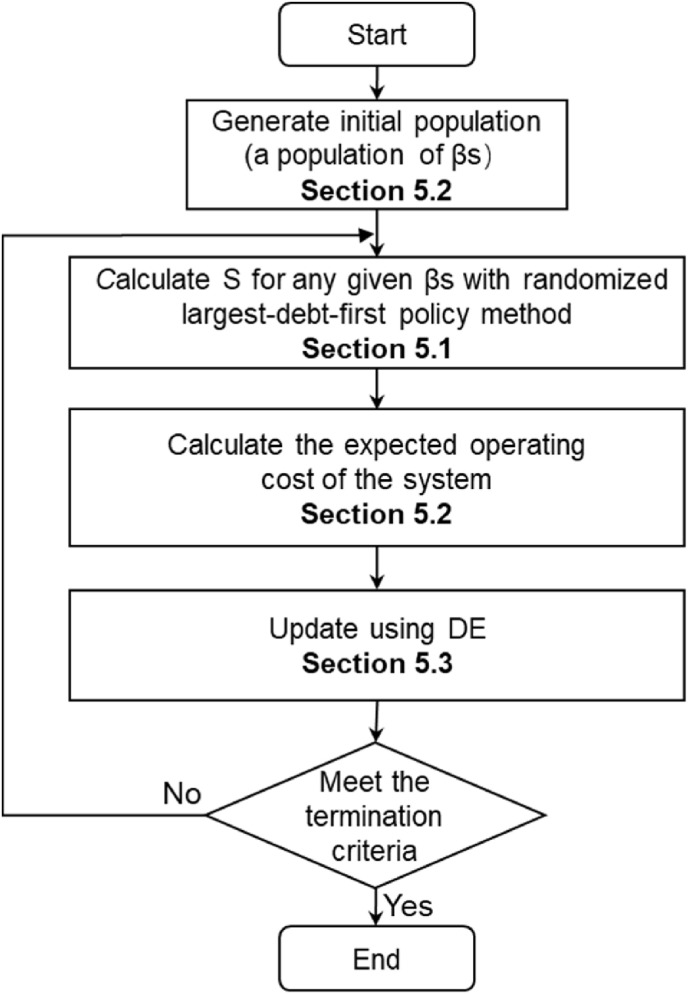
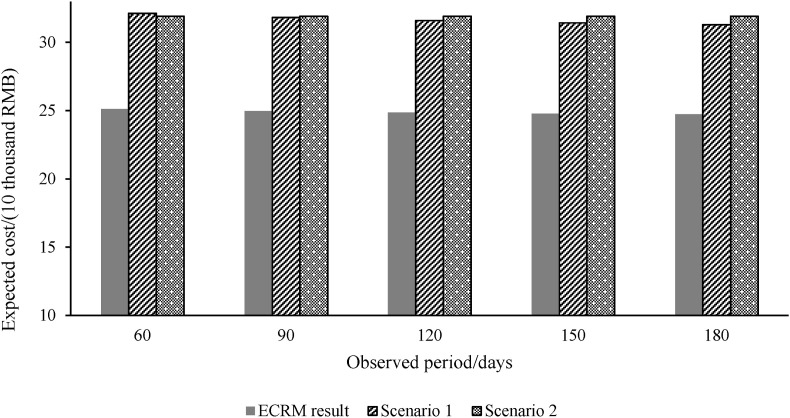
In the post-COVID-19 epidemic era (PCEE), the supply of empty containers will face stronger uncertainty. Estimating the amount of self-owned and leased empty containers that need to be allocated to each inland freight station in a specific area becomes a critical issue for liner companies in PCEE. However, owing to the high degree of unpredictability of the demand and the limited flexibility of empty container relocation, the abovementioned issue has not been fully addressed. This paper provides a model for empty container allocation without knowing the probability distribution function of empty container demand in advance. The abovementioned model can jointly optimize the quantities of self-owned empty containers and leased containers allocated to each inland freight station. To solve the model, a largest-debt-first policy is adopted to simplify the complicated model, and a differential evolutionary (DE) algorithm is developed to solve the simplified model. Compared with some commonly used algorithms, DE has advantages considering the ability to explore the optimal solution. In addition, the utility of the largest-debt-first policy proposed in this paper is compared with that of the traditional method. Experimental results show that in the case of high demand fluctuations, the proposed policy is better in controlling the operational and management costs. Overall, the theory and method proposed in this paper can effectively help the carrier set a reasonable regional empty container stock level and determine the number of self-owned and leased empty containers.
在新冠疫情后时代(PCEE),空箱供应将面临更大的不确定性。估算特定区域内每个内陆货运站需要分配的自有和租赁空箱数量,成为PCEE中航运公司的关键问题。然而,由于需求的高度不可预测性以及空箱调运灵活性有限,上述问题尚未得到充分解决。本文提出一种在事先不知道空箱需求概率分布函数情况下的空箱分配模型。上述模型能够联合优化分配给每个内陆货运站的自有空箱和租赁空箱数量。为求解该模型,采用最大负债优先策略简化复杂模型,并开发了一种差分进化(DE)算法来求解简化后的模型。与一些常用算法相比,DE在探索最优解能力方面具有优势。此外,将本文提出的最大负债优先策略的效用与传统方法进行了比较。实验结果表明,在需求波动较大的情况下,所提策略在控制运营和管理成本方面表现更优。总体而言,本文提出的理论和方法能够有效帮助承运人设定合理的区域空箱库存水平,并确定自有和租赁空箱数量。