Lambie Stephanie G, Weal Geoffrey R, Blackmore Caroline E, Palmer Richard E, Garden Anna L
Department of Chemistry, University of Otago P.O. Box 56 Dunedin 9054 New Zealand
Nanoscale Physics Research Laboratory, School of Physics and Astronomy, University of Birmingham Birmingham B15 2TT UK.
Nanoscale Adv. 2019 May 3;1(6):2416-2425. doi: 10.1039/c9na00122k. eCollection 2019 Jun 11.
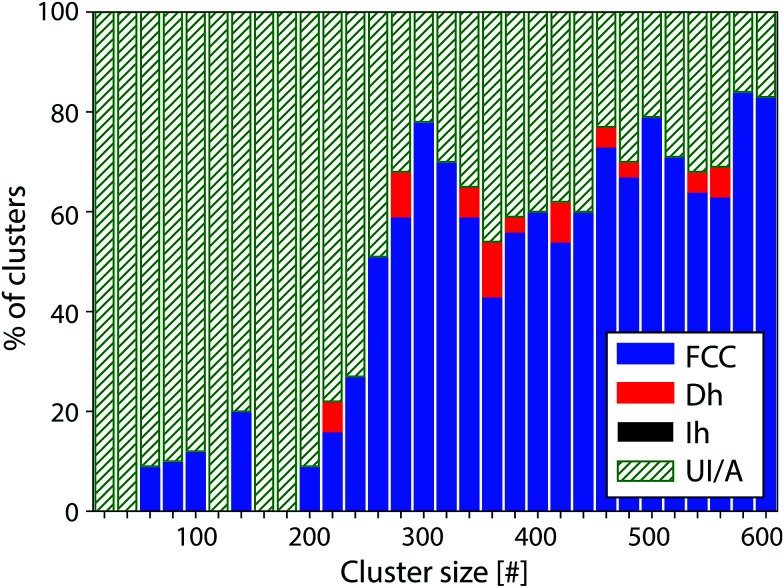
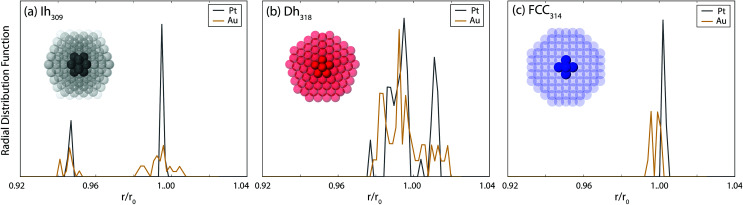
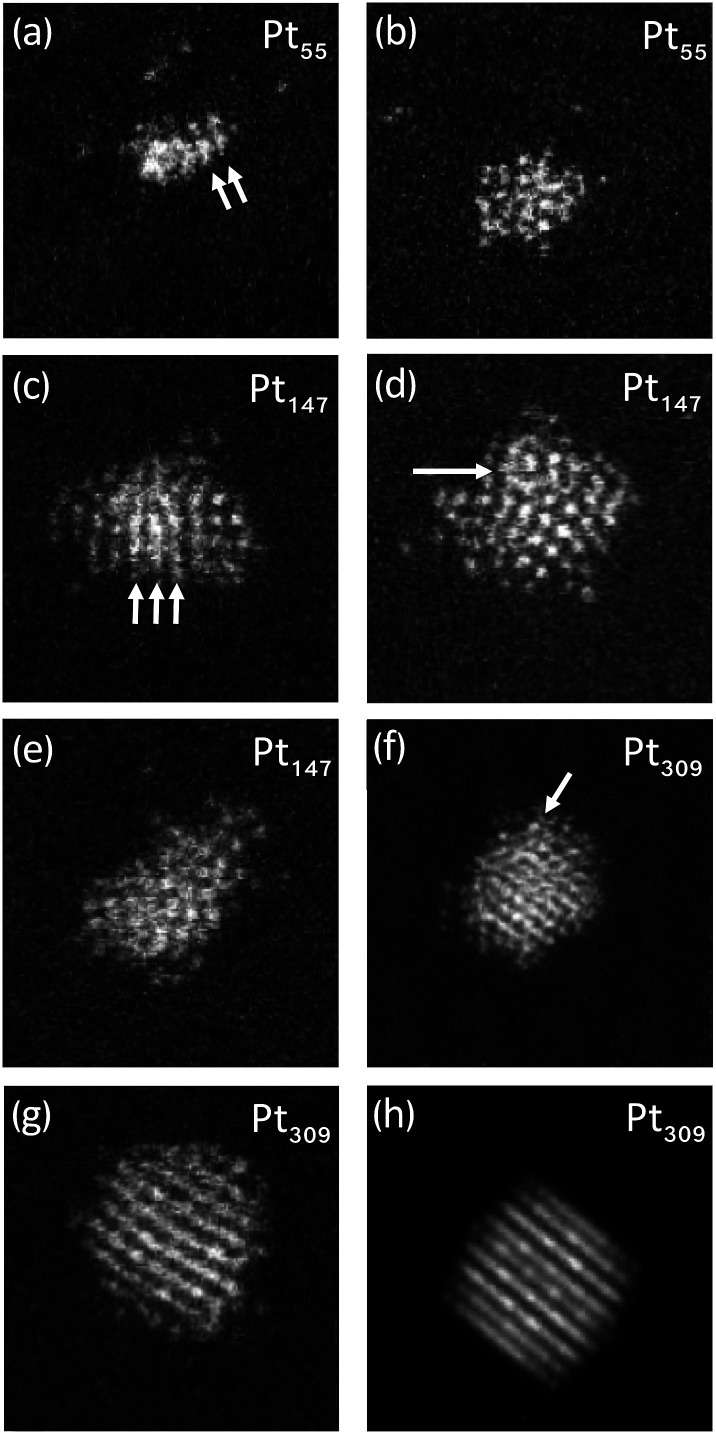
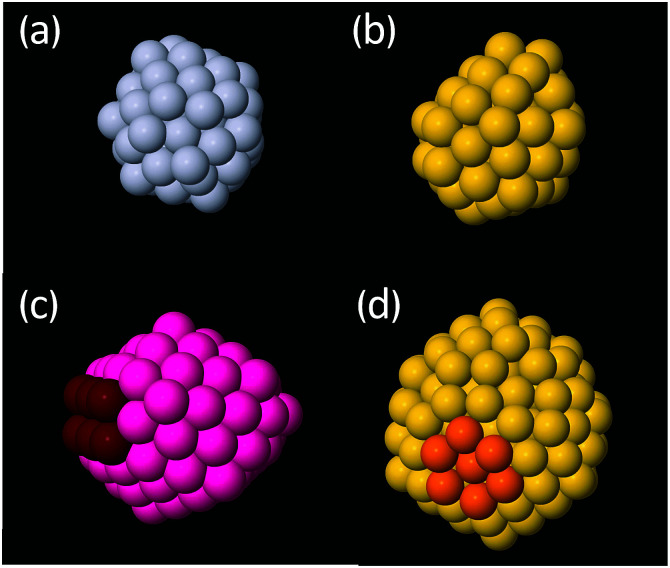
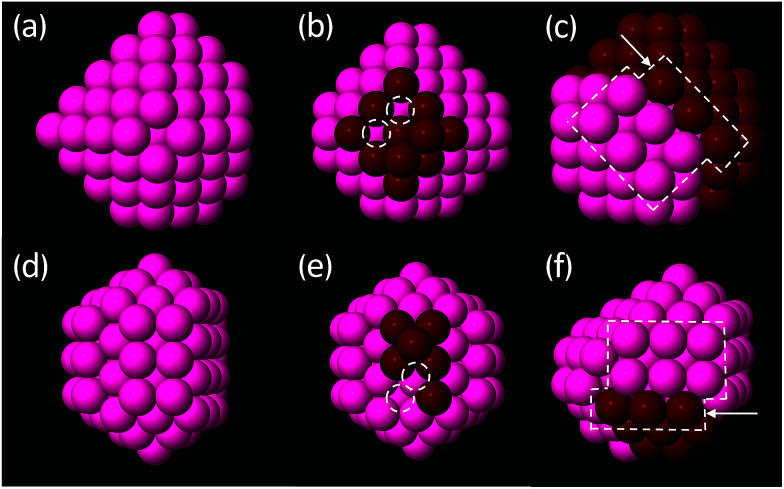
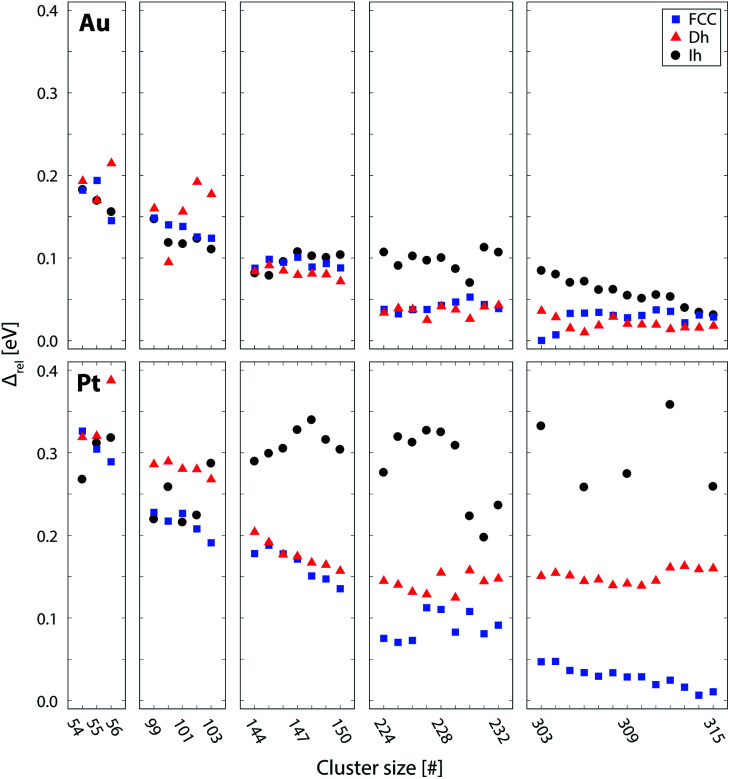
The atomic structure of size-selected Pt clusters in the range 10-600 atoms is investigated with aberration-corrected scanning transmission electron microscopy and reveals significantly different behaviour from the existing data for Au clusters. The Pt clusters show a dominance of the FCC motif from relatively small sizes, whereas traditionally for Au multiple motifs - the icosahedron, decahedron and FCC motifs (and related structures) compete. The new data motivates a comprehensive computational investigation to better understand similarities and differences in the structures and energetics of the two different metallic clusters. Low energy structures of Pt and Au clusters with 55, 101, 147, 228 and 309 atoms (±2%) are identified using a global optimisation algorithm, and the relative energies found by local minimisation using density functional theory. Our computational results support the experimental observations; for Au clusters all motifs are comparably stable over the whole size range, whereas for Pt, the motifs only compete at the smallest sizes, after which the FCC motif is the most stable. Structural analysis suggests the greater tendency of Au towards amorphisation enables the icosahedron and decahedron to remain competitive at larger sizes.
利用像差校正扫描透射电子显微镜研究了尺寸在10至600个原子范围内的尺寸选择铂团簇的原子结构,结果表明其行为与现有金团簇数据有显著差异。铂团簇从相对较小的尺寸起就以面心立方(FCC)结构为主,而传统上金团簇有多种结构——二十面体、十面体和面心立方结构(以及相关结构)相互竞争。这些新数据促使开展全面的计算研究,以更好地理解这两种不同金属团簇在结构和能量方面的异同。使用全局优化算法确定了含有55、101、147、228和309个原子(±2%)的铂和金团簇的低能量结构,并利用密度泛函理论通过局部极小化找到相对能量。我们的计算结果支持实验观察结果;对于金团簇,在整个尺寸范围内所有结构都相当稳定,而对于铂团簇,这些结构仅在最小尺寸时相互竞争,在此之后面心立方结构最稳定。结构分析表明,金更易形成非晶态的倾向使得二十面体和十面体在较大尺寸时仍具有竞争力。