Xiao Chen, Hu Hang, Yang Hai, Li Si, Zhou Hui, Ruan Jian, Zhu Yuting, Yang Xiangliang, Li Zifu
National Engineering Research Center for Nanomedicine, College of Life Science and Technology, Huazhong University of Science and Technology Wuhan 430074 China
Department of Nanomedicine and Biopharmaceutics, College of Life Science and Technology, Huazhong University of Science and Technology Wuhan 430074 China.
Nanoscale Adv. 2018 Nov 26;1(3):1002-1012. doi: 10.1039/c8na00271a. eCollection 2019 Mar 12.
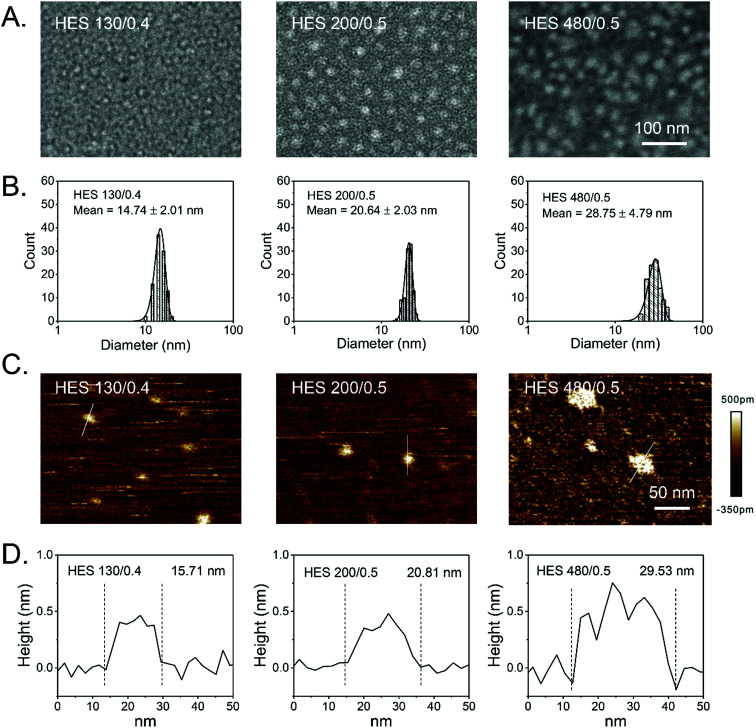
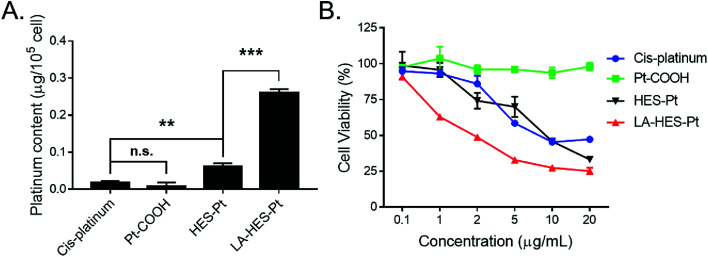
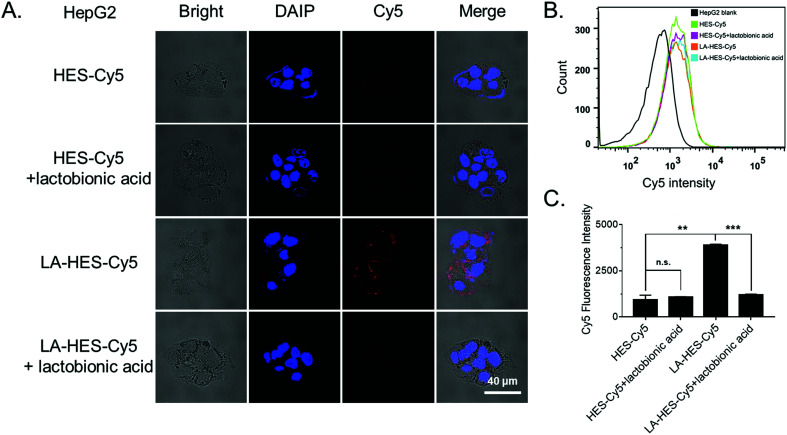
Cis-platinum has been widely used as a first-line chemotherapy agent in clinics for more than 40 years. Although considerable efforts have been expended for developing platinum-based nano drug delivery systems (NDDS) to resolve the problems of low water solubility, short half-life, and severe side effects of cis-platinum, it remains challenging to apply these nanoplatforms to cancer treatments in clinics on account of the issues related to safety, complex fabrication procedures, and limited cellular uptake. Herein, we constructed a novel cis-platinum delivery system with hydroxyethyl starch (HES), which is a semisynthetic polysaccharide that has been used worldwide as colloidal plasma volume expanders (PVE) in clinics for several decades. By combining TEM, AFM, and DLS, we have found that HES particles are colloidal nanoparticles in solution, with diameters ranging from 15 to 40 nm as a function of molecular weight. We further revealed that HES adopted a hyperbranched colloidal structure with rather compact conformation. These results demonstrate that HES is a promising nanocarrier to deliver drug molecules. Taking advantage of the poly-hydroxyl sites of HES, we constructed a novel HES-based cis-platinum delivery nanoplatform. HES was directly conjugated with cis-platinum prodrug an ester bond and decorated with an active targeting molecule, lactobionic acid (LA), contributing toward higher antitumor activity against hepatoma carcinoma cells as compared to cis-platinum. These results have significant implications for the clinically used plasma volume expander-HES and shed light on the clinical translation of HES-based nano drug delivery systems.
顺铂作为一线化疗药物已在临床上广泛应用40多年。尽管人们为开发基于铂的纳米药物递送系统(NDDS)付出了巨大努力,以解决顺铂水溶性低、半衰期短和副作用严重等问题,但由于与安全性、复杂的制备程序以及有限的细胞摄取相关的问题,将这些纳米平台应用于临床癌症治疗仍然具有挑战性。在此,我们构建了一种新型的顺铂递送系统,该系统使用羟乙基淀粉(HES),羟乙基淀粉是一种半合成多糖,几十年来一直在全球临床用作胶体血浆容量扩充剂(PVE)。通过结合透射电子显微镜(TEM)、原子力显微镜(AFM)和动态光散射(DLS),我们发现HES颗粒在溶液中是胶体纳米颗粒,其直径根据分子量在15至40纳米范围内变化。我们进一步揭示,HES呈现出具有相当紧密构象的超支化胶体结构。这些结果表明,HES是一种有前景的药物分子递送纳米载体。利用HES的多羟基位点,我们构建了一种新型的基于HES的顺铂递送纳米平台。HES通过酯键与顺铂前药直接共轭,并装饰有活性靶向分子乳糖酸(LA),与顺铂相比,对肝癌细胞具有更高的抗肿瘤活性。这些结果对临床使用的血浆容量扩充剂HES具有重要意义,并为基于HES的纳米药物递送系统的临床转化提供了启示。