Department of Pharmacy and Therapeutics, University of Pittsburgh School of Pharmacy, Pittsburgh, PA, 15217, USA.
Department of Orthopedic Surgery, Rush Oak Park Hospital, Rush Medical College, Chicago, IL, USA.
Appl Health Econ Health Policy. 2023 Jan;21(1):141-152. doi: 10.1007/s40258-022-00762-9. Epub 2022 Sep 22.
The aim of this study was to assess the cost effectiveness of allogeneic umbilical cord blood-derived mesenchymal stem cells with sodium hyaluronate (hUCB-MSC) compared with microfracture in patients with knee cartilage defects caused by osteoarthritis (OA) in South Korea.
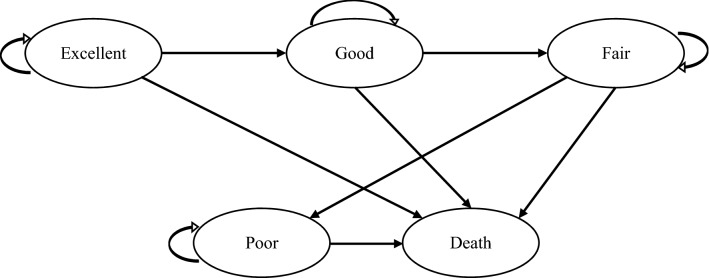
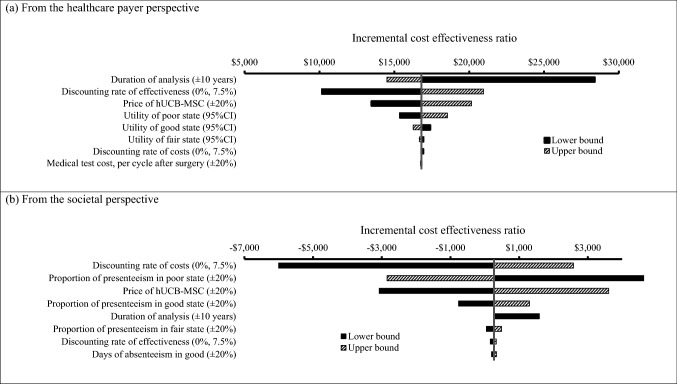
A partitioned survival model approach was taken consisting of five mutually exclusive health states: excellent, good, fair, poor, and death over a 20-year time horizon. Utility values were obtained from a randomized clinical trial. Cost data were extracted from a database provided by the Health Insurance Review & Assessment Service, and the utilization of healthcare services was estimated from an expert panel of orthopedic surgeons using a structured questionnaire. The incremental cost-effectiveness ratio (ICER) in terms of quality-adjusted life-years (QALY) was calculated. Deterministic and probabilistic sensitivity analyses were performed.
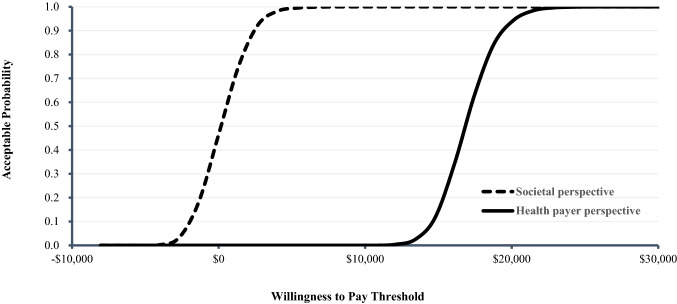
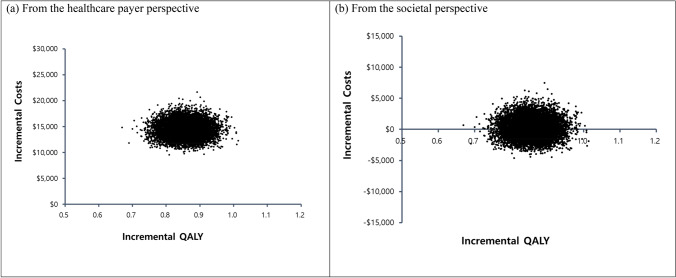
In the base case, the incremental costs of US$14,410 for hUCB-MSC therapy along with its associated QALY gain of 0.857 resulted in an ICER of US$16,812 (₩18,790,773) per QALY (95% confidence interval [CI] US$13,408-US$20,828) when compared with microfracture treatment from a healthcare payer perspective. From a societal perspective, the ICER was US$268 (₩299,255) per QALY (95% CI -US$2915 to US$3784). When using a willingness-to-pay threshold of US$22,367/QALY, the probability of hUCB being cost effectiveness compared with microfracture was 99% from the healthcare payer perspective and 100% from the societal perspective.
The study demonstrated that hUCB-MSC therapy was cost effective compared with microfracture when treating patients with knee OA. These findings should inform health policy decision makers about considerations for cost-effective therapy for treating knee OA to ultimately enhance population health.
本研究旨在评估同种异体脐带血来源间充质干细胞联合透明质酸钠(hUCB-MSC)治疗由骨关节炎(OA)引起的膝关节软骨缺损患者的成本效果,与微骨折相比,该研究在韩国进行。
采用分区生存模型方法,包括五个相互排斥的健康状态:优秀、良好、中等、差和死亡,时间范围为 20 年。效用值来自一项随机临床试验。成本数据从健康保险审查和评估服务数据库中提取,使用骨科医生专家组的结构化问卷估计医疗保健服务的使用情况。根据质量调整生命年(QALY)计算增量成本效果比(ICER)。进行了确定性和概率敏感性分析。
在基础情况下,hUCB-MSC 治疗的增量成本为 14410 美元,相关的 QALY 增益为 0.857,从医疗保健支付者的角度来看,与微骨折治疗相比,ICER 为 16812 美元(₩18790773)每 QALY(95%置信区间 [CI] 美元 13408-20828)。从社会角度来看,ICER 为 268 美元(₩299255)每 QALY(95%CI-2915 美元至 3784 美元)。当使用 22367 美元/QALY 的支付意愿阈值时,hUCB 相对于微骨折的成本效果的概率从医疗保健支付者的角度来看为 99%,从社会的角度来看为 100%。
该研究表明,与微骨折相比,hUCB-MSC 治疗膝骨关节炎患者具有成本效益。这些发现应告知卫生政策决策者在考虑治疗膝骨关节炎的成本效益治疗时的考虑因素,最终提高人口健康水平。