Faculty of Veterinary Medicine, University of Calgary, Calgary, AB T2N 1N4, Canada.
Agriculture and Agri-Food Canada, Lethbridge Research and Development Centre, Lethbridge, AB T1J 4B1, Canada.
Toxins (Basel). 2022 Aug 31;14(9):603. doi: 10.3390/toxins14090603.
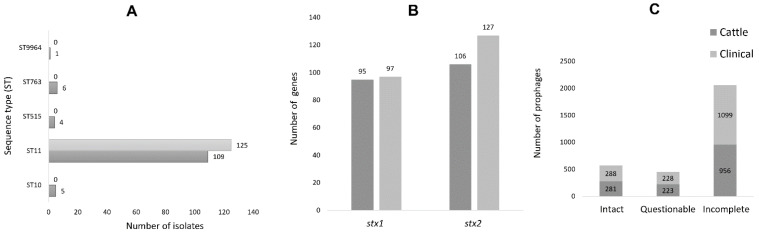
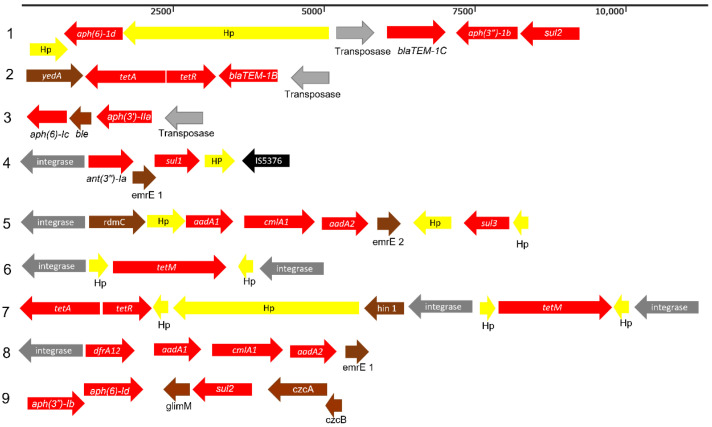
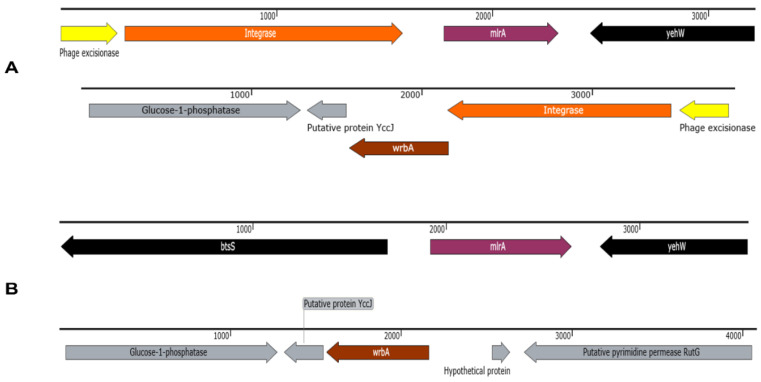
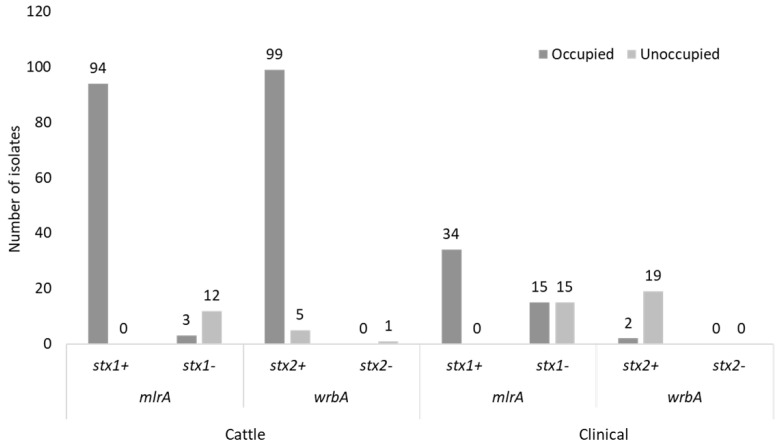
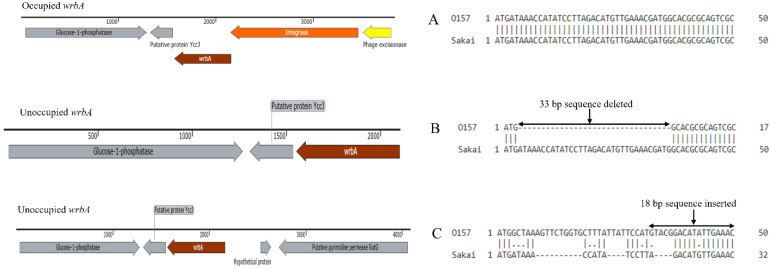
Shiga toxin () is the principal virulence factor of the foodborne pathogen, Shiga toxin-producing (STEC) O157:H7 and is associated with various lambdoid bacterio (phages). A comparative genomic analysis was performed on STEC O157 isolates from cattle ( = 125) and clinical ( = 127) samples to characterize virulence genes, -phage insertion sites and antimicrobial resistance genes that may segregate strains circulating in the same geographic region. In silico analyses revealed that O157 isolates harboured the toxin subtypes and Most cattle (76.0%) and clinical (76.4%) isolates carried the virulence gene combination of , , and . Characterization of and -carrying phages in assembled contigs revealed that they were associated with and insertion sites, respectively. In cattle isolates, and insertion sites were occupied more often (77% and 79% isolates respectively) than in clinical isolates (38% and 1.6% isolates, respectively). Profiling of antimicrobial resistance genes (ARGs) in the assembled contigs revealed that 8.8% of cattle (11/125) and 8.7% of clinical (11/127) isolates harboured ARGs. Eight antimicrobial resistance genes cassettes (ARCs) were identified in 14 isolates (cattle, = 8 and clinical, = 6) with streptomycin (, , and -) being the most prevalent gene in ARCs. The profound disparity between the cattle and clinical strains in occupancy of the locus suggests that this trait may serve to differentiate cattle from human clinical STEC O157:H7. These findings are important for screening and -phage insertion site genotyping as well as monitoring ARGs in isolates from cattle and clinical samples.
志贺毒素 () 是食源性病原体产志贺毒素大肠埃希氏菌(STEC)O157:H7 的主要毒力因子,与各种类 lambda 噬菌体有关。对来自牛(=125)和临床(=127)样本的 STEC O157 分离株进行了比较基因组分析,以表征可能在同一地理区域传播的菌株中分离的毒力基因、-噬菌体插入位点和抗菌药物耐药基因。计算机分析显示,O157 分离株携带毒素亚型 和 。大多数牛(76.0%)和临床(76.4%)分离株携带 、 、 和 毒力基因组合。在组装的连续体中对携带 和 的噬菌体进行表征,发现它们分别与 和 插入位点有关。在牛分离株中, 和 插入位点的占有率更高(分别为 77%和 79%的分离株),而在临床分离株中则较低(分别为 38%和 1.6%的分离株)。在组装的连续体中对抗菌药物耐药基因(ARGs)进行分析,发现 8.8%的牛(11/125)和 8.7%的临床(11/127)分离株携带 ARGs。在 14 个分离株(牛,=8 和临床,=6)中发现了 8 个抗菌药物耐药基因盒(ARCs),其中 ARCs 中最常见的基因是链霉素( 、 、 和 )。牛和临床分离株在 基因座的占有率存在显著差异,这表明该特征可能有助于区分牛源和人源临床 STEC O157:H7。这些发现对从牛和临床样本中筛选和-噬菌体插入位点基因分型以及监测 ARGs 非常重要。