Baia Karen Lorena N, Cordeiro Ana Caroline C, Frade Paula Cristina R, Gouveia Alanna Gabrielly N, Resque Rafael Lima, Pinheiro Luiz Marcelo L, Fonseca Ricardo Roberto S, Machado Luiz Fernando A, Martins Luisa C, Kupek Emil, Fischer Benedikt, Oliveira-Filho Aldemir B
Programa de Pós-Graduação em Doenças Tropicais, Universidade Federal do Pará, Belém 66075-110, Brazil.
Residência Multiprofissional em Saúde da Mulher e da Criança, Hospital Santo Antônio Maria Zaccaria, Bragança 68600-000, Brazil.
Pathogens. 2022 Sep 16;11(9):1055. doi: 10.3390/pathogens11091055.
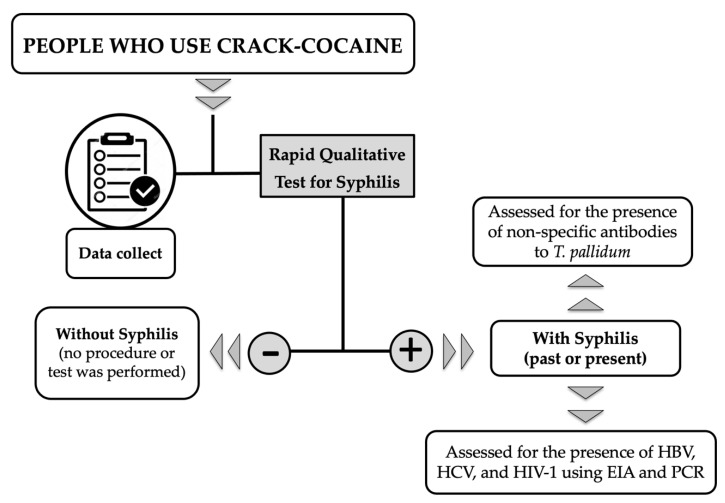
The rates of syphilis and viral co-infections among people who use crack-cocaine (PWUCC) were assessed in this study. This cross-sectional study relied on biological and self-reported socio-behavioral data from a convenience sample of 990 PWUCC from twenty-six municipalities in the states of Amapá and Pará, northern Brazil. Blood samples were collected to assess the presence of using the Rapid Qualitative Test (RQT) and the Venereal Disease Research Laboratory (VDRL). Reactive samples by RQT were used to assess the presence of HBV, HCV, and HIV-1 using Enzyme Immunoassay (EIA) and Polymerase Chain Reaction (PCR). Logistic regression models were used to determine the association of variables assessed with syphilis. In total, 287 (29.0%) of the PWUCC sample had reactive results for syphilis. HBV (15.7%), HCV (5.9%), and HIV-1 (9.8%) were detected among PWUCC with syphilis. Young age, low monthly income and education level, long duration of crack-cocaine use, condomless sex, multiple sex partners, and exchange of sex for money/drugs were associated with syphilis. The present study provides unique insights on the epidemiological status of syphilis among PWUCC in northern Brazil, with multiple implications for improving urgent interventions for diagnosis, prevention, and treatment.
本研究评估了使用快克可卡因者(PWUCC)的梅毒和病毒合并感染率。这项横断面研究依赖于来自巴西北部阿马帕州和帕拉州26个市的990名PWUCC便利样本的生物学和自我报告的社会行为数据。采集血样,使用快速定性试验(RQT)和性病研究实验室试验(VDRL)评估梅毒螺旋体的存在情况。RQT反应性样本用于通过酶免疫测定(EIA)和聚合酶链反应(PCR)评估HBV、HCV和HIV-1的存在情况。使用逻辑回归模型确定所评估变量与梅毒的关联。在PWUCC样本中,共有287人(29.0%)梅毒检测结果呈反应性。在患有梅毒的PWUCC中检测到HBV(15.7%)、HCV(5.9%)和HIV-1(9.8%)。年轻、月收入和教育水平低、使用快克可卡因时间长、无保护性行为、多个性伴侣以及以性换钱/毒品与梅毒有关。本研究为巴西北部PWUCC中梅毒的流行病学状况提供了独特见解,对改进诊断、预防和治疗的紧急干预措施具有多重意义。