Zingale Elide, Rizzo Salvatore, Bonaccorso Angela, Consoli Valeria, Vanella Luca, Musumeci Teresa, Spadaro Angelo, Pignatello Rosario
Department of Drug and Health Sciences, University of Catania, 95125 Catania, Italy.
NANOMED-Research Centre for Nanomedicine and Pharmaceutical Nanotechnology, University of Catania, 95125 Catania, Italy.
Pharmaceutics. 2022 Sep 16;14(9):1961. doi: 10.3390/pharmaceutics14091961.
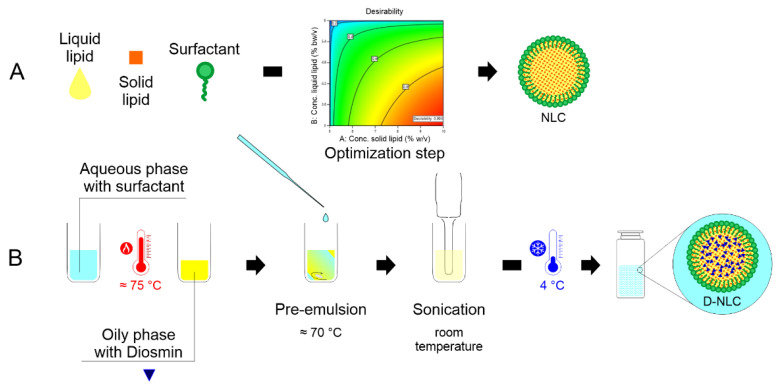
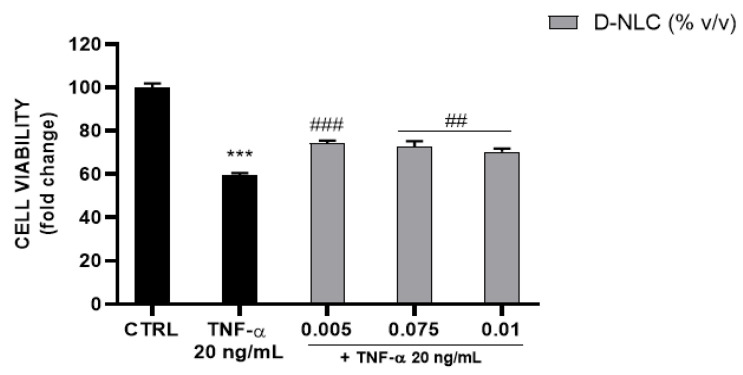
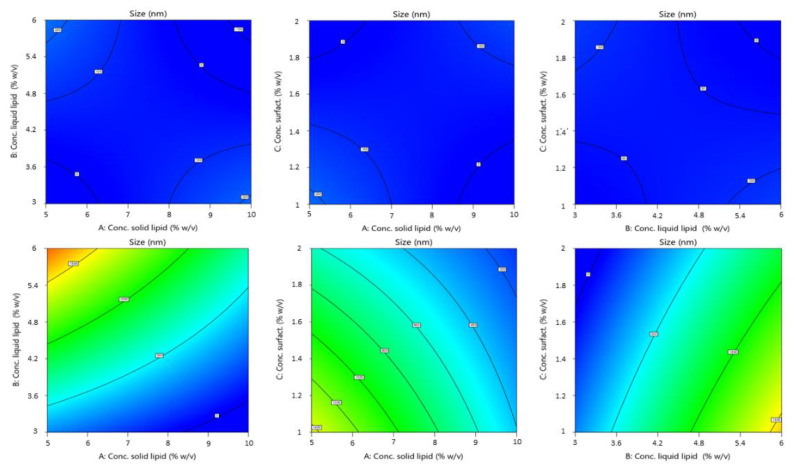
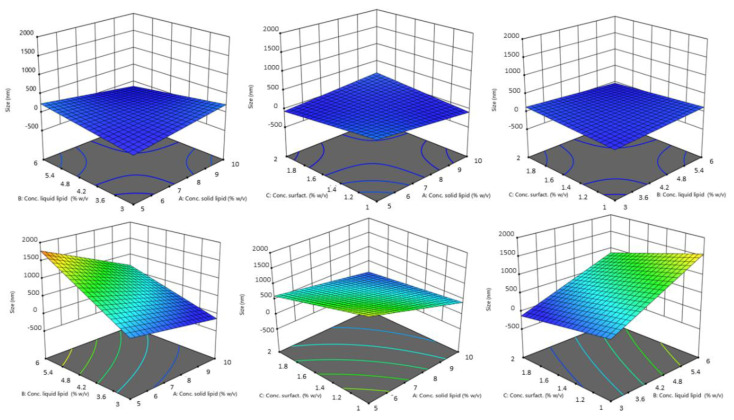
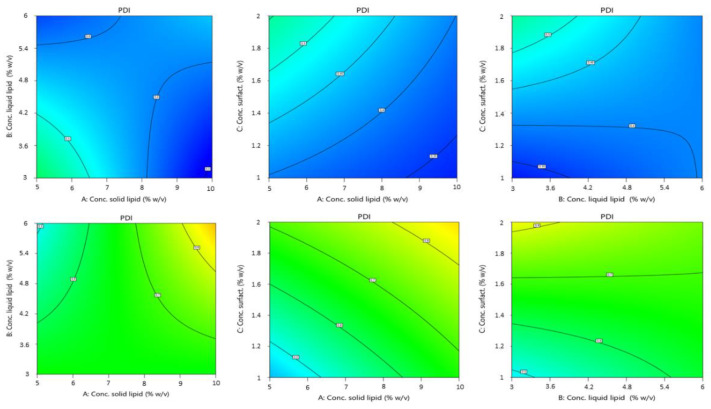
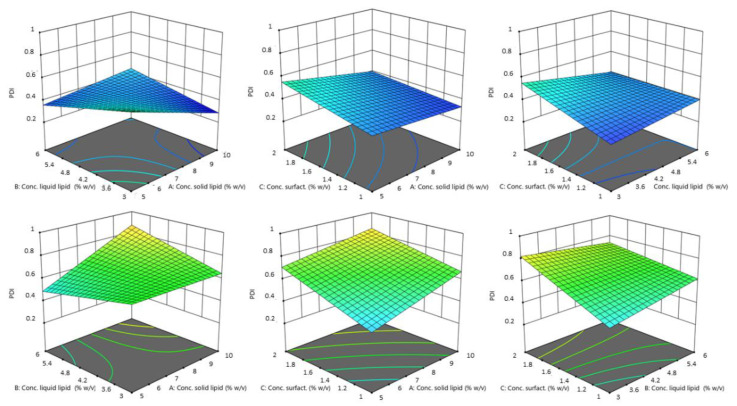
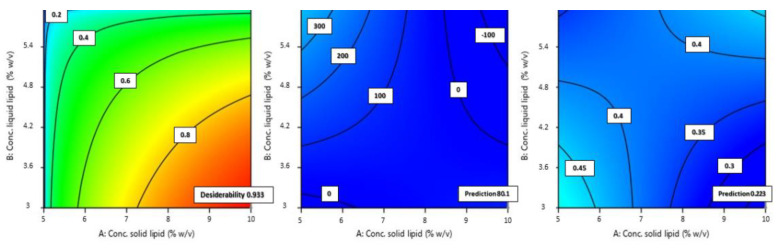
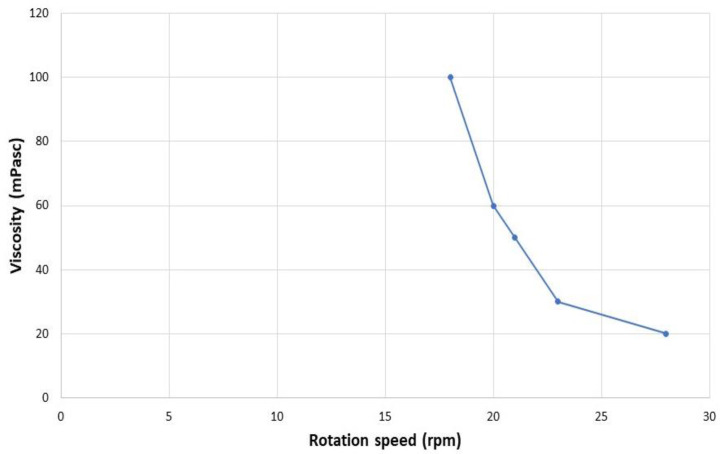
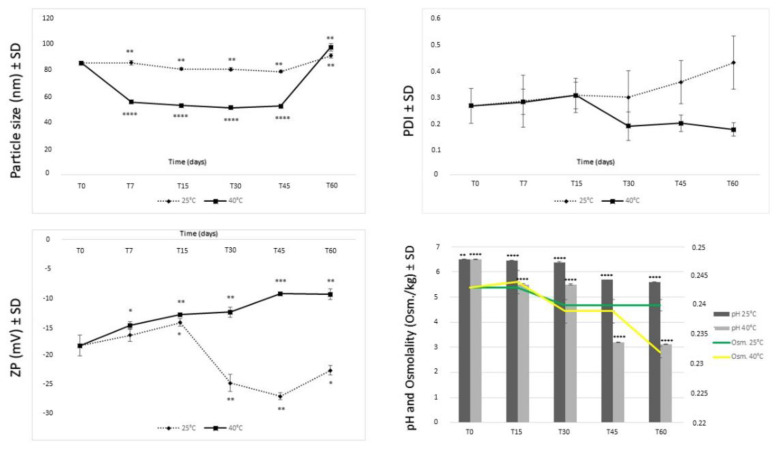
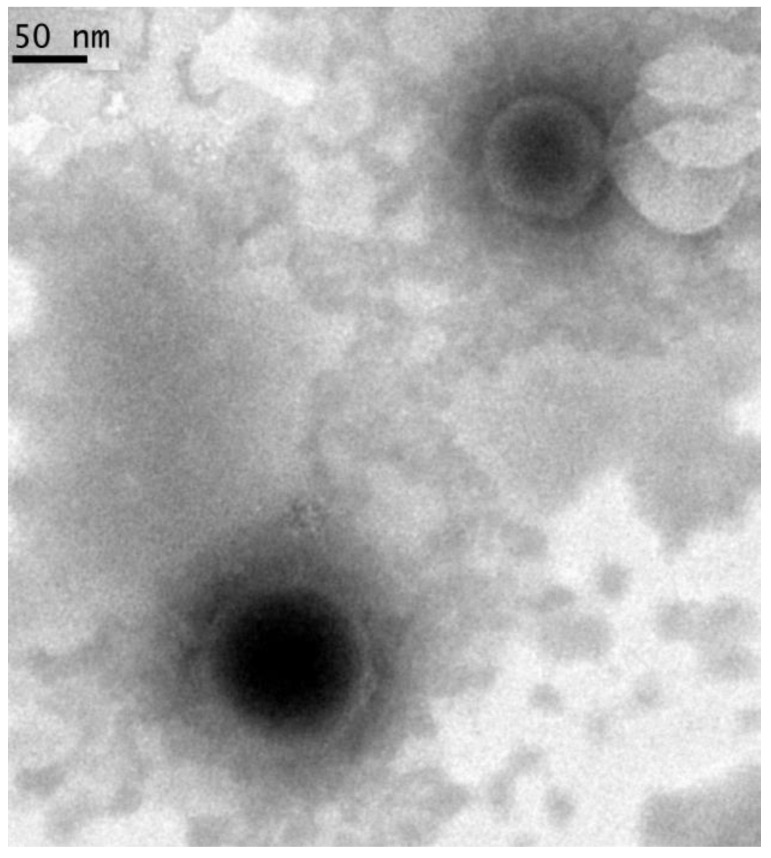
Diosmin is a flavonoid with a great variety of biological activities including antioxidant and anti-inflammatory ones. Its cytoprotective effect in retinal pigment epithelium cells under high glucose conditions makes it a potential support in the treatment of diabetic retinopathy. Despite its benefits, poor solubility in water reduces its potential for therapeutic use, making it the biggest biopharmaceutical challenge. The design of diosmin-loaded nanocarriers for topical ophthalmic application represents a novelty that has not been yet explored. For this purpose, the response surface methodology (RSM) was used to optimize nanostructured lipid carriers (NLCs), compatible for ocular administration, to encapsulate diosmin and improve its physicochemical issues. NLCs were prepared by a simple and scalable technique: a melt emulsification method followed by ultrasonication. The experimental design was composed of four independent variables (solid lipid concentration, liquid lipid concentration, surfactant concentration and type of solid lipid). The effect of the factors was assessed on NLC size and PDI (responses) by analysis of variance (ANOVA). The optimized formulation was selected according to the desirability function (0.993). Diosmin at two different concentrations (80 and 160 µM) was encapsulated into NLCs. Drug-loaded nanocarriers (D-NLCs) were subjected to a physicochemical and technological investigation revealing a mean particle size of 83.58 ± 0.77 nm and 82.21 ± 1.12 nm, respectively for the D-NLC formulation prepared with diosmin at the concentration of 80 µM or 160 µM, and a net negative surface charge (-18.5 ± 0.60 and -18.0 ± 1.18, respectively for the two batches). The formulations were analyzed in terms of pH (6.5), viscosity, and adjusted for osmolarity, making them more compatible with the ocular environment. Subsequently, stability studies were carried out to assess D-NLC behavior under different storage conditions up to 60 days, indicating a good stability of NLC samples at room temperature. In-vitro studies on ARPE-19 cells confirmed the cytocompatibility of NLCs with retinal epithelium. The effect of D-NLCs was also evaluated in-vitro on a model of retinal inflammation, demonstrating the cytoprotective effect of D-NLCs at various concentrations. RSM was found to be a reliable model to optimize NLCs for diosmin encapsulation.
地奥司明是一种具有多种生物活性的黄酮类化合物,包括抗氧化和抗炎活性。其在高糖条件下对视网膜色素上皮细胞的细胞保护作用使其成为治疗糖尿病视网膜病变的潜在辅助药物。尽管它有诸多益处,但在水中的低溶解度降低了其治疗应用的潜力,这成为了最大的生物制药挑战。设计用于局部眼科应用的载地奥司明纳米载体是一个尚未探索的新领域。为此,采用响应面法(RSM)优化适合眼部给药的纳米结构脂质载体(NLCs),以包封地奥司明并改善其理化问题。NLCs通过一种简单且可扩展的技术制备:熔融乳化法随后进行超声处理。实验设计由四个自变量(固体脂质浓度、液体脂质浓度、表面活性剂浓度和固体脂质类型)组成。通过方差分析(ANOVA)评估这些因素对NLC大小和PDI(响应值)的影响。根据期望函数(0.993)选择优化后的制剂。将两种不同浓度(80和160 μM)的地奥司明包封到NLCs中。对载药纳米载体(D-NLCs)进行了理化和工艺研究,结果显示,对于分别用80 μM或160 μM地奥司明制备的D-NLC制剂,其平均粒径分别为83.58±0.77 nm和82.21±1.12 nm,表面净电荷为负(两批制剂分别为-18.5±0.60和-18.0±1.18)。对制剂进行了pH值(6.5)、粘度分析,并调整了渗透压,使其更符合眼部环境。随后,进行了稳定性研究以评估D-NLCs在长达60天的不同储存条件下的行为,结果表明NLC样品在室温下具有良好的稳定性。对ARPE-19细胞进行体外研究证实了NLCs与视网膜上皮细胞的细胞相容性。还在体外视网膜炎症模型上评估了D-NLCs的作用,并证明了不同浓度的D-NLCs具有细胞保护作用。结果发现,响应面法是优化用于包封地奥司明的NLCs的可靠模型。