Zhuang Dexuan, Wang Shuangshuang, Liu Guanyi, Liu Panpan, Deng Huiting, Sun Jianfeng, Liu Chang, Leng Xue, Zhang Qun, Bai Fuxiang, Mi Jun, Wu Xunwei
Shandong Key Laboratory of Oral Tissue Regeneration, Shandong Engineering Laboratory for Dental Materials and Oral Tissue Regeneration, Department of Tissue Engineering and Regeneration, School and Hospital of Stomatology, Cheeloo College of Medicine, Shandong University, Jinan, China.
Shandong Engineering Laboratory for Dental Materials and Oral Tissue Regeneration, Department of Orthodontics, School and Hospital of Stomatology, Cheeloo College of Medicine, Shandong University, Jinan, China.
Front Oncol. 2022 Sep 8;12:943477. doi: 10.3389/fonc.2022.943477. eCollection 2022.
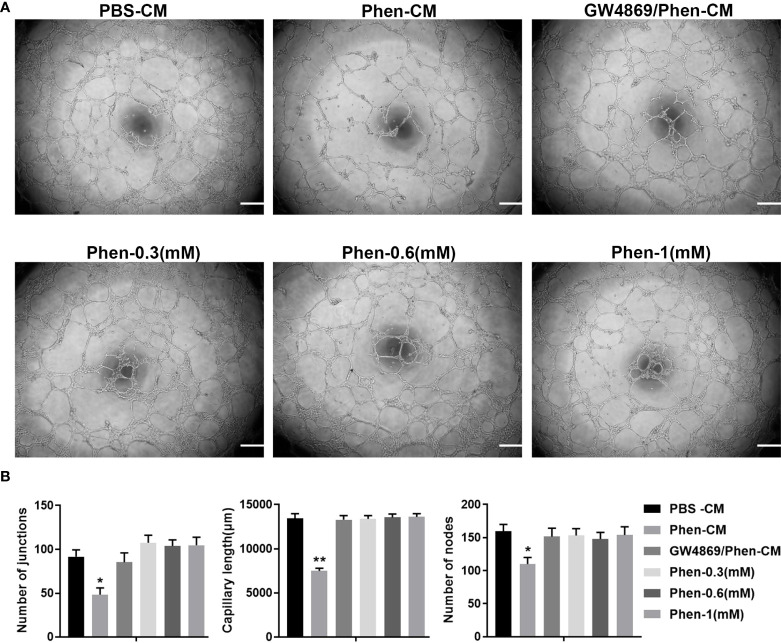
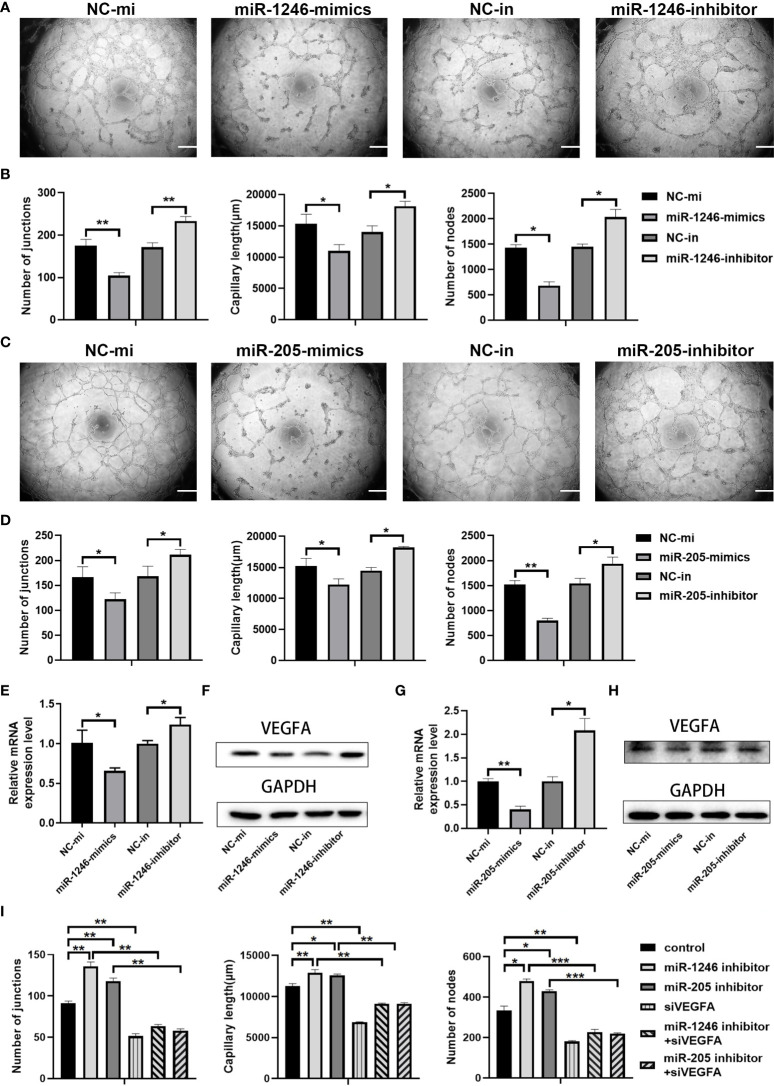
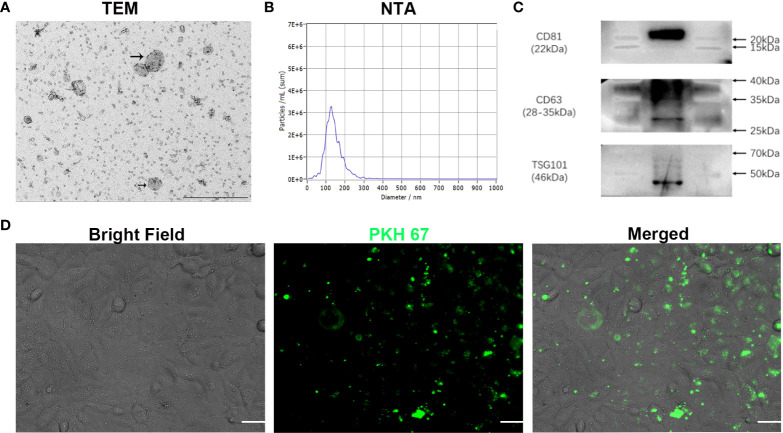
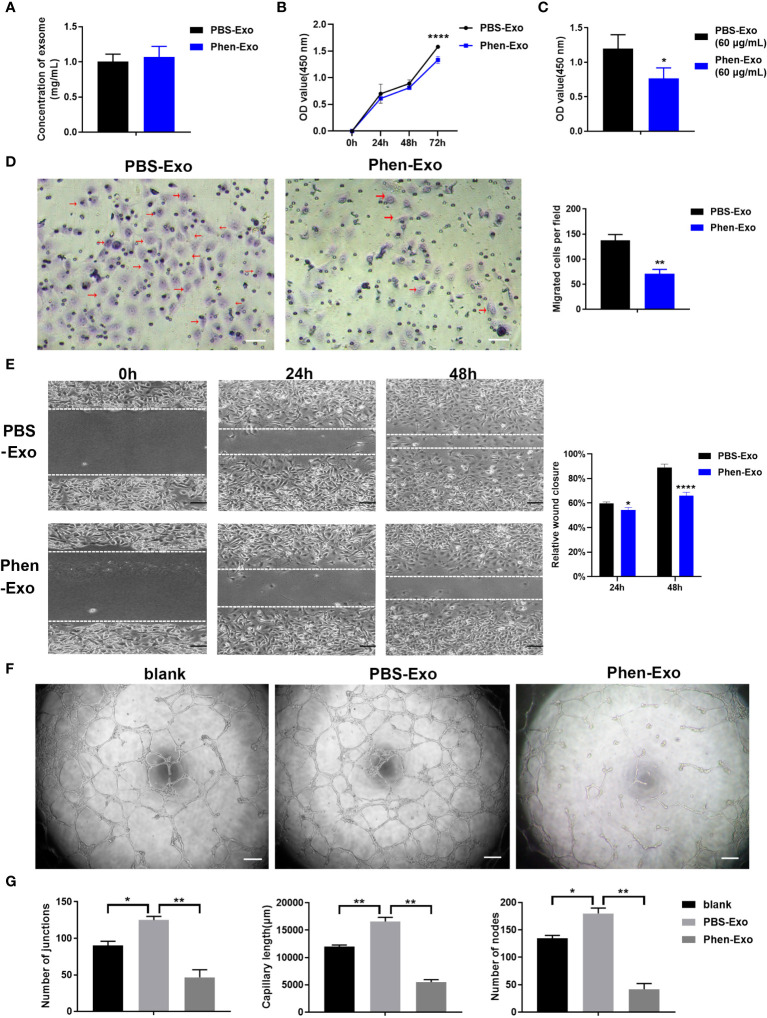
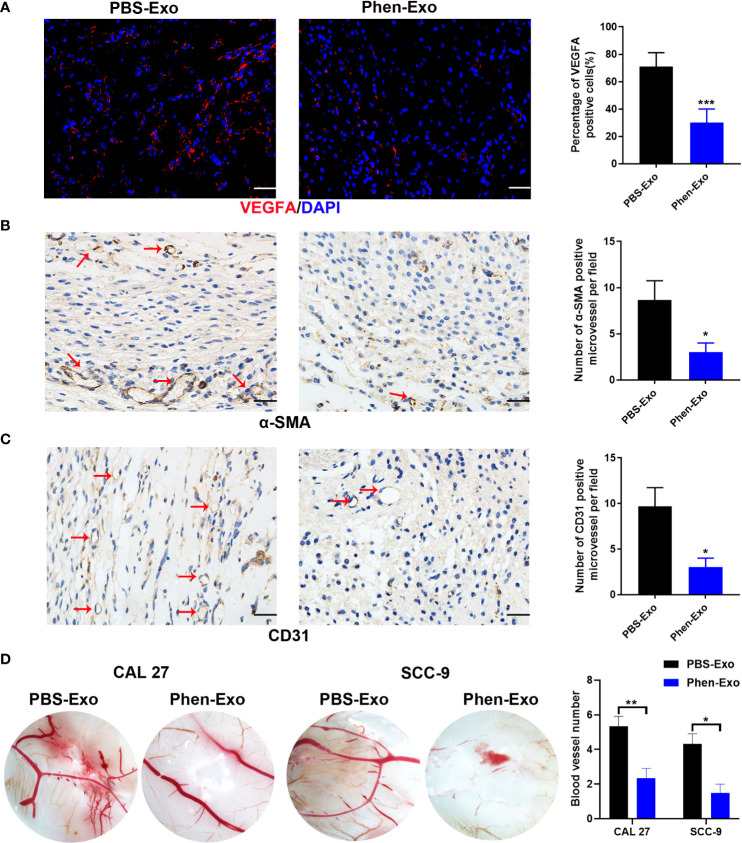
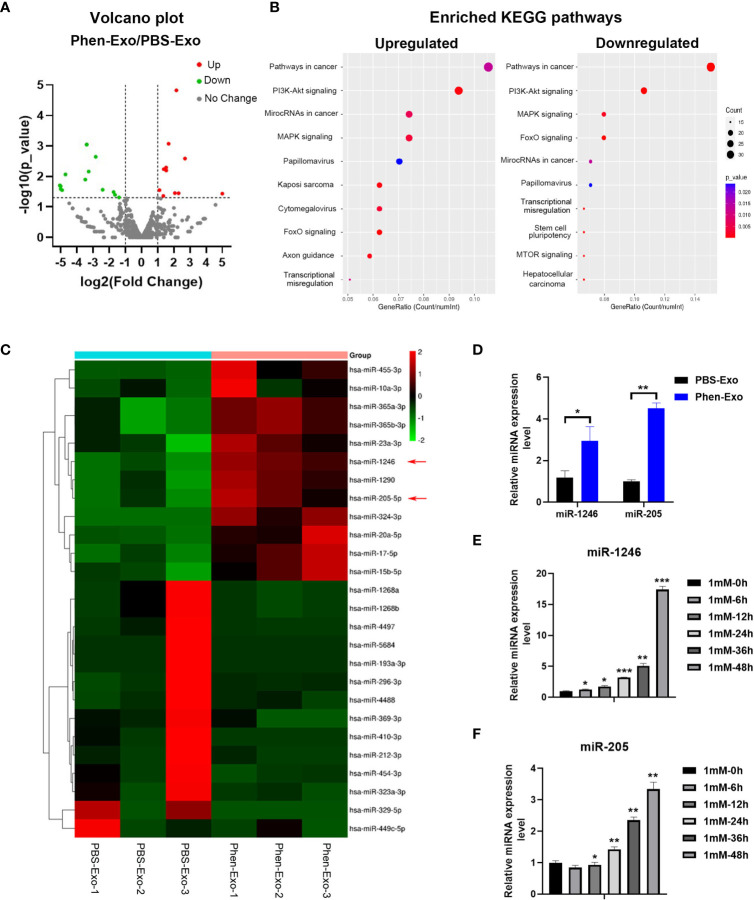
Exosomes secreted by cancer cells are important components in the tumor microenvironment, enabling cancer cells to communicate with each other and with noncancerous cells to play important roles in tumor progression and metastasis. Phenformin, a biguanide antidiabetic drug, has been reported to have a strong antitumor function in multiple types of cancer cells, however little research has been reported about whether phenformin can regulate the secretion of exosomes by cancer cells to regulate the tumor microenvironment and contribute to its antitumor function. Here we found that exosomes (Phen-Exo) derived from phenformin-treated oral squamous cell carcinoma (OSCC) cells significantly suppress the proliferation, migration and tube formation of human umbilical vein endothelial cells (HUVECs) . The inhibition of angiogenesis by Phen-Exo was verified by matrigel plug angiogenesis assays and by chick chorioallantoic membrane assays. Mechanistically, we discovered that the expression of microRNA-1246 (miR-1246) and microRNA-205 (miR-205) was significantly increased in exosomes secreted by OSCC cells treated with phenformin, while high expression levels of miR-1246 or miR-205 in vascular endothelial cells inhibited their angiogenic effects and decreased expression of the angiogenic factor VEGFA. In conclusion, these results reveal that phenformin can inhibit angiogenesis by regulating the levels of miR-1246 and miR-205 in exosomes secreted by OSCC cells, suggesting that phenformin has the potential to alter the tumor microenvironment to antagonize the growth of OSCCs, which provides a theoretical basis for developing new strategies to treat OSCCs in the future.
癌细胞分泌的外泌体是肿瘤微环境中的重要组成部分,使癌细胞能够相互交流并与非癌细胞相互作用,在肿瘤进展和转移中发挥重要作用。二甲双胍是一种双胍类抗糖尿病药物,据报道在多种类型的癌细胞中具有强大的抗肿瘤功能,然而关于二甲双胍是否能调节癌细胞外泌体的分泌以调节肿瘤微环境并促进其抗肿瘤功能的研究报道较少。在此,我们发现来自二甲双胍处理的口腔鳞状细胞癌(OSCC)细胞的外泌体(Phen-Exo)显著抑制人脐静脉内皮细胞(HUVECs)的增殖、迁移和管形成。通过基质胶栓血管生成试验和鸡胚绒毛尿囊膜试验验证了Phen-Exo对血管生成的抑制作用。机制上,我们发现用二甲双胍处理的OSCC细胞分泌的外泌体中,微小RNA-1246(miR-1246)和微小RNA-205(miR-205)的表达显著增加,而血管内皮细胞中miR-1246或miR-205的高表达水平抑制了它们的血管生成作用,并降低了血管生成因子VEGFA的表达。总之,这些结果表明二甲双胍可通过调节OSCC细胞分泌的外泌体中miR-1246和miR-205的水平来抑制血管生成,提示二甲双胍有可能改变肿瘤微环境以拮抗OSCC的生长,这为未来开发治疗OSCC的新策略提供了理论依据。