Muthelo Tshifhiwa, Mulaudzi Vhahangwele, Netshishivhe Munei, Dongola Tendamudzimu Harmfree, Kok Michelle, Makumire Stanley, de Villiers Marianne, Burger Adélle, Zininga Tawanda, Shonhai Addmore
Department of Biochemistry & Microbiology, University of Venda, Thohoyandou, South Africa.
Department of Biochemistry, Stellenbosch University, Matieland, South Africa.
Front Mol Biosci. 2022 Sep 13;9:947203. doi: 10.3389/fmolb.2022.947203. eCollection 2022.
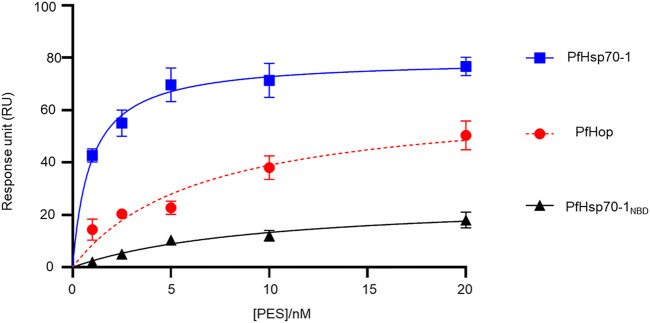
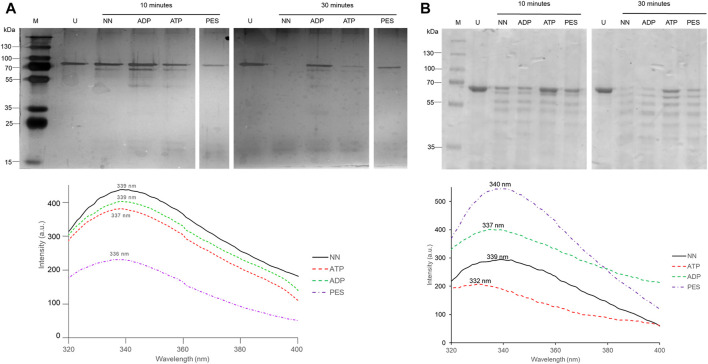
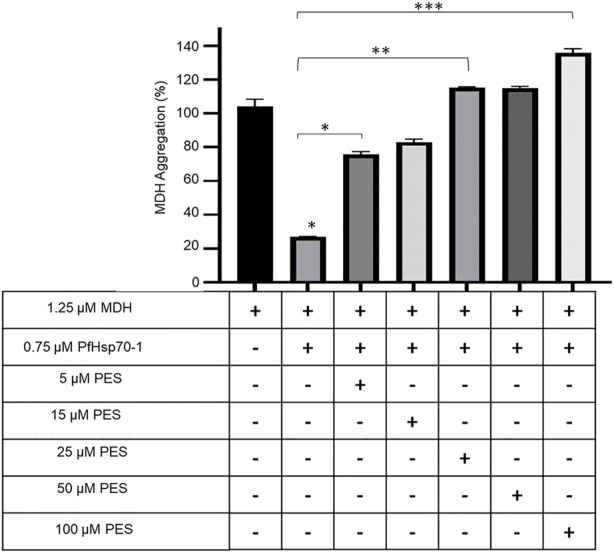
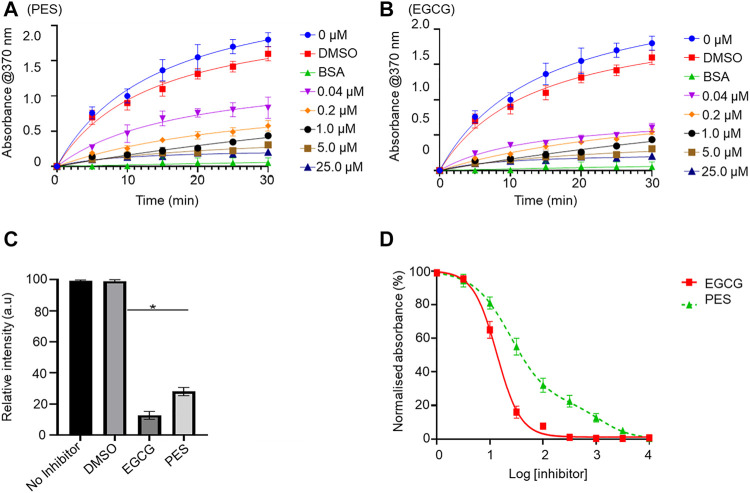
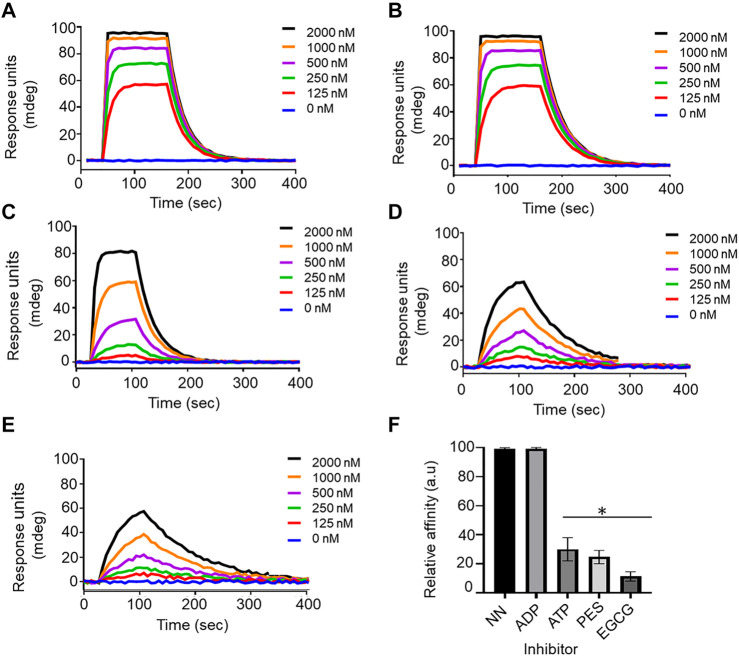
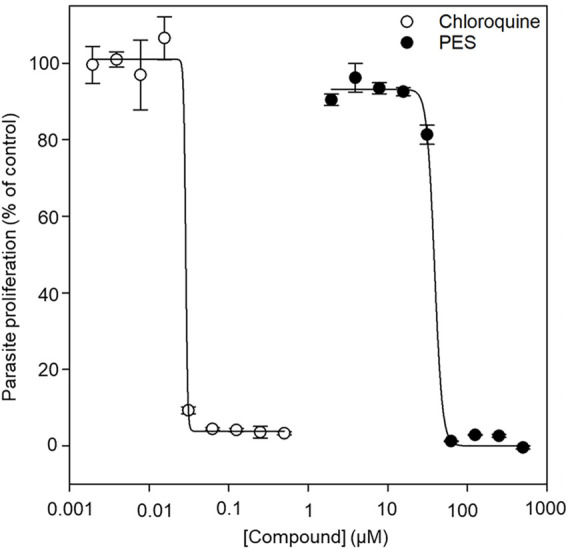
Hsp70-1 (PfHsp70-1; PF3D7_0818900) and PfHsp90 (PF3D7_0708400) are essential cytosol localized chaperones of the malaria parasite. The two chaperones form a functional complex via the adaptor protein, Hsp90-Hsp70 organizing protein (PfHop [PF3D7_1434300]), which modulates the interaction of PfHsp70-1 and PfHsp90 through its tetracopeptide repeat (TPR) domains in a nucleotide-dependent fashion. On the other hand, PfHsp70-1 and PfHsp90 possess C-terminal EEVD and MEEVD motifs, respectively, which are crucial for their interaction with PfHop. By coordinating the cooperation of these two chaperones, PfHop plays an important role in the survival of the malaria parasite. 2-Phenylthynesulfonamide PES) is a known anti-cancer agent whose mode of action is to inhibit Hsp70 function. In the current study, we explored the antiplasmodial activity of PES and investigated its capability to target the functions of PfHsp70-1 and its co-chaperone, PfHop. PES exhibited modest antiplasmodial activity (IC of 38.7 ± 0.7 µM). Furthermore, using surface plasmon resonance (SPR) analysis, we demonstrated that PES was capable of binding recombinant forms of both PfHsp70-1 and PfHop. Using limited proteolysis and intrinsic fluorescence-based analysis, we showed that PES induces conformational changes in PfHsp70-1 and PfHop. In addition, we demonstrated that PES inhibits the chaperone function of PfHsp70-1. Consequently, PES abrogated the association of the two proteins . Our study findings contribute to the growing efforts to expand the arsenal of potential antimalarial compounds in the wake of growing parasite resistance against currently used drugs.
热休克蛋白70-1(PfHsp70-1;PF3D7_0818900)和疟原虫热休克蛋白90(PfHsp90;PF3D7_0708400)是疟原虫胞质中必不可少的伴侣蛋白。这两种伴侣蛋白通过衔接蛋白热休克蛋白90-热休克蛋白70组织蛋白(PfHop [PF3D7_1434300])形成功能复合物,该衔接蛋白通过其四肽重复(TPR)结构域以核苷酸依赖的方式调节PfHsp70-1和PfHsp90的相互作用。另一方面,PfHsp70-1和PfHsp90分别具有C端EEVD和MEEVD基序,这对它们与PfHop的相互作用至关重要。通过协调这两种伴侣蛋白的合作,PfHop在疟原虫的存活中发挥重要作用。2-苯乙炔磺酰胺(PES)是一种已知的抗癌药物,其作用方式是抑制热休克蛋白70的功能。在本研究中,我们探索了PES的抗疟活性,并研究了其靶向PfHsp70-1及其共伴侣蛋白PfHop功能的能力。PES表现出适度的抗疟活性(IC为38.7±0.7µM)。此外,通过表面等离子体共振(SPR)分析,我们证明PES能够结合重组形式的PfHsp70-1和PfHop。使用有限蛋白酶解和基于内在荧光的分析,我们表明PES诱导PfHsp70-1和PfHop的构象变化。此外,我们证明PES抑制PfHsp70-1的伴侣功能。因此,PES消除了这两种蛋白的结合。我们的研究结果有助于在寄生虫对目前使用的药物产生越来越多耐药性的情况下,为扩大潜在抗疟化合物库做出更多努力。