Department of Hematology, The First Hospital of China Medical University, Shenyang, Liaoning, China.
Ann Hematol. 2022 Dec;101(12):2583-2600. doi: 10.1007/s00277-022-04979-5. Epub 2022 Oct 1.
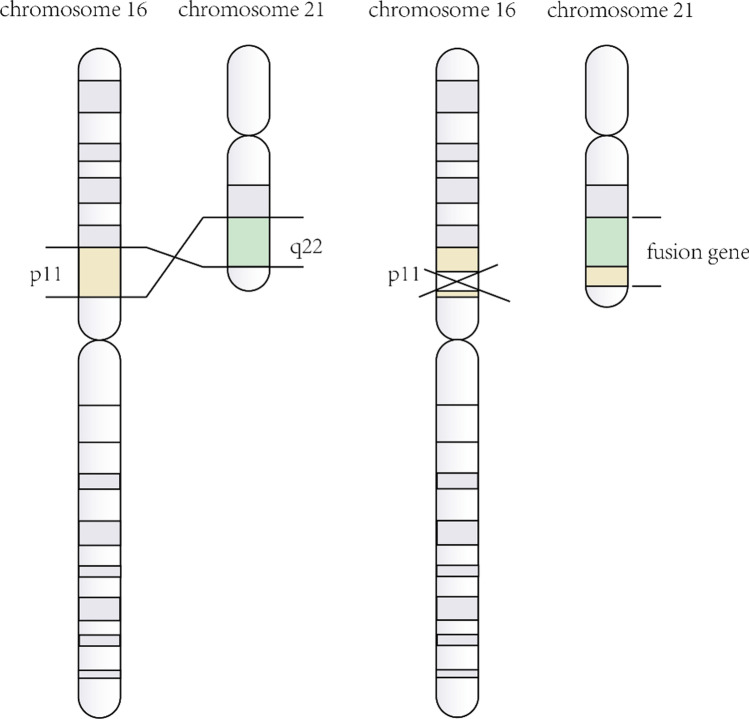
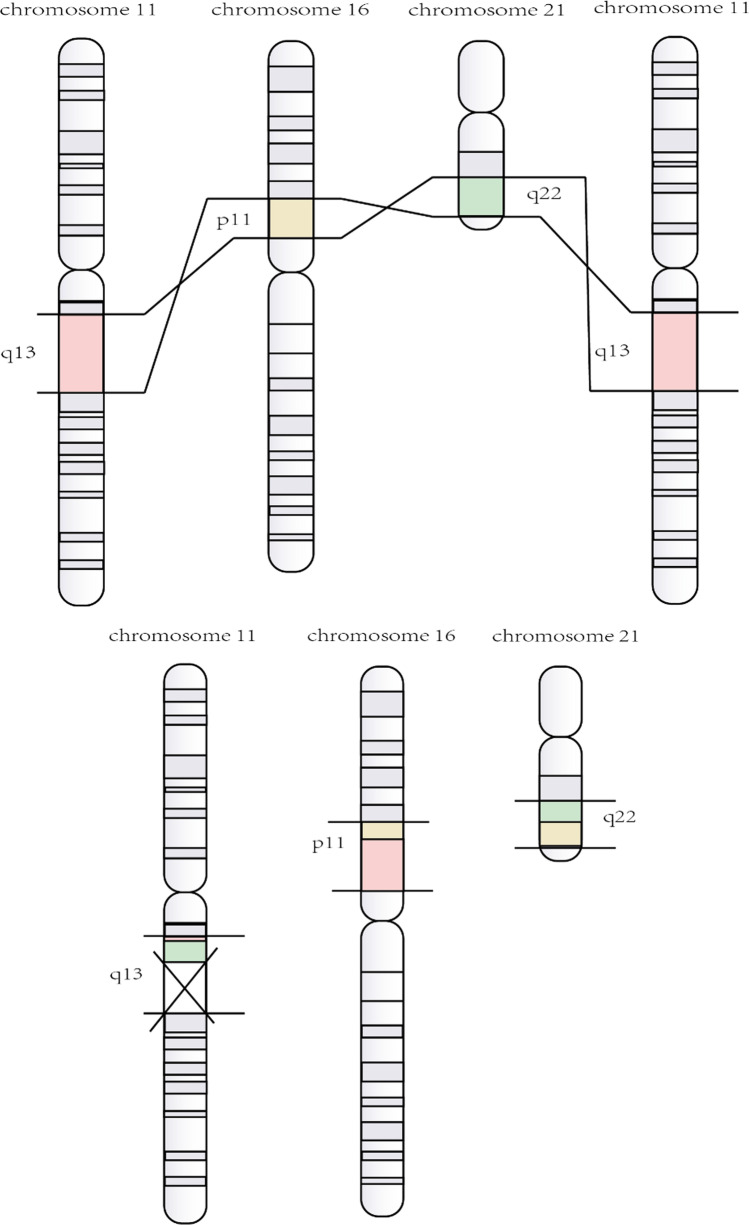
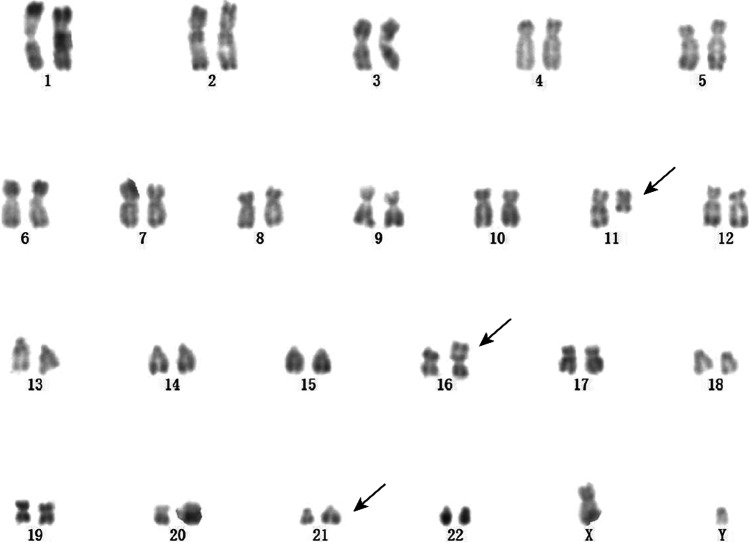
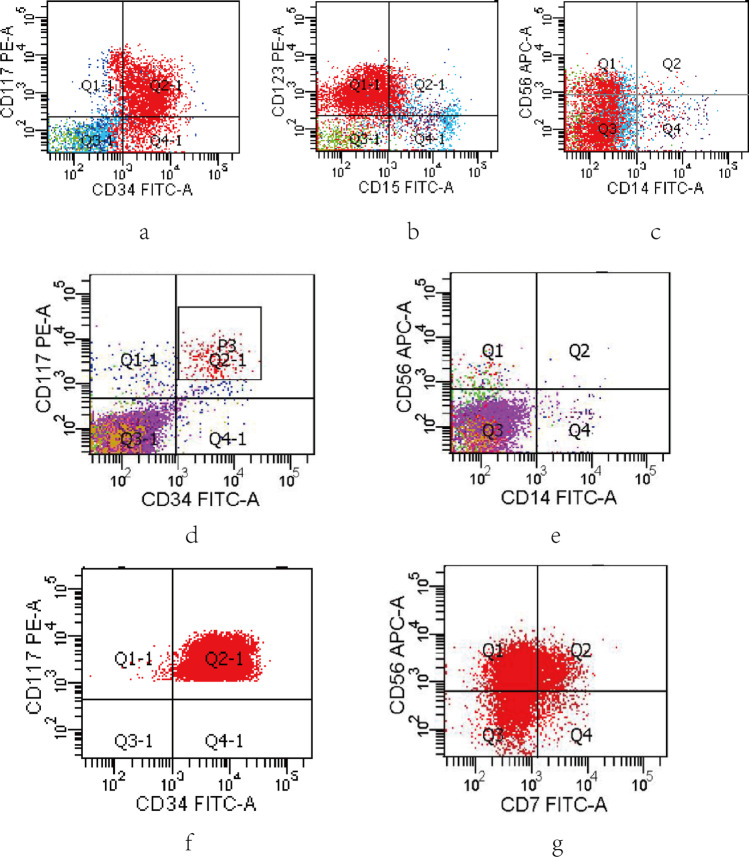
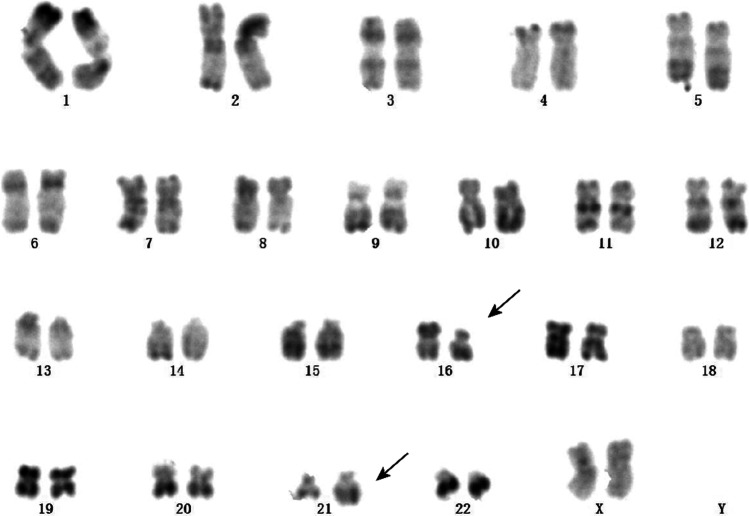
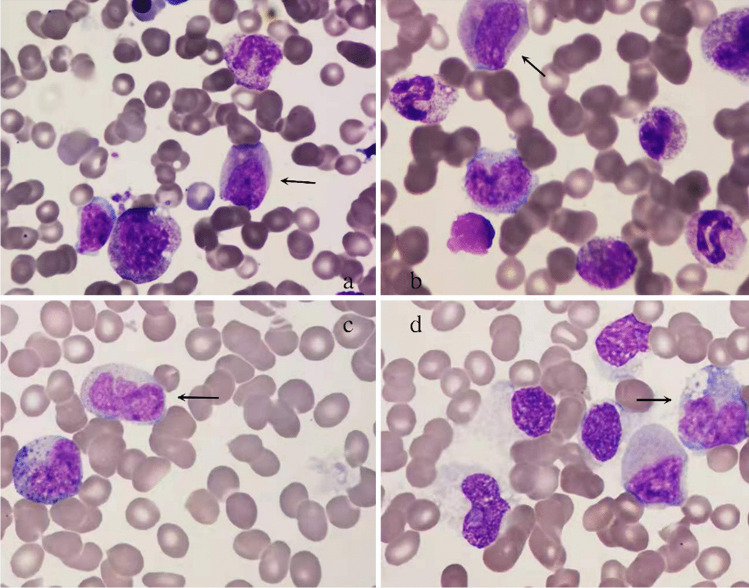
To investigate the pathogenesis and the refractory/relapse mechanisms in patients with t(16;21)(p11;q22), we retrospectively analyzed the clinical data of six cases in our hospital and sixty-two cases reported in the literature. Among the patients in our hospital, five cases were diagnosed as acute leukemia, and one was myelodysplastic syndrome evolved to acute myeloid leukemia, harboring TLS/FUS-ERG fusion gene; all the cases were detected t(16;21)(p11;q22) translocation, and five cases showed additional chromosomal abnormalities. We firstly report a novel three-way translocation t(11;16;21)(q13;p11;q22), which may affect the prognosis of leukemia with TLS-ERG fusion gene because this patient shows a more satisfactory treatment effect and deeper remission. And we found patients with TLS-ERG are more likely to have bone and arthrosis pain. Besides, CD56 and CD123 were positive in these cases, which are related to poor prognosis and the character of refractory. Moreover, some gene mutations are involved, and GATA2 and SMAD4 mutations were identified when the disease progressed from myelodysplastic syndrome to leukemia. Among sixty-two patients reported in the literature, valid positive percent of CD56 and CD123 were 81% and 14.3%, respectively. Mutation of the RUNX1 gene was detected in four cases, and one patient had multiple mutations, including BCOR, PLCG1, DIS3, BRAF, JAK2, and JAK3. The prominent feature of leukemia carrying the TLS/FUS-ERG gene is its poor prognosis. The relevant mechanism includes new mutation, jumping translocation, different transcripts, and so on. The mechanism still acquaints scarcely, which requires further study.
为了探究 t(16;21)(p11;q22)患者的发病机制和难治/复发机制,我们回顾性分析了我院的 6 例病例和文献中报道的 62 例病例的临床资料。我院的 5 例患者被诊断为急性白血病,1 例为骨髓增生异常综合征进展为急性髓系白血病,均携带 TLS/FUS-ERG 融合基因;所有患者均检测到 t(16;21)(p11;q22)易位,5 例患者显示额外的染色体异常。我们首次报道了一种新的三向易位 t(11;16;21)(q13;p11;q22),可能会影响携带 TLS-ERG 融合基因的白血病的预后,因为该患者表现出更满意的治疗效果和更深的缓解。我们发现携带 TLS-ERG 的患者更容易出现骨骼和关节疼痛。此外,这些病例中 CD56 和 CD123 阳性,这与预后不良和难治性有关。此外,还涉及一些基因突变,当疾病从骨髓增生异常综合征进展为白血病时,鉴定出 GATA2 和 SMAD4 基因突变。在文献报道的 62 例患者中,CD56 和 CD123 的有效阳性率分别为 81%和 14.3%。在 4 例患者中检测到 RUNX1 基因突变,1 例患者有多个基因突变,包括 BCOR、PLCG1、DIS3、BRAF、JAK2 和 JAK3。携带 TLS/FUS-ERG 基因的白血病的突出特征是预后不良。相关机制包括新突变、跳跃易位、不同转录本等。机制仍知之甚少,需要进一步研究。