Zhao Zibo, Rendleman Emily Jane, Szczepanski Aileen Patricia, Morgan Marc Alard, Wang Lu, Shilatifard Ali
Simpson Querrey Center for Epigenetics, Northwestern University Feinberg School of Medicine, 303 East Superior Street, Chicago, IL 60611, USA.
Sci Adv. 2022 Oct 7;8(40):eadd3339. doi: 10.1126/sciadv.add3339. Epub 2022 Oct 5.
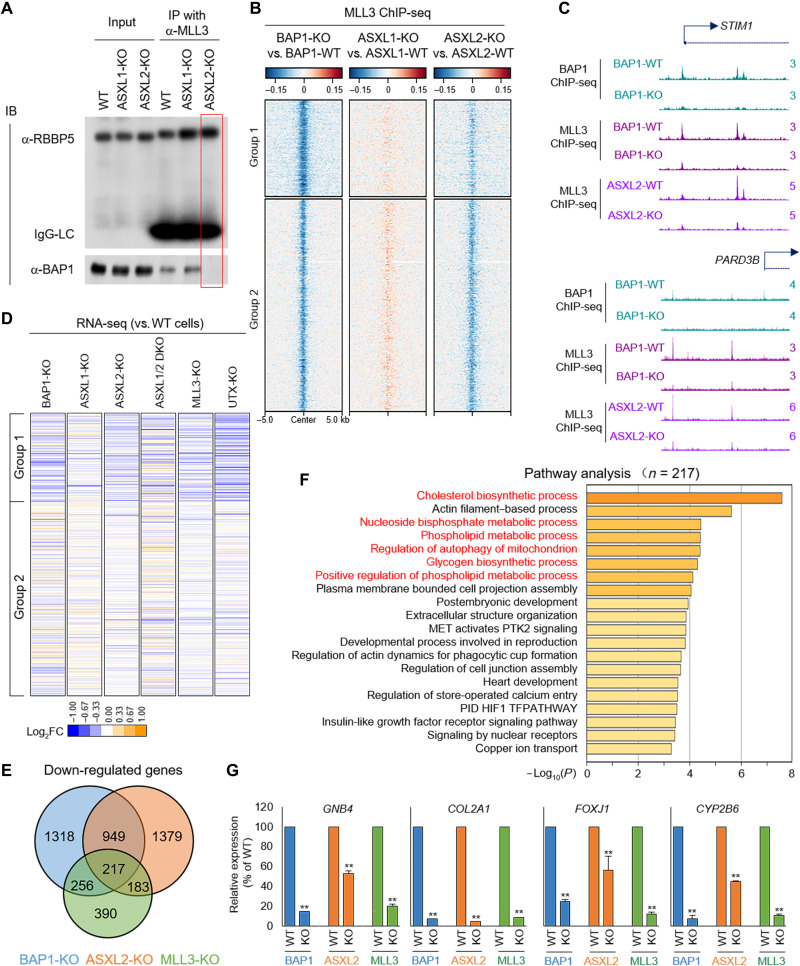
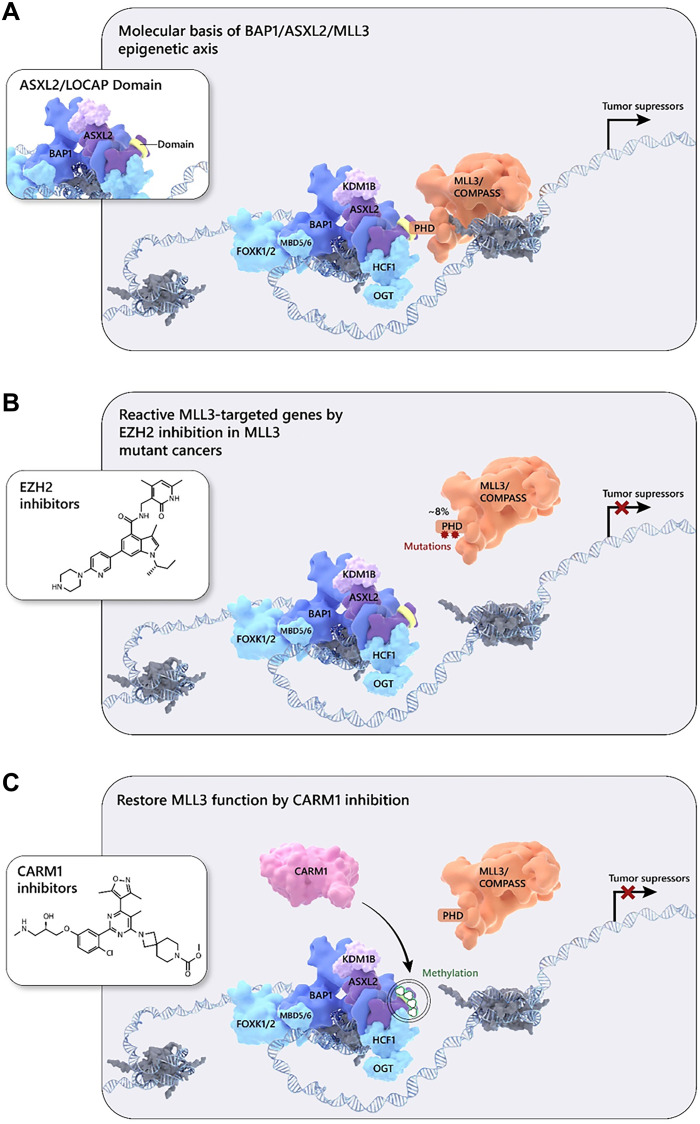
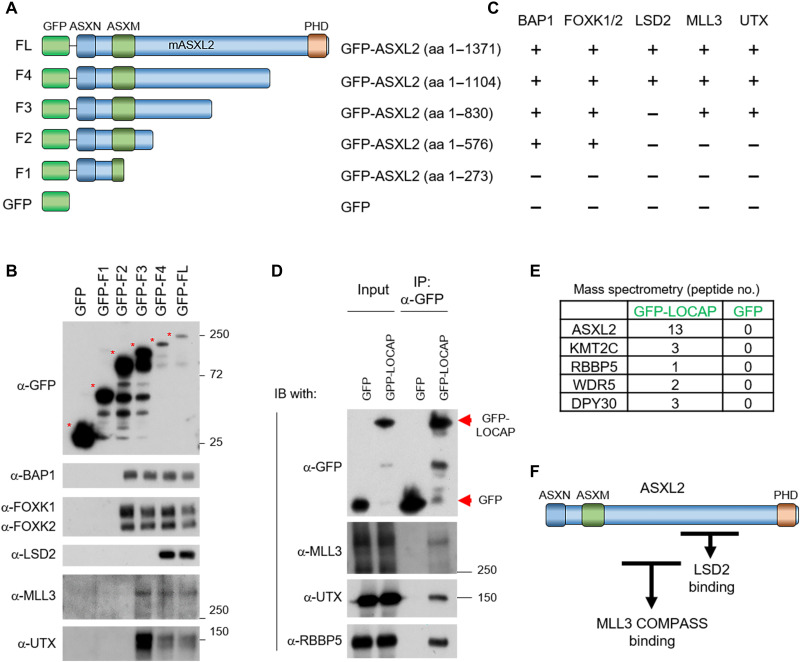
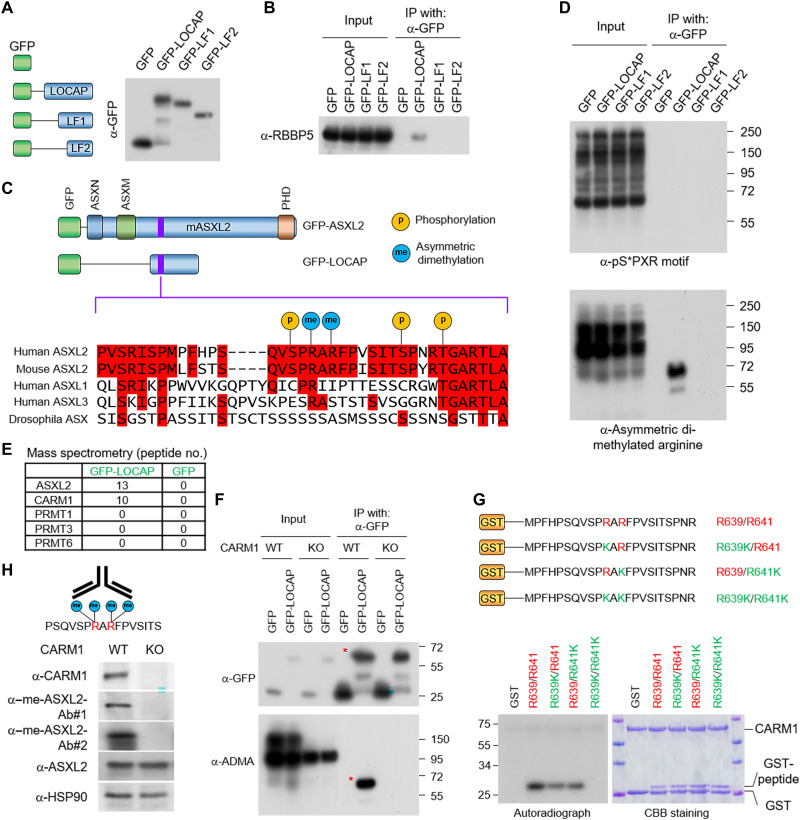
An imbalance in the activities of the Polycomb and Trithorax complexes underlies numerous human pathologies, including cancer. The BRCA1 associated protein-1 (BAP1) deubiquitinase negatively regulates Polycomb activity and recruits the Trithorax histone H3K4 methyltransferase, mixed-lineage leukemia protein 3 (MLL3) within Complex Proteins Associated with Set1 (COMPASS), to the enhancers of tumor suppressor genes. We previously demonstrated that the BAP1-MLL3 pathway is mutated in several cancers, yet how BAP1 recruits MLL3 to its target loci remains an important unanswered question. We demonstrate that the ASXL2 subunit of the BAP1 complex mediates a direct interaction with MLL3/COMPASS. ASXL2 loss results in decreased MLL3 occupancy at enhancers and reduced BAP1-MLL3 target gene expression. Interaction between ASXL2 and MLL3 is negatively regulated by protein arginine methyltransferase 4 (PRMT4/CARM1), which methylates ASXL2 at R639/R641. ASXL2 methylation blocks binding to MLL3 and impairs the expression of MLL3/COMPASS-dependent genes. This previously unidentified transcriptional repressive function of CARM1 provides insight into the BAP1/MLL3-COMPASS axis and reveals a potential cancer therapeutic target.
多梳蛋白复合体(Polycomb)和三胸节蛋白复合体(Trithorax)活性的失衡是包括癌症在内的多种人类疾病的基础。BRCA1相关蛋白1(BAP1)去泛素酶负向调节多梳蛋白活性,并将三胸节蛋白组蛋白H3K4甲基转移酶、与Set1相关的复合蛋白(COMPASS)中的混合谱系白血病蛋白3(MLL3)招募至肿瘤抑制基因的增强子处。我们之前证明,BAP1-MLL3通路在多种癌症中发生突变,但BAP1如何将MLL3招募至其靶位点仍是一个重要的未解决问题。我们证明,BAP1复合体的ASXL2亚基介导与MLL3/COMPASS的直接相互作用。ASXL2缺失导致增强子处MLL3占据减少,以及BAP1-MLL3靶基因表达降低。ASXL2与MLL3之间的相互作用受蛋白精氨酸甲基转移酶4(PRMT4/CARM1)负向调节,PRMT4/CARM1使ASXL2的R639/R641位点发生甲基化。ASXL2甲基化会阻止其与MLL3结合,并损害MLL3/COMPASS依赖性基因的表达。CARM1这种先前未被识别的转录抑制功能为BAP1/MLL3-COMPASS轴提供了见解,并揭示了一个潜在的癌症治疗靶点。