Zu Dan, Dong Qi, Chen Sunfang, Chen Yongde, Yao Jun, Zou Yubin, Lin Jiawei, Fang Bin, Wu Bing
Central Laboratory, The Central Hospital, Shaoxing University, Shaoxing 312030, China.
Department of Spine Surgery, The Central Hospital, Shaoxing University, Shaoxing 312030, China.
J Oncol. 2022 Sep 26;2022:6459029. doi: 10.1155/2022/6459029. eCollection 2022.
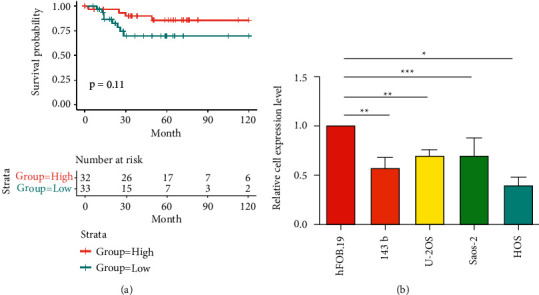
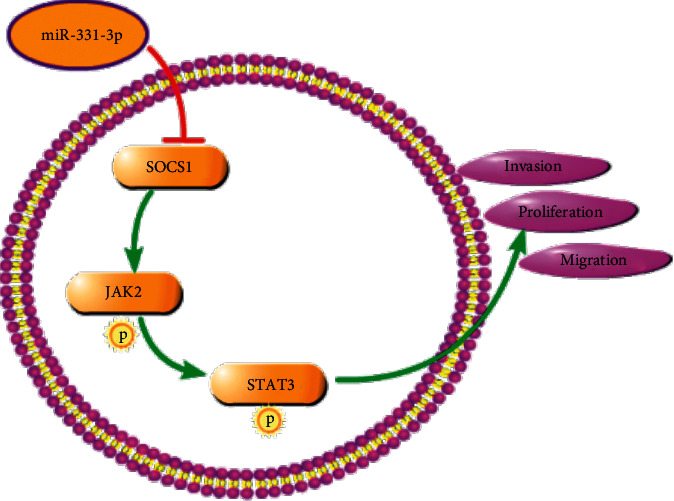
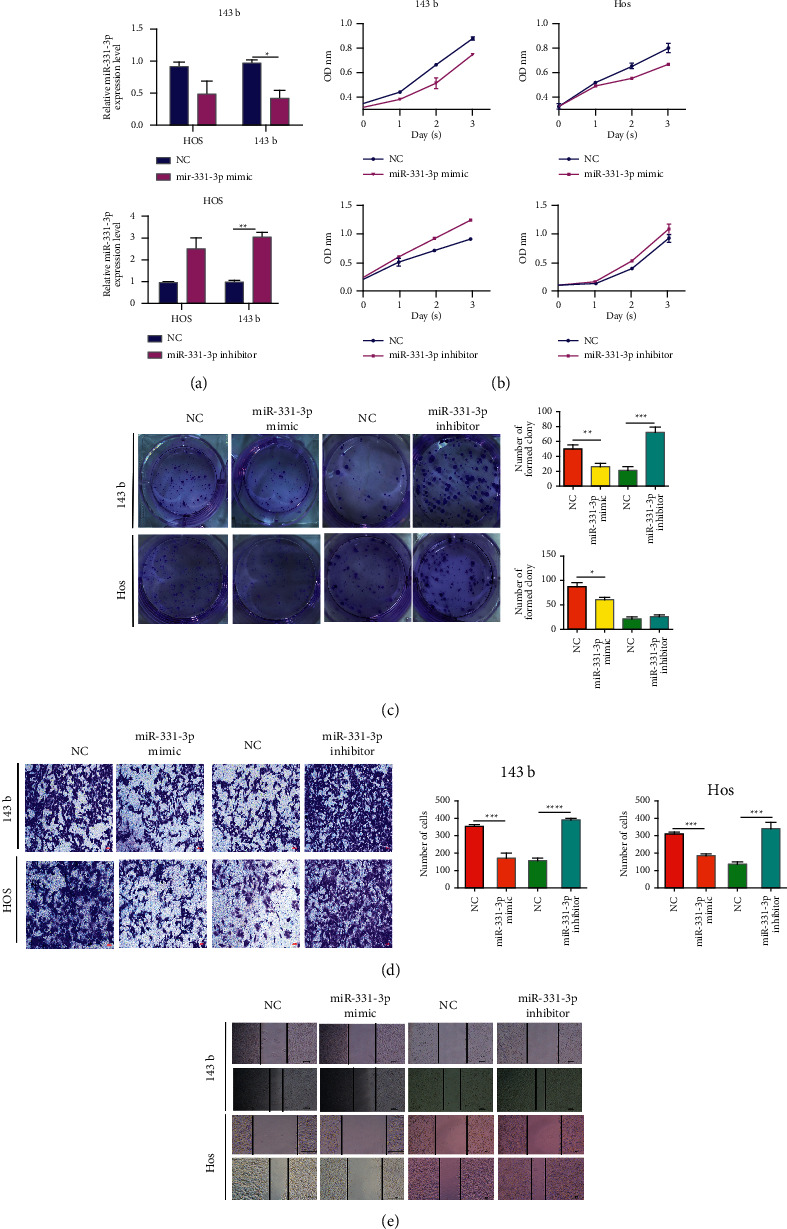
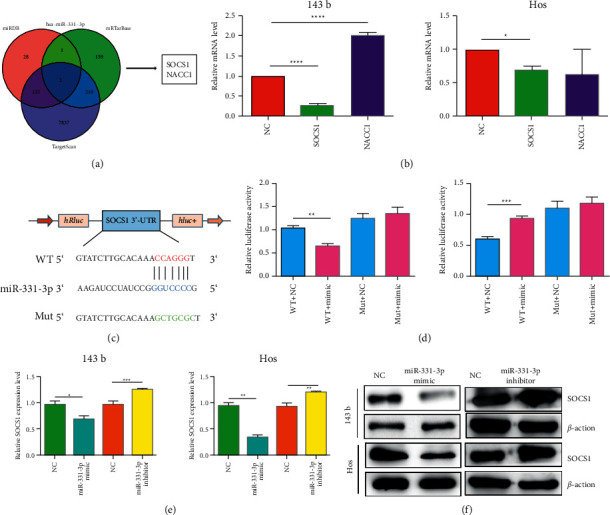
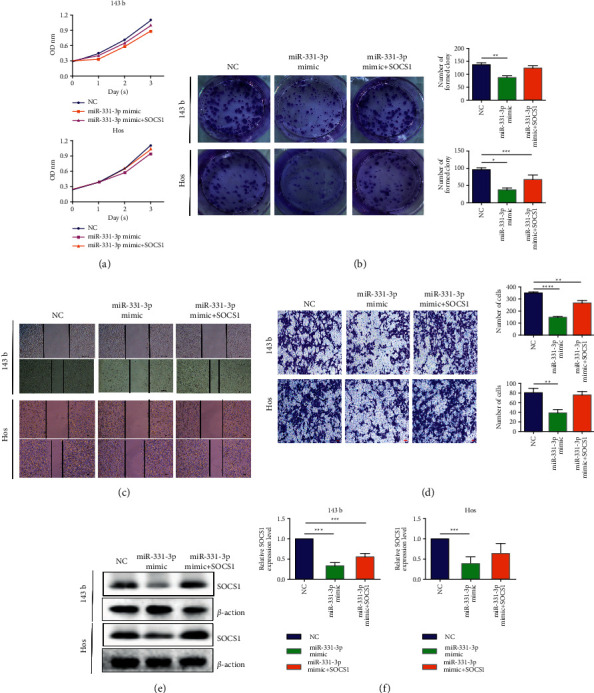
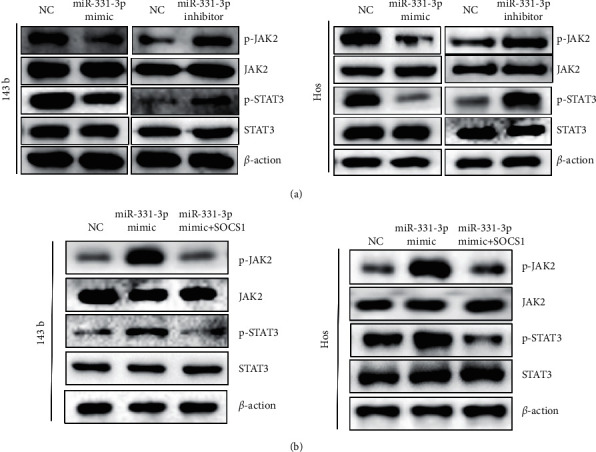
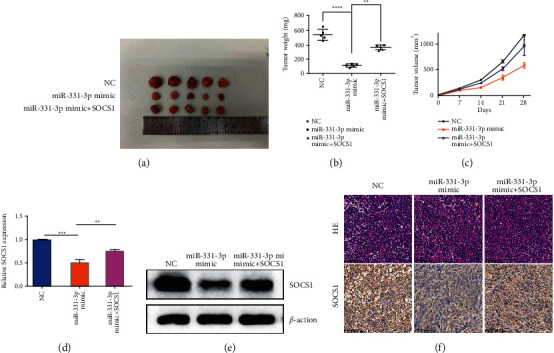
MicroRNAs (miRNAs) are regulatory small noncoding RNAs that play a key role in several types of cancer. It has been reported that miR-331-3p is involved in the development and progression of various cancers, but there are few reports regarding osteosarcoma (OS). The public GEO database was used to analyze the survival difference of miR-331-3p in OS organizations. The level of cell proliferation assay was assessed by CCK-8 and colony formation. First, transwell and wound-healing assays were used to detect the transfer and invasion ability of miR-331-3p in OS. Second, TargetScan, miRDBmiR, TarBase, and dual-luciferase reporter gene assays were used to determine SOCS1 as a targeted regulator. Third, Western blot and immunohistochemistry were used to detect the expression of protein levels. Finally, a mouse model of subcutaneously transplantable tumors is used to evaluate the proliferation of OS in vivo. The low expression of miR-331-3p was negatively correlated with the overall survival of OS patients. Overexpression of miR-331-3p significantly inhibited cell proliferation, metastasis, and invasion. Moreover, miR-331-3p affected the occurrence and development of osteosarcoma by targeting the SOCS1/JAK2/STAT3 signaling pathway. Therefore, miR-331-3p reduces the expression of SOCS1 by combining with its 3'UTR, thereby activating the JAK2/STAT3 signaling pathway to regulate the progression of OS. This provides a new theoretical basis for the treatment of osteosarcoma.
微小RNA(miRNA)是一类具有调控作用的小型非编码RNA,在多种癌症中发挥关键作用。据报道,miR-331-3p参与了多种癌症的发生和发展,但关于骨肉瘤(OS)的报道较少。利用公共基因表达综合数据库(GEO数据库)分析miR-331-3p在骨肉瘤组织中的生存差异。通过细胞计数试剂盒-8(CCK-8)和集落形成实验评估细胞增殖水平。首先,采用Transwell实验和伤口愈合实验检测miR-331-3p在骨肉瘤中的迁移和侵袭能力。其次,利用TargetScan、miRDBmiR、TarBase和双荧光素酶报告基因实验确定细胞因子信号传导抑制因子1(SOCS1)为靶向调控因子。第三,采用蛋白质免疫印迹法(Western blot)和免疫组织化学法检测蛋白水平的表达。最后,利用皮下可移植肿瘤小鼠模型评估骨肉瘤在体内的增殖情况。miR-331-3p的低表达与骨肉瘤患者的总生存期呈负相关。miR-331-3p的过表达显著抑制细胞增殖、转移和侵袭。此外,miR-331-3p通过靶向SOCS1/Janus激酶2(JAK2)/信号转导与转录激活因子3(STAT3)信号通路影响骨肉瘤的发生和发展。因此,miR-331-3p通过与其3'非翻译区(3'UTR)结合降低SOCS1的表达,从而激活JAK2/STAT3信号通路来调节骨肉瘤的进展。这为骨肉瘤的治疗提供了新的理论依据。