Zhao Jieyi, Zhao Huamin, Jia Tingting, Yang Shiru, Wang Xiaoyu
Department of Neurosurgery, West China Hospital, Sichuan University, Chengdu, People's Republic of China.
West China Medical School, Sichuan University, Chengdu, People's Republic of China.
Cancer Manag Res. 2022 Sep 29;14:2933-2944. doi: 10.2147/CMAR.S377784. eCollection 2022.
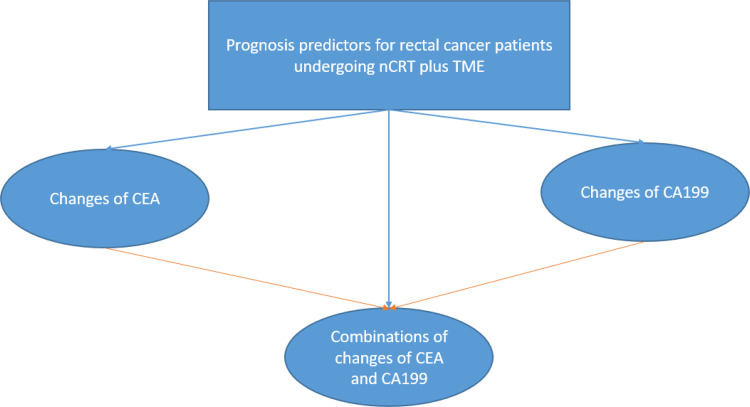
Previous studies have shown that the levels of serum tumor markers CEA and CA19-9 were related to chemoradiotherapy. Therefore, it has been assumed that dynamic monitoring of these markers could predict the prognosis of stage II/III rectal cancer (RC). Therefore, this study proposed to evaluate the prognostic value of changes in serum tumor biomarkers for stage II/III RC patients undergoing neoadjuvant chemoradiotherapy (NCRT) followed by total mesorectal excision (TME).
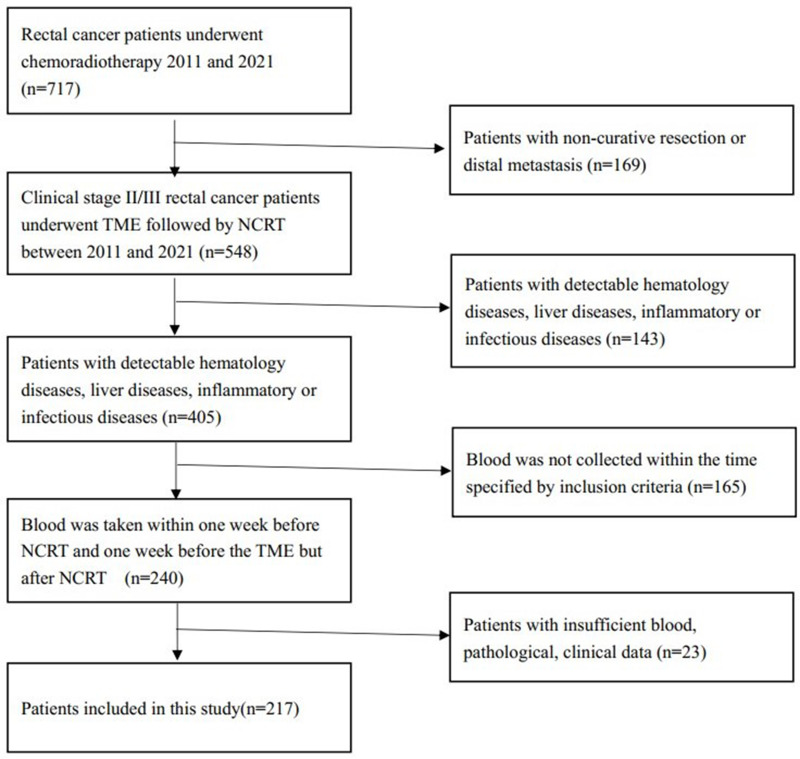
A total of 217 patients with stage II/III RC receiving NCRT followed by TME were retrospectively analyzed. Serum CEA and CA199 levels were measured within one week before NCRT and one week before TME. The optimal cut-off points of ∆CEA% and ∆CA199% for prognosis prediction were calculated by receiver operating characteristics (ROC) analysis. Independent prognostic predictors were identified by univariate and multivariate Cox regression analyses. To avoid the efficiency of ∆CEA% and ∆CA199% on serum tumor biomarker change (STBC) score, two models including and excluding ∆CEA% and ∆CA199% were established separately in multivariate analysis.
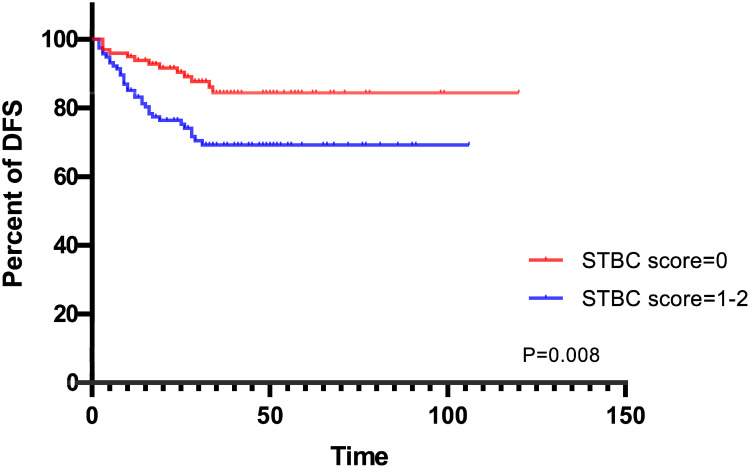
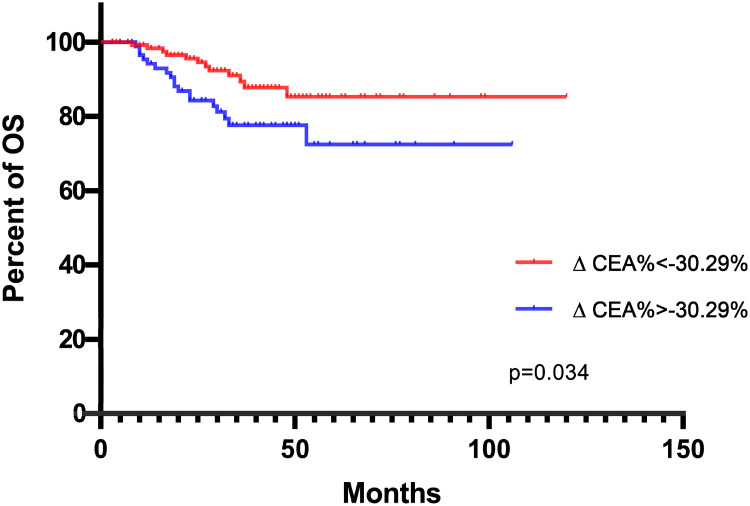
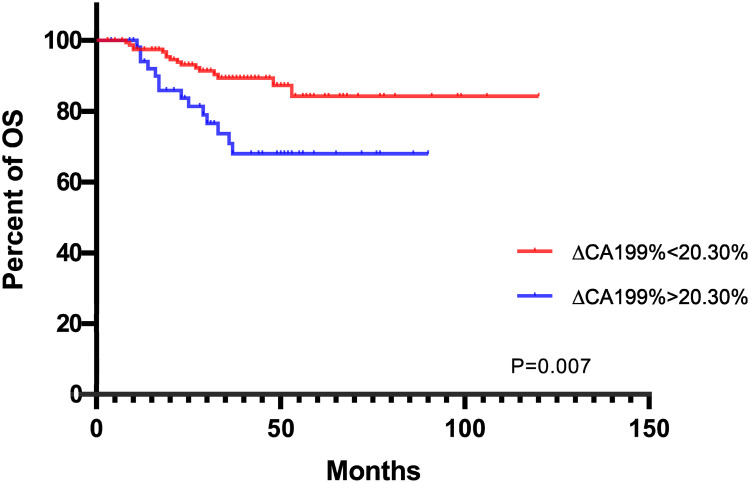
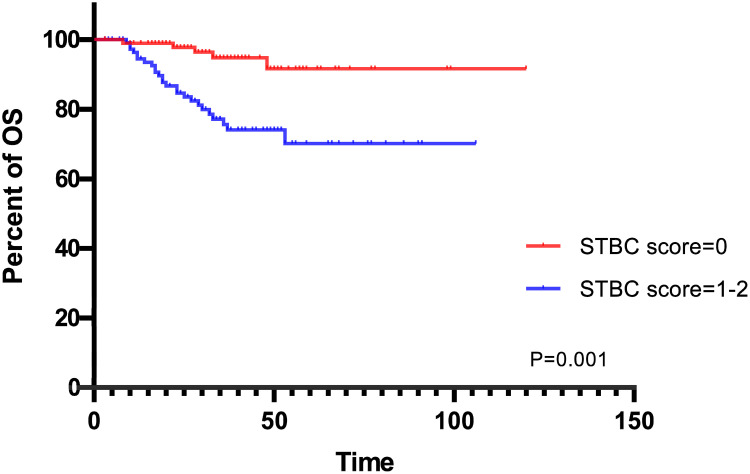
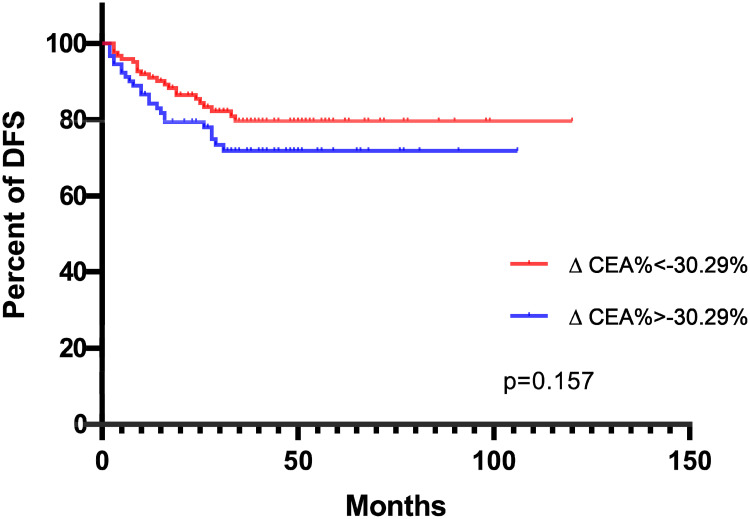
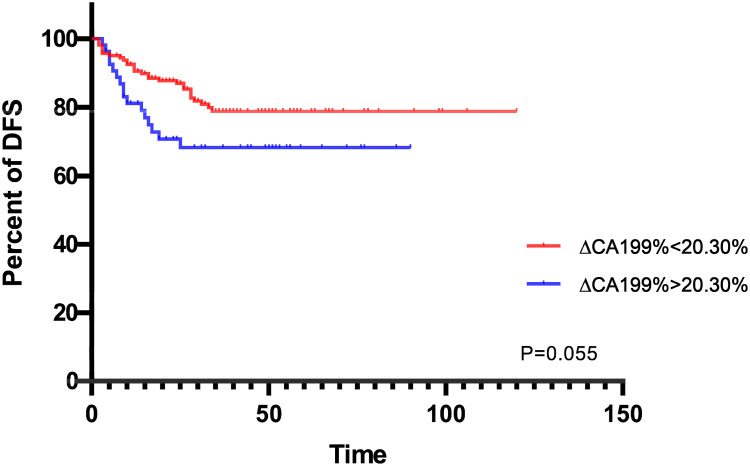
The optimal cut-off point for ∆CEA% and ∆CA199% were -30.29% and 20.30%, respectively. Univariate analysis showed that ∆CEA%, ∆CA199%, STBC score, ypT staging and yN staging could predict OS. ypT staging and STBC score could predict DFS. In multivariate analysis, only ∆CA199% (HR = 0.468, 95% CI: 0.220-0.994, p = 0.048), ypT staging (HR = 0.420, 95% CI: 0.182-0.970, p = 0.042), and STBC score (HR = 0.204, 95% CI: 0.078-0.532, p = 0.001) were independently related to OS; and STBC score (HR = 0.412, 95% CI: 0.216-0.785, p=0.007) and ypT staging (HR = 0.421, 95% CI: 0.224-0.792, p = 0.007) were independently related to DFS.
We established a combined STBC score to predict the prognosis of stage II/III RC patients receiving NCRT followed by TME. The predictive value of the combined score was stronger than a single marker alone and even stronger than several pathological indicators.
既往研究表明,血清肿瘤标志物癌胚抗原(CEA)和糖类抗原19-9(CA19-9)水平与放化疗相关。因此,人们认为动态监测这些标志物可预测Ⅱ/Ⅲ期直肠癌(RC)的预后。因此,本研究旨在评估血清肿瘤生物标志物变化对接受新辅助放化疗(NCRT)后行全直肠系膜切除术(TME)的Ⅱ/Ⅲ期RC患者的预后价值。
回顾性分析217例接受NCRT后行TME的Ⅱ/Ⅲ期RC患者。在NCRT前1周和TME前1周测量血清CEA和CA199水平。通过受试者工作特征(ROC)分析计算用于预后预测的ΔCEA%和ΔCA199%的最佳截断点。通过单因素和多因素Cox回归分析确定独立的预后预测因素。为避免ΔCEA%和ΔCA199%对血清肿瘤生物标志物变化(STBC)评分的影响,在多因素分析中分别建立了包含和排除ΔCEA%和ΔCA199%的两个模型。
ΔCEA%和ΔCA199%的最佳截断点分别为-30.29%和20.30%。单因素分析显示,ΔCEA%、ΔCA199%、STBC评分、ypT分期和ypN分期可预测总生存期(OS)。ypT分期和STBC评分可预测无病生存期(DFS)。多因素分析中,仅ΔCA199%(风险比[HR]=0.468,95%置信区间[CI]:0.220-0.994,P=0.048)、ypT分期(HR=0.420,95%CI:0.182-0.970,P=0.042)和STBC评分(HR=