Genentech Research and Early Development, South San Francisco, California, USA.
MAbs. 2022 Jan-Dec;14(1):2115213. doi: 10.1080/19420862.2022.2115213.
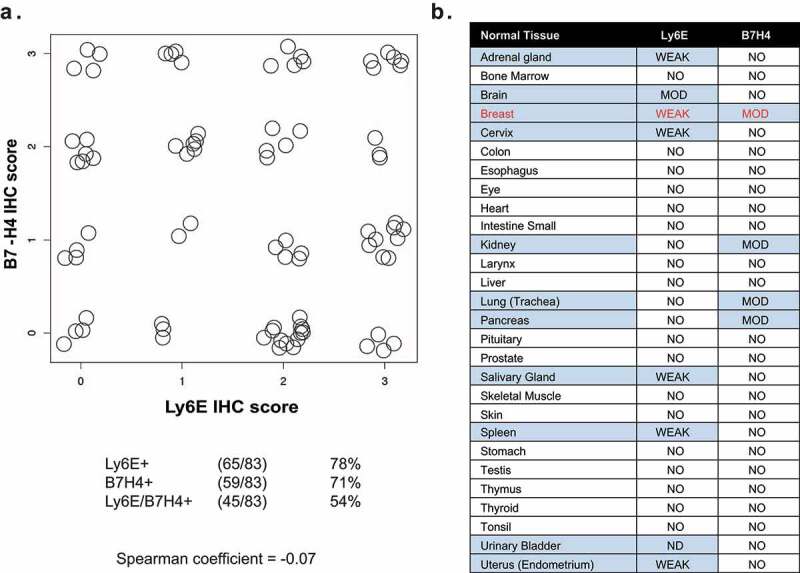
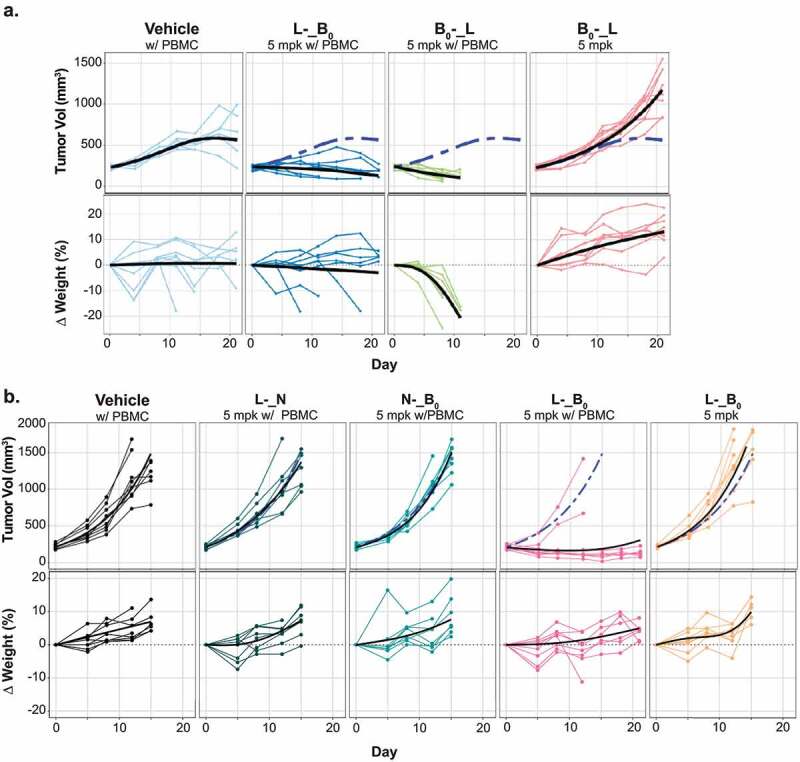
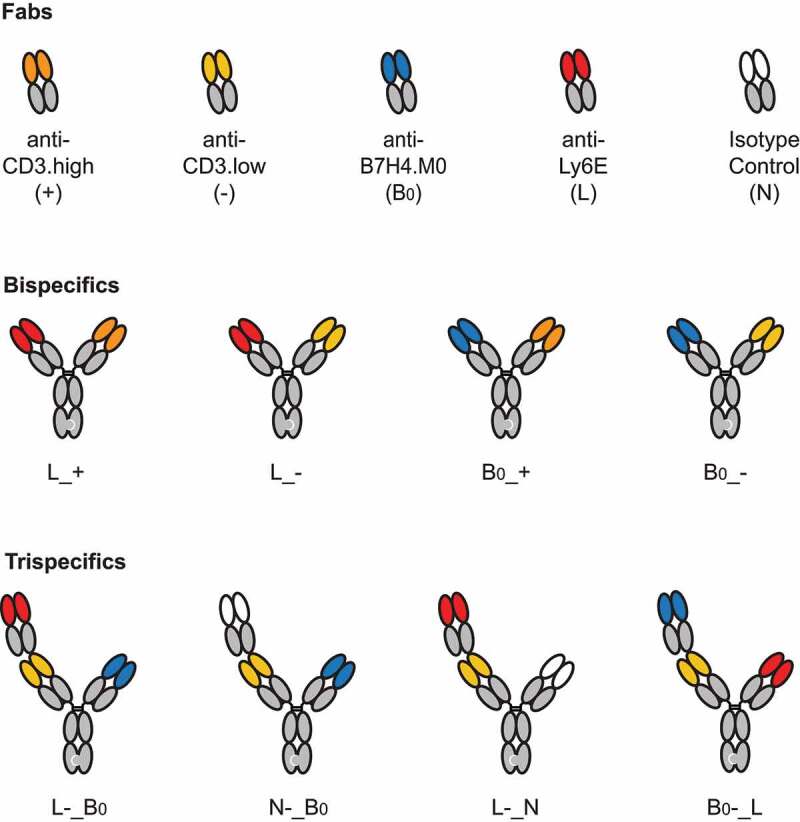
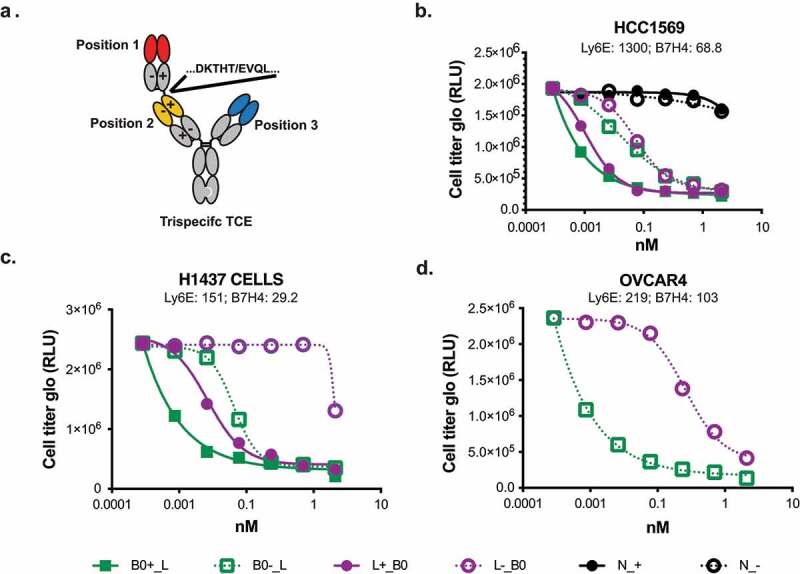
T cell-engaging bispecific antibodies (TCEs) are clinically effective treatments for hematological cancers. While the utility of TCEs in solid malignancies is being explored, toxicities arising from antigen expression on normal tissues have slowed or halted several clinical trials. Here, we describe the development of TCEs that preferentially drive T cell-mediated death against target cells co-expressing two tumor-associated antigens. We show that Ly6E and B7-H4 are simultaneously expressed on approximately 50% of breast cancers, whereas normal tissue expression is limited and mostly orthogonal. Traditional bispecific TCEs targeting a singular antigen, either Ly6E or B7-H4, are active when paired with high-affinity CD3-engagers, but normal tissue expression presents a toxicity risk. Treatment with a murine cross-reactive B7-H4-TCE results in rapid and severe weight loss in mice along with damage to B7-H4-expressing tissues. To overcome on-target toxicity, we designed trispecific antibodies co-targeting Ly6E, B7-H4, CD3 and characterized the impact of dual-antigen binding and the relative placement of each binding domain on tumor killing and killing of tumor cells co-expressing both antigens correlates to the placement of the higher affinity B7-H4 binding domain, with only modest enhancements seen upon addition of Ly6E binding. In xenograft models, avid binding of appropriately designed trispecific TCEs enables tumor growth inhibition while evading the poor tolerability seen with active bispecific TCEs. Collectively these data highlight the potential for dual-antigen targeting to improve safety and efficacy, and expand the scope of tumors that may effectively be treated by TCEs. Chimeric antigen receptor T cells (CAR-Ts), dual-antigen targeted T cell engagers (DAT-TCE), Fragment antigen-binding (Fab), Hematoxylin and eosin (H&E), Institutional Animal Care and Use Committee (IACUC), Immunoglobulin G (IgG), immunohistochemistry (IHC), NOD SCID gamma (NSG), peripheral blood mononuclear cells (PBMCs), surface plasmon resonance (SPR), T cell-engagers (TCEs).
T 细胞结合双特异性抗体(TCEs)是治疗血液系统癌症的有效临床治疗方法。虽然正在探索 TCEs 在实体恶性肿瘤中的应用,但由于正常组织上抗原表达引起的毒性已经减缓或停止了几项临床试验。在这里,我们描述了开发优先驱动针对同时表达两种肿瘤相关抗原的靶细胞的 T 细胞介导的死亡的 TCEs。我们表明,Ly6E 和 B7-H4 大约同时表达在 50%的乳腺癌中,而正常组织的表达有限且大多是正交的。传统的靶向单一抗原(Ly6E 或 B7-H4)的双特异性 TCEs 在与高亲和力 CD3 结合物配对时是有效的,但正常组织的表达存在毒性风险。用鼠源交叉反应性 B7-H4-TCE 治疗会导致小鼠体重迅速而严重下降,同时伴有表达 B7-H4 的组织损伤。为了克服靶毒性,我们设计了共靶向 Ly6E、B7-H4、CD3 的三特异性抗体,并研究了双重抗原结合和每个结合域的相对位置对肿瘤杀伤的影响,以及对同时表达两种抗原的肿瘤细胞的杀伤与 B7-H4 结合域的亲和力位置相关,仅在添加 Ly6E 结合时观察到适度增强。在异种移植模型中,适当设计的三特异性 TCE 的高亲和力结合可抑制肿瘤生长,同时避免了活性双特异性 TCE 所见的较差耐受性。总的来说,这些数据突出了双重抗原靶向的潜力,可以提高安全性和疗效,并扩大可能有效治疗 TCEs 的肿瘤范围。嵌合抗原受体 T 细胞(CAR-Ts)、双抗原靶向 T 细胞结合物(DAT-TCE)、Fragment antigen-binding(Fab)、苏木精和伊红(H&E)、机构动物护理和使用委员会(IACUC)、免疫球蛋白 G(IgG)、免疫组织化学(IHC)、无胸腺、严重联合免疫缺陷(NOD SCID gamma)(NSG)、外周血单核细胞(PBMCs)、表面等离子体共振(SPR)、T 细胞结合物(TCEs)。