Jiao Ji-Wei, Zhan Xiu-Hui, Wang Juan-Juan, He Li-Xia, Guo Zhen-Chang, Xu Xiu-E, Liao Lian-Di, Huang Xin, Wen Bing, Xu Yi-Wei, Hu Hai, Neufeld Gera, Chang Zhi-Jie, Zhang Kai, Xu Li-Yan, Li En-Min
The Key Laboratory of Molecular Biology for High Cancer Incidence Coastal Chaoshan Area, Department of Biochemistry and Molecular Biology, Shantou University Medical College, Shantou, 515041, China.
Department of Orthopedics, Research Center of Translational Medicine, The Second Affiliated Hospital of Shantou University Medical College, Shantou, 515041, China.
Redox Biol. 2022 Nov;57:102496. doi: 10.1016/j.redox.2022.102496. Epub 2022 Oct 3.
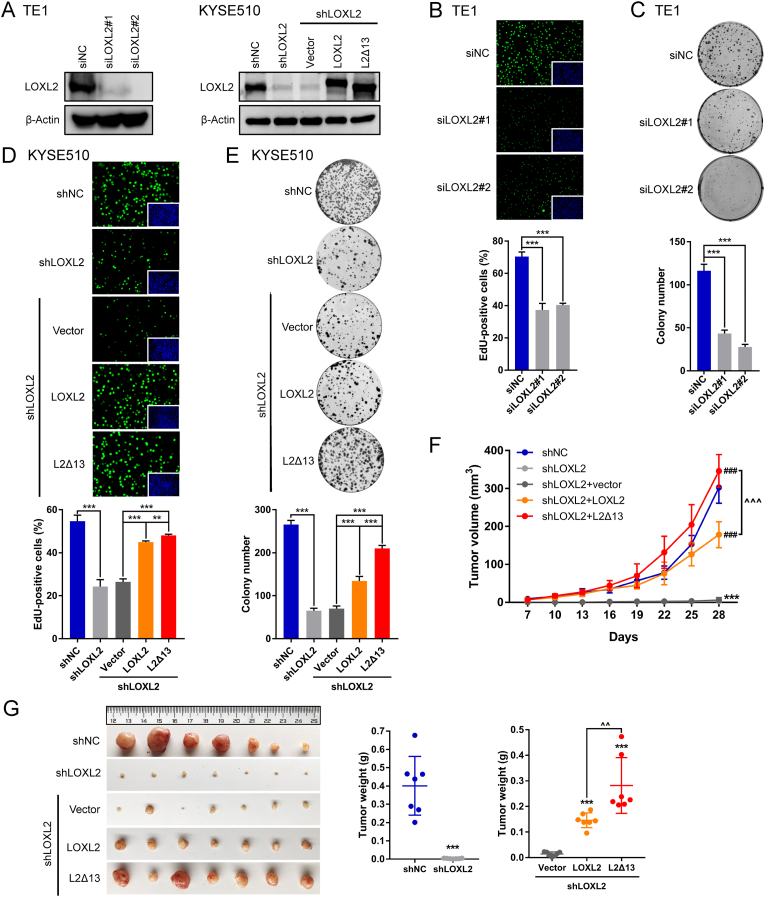
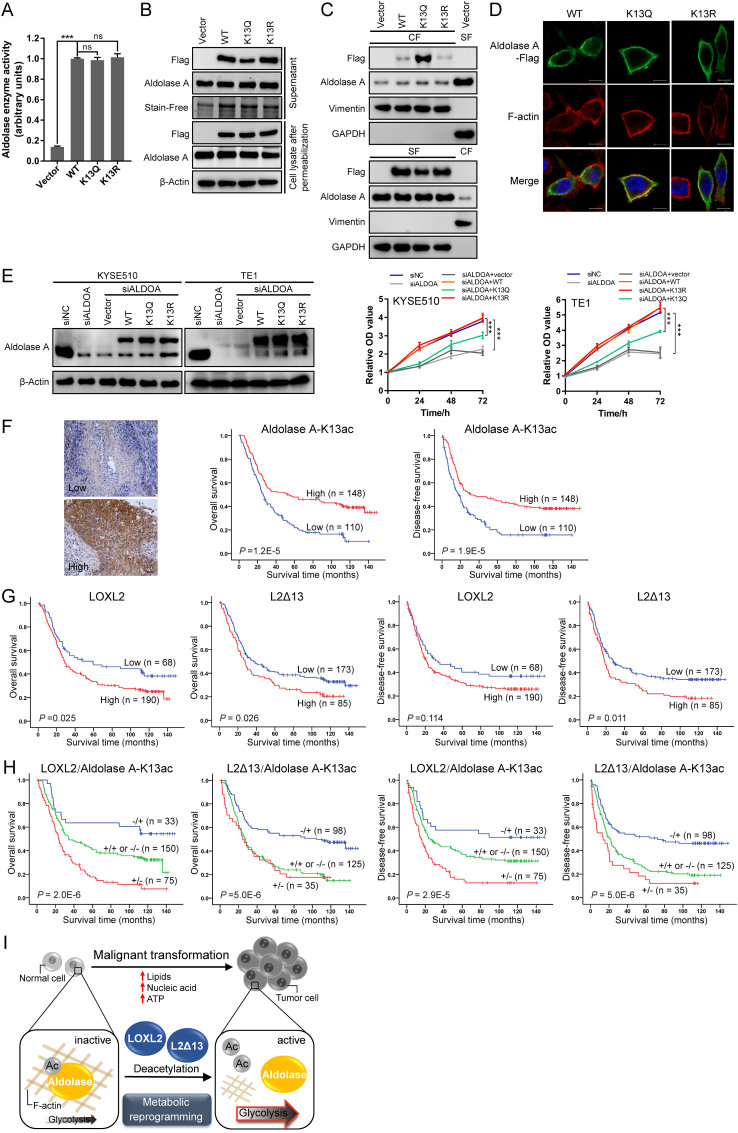
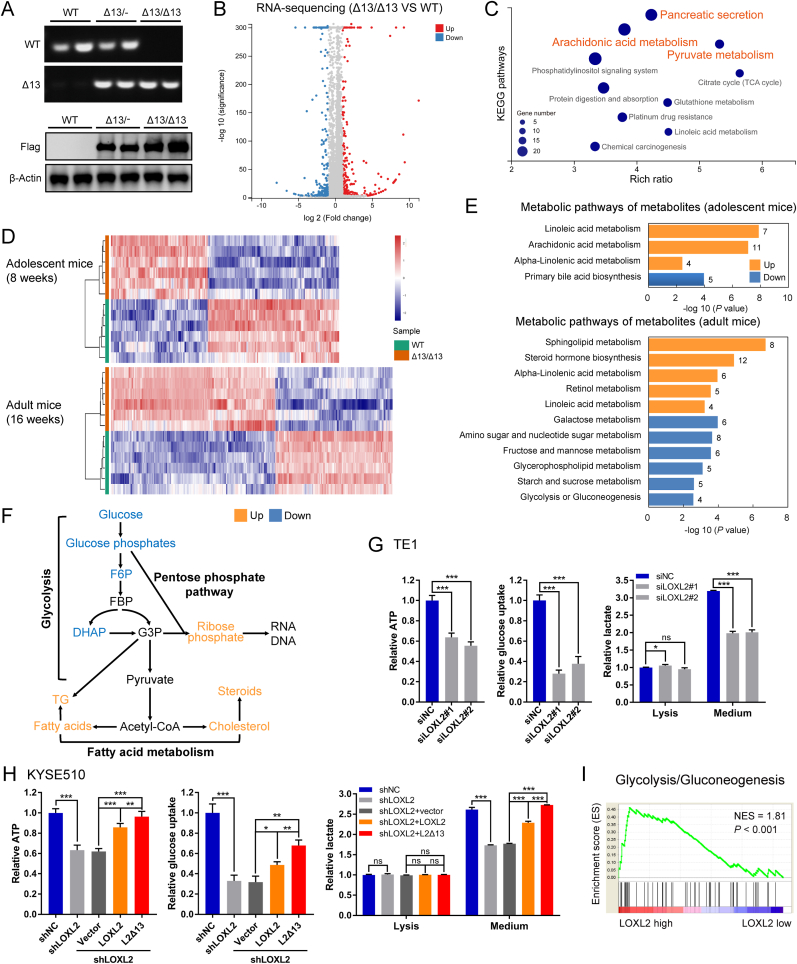
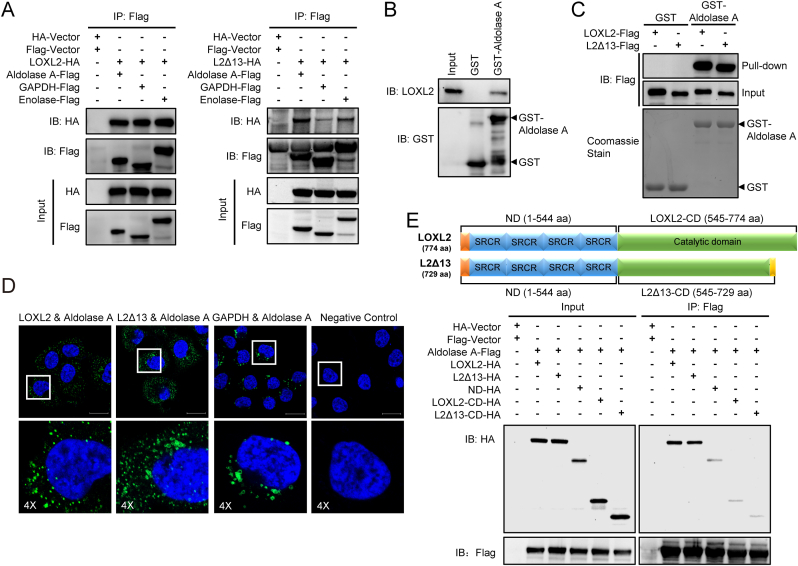
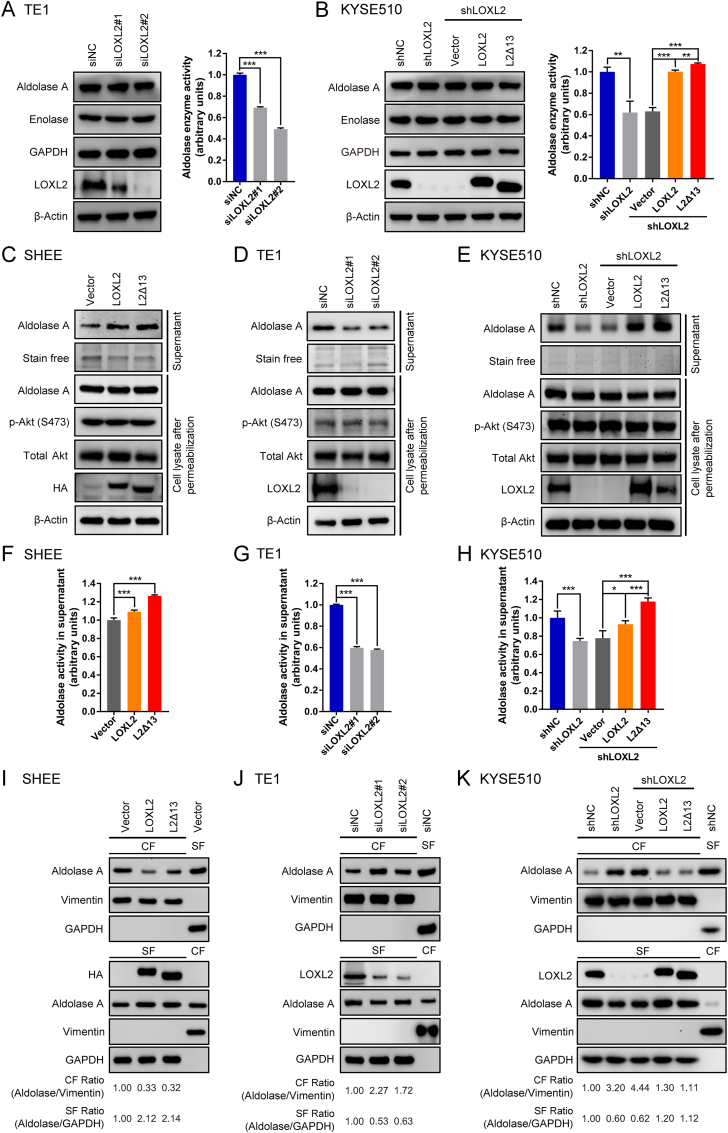
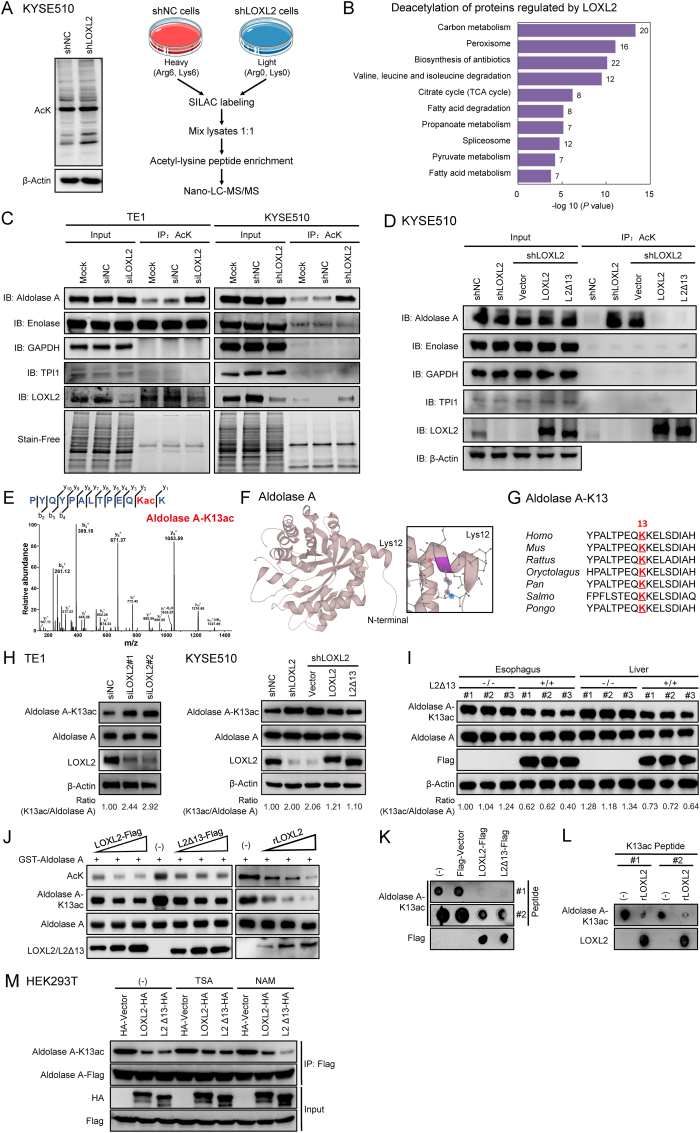
Lysyl-oxidase like-2 (LOXL2) regulates extracellular matrix remodeling and promotes tumor invasion and metastasis. Altered metabolism is a core hallmark of cancer, however, it remains unclear whether and how LOXL2 contributes to tumor metabolism. Here, we found that LOXL2 and its catalytically inactive L2Δ13 splice variant boost glucose metabolism of esophageal tumor cells, facilitate tumor cell proliferation and promote tumor development in vivo. Consistently, integrated transcriptomic and metabolomic analysis of a knock-in mouse model expressing L2Δ13 gene revealed that LOXL2/L2Δ13 overexpression perturbs glucose and lipid metabolism. Mechanistically, we identified aldolase A, glyceraldehyde-3-phosphate dehydrogenase and enolase as glycolytic proteins that interact physically with LOXL2 and L2Δ13. In the case of aldolase A, LOXL2/L2Δ13 stimulated its mobilization from the actin cytoskeleton to enhance aldolase activity during malignant transformation. Using stable isotope labeling of amino acids in cell culture (SILAC) followed by proteomic analysis, we identified LOXL2 and L2Δ13 as novel deacetylases that trigger metabolic reprogramming. Both LOXL2 and L2Δ13 directly catalyzed the deacetylation of aldolase A at K13, resulting in enhanced glycolysis which subsequently reprogramed tumor metabolism and promoted tumor progression. High level expression of LOXL2/L2Δ13 combined with decreased acetylation of aldolase-K13 predicted poor clinical outcome in patients with esophageal cancer. In summary, we have characterized a novel molecular mechanism that mediates the pro-tumorigenic activity of LOXL2 independently of its classical amine oxidase activity. These findings may enable the future development of therapeutic agents targeting the metabolic machinery via LOXL2 or L2Δ13. HIGHLIGHT OF THE STUDY: LOXL2 and its catalytically inactive isoform L2Δ13 function as new deacetylases to promote metabolic reprogramming and tumor progression in esophageal cancer by directly activating glycolytic enzymes such as aldolase A.
赖氨酰氧化酶样蛋白2(LOXL2)调节细胞外基质重塑,并促进肿瘤侵袭和转移。代谢改变是癌症的一个核心特征,然而,LOXL2是否以及如何影响肿瘤代谢仍不清楚。在此,我们发现LOXL2及其催化无活性的L2Δ13剪接变体可促进食管肿瘤细胞的葡萄糖代谢,促进肿瘤细胞增殖并在体内促进肿瘤发展。一致地,对表达L2Δ13基因的基因敲入小鼠模型进行的综合转录组学和代谢组学分析表明,LOXL2/L2Δ13过表达扰乱了葡萄糖和脂质代谢。从机制上讲,我们确定醛缩酶A、甘油醛-3-磷酸脱氢酶和烯醇化酶为与LOXL2和L2Δ13发生物理相互作用的糖酵解蛋白。就醛缩酶A而言,LOXL2/L2Δ13刺激其从肌动蛋白细胞骨架上脱离,以在恶性转化过程中增强醛缩酶活性。通过细胞培养中氨基酸的稳定同位素标记(SILAC),随后进行蛋白质组学分析,我们确定LOXL2和L2Δ13为触发代谢重编程的新型脱乙酰酶。LOXL2和L2Δ13均直接催化醛缩酶A在K13位点的去乙酰化,导致糖酵解增强,随后重新编程肿瘤代谢并促进肿瘤进展。LOXL2/L2Δ13的高水平表达与醛缩酶-K13乙酰化降低相结合,预示着食管癌患者的临床预后较差。总之,我们已经阐明了一种新的分子机制,该机制介导了LOXL2的促肿瘤活性,而与其经典的胺氧化酶活性无关。这些发现可能有助于未来开发通过LOXL2或L2Δ13靶向代谢机制的治疗药物。研究亮点:LOXL2及其催化无活性的同工型L2Δ13作为新的脱乙酰酶,通过直接激活醛缩酶A等糖酵解酶来促进食管癌中的代谢重编程和肿瘤进展。