Asiimwe Innocent G, Blockman Marc, Cohen Karen, Cupido Clint, Hutchinson Claire, Jacobson Barry, Lamorde Mohammed, Morgan Jennie, Mouton Johannes P, Nakagaayi Doreen, Okello Emmy, Schapkaitz Elise, Sekaggya-Wiltshire Christine, Semakula Jerome R, Waitt Catriona, Zhang Eunice J, Jorgensen Andrea L, Pirmohamed Munir
The Wolfson Centre for Personalized Medicine, Department of Pharmacology and Therapeutics, Institute of Systems, Molecular and Integrative Biology, University of Liverpool, Liverpool, United Kingdom.
Division of Clinical Pharmacology, Department of Medicine, University of Cape Town, Cape Town, South Africa.
Front Pharmacol. 2022 Sep 23;13:967082. doi: 10.3389/fphar.2022.967082. eCollection 2022.
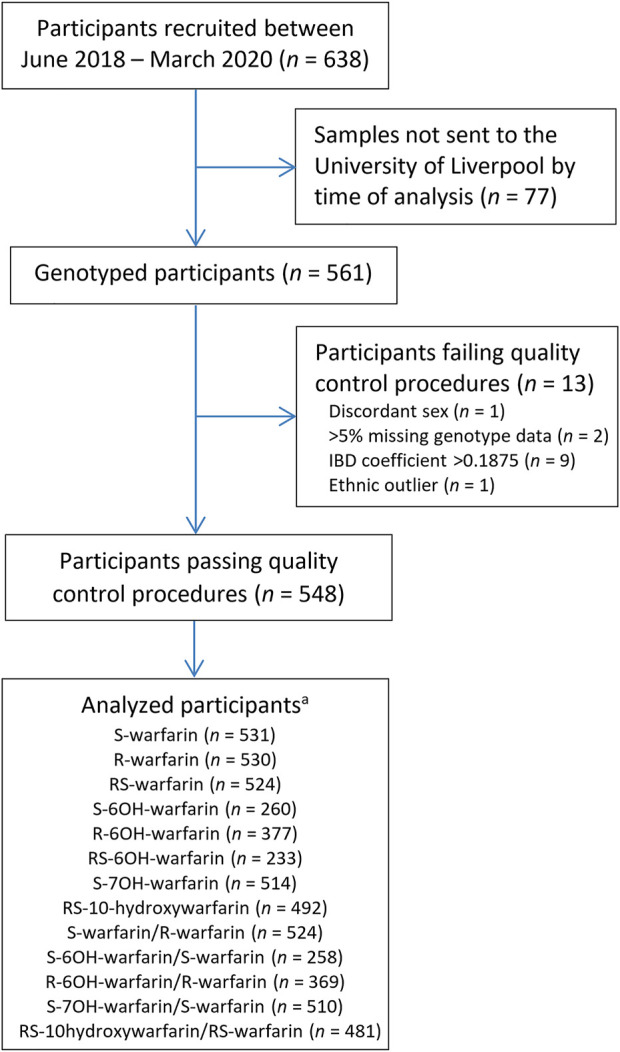
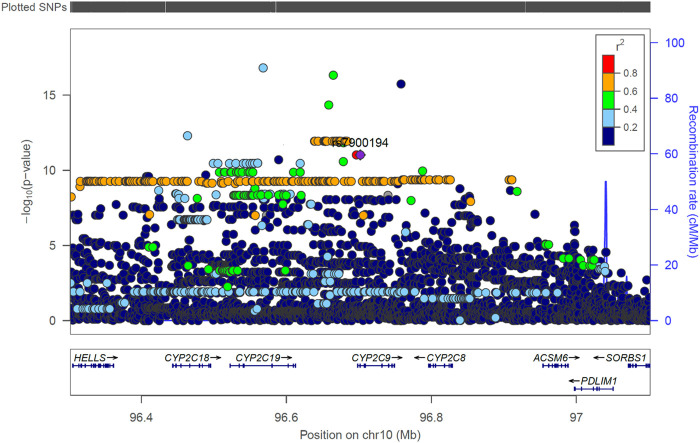
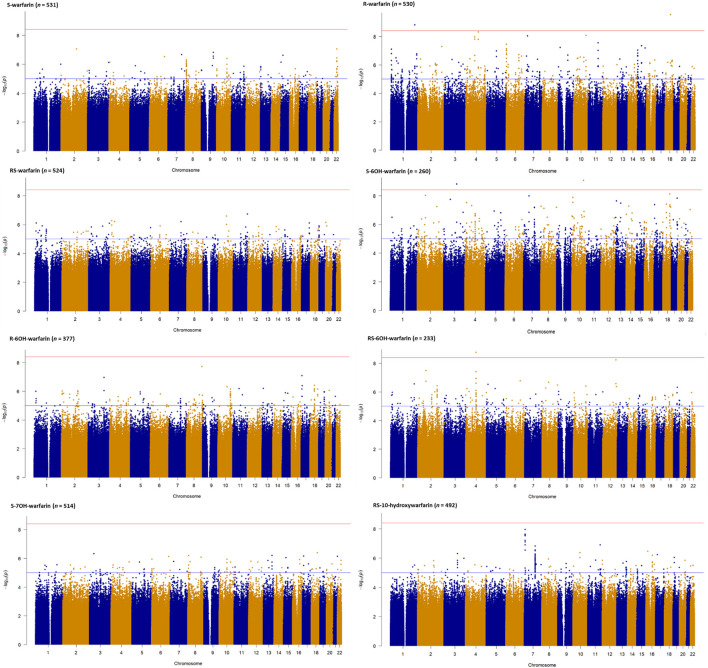
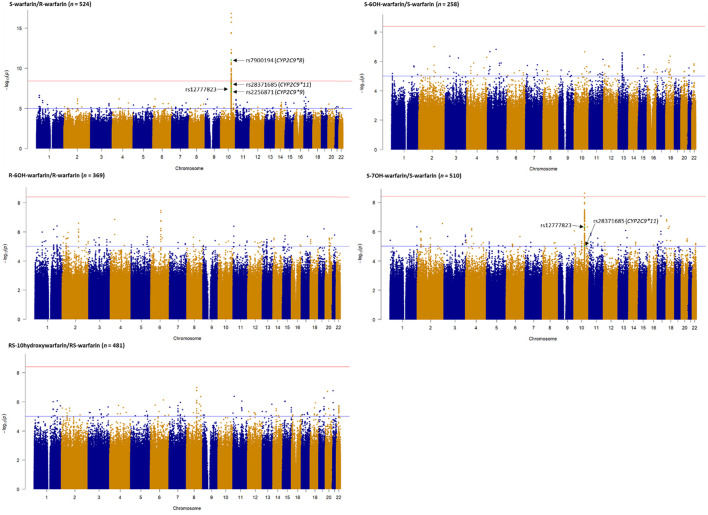
Diversity in pharmacogenomic studies is poor, especially in relation to the inclusion of black African patients. Lack of funding and difficulties in recruitment, together with the requirement for large sample sizes because of the extensive genetic diversity in Africa, are amongst the factors which have hampered pharmacogenomic studies in Africa. Warfarin is widely used in sub-Saharan Africa, but as in other populations, dosing is highly variable due to genetic and non-genetic factors. In order to identify genetic factors determining warfarin response variability, we have conducted a genome-wide association study (GWAS) of plasma concentrations of warfarin enantiomers/metabolites in sub-Saharan black-Africans. This overcomes the issue of non-adherence and may have greater sensitivity at genome-wide level, to identify pharmacokinetic gene variants than focusing on mean weekly dose, the usual end-point used in previous studies. Participants recruited at 12 outpatient sites in Uganda and South Africa on stable warfarin dose were genotyped using the Illumina Infinium H3Africa Consortium Array v2. Imputation was conducted using the 1,000 Genomes Project phase III reference panel. Warfarin/metabolite plasma concentrations were determined by high-performance liquid chromatography with tandem mass spectrometry. Multivariable linear regression was undertaken, with adjustment made for five non-genetic covariates and ten principal components of genetic ancestry. After quality control procedures, 548 participants and 17,268,054 SNPs were retained. , , , and the cluster SNP rs12777823 passed the Bonferroni-adjusted replication significance threshold ( < 3.21E-04) for warfarin/metabolite ratios. In an exploratory GWAS analysis, 373 unique SNPs in 13 genes, including , passed the Bonferroni-adjusted genome-wide significance threshold ( < 3.846E-9), with 325 (87%, all located on chromosome 10) SNPs being associated with the S-warfarin/R-warfarin outcome (top SNP rs11188082, intron variant, = 1.55E-17). Approximately 69% of these SNPs were in linkage disequilibrium ( > 0.8) with ( = 216) and rs12777823 ( = 8). Using a pharmacokinetic approach, we have shown that variants other than and *3 are more important in sub-Saharan black-Africans, mainly due to the allele frequencies. In exploratory work, we conducted the first warfarin pharmacokinetics-related GWAS in sub-Saharan Africans and identified novel SNPs that will require external replication and functional characterization before they can be considered for inclusion in warfarin dosing algorithms.
药物基因组学研究的多样性较差,尤其是在纳入非洲黑人患者方面。资金短缺、招募困难,以及由于非洲广泛的遗传多样性而需要大样本量,这些都是阻碍非洲药物基因组学研究的因素。华法林在撒哈拉以南非洲广泛使用,但与其他人群一样,由于遗传和非遗传因素,剂量差异很大。为了确定决定华法林反应变异性的遗传因素,我们对撒哈拉以南非洲黑人的华法林对映体/代谢物血浆浓度进行了全基因组关联研究(GWAS)。这克服了不依从性问题,并且在全基因组水平上可能比关注以前研究中常用的终点——平均每周剂量,对识别药代动力学基因变异具有更高的敏感性。在乌干达和南非的12个门诊地点招募的服用稳定华法林剂量的参与者,使用Illumina Infinium H3Africa Consortium Array v2进行基因分型。使用千人基因组计划第三阶段参考面板进行插补。通过高效液相色谱-串联质谱法测定华法林/代谢物血浆浓度。进行多变量线性回归,并对五个非遗传协变量和十个遗传血统主成分进行调整。经过质量控制程序后,保留了548名参与者和17,268,054个单核苷酸多态性(SNP)。……以及簇SNP rs12777823通过了华法林/代谢物比率的Bonferroni校正复制显著性阈值(P < 3.21E-04)。在探索性GWAS分析中,13个基因中的373个独特SNP,包括……通过了Bonferroni校正的全基因组显著性阈值(P < 3.846E-9),其中325个(87%,均位于10号染色体上)SNP与S-华法林/R-华法林结果相关(顶级SNP rs11188082,内含子变异,P = 1.55E-17)。这些SNP中约69%与……(r2 = 216)和rs12777823(r2 = 8)处于连锁不平衡状态(r2 > 0.8)。使用药代动力学方法,我们已经表明,除了……和*3之外的变异在撒哈拉以南非洲黑人中更重要,主要是由于等位基因频率。在探索性工作中,我们在撒哈拉以南非洲人身上进行了首次与华法林药代动力学相关的GWAS,并确定了新的SNP,在将它们纳入华法林给药算法之前,需要进行外部复制和功能表征。