State Key Laboratory of Virology, Wuhan Institute of Virology, Center for Biosafety Mega-Science, Chinese Academy of Sciences, Wuhan, China.
Savaid Medical School, University of Chinese Academy of Sciences, Beijing, China.
Front Immunol. 2022 Sep 23;13:983502. doi: 10.3389/fimmu.2022.983502. eCollection 2022.
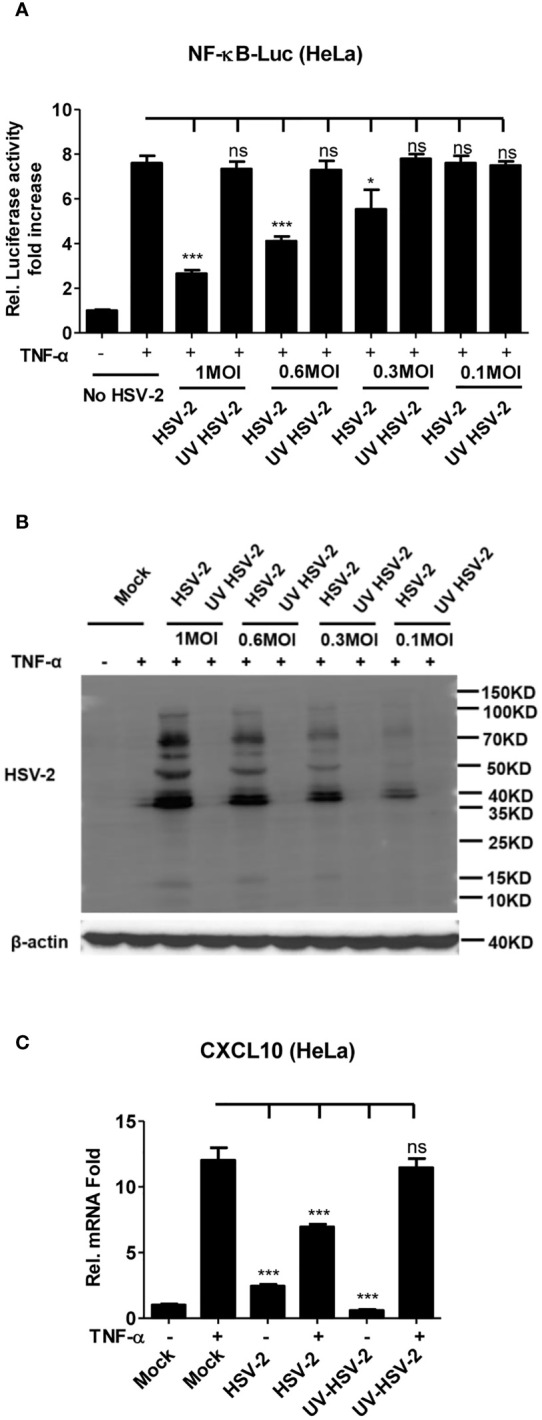
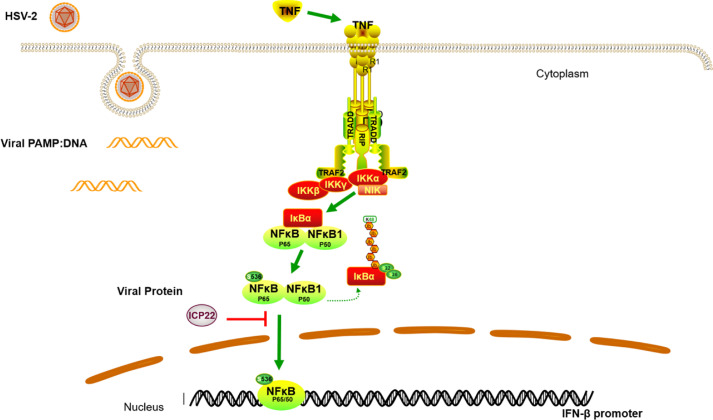
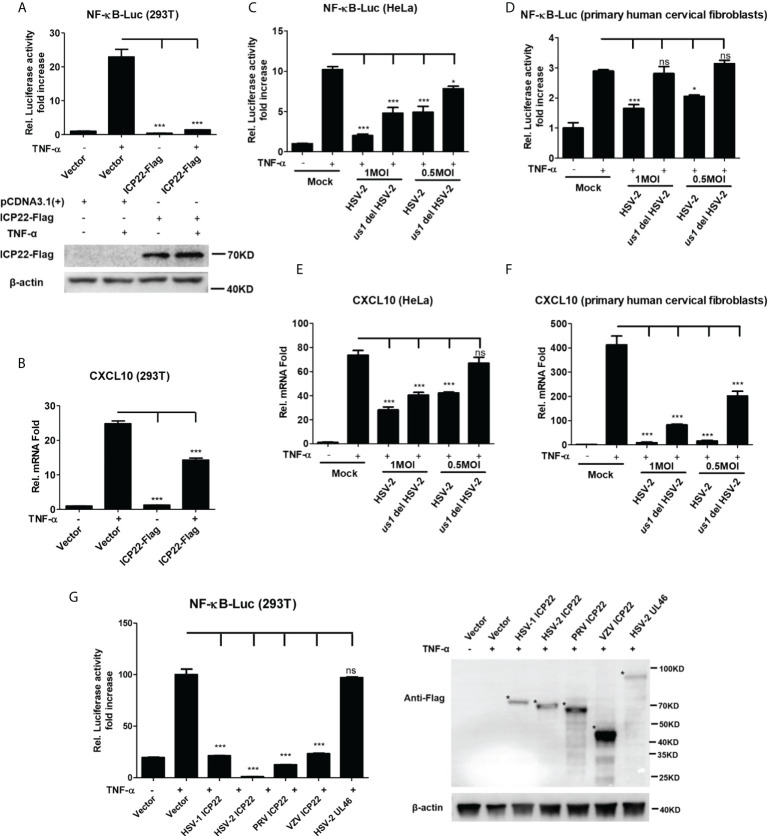
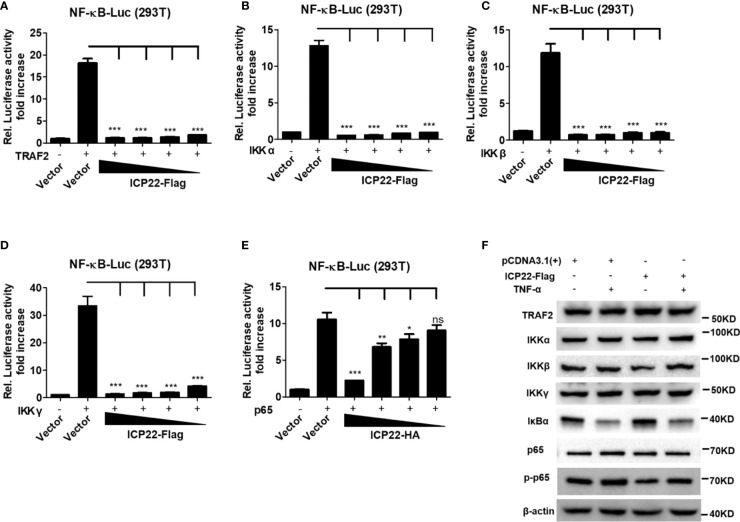
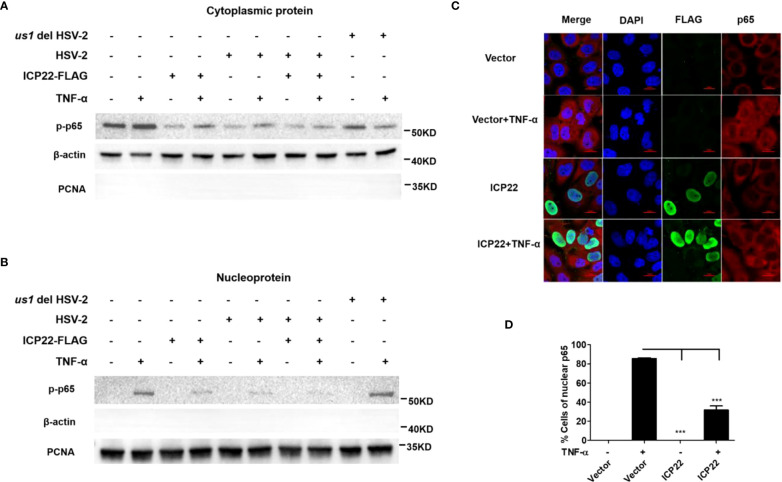
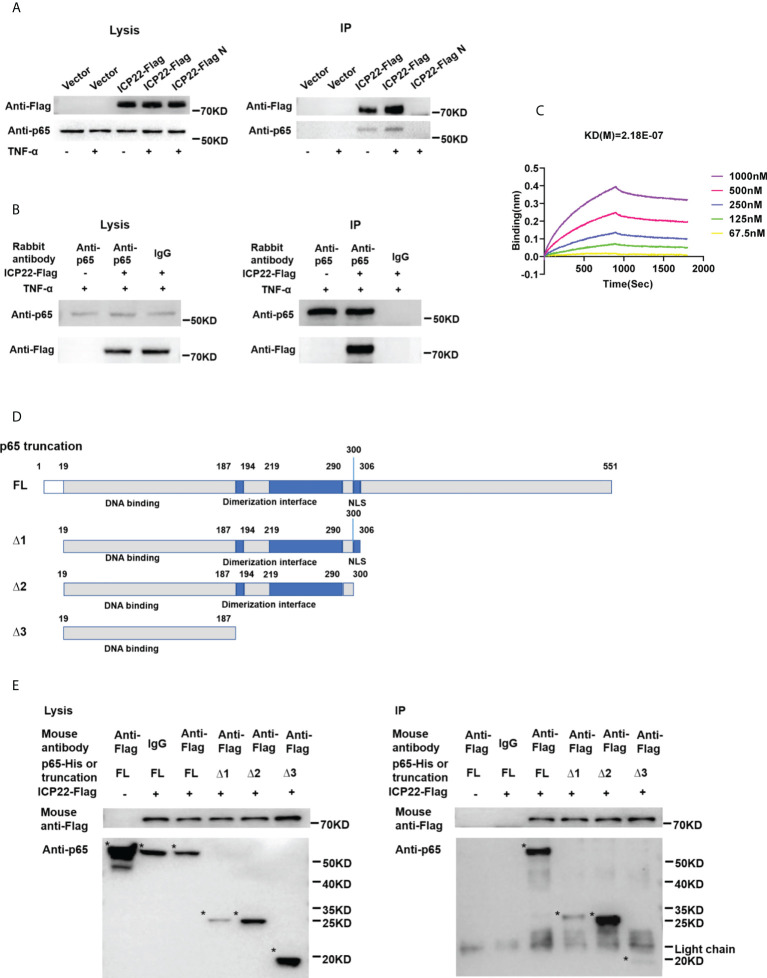
Herpes simplex virus type 2 (HSV-2) is a prevalent human pathogen and the main cause of genital herpes. After initial infection, HSV-2 can establish lifelong latency within dorsal root ganglia by evading the innate immunity of the host. NF-κB has a crucial role in regulating cell proliferation, inflammation, apoptosis, and immune responses. It is known that inhibition of NF-κB activation by a virus could facilitate it to establish infection in the host. In the current study, we found that HSV-2 inhibited TNF-α-induced activation of NF-κB-responsive promoter in a dose-dependent manner, while UV-inactivated HSV-2 did not have such capability. We further identified the immediate early protein ICP22 of HSV-2 as a vital viral element in inhibiting the activation of NF-κB-responsive promoter. The role of ICP22 was confirmed in human cervical cell line HeLa and primary cervical fibroblasts in the context of HSV-2 infection, showing that ICP22 deficient HSV-2 largely lost the capability in suppressing NF-κB activation. HSV-2 ICP22 was further shown to suppress the activity of TNF receptor-associated factor 2 (TRAF2)-, IκB kinase α (IKK α)-, IKK β-, IKK γ-, or p65-induced activation of NF-κB-responsive promoter. Mechanistically, HSV-2 ICP22 inhibited the phosphorylation and nuclear translocation of p65 by directly interacting with p65, resulting in the blockade of NF-κB activation. Furthermore, ICP22 from several alpha-herpesviruses could also inhibit NF-κB activation, suggesting the significance of ICP22 in herpesvirus immune evasion. Findings in this study highlight the importance of ICP22 in inhibiting NF-κB activation, revealing a novel mechanism by which HSV-2 evades the host antiviral responses.
单纯疱疹病毒 2 型(HSV-2)是一种流行的人类病原体,也是生殖器疱疹的主要原因。初次感染后,HSV-2 通过逃避宿主固有免疫,在背根神经节中建立终身潜伏。NF-κB 在调节细胞增殖、炎症、凋亡和免疫反应方面起着至关重要的作用。已知病毒抑制 NF-κB 激活可促进其在宿主中建立感染。在本研究中,我们发现 HSV-2 以剂量依赖的方式抑制 TNF-α诱导的 NF-κB 反应性启动子的激活,而紫外线失活的 HSV-2 则没有这种能力。我们进一步鉴定出 HSV-2 的早期即刻蛋白 ICP22 是抑制 NF-κB 反应性启动子激活的重要病毒元件。在 HSV-2 感染的情况下,ICP22 在人宫颈细胞系 HeLa 和原代宫颈成纤维细胞中作用得到了验证,表明 ICP22 缺陷型 HSV-2 很大程度上丧失了抑制 NF-κB 激活的能力。进一步表明,HSV-2 ICP22 抑制 TNF 受体相关因子 2(TRAF2)、IκB 激酶α(IKKα)、IKKβ、IKKγ或 p65 诱导的 NF-κB 反应性启动子激活。在机制上,HSV-2 ICP22 通过直接与 p65 相互作用抑制 p65 的磷酸化和核易位,从而阻断 NF-κB 的激活。此外,来自几种α疱疹病毒的 ICP22 也能抑制 NF-κB 的激活,这表明 ICP22 在疱疹病毒免疫逃避中的重要性。本研究的结果强调了 ICP22 抑制 NF-κB 激活的重要性,揭示了 HSV-2 逃避宿主抗病毒反应的新机制。