Chen Gaoqi, Wu Kaiwen, Li Hao, Xia Demeng, He Tianlin
Department of Hepatobiliary Pancreatic Surgery, Changhai Hospital, Second Military Medical University (Naval Medical University), Shanghai, China.
Department of Gastroenterology, The Third People's Hospital of Chengdu, The Affiliated Hospital of Southwest Jiaotong University, Chengdu, China.
Front Oncol. 2022 Sep 23;12:961637. doi: 10.3389/fonc.2022.961637. eCollection 2022.
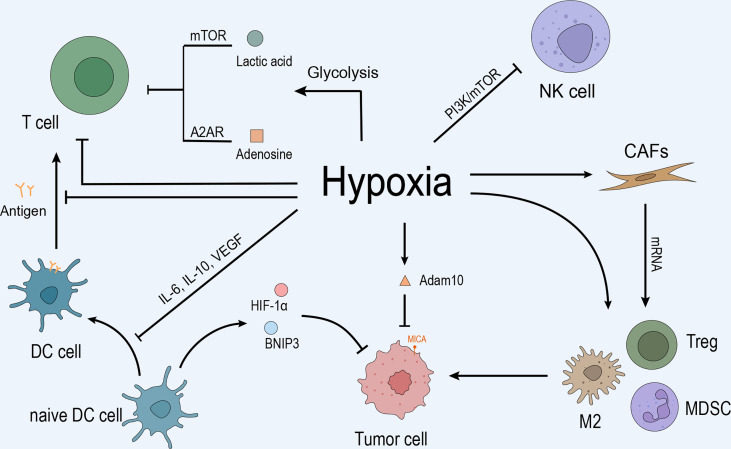
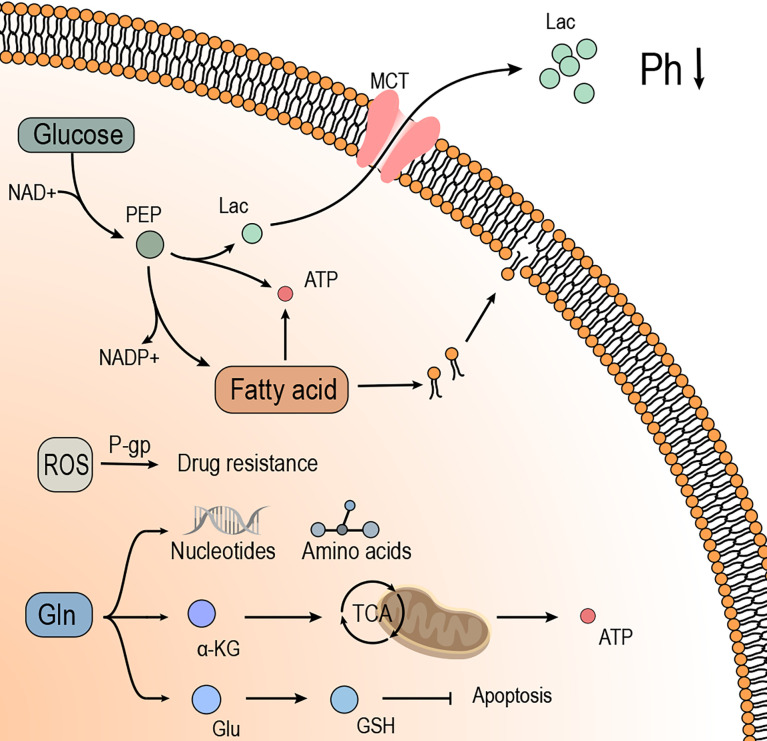
Tumor microenvironment (TME), which is characterized by hypoxia, widely exists in solid tumors. As a current research hotspot in the TME, hypoxia is expected to become a key element to break through the bottleneck of tumor treatment. More and more research results show that a variety of biological behaviors of tumor cells are affected by many factors in TME which are closely related to hypoxia. In order to inhibiting the immune response in TME, hypoxia plays an important role in tumor cell metabolism and anti-apoptosis. Therefore, exploring the molecular mechanism of hypoxia mediated malignant tumor behavior and therapeutic targets is expected to provide new ideas for anti-tumor therapy. In this review, we discussed the effects of hypoxia on tumor behavior and its interaction with TME from the perspectives of immune cells, cell metabolism, oxidative stress and hypoxia inducible factor (HIF), and listed the therapeutic targets or signal pathways found so far. Finally, we summarize the current therapies targeting hypoxia, such as glycolysis inhibitors, anti-angiogenesis drugs, HIF inhibitors, hypoxia-activated prodrugs, and hyperbaric medicine.
肿瘤微环境(TME)以缺氧为特征,广泛存在于实体瘤中。作为TME当前的研究热点,缺氧有望成为突破肿瘤治疗瓶颈的关键因素。越来越多的研究结果表明,肿瘤细胞的多种生物学行为受到TME中许多与缺氧密切相关的因素影响。为了抑制TME中的免疫反应,缺氧在肿瘤细胞代谢和抗凋亡中发挥着重要作用。因此,探索缺氧介导恶性肿瘤行为的分子机制和治疗靶点有望为抗肿瘤治疗提供新思路。在这篇综述中,我们从免疫细胞、细胞代谢、氧化应激和缺氧诱导因子(HIF)的角度讨论了缺氧对肿瘤行为的影响及其与TME的相互作用,并列出了目前已发现的治疗靶点或信号通路。最后,我们总结了目前针对缺氧的治疗方法,如糖酵解抑制剂、抗血管生成药物、HIF抑制剂、缺氧激活前药和高压医学。