Hao Guangzhi, Chu Guangxin, Pan Pengyu, Han Yuwei, Ai Yunzheng, Shi Zuolin, Liang Guobiao
Department of Neurosurgery, General Hospital of Northern Theater Command, Shenyang, China.
Front Neurol. 2022 Sep 21;13:982498. doi: 10.3389/fneur.2022.982498. eCollection 2022.
In clinical practice, nimodipine is used to control cerebral vasospasm (CVS), which is one of the major causes of severe disability and mortality in patients with aneurysmal subarachnoid hemorrhage (aSAH). However, the exact efficacy of nimodipine use for patients with aSAH is still controversial due to the lack of sufficient and up-to-date evidence.
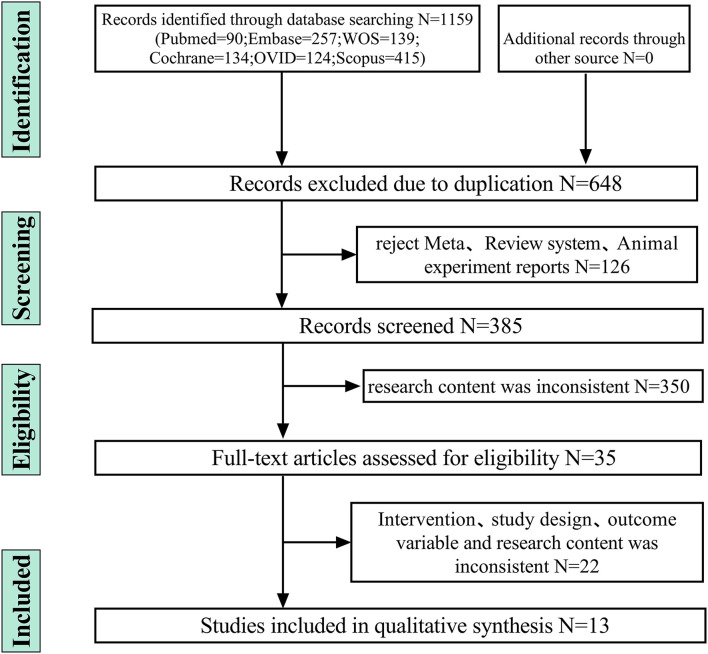
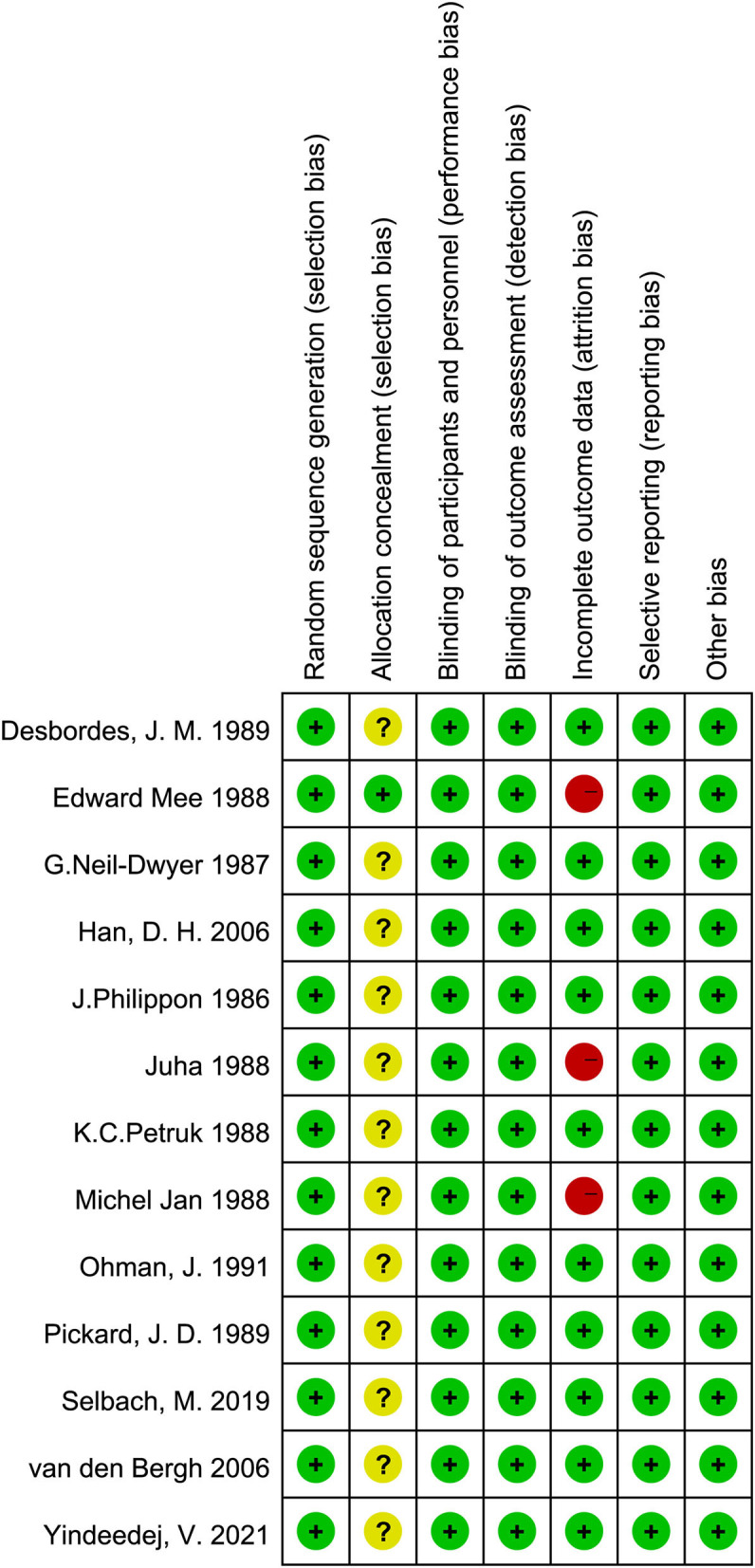
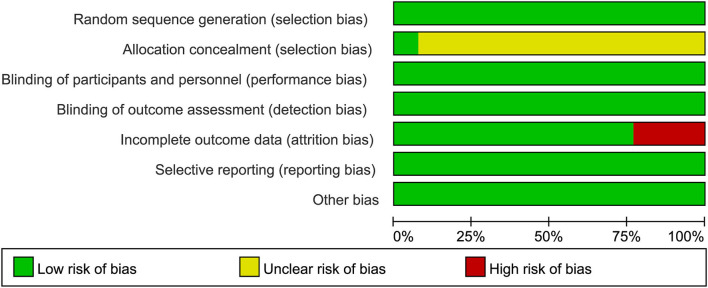
In this meta-analysis, the latest databases of the Cochrane Central Register of Controlled Trials, PubMed-Medline, Web of Science, Embase, Scopus, and OVID-Medline were comprehensively searched for retrieving all randomized controlled trials (RCTs) regarding the efficacy of nimodipine in patients with aSAH. The primary outcome was a poor outcome, and the secondary outcomes were mortality and cerebral vasospasm (CVS). After detailed statistical analysis of different outcome variables, further evidence quality evaluation and recommendation grade assessment were carried out.
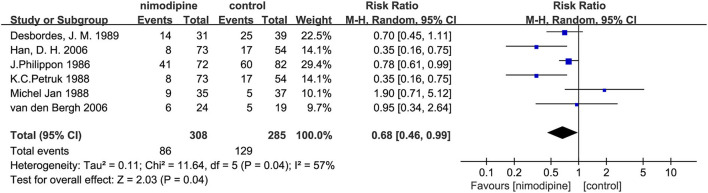
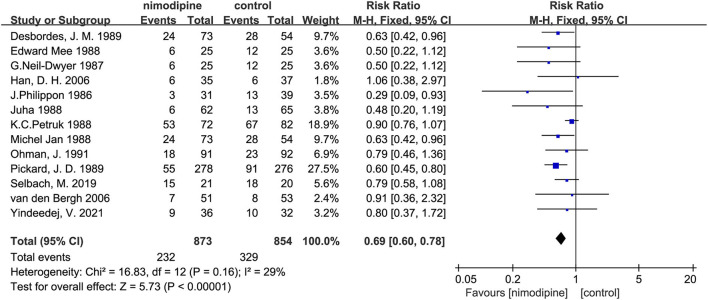
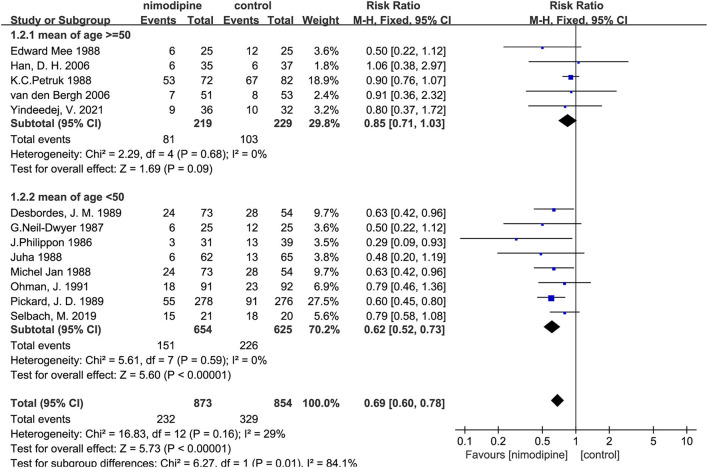
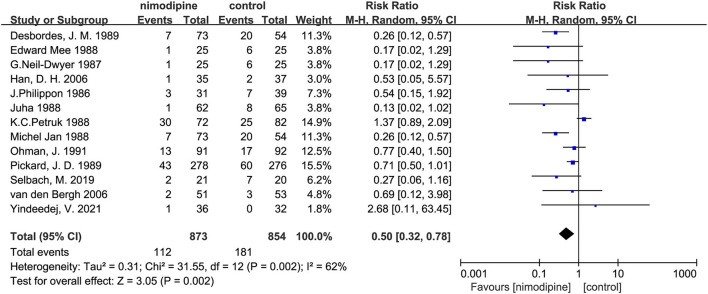
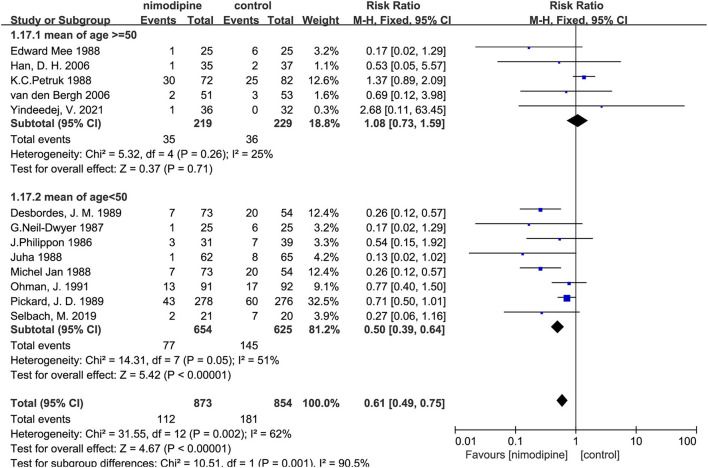
Approximately 13 RCTs met the inclusion criteria, and a total of 1,727 patients were included. Meta-analysis showed that a poor outcome was significantly reduced in the nimodipine group [RR, 0.69 (0.60-0.78); I = 29%]. Moreover, nimodipine also dramatically decreased the mortality [RR, 0.50 (0.32-0.78); I = 62%] and the incidence of CVS [RR, 0.68 (0.46-0.99); I = 57%]. Remarkably, we found a poor outcome and mortality were both significantly lower among patients with aSAH, with the mean age < 50 than that mean age ≥ 50 by subgroup analysis. Furthermore, the evidence grading of a poor outcome and its age subgroup in this study was assessed as high.
Nimodipine can significantly reduce the incidence of a poor outcome, mortality, and CVS in patients with aSAH. Moreover, we strongly recommend that patients with aSAH, especially those younger than 50 years old, should use nimodipine as early as possible in order to achieve a better clinical outcome, whether oral medication or endovascular direct medication.
www.york.ac.uk/inst/crd, identifier: CRD42022334619.
在临床实践中,尼莫地平用于控制脑血管痉挛(CVS),这是动脉瘤性蛛网膜下腔出血(aSAH)患者严重残疾和死亡的主要原因之一。然而,由于缺乏充分和最新的证据,尼莫地平用于aSAH患者的确切疗效仍存在争议。
在这项荟萃分析中,全面检索了Cochrane对照试验中央注册库、PubMed-Medline、Web of Science、Embase、Scopus和OVID-Medline的最新数据库,以检索所有关于尼莫地平对aSAH患者疗效的随机对照试验(RCT)。主要结局是不良结局,次要结局是死亡率和脑血管痉挛(CVS)。在对不同结局变量进行详细的统计分析后,进行了进一步的证据质量评估和推荐等级评定。
约13项RCT符合纳入标准,共纳入1727例患者。荟萃分析表明,尼莫地平组不良结局显著降低[RR,0.69(0.60-0.78);I²=29%]。此外,尼莫地平还显著降低了死亡率[RR,0.50(0.32-0.78);I²=62%]和CVS的发生率[RR,0.68(0.46-0.99);I²=57%]。值得注意的是,通过亚组分析我们发现,aSAH患者中平均年龄<50岁的患者的不良结局和死亡率均显著低于平均年龄≥50岁的患者。此外,本研究中不良结局及其年龄亚组的证据等级被评估为高。
尼莫地平可显著降低aSAH患者不良结局、死亡率和CVS的发生率。此外,我们强烈建议aSAH患者,尤其是年龄小于50岁的患者,应尽早使用尼莫地平,以获得更好的临床结局,无论是口服药物还是血管内直接给药。