Department of Chemical, Biological, Pharmaceutical and Environmental Sciences, University of Messina, Messina, Italy.
Department of Pharmacy, Faculty of Health Sciences, Universidad San Jorge, Villanueva de Gállego (Zaragoza), Spain.
Pharm Biol. 2022 Dec;60(1):1994-2001. doi: 10.1080/13880209.2022.2128825.
Ten. (Brassicaceae) is an edible plant with very limited available information. Previous studies have demonstrated the polyphenolic profile and the antioxidant and cytotoxic properties of the leaf and flowering top hydroalcoholic extracts.
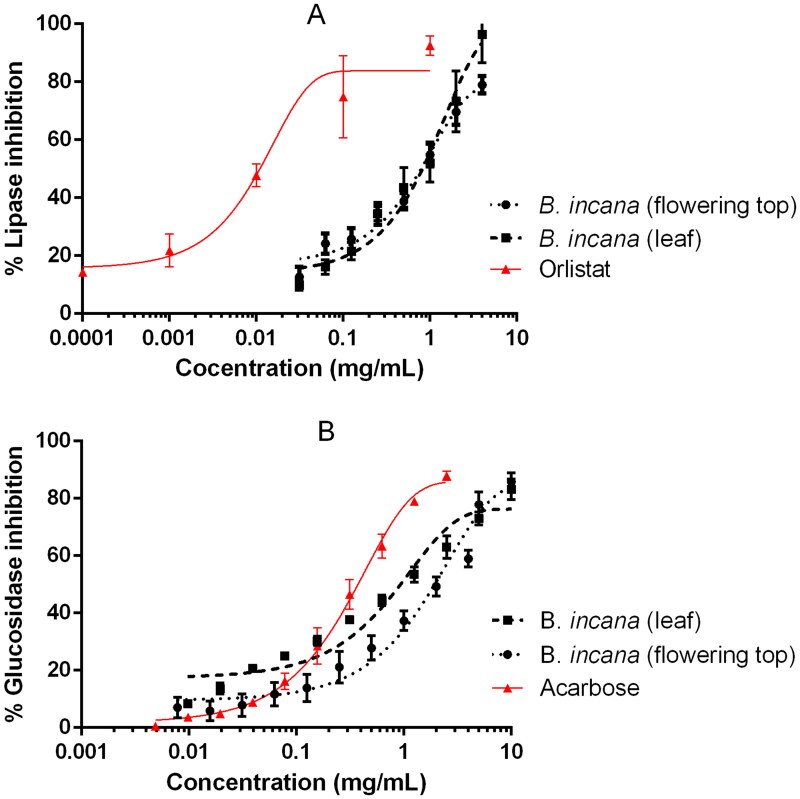
The volatile composition and the antidiabetic and anti-obesity potential of leaf and flowering top extracts have been investigated.
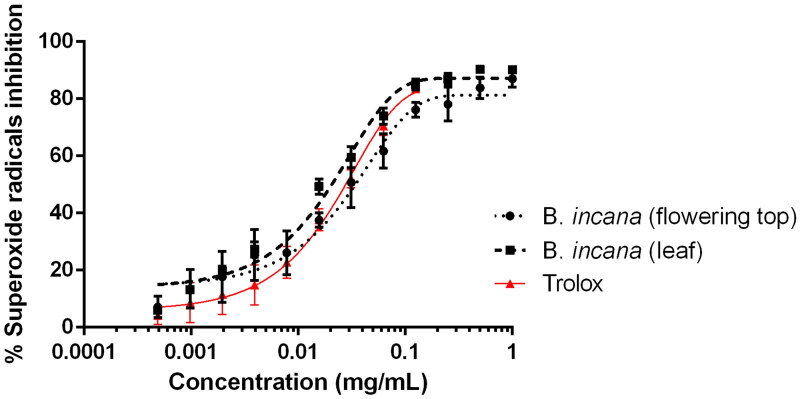
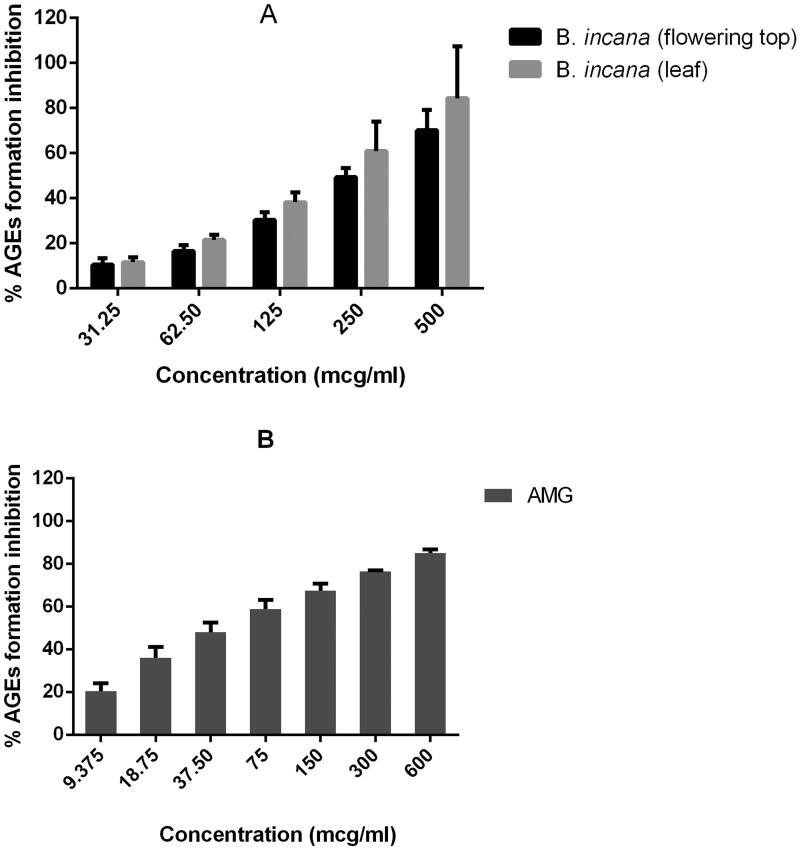
The volatile characterization of the extracts was attained by HS-SPME-GC/MS analysis. The antidiabetic and anti-obesity potential was investigated spectrophotometrically by the ability to modulate pancreatic lipase and α-glucosidase at different concentrations using orlistat and acarbose as reference drugs. The inhibition of advanced glycation end-products (AGEs) was measured with aminoguanidine as reference and the antioxidant activity with the xanthine/xanthine oxidase system and Trolox for comparative purposes.
Several volatiles belonging to different chemical classes were identified, being sulphur compounds the most abundant in both leaf and flowering top extracts (56.33% and 64.40% of all volatiles). Although the leaf extract showed lower IC values in most of the assays (0.968 and 1.921 mg/mL for α-glucosidase; 0.192 and 0.262 mg/mL for AGEs; 0.022 and 0.038 mg/mL for superoxide scavenging), there were no statistically significant differences between both samples. These extracts showed a similar behaviour to Trolox in the xanthine oxidase assay (IC values of 0.022 mg/mL for leaf extract; 0.038 mg/mL for flowering top and 0.028 for Trolox).
Leaves and flowering tops from can be used as sources of functional compounds that could act as antidiabetic and anti-obesogenic agents.
芜菁(十字花科)是一种可食用植物,但目前相关信息非常有限。先前的研究已经证明了叶和开花顶水醇提取物的多酚谱、抗氧化和细胞毒性特性。
研究了叶和开花顶提取物的挥发性成分以及抗糖尿病和抗肥胖的潜力。
采用 HS-SPME-GC/MS 分析对提取物的挥发性成分进行了表征。通过不同浓度下对胰腺脂肪酶和α-葡萄糖苷酶的调节能力,分光光度法研究了抗糖尿病和抗肥胖的潜力,使用奥利司他和阿卡波糖作为参考药物。采用氨基胍作为参考,测定了对晚期糖基化终产物(AGEs)的抑制作用,并用黄嘌呤/黄嘌呤氧化酶体系和 Trolox 进行了比较,以测定抗氧化活性。
鉴定出了属于不同化学类别的几种挥发性化合物,其中硫化合物在叶和开花顶提取物中含量最丰富(分别占所有挥发性化合物的 56.33%和 64.40%)。尽管叶提取物在大多数测定中显示出较低的 IC 值(α-葡萄糖苷酶的 IC 值为 0.968 和 1.921mg/mL;AGEs 的 IC 值为 0.192 和 0.262mg/mL;超氧化物清除的 IC 值为 0.022 和 0.038mg/mL),但两个样本之间没有统计学上的显著差异。这些提取物在黄嘌呤氧化酶测定中表现出与 Trolox 相似的行为(叶提取物的 IC 值为 0.022mg/mL;开花顶提取物的 IC 值为 0.038mg/mL;Trolox 的 IC 值为 0.028mg/mL)。
芜菁的叶子和开花顶可作为具有抗糖尿病和抗肥胖作用的功能性化合物的来源。