Department of Immunology, Royal Free London NHS Foundation Trust, London, UK.
Pediatric Immuno-Haematology and Rheumatology Unit, Necker Enfants Malades University Hospital, Assistance Publique-Hôpitaux de Paris (AP-HP), Paris, France.
J Clin Immunol. 2023 Jan;43(1):206-216. doi: 10.1007/s10875-022-01345-y. Epub 2022 Oct 12.
Due to the absence of curative treatments for inborn errors of immunity (IEI), children born with IEI require long-term follow-up for disease manifestations and related complications that occur over the lifespan. Effective transition from pediatric to adult services is known to significantly improve adherence to treatment and long-term outcomes. It is currently not known what transition services are available for young people with IEI in Europe.
To understand the prevalence and practice of transition services in Europe for young people with IEI, encompassing both primary immunodeficiencies (PID) and systemic autoinflammatory disorders (AID).
A survey was generated by the European Reference Network on immunodeficiency, autoinflammatory, and autoimmune diseases Transition Working Group and electronically circulated, through professional networks, to pediatric centers across Europe looking after children with IEI.
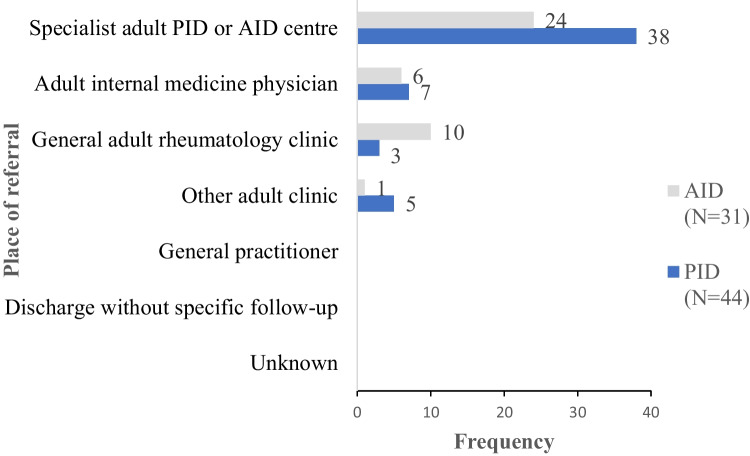
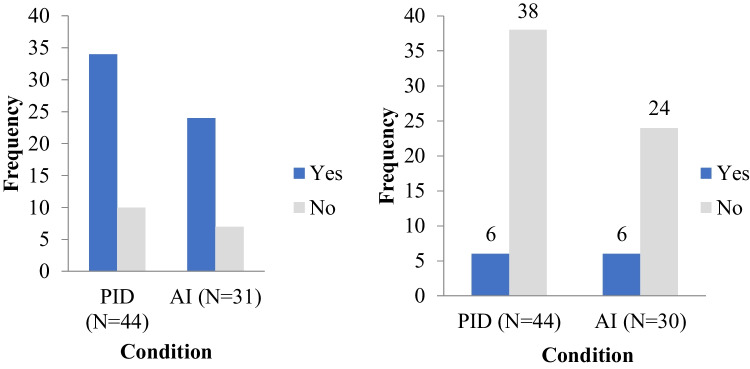
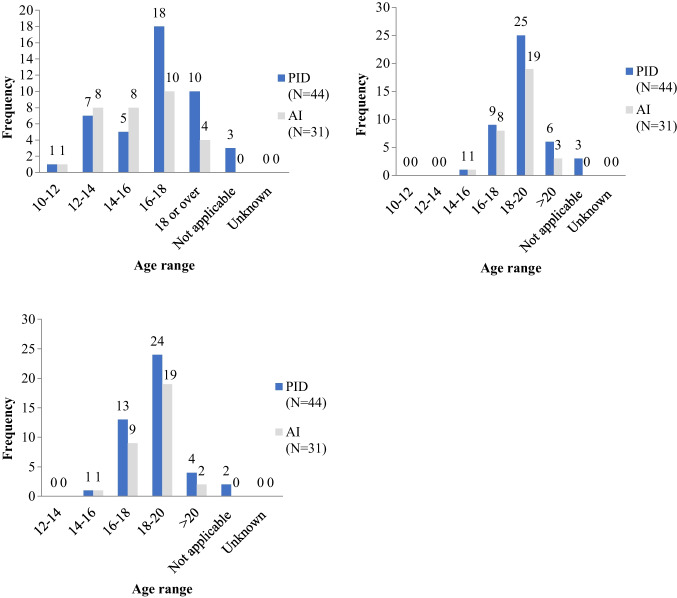
Seventy-six responses were received from 52 centers, in 45 cities across 17 different countries. All services transitioned patients to adult services, mainly to specialist PID or AID centers, typically transferring up to ten patients to adult care each year. The transition process started at a median age of 16-18 years with transfer to the adult center occurring at a median age of 18-20 years. 75% of PID and 68% of AID centers held at least one joint appointment with pediatric and adult services prior to the transfer of care. Approximately 75% of PID and AID services reported having a defined transition process, but few centers reported national disease-specific transition guidelines to refer to.
Transition services for children with IEI in Europe are available in many countries but lack standardized guidelines to promote best practice.
由于目前缺乏针对先天性免疫缺陷(IEI)的治愈方法,因此患有 IEI 的儿童需要长期随访以监测其一生中出现的疾病表现和相关并发症。从儿科到成人服务的有效过渡被认为可以显著提高治疗的依从性和长期预后。目前尚不清楚欧洲有哪些针对 IEI 青少年的过渡服务。
了解欧洲针对 IEI 青少年(包括原发性免疫缺陷(PID)和系统性自身炎症性疾病(AID))的过渡服务的普及情况和实践情况。
欧洲免疫缺陷、自身炎症和自身免疫性疾病过渡网络参考网络的过渡工作组制定了一份调查问卷,并通过专业网络向欧洲照顾 IEI 儿童的儿科中心进行电子分发。
从 45 个欧洲城市的 52 个中心收到了 76 份回复。所有服务都将患者转至成人服务,主要是转至专门的 PID 或 AID 中心,通常每年向成人护理机构转介多达 10 名患者。过渡过程从 16-18 岁的中位数年龄开始,向成人中心的转移中位数年龄为 18-20 岁。75%的 PID 和 68%的 AID 中心在转介之前至少与儿科和成人服务举行了一次联合预约。大约 75%的 PID 和 AID 服务报告说有一个明确的过渡流程,但很少有中心报告有国家特定疾病的过渡指南可以参考。
欧洲针对 IEI 儿童的过渡服务在许多国家都有提供,但缺乏促进最佳实践的标准化指南。