Department of Sports Medicine, The First Affiliated Hospital of Shenzhen University, Shenzhen Second People's Hospital, Shenzhen, Guangdong, China.
Department of Orthopaedics, Xiangya Hospital, Central South University, Changsha, Hunan, China.
J Foot Ankle Res. 2022 Oct 13;15(1):74. doi: 10.1186/s13047-022-00577-w.
To compare the kinematic characteristics of hindfoot joints in stage II adult acquired flatfoot deformity (AAFD) with those of non-flatfoot through the 3D-to-2D registration technology and single fluoroscopic imaging system.
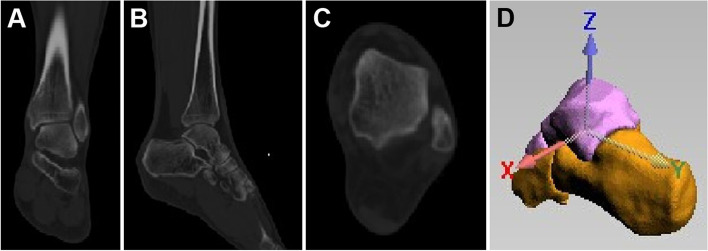
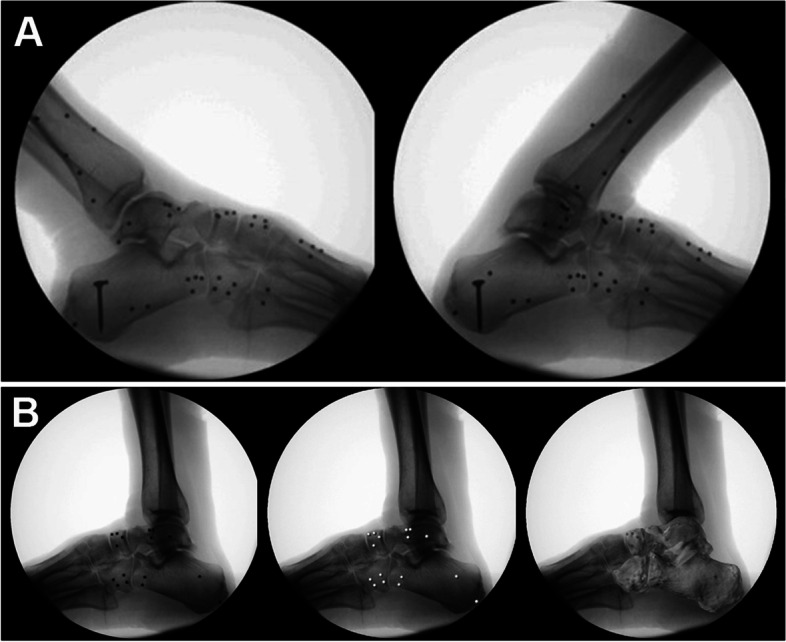
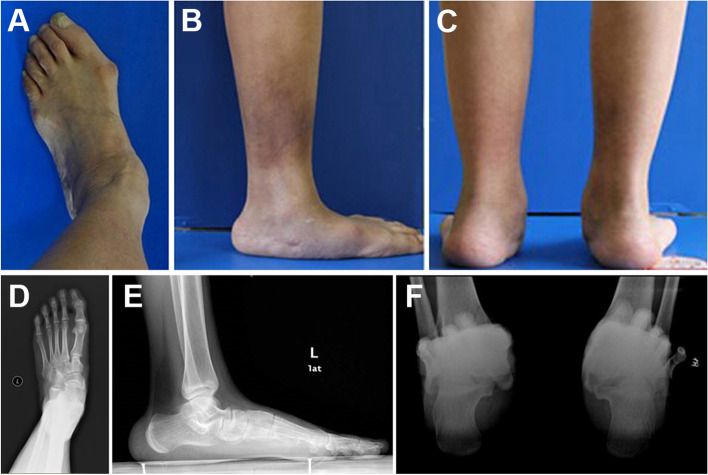
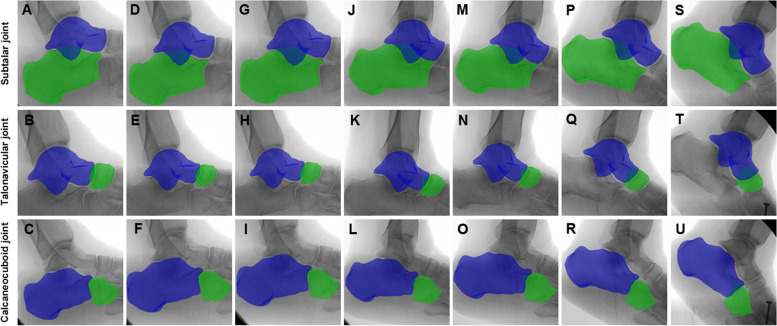
Eight volunteers with stage II AAFD and seven volunteers without stage II AAFD were recruited and CT scans were performed bilateral for both groups in neutral positions. Their lateral dynamic X-ray data during the stance phase, including 14 non-flatfeet and 10 flatfeet, was collected. A computer-aided simulated light source for 3D CT model was applied to obtain the virtual images, which were matched with the dynamic X-ray images to register in the "Fluo" software, so that the spatial changes during the stance phase could be calculated.
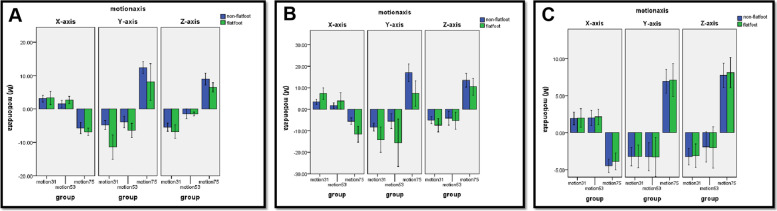
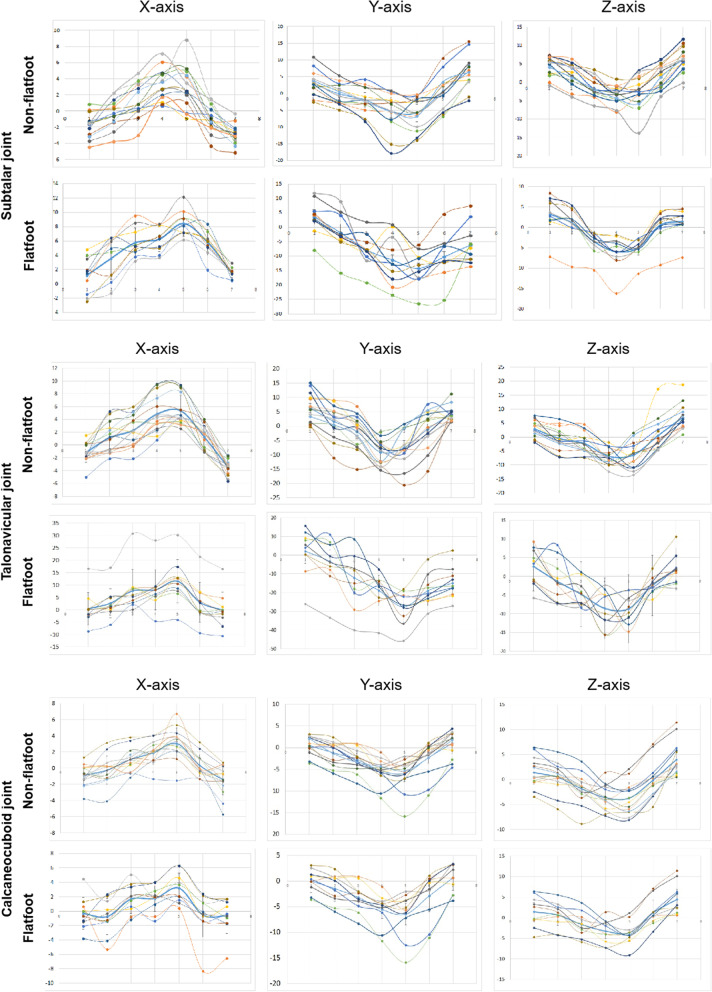
During the early-stance phase, the calcaneous was more dorsiflexed, everted, and externally-rotated relative to the talus in flatfoot compared with that in non-flatfoot (p < 0.05). During the mid-stance phase, the calcaneous was more dorsiflexed and everted relative to the talus in flatfoot compared with that in non-flatfoot (p < 0.05); however, the rotation did not differ significantly between the two groups (p > 0.05). During the late-stance phase, the calcaneous was more plantarflexed, but less inverted and internally-rotated, relative to the talus in flatfoot compared with that in non-flatfoot (p < 0.05). During the early- and mid-stance phase, the navicular was more dorsiflexed, everted, and externally-rotated relative to the talus in flatfoot compared with that in non-flatfoot (p < 0.05). During the late-stance phase, the navicular was more plantarflexed, but less inverted and internally-rotated, relative to the talus in flatfoot compared with that in non-flatfoot (p < 0.05). There was no difference in the motion of cuboid between the two groups during the whole stance phase (p > 0.05).
During the early- and mid-stance phase, excessive motion was observed in the subtalar and talonavicular joints in stage II AAFD. During the late-stance phase, the motion of subtalar and talonavicular joints appeared to be in the dysfunction state. The current study helps better understanding the biomechanics of the hindfoot during non-flatfoot and flatfoot condition which is critical to the intervention to the AAFD using conservative treatment such as insole or surgical treatment for joint hypermotion.
通过三维到二维配准技术和单荧光透视成像系统,比较 II 期成人获得性平足畸形(AAFD)患者和非平足患者的后足关节运动学特征。
招募 8 名 II 期 AAFD 志愿者和 7 名非 II 期 AAFD 志愿者,两组均在中立位进行双侧 CT 扫描。采集两组患者在站立相的动态侧位 X 线数据,共 14 个非平足和 10 个平足。应用计算机辅助模拟 3D CT 模型光源获得虚拟图像,将其与动态 X 线图像在“Fluo”软件中配准,以计算站立相时的空间变化。
在早期站立相中,与非平足相比,平足患者距骨在背屈、外展和外旋方面更为明显(p<0.05)。在中期站立相中,与非平足相比,平足患者距骨在背屈和外展方面更为明显(p<0.05);然而,两组之间的旋转没有显著差异(p>0.05)。在晚期站立相中,与非平足相比,平足患者距骨的跖屈程度更大,但内翻和内旋程度更小(p<0.05)。在早期和中期站立相中,与非平足相比,平足患者的舟骨在背屈、外展和外旋方面更为明显(p<0.05)。在晚期站立相中,与非平足相比,平足患者的舟骨跖屈程度更大,但内翻和内旋程度更小(p<0.05)。在整个站立相中,两组患者的骰骨运动无差异(p>0.05)。
在 II 期 AAFD 患者中,在早期和中期站立相中观察到距下和跟舟关节的过度运动。在晚期站立相中,距下和跟舟关节的运动似乎处于功能障碍状态。本研究有助于更好地了解非平足和平足状态下后足的生物力学特性,这对于使用鞋垫或关节过度活动的手术治疗等保守治疗方法干预 AAFD 至关重要。