School of Medicine, University of Washington, Seattle, WA, USA.
Department of Obstetrics and Gynecology, University of Washington, Seattle, WA, USA.
Ann Clin Microbiol Antimicrob. 2022 Oct 13;21(1):43. doi: 10.1186/s12941-022-00534-2.
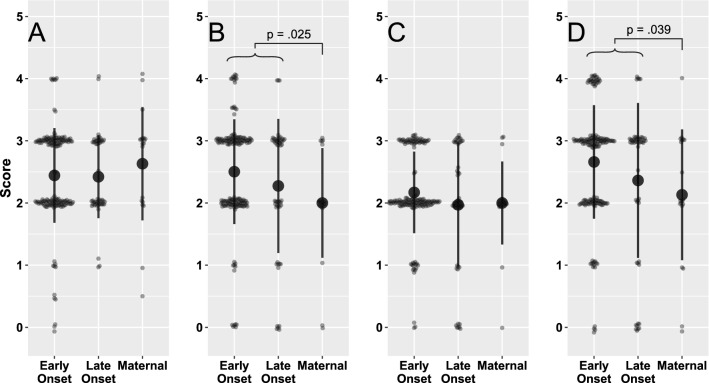
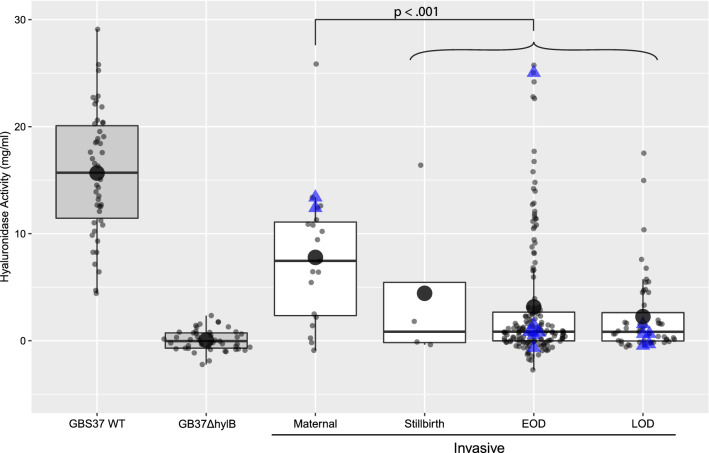
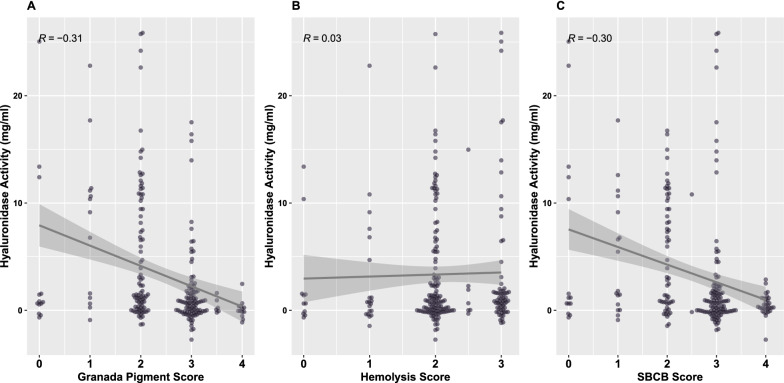
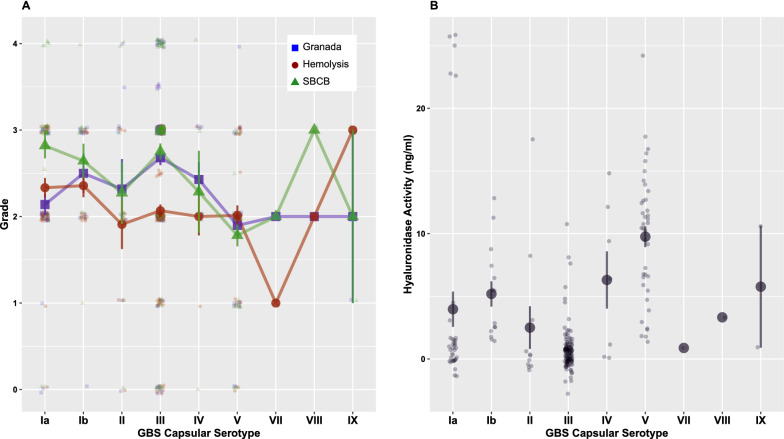
Group B streptococci (GBS) are bacteria that can cause preterm birth and invasive neonatal disease. Heterogeneous expression of virulence factors enables GBS to exist as both commensal bacteria and to become highly invasive. A molecular epidemiological study comparing GBS bacterial traits, genotype and host characteristics may indicate whether it is possible to predict the risk of perinatal invasive GBS disease and more accurately target intrapartum antibiotic prophylaxis. A total of 229 invasive GBS isolates from Swedish pregnant women or neonates were assessed for virulence and phenotypic traits: hemolysis zone, hemolytic pigment (Granada agar), Streptococcus B Carrot Broth (SBCB) assay, CAMP factor, and hyaluronidase activity. Genes regulating hemolytic pigment synthesis (covR/covS, abx1, stk1, stp1) were sequenced. Of the virulence factors and phenotypes assessed, a Granada pigment or SBCB score ≥ 2 captured more than 90% of EOD isolates with excellent inter-rater reliability. High enzyme activity of hyaluronidase was observed in 16% (36/229) of the invasive GBS isolates and notably, in one case of stillbirth. Hyaluronidase activity was also significantly higher in GBS isolates obtained from pregnant/postpartum individuals versus the stillbirth or neonatal invasive isolates (p < 0.001). Sequencing analysis found that abx1 (g.T106I), stk1 (g.T211N), stp1 (g.K469R) and covS (g.V343M) variants were present significantly more often in the higher (Granada pigment score ≥ 2) versus lower pigmented isolates (p < 0.001, each variant). Among the 203 higher Granada pigment scoring isolates, 22 (10.8%) isolates had 3 of the four sequence variants and 10 (4.9%) had 2 of the four sequence variants. Although heterogeneity in GBS virulence factor expression was observed, the vast majority were more highly pigmented and contained several common sequence variants in genes regulating pigment synthesis. High activity of hyaluronidase may increase risk for stillbirth and invasive disease in pregnant or postpartum individuals. Our findings suggest that testing for GBS pigmentation and hyaluronidase may, albeit imperfectly, identify pregnant people at risk for invasive disease and represent a step towards a personalized medical approach for the administration of intrapartum antibiotic prophylaxis.
B 群链球菌(GBS)是一种可导致早产和新生儿侵袭性疾病的细菌。其毒力因子的异质性表达使 GBS 既能作为共生菌存在,又能高度侵袭。比较 GBS 细菌特征、基因型和宿主特征的分子流行病学研究可能表明,是否有可能预测围产期侵袭性 GBS 疾病的风险,并更准确地针对产时抗生素预防。评估了来自瑞典孕妇或新生儿的 229 株侵袭性 GBS 分离株的毒力和表型特征:溶血区、溶血色素(Granada 琼脂)、链球菌 B 胡萝卜肉汤(SBCB)测定、CAMP 因子和透明质酸酶活性。测序了调节溶血色素合成的基因(covR/covS、abx1、stk1、stp1)。在所评估的毒力因子和表型中,Granada 色素或 SBCB 评分≥2 捕获了超过 90%的 EOD 分离株,具有良好的评分者间可靠性。在 229 株侵袭性 GBS 分离株中,16%(36/229)的透明质酸酶活性较高,值得注意的是,在一例死产中也是如此。与死产或新生儿侵袭性分离株相比,透明质酸酶活性在来自孕妇/产后个体的 GBS 分离株中显著更高(p<0.001)。测序分析发现,abx1(g.T106I)、stk1(g.T211N)、stp1(g.K469R)和 covS(g.V343M)变体在较高(Granada 色素评分≥2)与较低色素分离株中更频繁地存在(p<0.001,每个变体)。在 203 株较高 Granada 色素评分的分离株中,有 22 株(10.8%)分离株有 4 个序列变体中的 3 个,有 10 株(4.9%)有 4 个序列变体中的 2 个。尽管观察到 GBS 毒力因子表达的异质性,但绝大多数分离株的色素含量更高,并且在调节色素合成的基因中含有几种常见的序列变体。透明质酸酶的高活性可能会增加孕妇或产后个体发生死产和侵袭性疾病的风险。我们的研究结果表明,检测 GBS 色素沉着和透明质酸酶可能可以识别有侵袭性疾病风险的孕妇,代表了朝着个体化医疗方法管理产时抗生素预防迈进的一步。