Department of Ophthalmology and Visual Sciences, University of Illinois at Chicago, Chicago, IL 60612, USA.
Department of Pathology, Shiraz University of Medical Sciences, Shiraz 71348-14336, Iran.
Int J Mol Sci. 2022 Sep 29;23(19):11510. doi: 10.3390/ijms231911510.
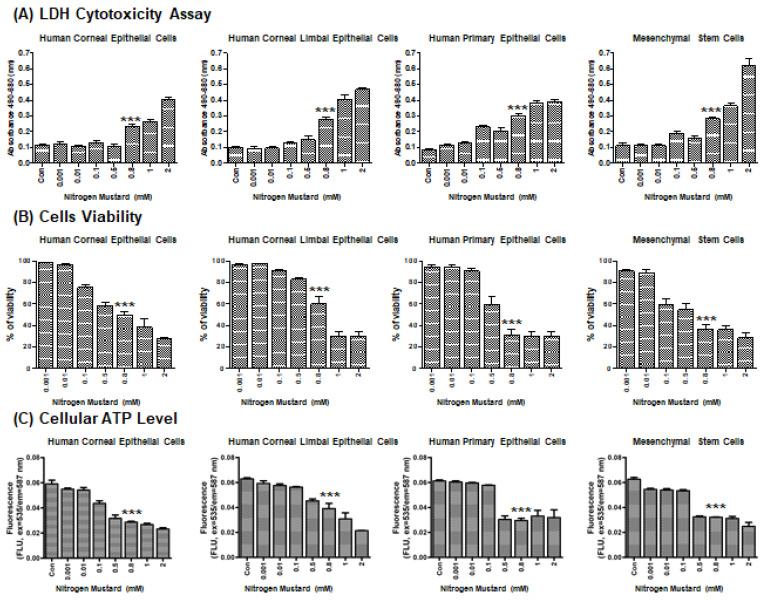
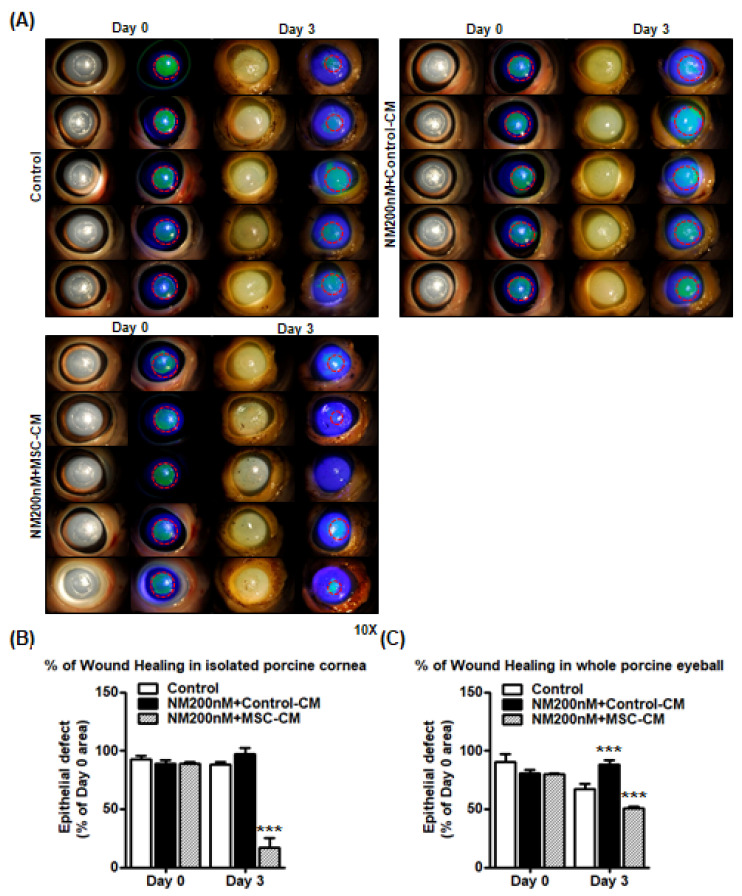
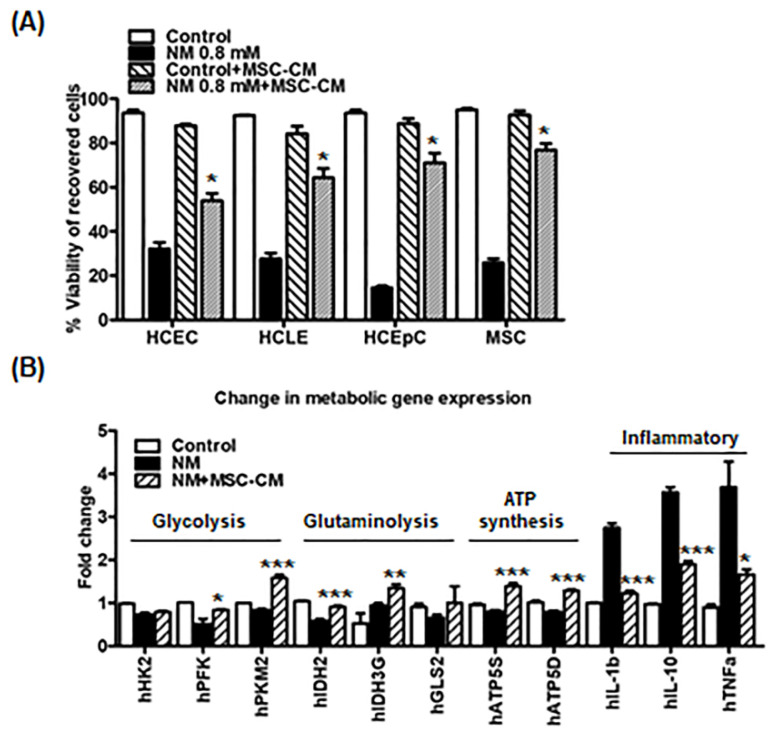
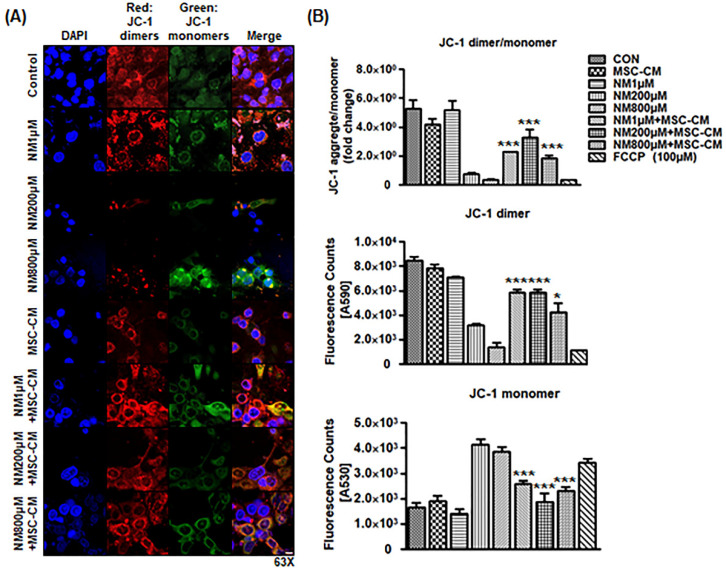
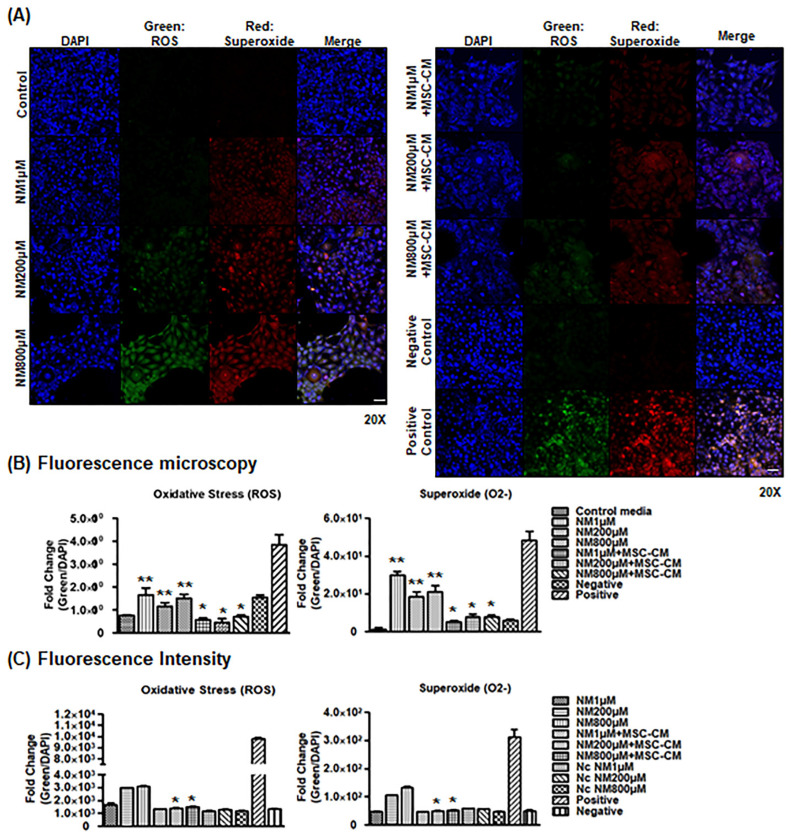
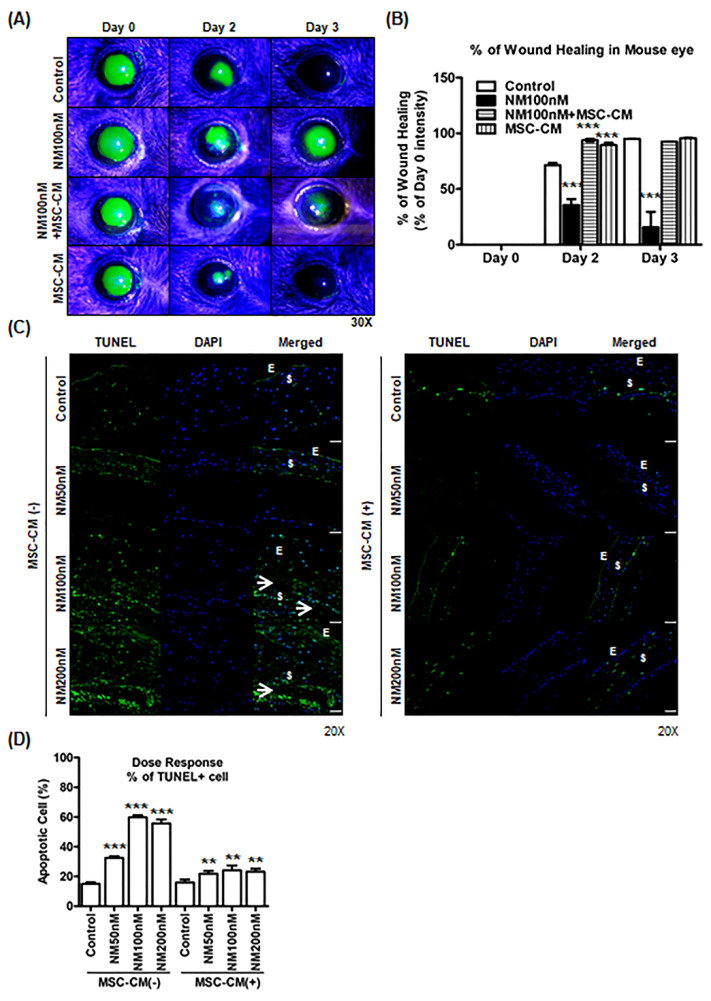
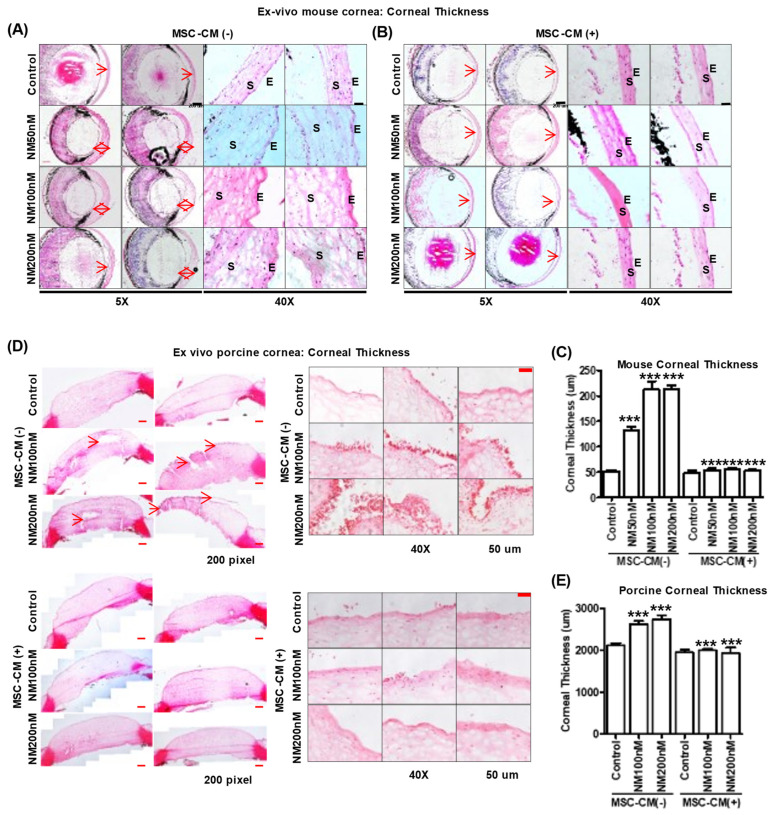
Ocular surface exposure to nitrogen mustard (NM) leads to severe ocular toxicity which includes the separation of epithelial and stromal layers, loss of endothelial cells, cell death, and severe loss of tissue function. No definitive treatment for mustard gas-induced ocular surface disorders is currently available. The research was conducted to investigate the therapeutic potential of mesenchymal stem cell-conditioned media (MSC-CM) in NM-induced corneal wounds. NM was added to different types of corneal cells, the ocular surface of porcine, and the ocular surface of mice, followed by MSC-CM treatment. NM significantly induced apoptotic cell death, cellular ROS (Reactive oxygen species), and reduced cell viability, metabolic gene expression, and mitochondrial function, and, in turn, delayed wound healing. The application of MSC-CM post NM exposure partially restored mitochondrial function and decreased intracellular ROS generation which promoted cell survival. MSC-CM therapy enhanced wound healing process. MSC-CM inhibited NM-induced apoptotic cell death in murine and porcine corneal tissue. The application of MSC-CM following a chemical insult led to significant improvements in the preservation of corneal structure and wound healing. In vitro, ex vivo, and in vivo results suggest that MSC-CM can potentially provide targeted therapy for the treatment of chemical eye injuries, including mustard gas keratopathy (MGK) which presents with significant loss of vision alongside numerous corneal pathologies.
眼睛表面接触氮芥(NM)会导致严重的眼部毒性,包括上皮和基质层分离、内皮细胞丧失、细胞死亡和组织功能严重丧失。目前尚无针对芥子气诱导的眼表面疾病的明确治疗方法。本研究旨在探讨间充质干细胞条件培养基(MSC-CM)在 NM 诱导的角膜伤口中的治疗潜力。将 NM 添加到不同类型的角膜细胞、猪眼表面和小鼠眼表面,然后用 MSC-CM 处理。NM 显著诱导细胞凋亡、细胞内 ROS(活性氧),降低细胞活力、代谢基因表达和线粒体功能,并延迟伤口愈合。暴露于 NM 后应用 MSC-CM 部分恢复了线粒体功能,减少了细胞内 ROS 的产生,从而促进了细胞存活。MSC-CM 治疗促进了伤口愈合过程。MSC-CM 抑制了 NM 诱导的小鼠和猪角膜组织中的凋亡细胞死亡。化学损伤后应用 MSC-CM 可显著改善角膜结构的保存和伤口愈合。体外、离体和体内结果表明,MSC-CM 可能为包括芥子气角膜病变(MGK)在内的化学性眼损伤的治疗提供靶向治疗,MGK 伴有严重视力丧失和多种角膜病变。