
小分子热休克蛋白在与蛋白错误折叠相关的运动神经元疾病中的作用。
The Role of Small Heat Shock Proteins in Protein Misfolding Associated Motoneuron Diseases.
机构信息
Dipartimento di Scienze Farmacologiche e Biomolecolari (DiSFeB), Università degli Studi di Milano, Via Balzaretti 9, 20133 Milan, Italy.
Unit of Medical Genetics and Neurogenetics, Fondazione IRCCS Istituto Neurologico Carlo Besta, Via Celoria 11, 20133 Milan, Italy.
出版信息
Int J Mol Sci. 2022 Oct 4;23(19):11759. doi: 10.3390/ijms231911759.
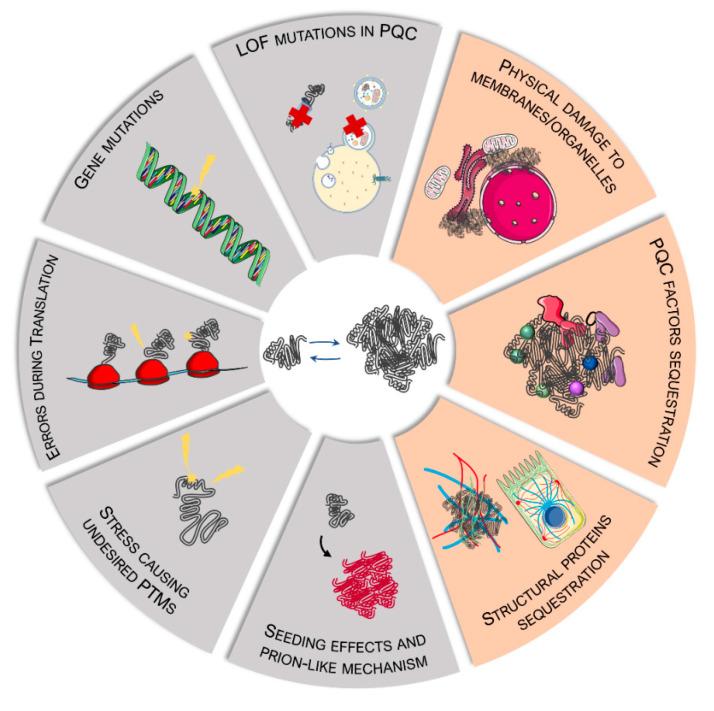
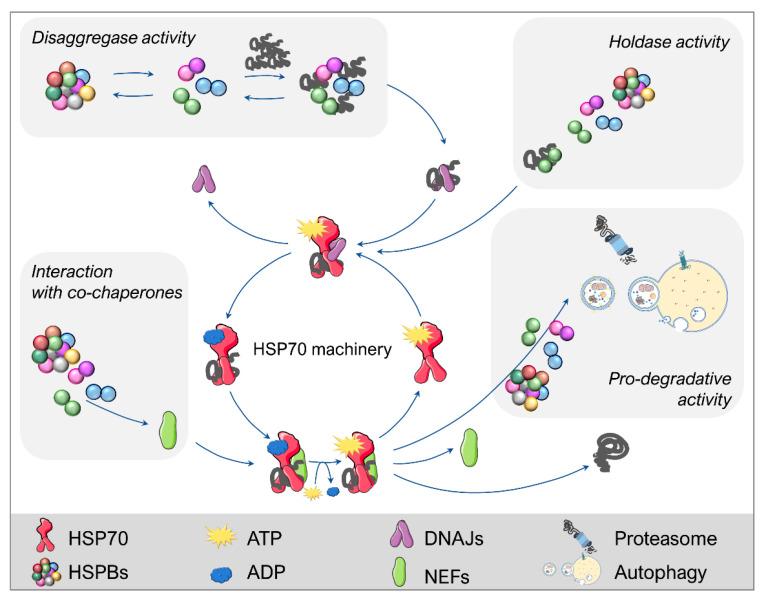
Motoneuron diseases (MNDs) are neurodegenerative conditions associated with death of upper and/or lower motoneurons (MNs). Proteostasis alteration is a pathogenic mechanism involved in many MNDs and is due to the excessive presence of misfolded and aggregated proteins. Protein misfolding may be the product of gene mutations, or due to defects in the translation process, or to stress agents; all these conditions may alter the native conformation of proteins making them prone to aggregate. Alternatively, mutations in members of the protein quality control (PQC) system may determine a loss of function of the proteostasis network. This causes an impairment in the capability to handle and remove aberrant or damaged proteins. The PQC system consists of the degradative pathways, which are the autophagy and the proteasome, and a network of chaperones and co-chaperones. Among these components, Heat Shock Protein 70 represents the main factor in substrate triage to folding, refolding, or degradation, and it is assisted in this task by a subclass of the chaperone network, the small heat shock protein (sHSPs/HSPBs) family. HSPBs take part in proteostasis by bridging misfolded and aggregated proteins to the HSP70 machinery and to the degradative pathways, facilitating refolding or clearance of the potentially toxic proteins. Because of its activity against proteostasis alteration, the chaperone system plays a relevant role in the protection against proteotoxicity in MNDs. Here, we discuss the role of HSPBs in MNDs and which HSPBs may represent a valid target for therapeutic purposes.
运动神经元疾病(MNDs)是与上运动神经元和/或下运动神经元(MNs)死亡相关的神经退行性疾病。蛋白质稳态改变是许多 MNDs 的一种致病机制,是由于异常折叠和聚集的蛋白质过多所致。蛋白质错误折叠可能是基因突变的产物,也可能是由于翻译过程中的缺陷,或应激剂引起的;所有这些情况都可能改变蛋白质的天然构象,使其易于聚集。或者,蛋白质质量控制(PQC)系统成员的突变可能导致蛋白质稳态网络的功能丧失。这会导致处理和去除异常或受损蛋白质的能力受损。PQC 系统由降解途径组成,即自噬和蛋白酶体,以及伴侣蛋白和共伴侣蛋白网络。在这些成分中,热休克蛋白 70(HSP70)是将底物分类为折叠、重折叠或降解的主要因素,伴侣蛋白网络的一个亚类,即小热休克蛋白(sHSPs/HSPBs)家族,协助其完成这项任务。HSPBs 通过将错误折叠和聚集的蛋白质与 HSP70 机器和降解途径桥接,促进潜在毒性蛋白质的重折叠或清除,从而参与蛋白质稳态。由于其对蛋白质稳态改变的活性,伴侣系统在保护 MNDs 免受蛋白毒性方面发挥着重要作用。在这里,我们讨论了 HSPBs 在 MNDs 中的作用,以及哪些 HSPBs 可能是治疗目的的有效靶点。

 Zotero 插件