Medical Oncology Intercenter Unit, Regional and Virgen de la Victoria University Hospitals, Instituto de Investigación Biomédica de Málaga y Plataforma en Nanomedicina-IBIMA Plataforma BIONAND, 29010 Málaga, Spain.
Department of Medicine and Dermatology, Medical School University of Málaga, Campus Teatinos, Blvr. Louis Pasteur, 32, 29010 Málaga, Spain.
Int J Mol Sci. 2022 Oct 9;23(19):11990. doi: 10.3390/ijms231911990.
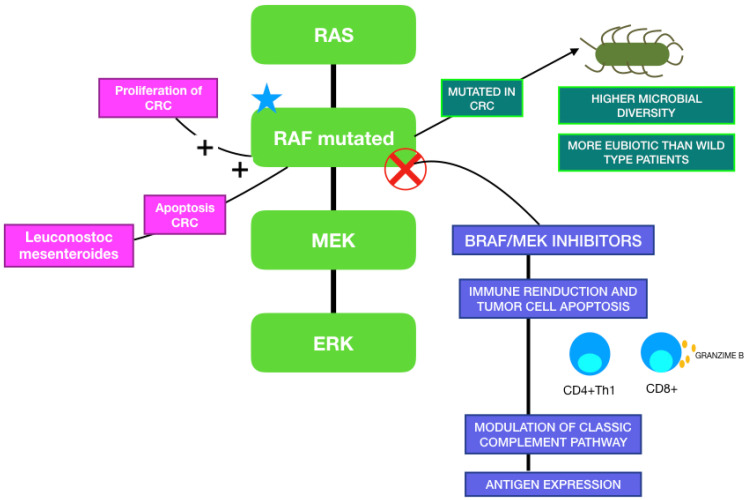
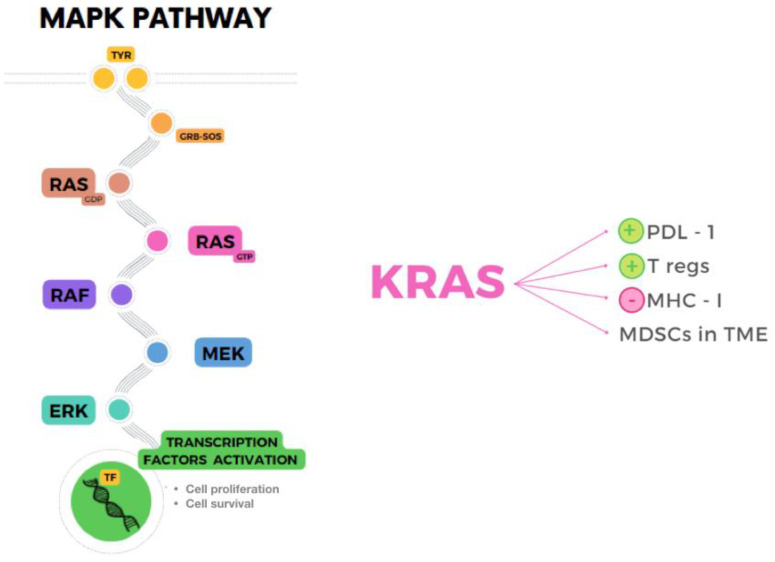
Gut microbiome (GM) and its either pro-tumorigenic or anti-tumorigenic role is intriguing and constitutes an evolving landscape in translational oncology. It has been suggested that these microorganisms may be involved in carcinogenesis, cancer treatment response and resistance, as well as predisposition to adverse effects. In melanoma patients, one of the most immunogenic cancers, immune checkpoint inhibitors (ICI) and MAPK-targeted therapy-BRAF/MEK inhibitors-have revolutionized prognosis, and the study of the microbiome as a modulating factor is thus appealing. Although BRAF/MEK inhibitors constitute one of the main backbones of treatment in melanoma, little is known about their impact on GM and how this might correlate with immune re-induction. On the contrary, ICI and their relationship to GM has become an interesting field of research due to the already-known impact of immunotherapy in modulating the immune system. Immune reprogramming in the tumor microenvironment has been established as one of the main targets of microbiome, since it can induce immunosuppressive phenotypes, promote inflammatory responses or conduct anti-tumor responses. As a result, ongoing clinical trials are evaluating the role of fecal microbiota transplant (FMT), as well as the impact of using dietary supplements, antibiotics and probiotics in the prediction of response to therapy. In this review, we provide an overview of GM's link to cancer, its relationship with the immune system and how this may impact response to treatments in melanoma patients. We also discuss insights about novel therapeutic approaches including FMT, changes in diet and use of probiotics, prebiotics and symbiotics. Finally, we hypothesize on the possible pathways through which GM may impact anti-tumor efficacy in melanoma patients treated with targeted therapy, an appealing subject of which little is known.
肠道微生物组(GM)及其促肿瘤或抑肿瘤作用令人着迷,是转化肿瘤学中不断发展的领域。有人提出,这些微生物可能参与致癌、癌症治疗反应和耐药以及不良反应易感性。在黑色素瘤患者中,GM 作为一个调节因子的研究很有吸引力,因为 GM 是最具免疫原性的癌症之一,免疫检查点抑制剂(ICI)和 MAPK 靶向治疗-BRAF/MEK 抑制剂-已经彻底改变了预后。尽管 BRAF/MEK 抑制剂是黑色素瘤治疗的主要支柱之一,但人们对它们对 GM 的影响知之甚少,以及这如何与免疫再诱导相关。相反,由于免疫疗法在调节免疫系统方面的已有影响,ICI 及其与 GM 的关系已成为一个有趣的研究领域。肿瘤微环境中的免疫重编程已被确立为 GM 的主要靶点之一,因为它可以诱导免疫抑制表型、促进炎症反应或进行抗肿瘤反应。因此,正在进行的临床试验正在评估粪便微生物群移植(FMT)的作用,以及使用膳食补充剂、抗生素和益生菌在预测治疗反应中的作用。在这篇综述中,我们概述了 GM 与癌症的联系、它与免疫系统的关系以及这如何影响黑色素瘤患者对治疗的反应。我们还讨论了关于新型治疗方法的见解,包括 FMT、饮食变化和使用益生菌、益生元和共生体。最后,我们假设 GM 可能通过哪些途径影响接受靶向治疗的黑色素瘤患者的抗肿瘤疗效,这是一个知之甚少但很有吸引力的课题。