Tavares Marina Rodrigues, Kirakci Kaplan, Kotov Nikolay, Pechar Michal, Lang Kamil, Pola Robert, Etrych Tomáš
Institute of Macromolecular Chemistry of the Czech Academy of Sciences, Heyrovského Náměstí 2, 162 06 Prague 6, Czech Republic.
Institute of Inorganic Chemistry of the Czech Academy of Sciences, 250 68 Husinec-Řež 1001, Czech Republic.
Nanomaterials (Basel). 2022 Sep 26;12(19):3350. doi: 10.3390/nano12193350.
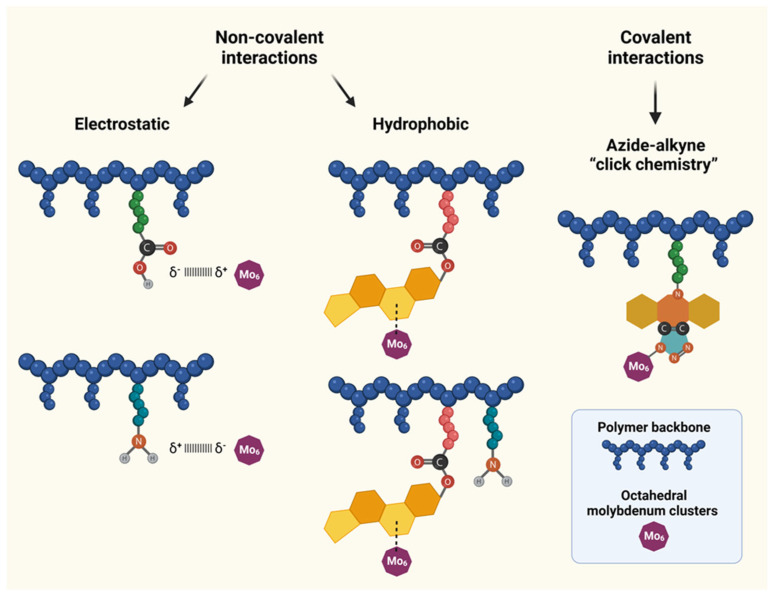
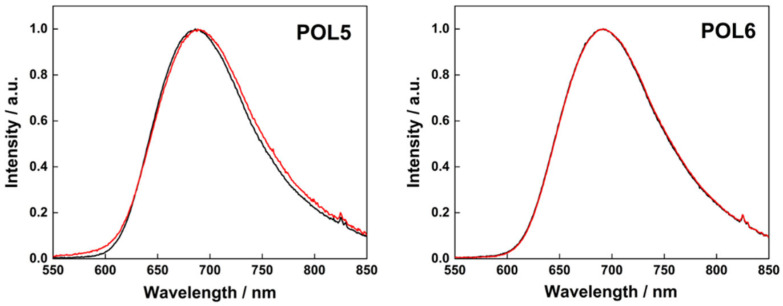
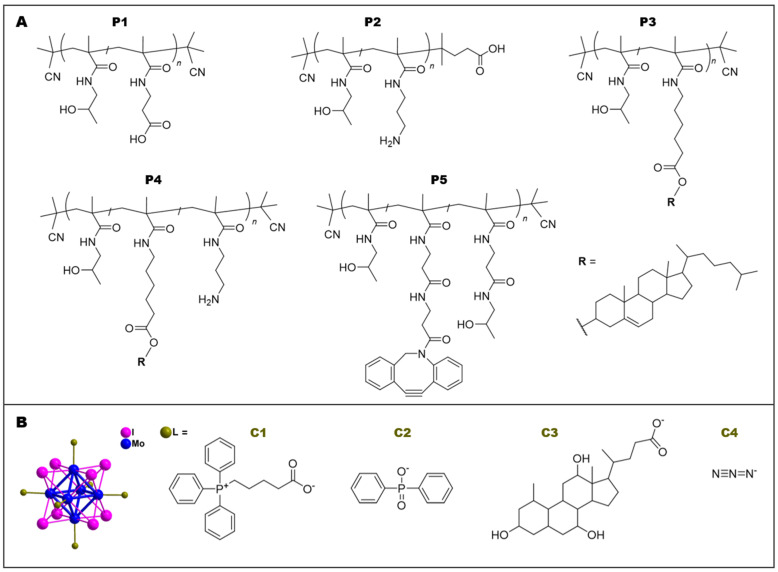
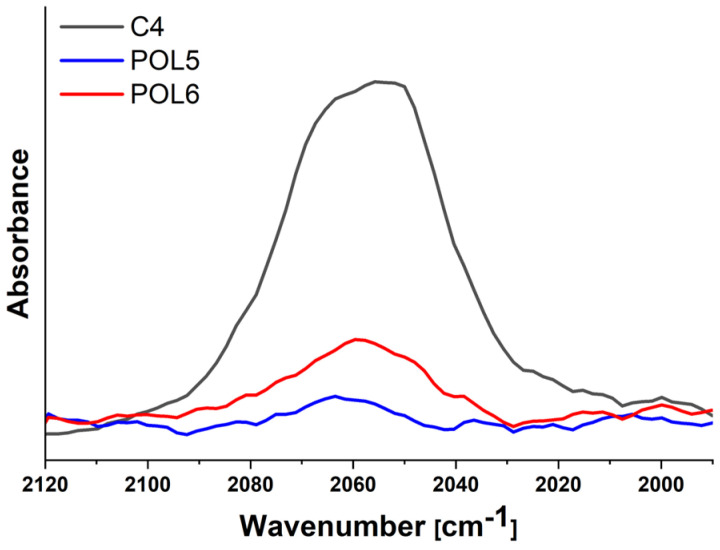
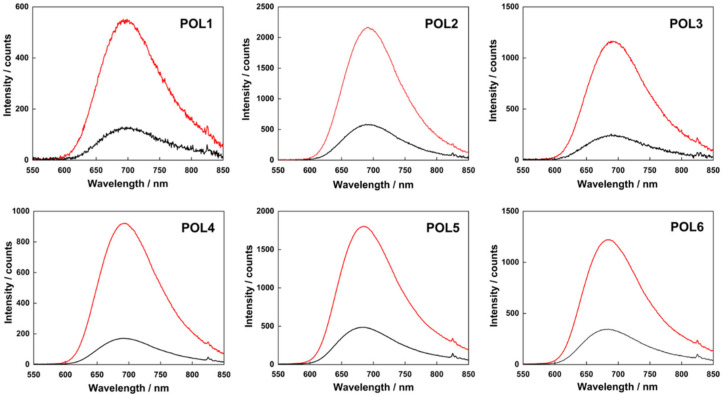
Photo/radiosensitizers, such as octahedral molybdenum clusters (Mo), have been intensively studied for photodynamic applications to treat various diseases. However, their delivery to the desired target can be hampered by its limited solubility, low stability in physiological conditions, and inappropriate biodistribution, thus limiting the therapeutic effect and increasing the side effects of the therapy. To overcome such obstacles and to prepare photofunctional nanomaterials, we employed biocompatible and water-soluble copolymers based on -(2-hydroxypropyl)methacrylamide (pHPMA) as carriers of Mo clusters. Several strategies based on electrostatic, hydrophobic, or covalent interactions were employed for the formation of polymer-cluster constructs. Importantly, the luminescent properties of the Mo clusters were preserved upon association with the polymers: all polymer-cluster constructs exhibited an effective quenching of their excited states, suggesting a production of singlet oxygen (O(Δ)) species which is a major factor for a successful photodynamic treatment. Even though the colloidal stability of all polymer-cluster constructs was satisfactory in deionized water, the complexes prepared by electrostatic and hydrophobic interactions underwent severe aggregation in phosphate buffer saline (PBS) accompanied by the disruption of the cohesive forces between the cluster and polymer molecules. On the contrary, the conjugates prepared by covalent interactions notably displayed colloidal stability in PBS in addition to high luminescence quantum yields, suggesting that pHPMA is a suitable nanocarrier for molybdenum cluster-based photosensitizers intended for photodynamic applications.
光/放射增敏剂,如八面体钼簇(Mo),已被深入研究用于光动力应用以治疗各种疾病。然而,它们向所需靶点的递送可能会受到其有限的溶解度、在生理条件下的低稳定性以及不适当的生物分布的阻碍,从而限制了治疗效果并增加了治疗的副作用。为了克服这些障碍并制备光功能纳米材料,我们采用了基于聚(2-羟丙基)甲基丙烯酰胺(pHPMA)的生物相容性和水溶性共聚物作为钼簇的载体。基于静电、疏水或共价相互作用的几种策略被用于形成聚合物-簇构建体。重要的是,钼簇与聚合物结合后其发光特性得以保留:所有聚合物-簇构建体都表现出其激发态的有效猝灭,这表明产生了单线态氧(O(Δ))物种,这是成功进行光动力治疗的一个主要因素。尽管所有聚合物-簇构建体在去离子水中的胶体稳定性令人满意,但通过静电和疏水相互作用制备的复合物在磷酸盐缓冲盐水(PBS)中会发生严重聚集,同时伴随着簇与聚合物分子之间内聚力的破坏。相反,通过共价相互作用制备的缀合物除了具有高发光量子产率外,在PBS中还显著表现出胶体稳定性,这表明pHPMA是用于光动力应用的基于钼簇的光敏剂的合适纳米载体。